What if your touring bike didn’t need to scream “Midlife Crisis: Chapter Two” just to be competent? The 2025 Honda NT1100 is the answer to a question only Honda would dare to ask: Can you build a sport-touring motorcycle that’s as practical as a Swiss Army knife but as exciting as… well, a Swiss Army knife being thrown at 100 mph? It borrows its engine from the Africa Twin and offers a dual-clutch transmission for riders who think clutches are for people with something to prove. It may look like it files its own taxes, but give it a stretch of open road and it will outrun your expectations – and probably your buddy’s V-Strom too.


If the Africa Twin is the cool, rugged uncle who lives off-grid and builds his own furniture, the NT1100 is his clean-shaven brother who shows up to family dinner in wrinke-free khakis and brings a spreadsheet of vacation ideas. Gone are the high-mounted fenders, crash bars, and Dakar cosplay; in their place is a sleek, almost corporate-looking fairing with integrated wind deflectors and a tall, adjustable windscreen that screams “commuter efficiency”. It’s the kind of bike that doesn’t look like it wants attention, and that’s the point – Honda’s playing the long game here, building a machine that looks like it was designed by people who measure twice, cut once, and never, ever ride without gloves.
Compared to the Africa Twin, the NT1100 sits lower, feels tighter, and swaps out off-road ambition for on-road intention. The suspension is shorter, the seat is much more accessible, and the wheels – 17 inches in the front and rear – ditch the wire spokes in favor of cast alloys. It’s narrower through the midsection, more streamlined, and the bodywork is designed to keep the wind off your torso and rain off your legs without looking like a barn door. It may share the same 1084cc parallel-twin as its adventure sibling, but in this application, it’s been repackaged with a vibe that’s more “German autobahn” than “Namibian sand dune.”
Then there is the cockpit – part motorcycle, part Star Trek. The NT1100’s dual-screen layout is a direct carryover from the Africa Twin, with a 6.5″ touchscreen that supports Apple CarPlay and Android Auto, sitting above a more traditional LCD for speed, gear and fuel info. It looks a bit like someone stacked two dashboards on top of each other – useful, but not elegant. The button layout is, well, peak Honda: a forest of toggles and switches that require a bit of learning curve, but ultimately reward you with full control over things like traction, ride modes, bluetooth connection, and even heated grips. It’s not pretty, but it works – just like a Casio calculator.


Egonomically, the NT1100 feels like it was designed by someone who’s done a 900-kilometre day and decided never again – at least not without lumbar support and cruise control. The seat is plush without being squishy, with a neutral riding triangle that puts your knees at a civilized angle and your arms in a position that says “I commute… but I also crush continents.” The windscreen adjusts in one hand, which requires a little bit of patience as it is not the easiest system, but it has a great range up and down.
Touring perks? Honda didn’t go halfway. The NT1100 comes standard with cruise control, heated grips, center stand, USB and 12V sockets, and enough real estate on the rear subframe to strap a small apartment. The rear pegs and passenger seat are also properly considered – your passenger won’t hate you after two hours, which in the sport-touring world is practically love. Add in the optional luggage and you’ve got a bike that doesn’t just tolerate long-distance travel – it thrives on it, sipping fuel at a rate that makes you wonder if it secretly runs on goodwill and Honda reliability alone.
At the heart of the NT110 beats the same 1084cc parallel-twin lifted from the Africa Twin – but here, it’s been retuned for smoother road manners and a more relaxed personality. Still making 101 horsepower and 77 lb-ft of torque, it’s a torque-rich unit that’s all about midrange punch, perfect for lazy overtakes and stress-free cruising. But it’s the transmission that really defines the NT1100 experience: Honda’s Dual Clutch Transmission (DCT) handles all the shifting, and depending on the mode, it’s either smooth and brilliant, or slightly annoying. In Drive mode, the transmission tune is obsessed with fuel economy – short-shifting aggressively and lugging the engine into sixth gear by 60 km/h, which can introduce low-RPM vibes and a sense of mechanical grumble that makes the bike feel less refined than it really is.


The fix? Stick it in Sport (S) mode. Actually, any of the three Sport modes. These S modes hold gears longer, downshift more willingly, and keep the engine in the meat of its torque curve, where it feels smoother, more response, and just plain happier. You can still override with paddle shifters at any time, and honestly, once you are in S2 or S3, the DCT starts to feel like it’s reading your mind – crisp, intuitive, and always in the right gear. This isn’t a bike trying to impress you with theatrics – it’s engineered competence, with a little caffeine kick when you toggle the right mode.
You also get three preset ride modes – Urban, Rain or Tour – plus two user-configurable modes where you can dial in power delivery, traction control and engine braking. Want max throttle response and minimum interference? Set it. Prefer a relaxed throttle with lots of traction control for rain or bad roads? That’s in the menu too. The throttle-by-wire system is linear and intuitive, but still leans toward smooth over snappy – very Honda. Traction control works well behind the scenes to keep everything calm and composed, even when the roads get sketchy. It’s not an overwhelming system of menus and tech – it’s smartly implemented, gives you what you need, and stays out of the way when you are just trying to enjoy the ride.
Suspension on the NT1100 is refreshingly old-school in a good way – no electronic doodads, no semi-active wizardry, just solid hardware that works. Up front, you get a 43mm Showa SFF-BP fork, and out back, a preload-adjustable Showa shock hooked to a Pro-Link setup. It’s tuned for comfort first, but not in a wallowy, Gold Wing-on-melatonin kind of way. It soaks up broken pavement with genuine composure, holds a line through fast sweepers, and stays surprisingly flat under braking. Is it sporty? Not quite. But it’s planted, stable, and more confidence-inspiring than something this practical has any right to be. If you aren’t riding two-up with 40 pounds of luggage over potholes at track day speeds, you won’t miss the fancy electronics.


Brakes are equally straightforwards: twin 310mm front discs with Nissin four-piston radial calipers, and a single 256mm disc at the rear. There’s ABS of course, but no cornering ABS or lean-sensitive trickery – and honestly, you don’t need it. The lever feels solid, progressive, and strong enough to haul this 524-pound machine down from speed without drama. It’s not superbike sharp, but for a sport-tourer, the stopping power is right in the sweet spot. More importantly, it’s consistent. Whether you are dodging traffic downtown or hauling down from highway speeds, the NT1100 suspension and braking setup just gets on with it, no flash, no fade, no fuss.
The 2025 Honda NT1100 is the kind of bike that doesn’t wow you in the first five minutes – but give it a full tank and a weekend, and you’ll start to wonder why every motorcycle can’t be this easy to live with. It’s comfortable, composed, practical to a fault, and just engaging enough when you want it to be. The DCT is a blessing on long rides, and the ride quality and wind protection make it a genuine mile-eater. On the other hand, the DCT’s “economy-first” programming dulls the experience unless you want to intervene, the styling is more appliance than aspiration, and Honda’s insistance on cost-cutting (no standard luggage, basic electronics) means it lacks some of the polish found on pricier Euro rivals. Still, if you want a sport-tourer that nails the “ride more, fuss less” formula, the NT1100 isn’t just competent – it’s quietly brilliant.
| Engine | 1,084cc, liquid-cooled parallel twin |
| Max Power | 101 hp @ 7500 rpm |
| Max Torque | 86.2 lb-ft @ 6250 rpm |
| Front Brakes | Dual 310mm discs, 4-piston radial-mount calipers, ABS |
| Rear Brakes | Single 256mm disc, 1-piston caliper, ABS |
| Weight (wet) | 524 lbs – 238 kg |
| Fuel Capacity | 5.4 gallons – 20.4 L |
| Seat Height | 32.3 in – 820 mm |
| Price (as tested) | $18,766 (CAD) |
| Website | www.honda.ca |
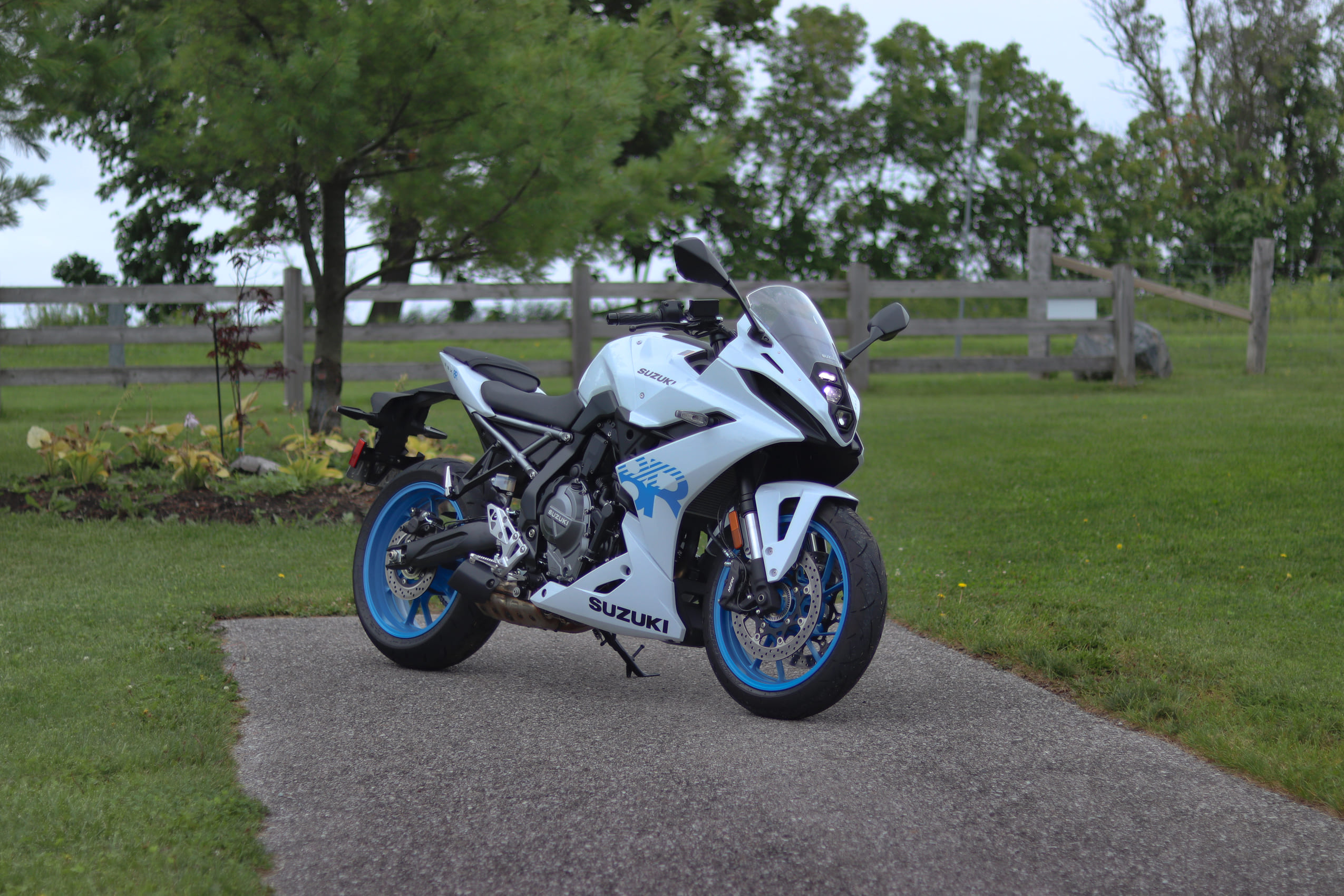
2026 Suzuki GSX-8R: The Middleweight Sport Bike Formula Done Right
The motorcycle world has spent the last decade trapped in a profoundly stupid dick-measuring contest, obsessed with building 200-horsepower, track-focused…

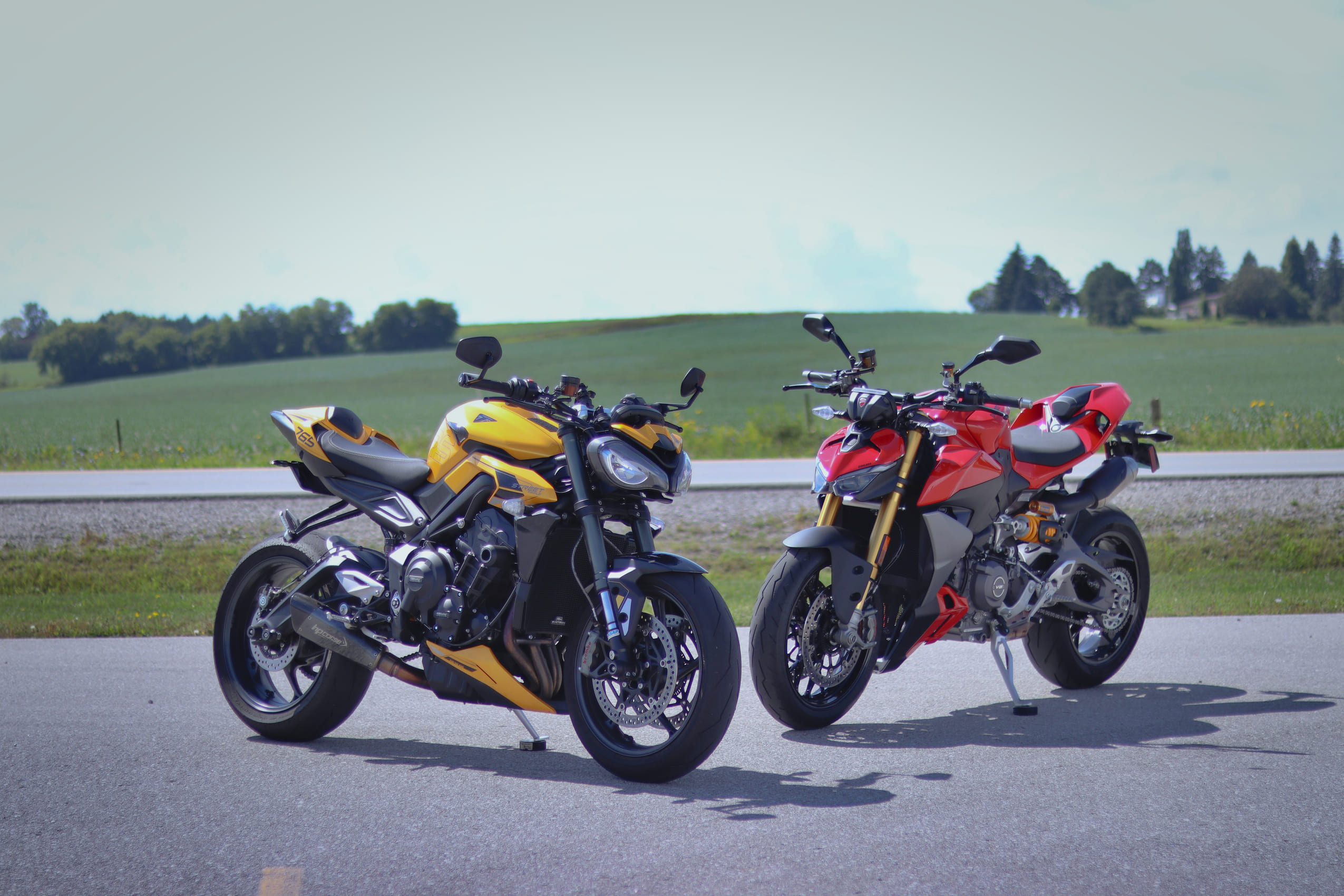
British Precision vs. Italian Violence: 2026 Ducati Streetfighter V2S vs.
Human beings are inherently absurd creatures, but nowhere is that absurdity more evident than in our willingness to strap our…
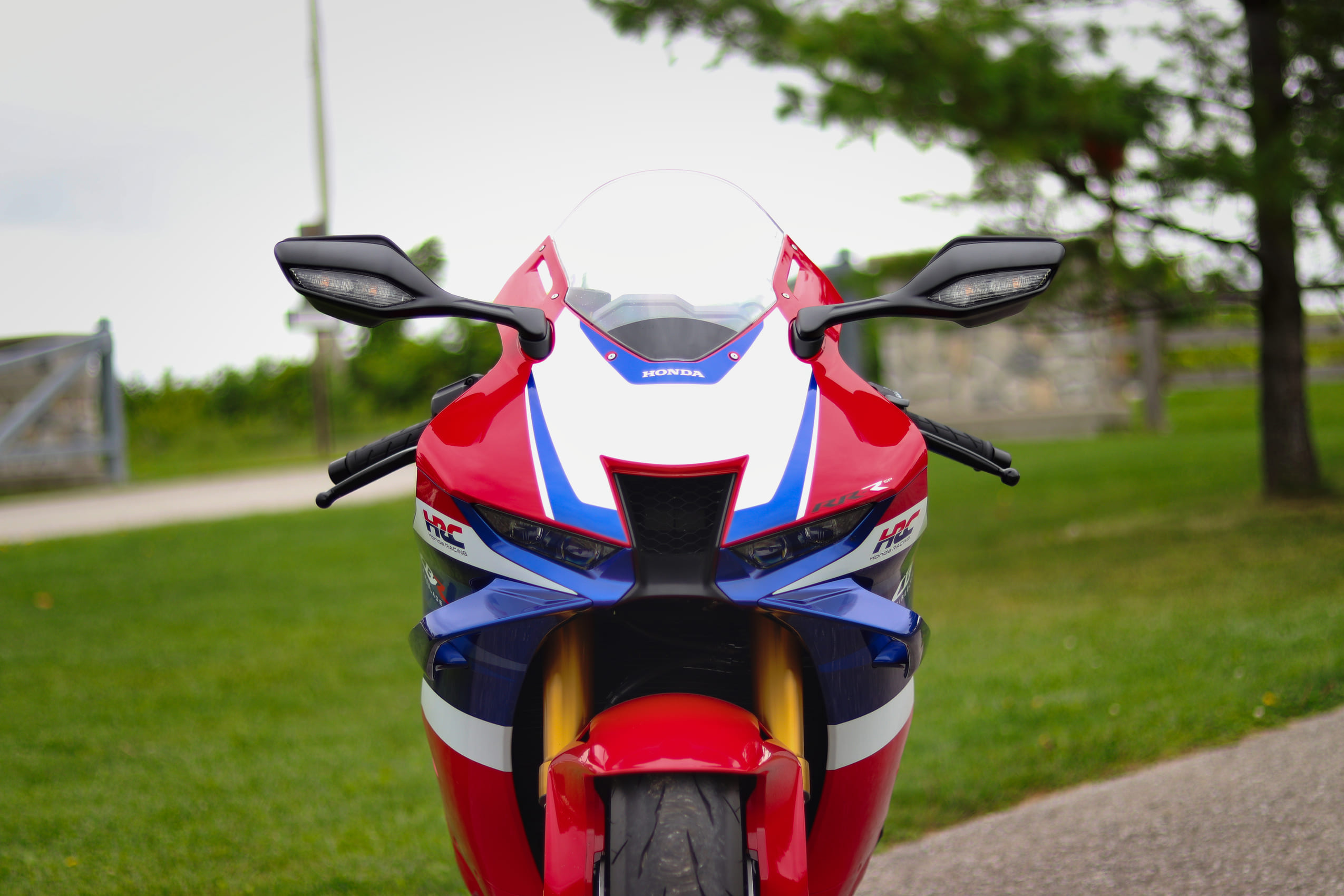
2026 Honda CBR1000RR-R Fireblade SP Review: Pure Mechanical Violence
The 2026 Honda CBR1000RR-R Fireblade SP is not a motorcycle; it is a clinical, unrelenting exercise in absolute mechanical insanity…
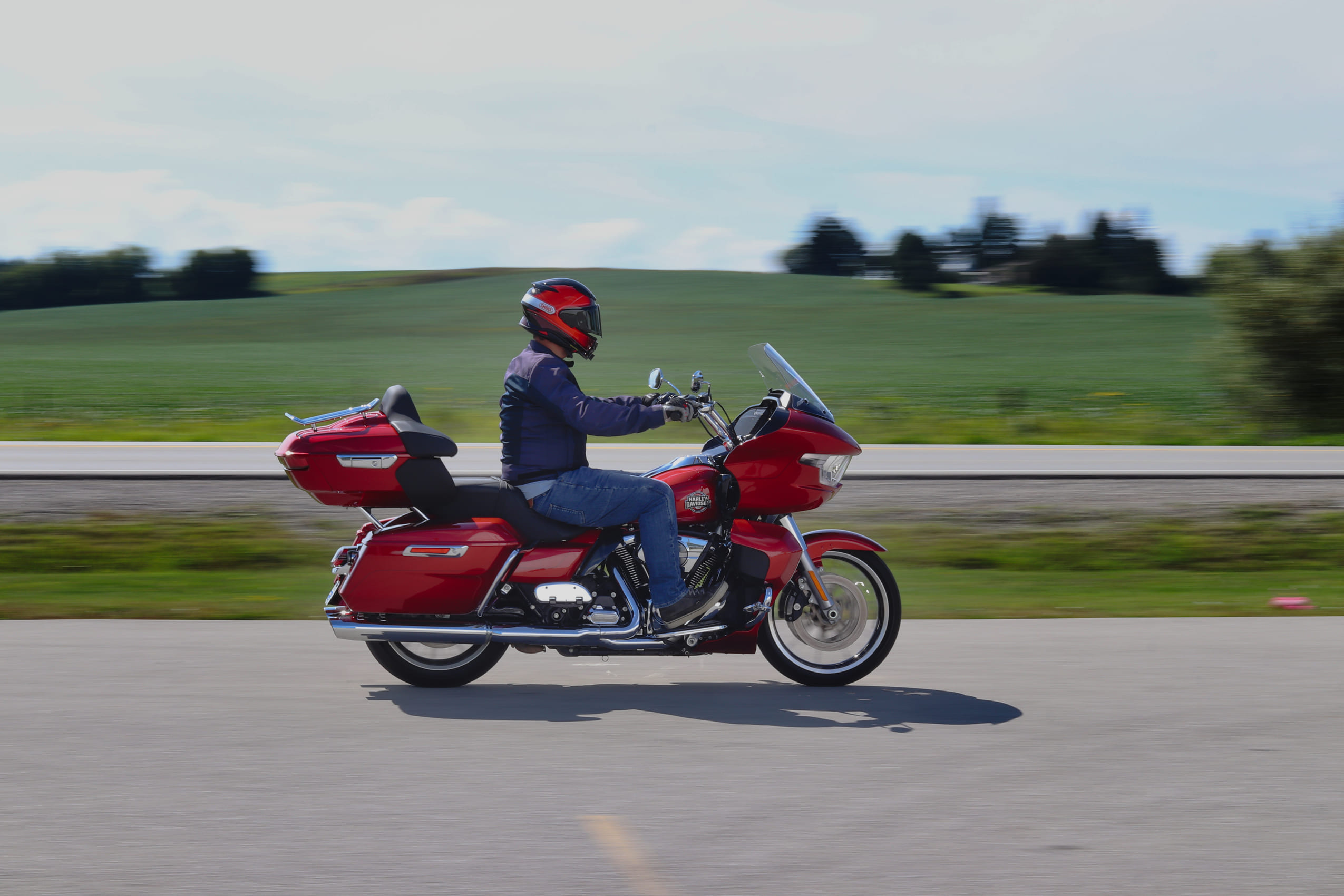
Sharknose Supremacy: Driving the 2026 Harley-Davidson Road Glide
Let’s get one thing straight: the 2026 Harley-Davidson Road Glide shouldn’t make sense. It’s a rolling, 800-pound contradiction—a massive, frame-mounted…
The Anti-ADV Hero: Why the 2026 Honda Transalp is the
Leave it to Honda to look at the entire, absurdly over-engineered, $25,000 middleweight adventure segment—a market flooded with hyper-focused rally…
2026 Suzuki V-Strom 800DE: No V-Twin, No Problem
Words are supposed to mean things. The “V” in V-6 means a V-layout, and for two decades, the “V” in…