The 2026 Chrysler Pacifica is the automotive equivalent of a Swiss Army knife that somehow ended up in a tuxedo. While the rest of the world has convinced itself that a three-row SUV is “lifestyle-appropriate,” the Pacifica remains the only honest vehicle left on the road. Whether you’re opting for the Plug-in Hybrid to save the planet or the AWD to survive a Canadian February, the Pacifica is a masterclass in packaging that proves, once and for all, that the minivan isn’t dead—it’s just better than your crossover.
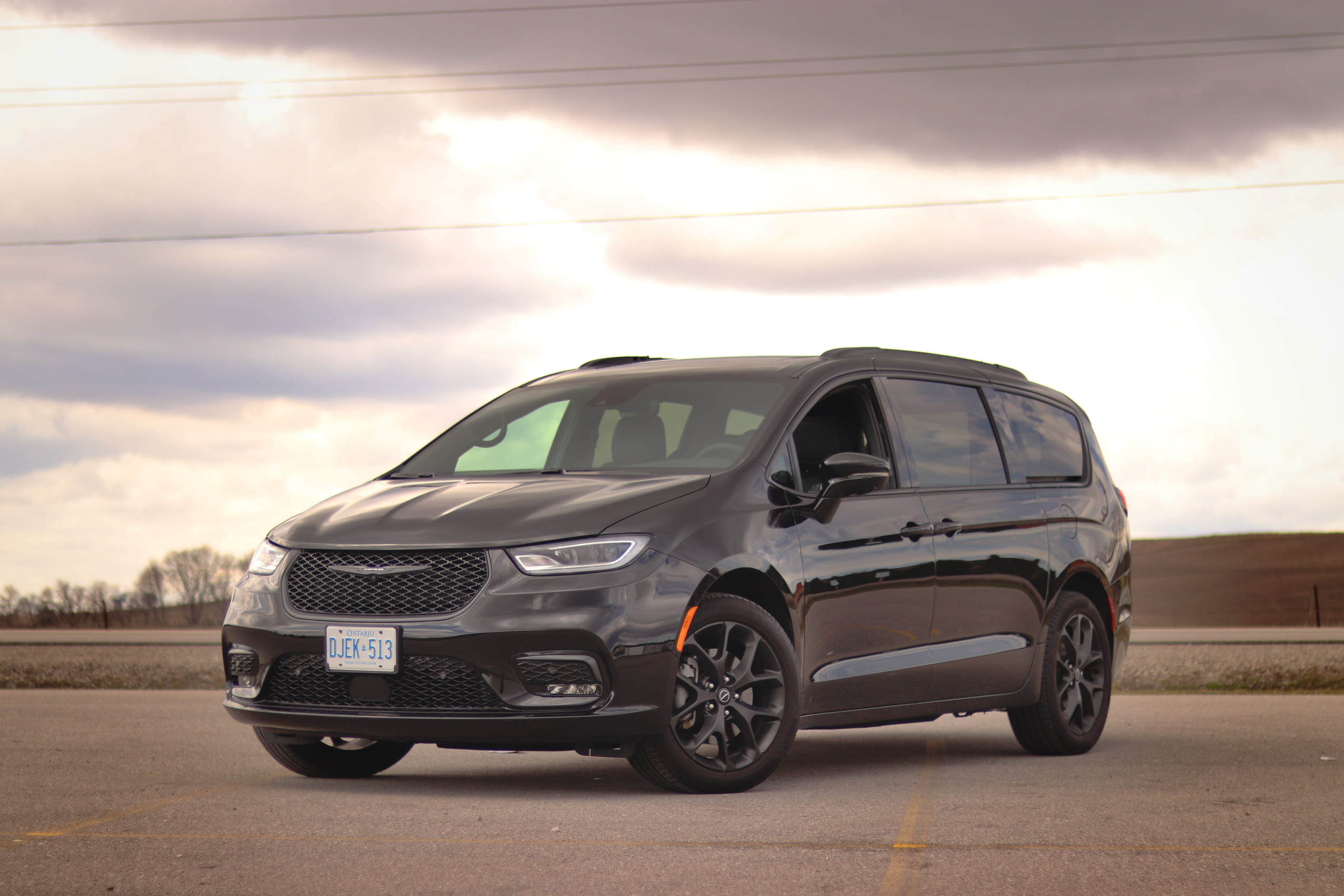
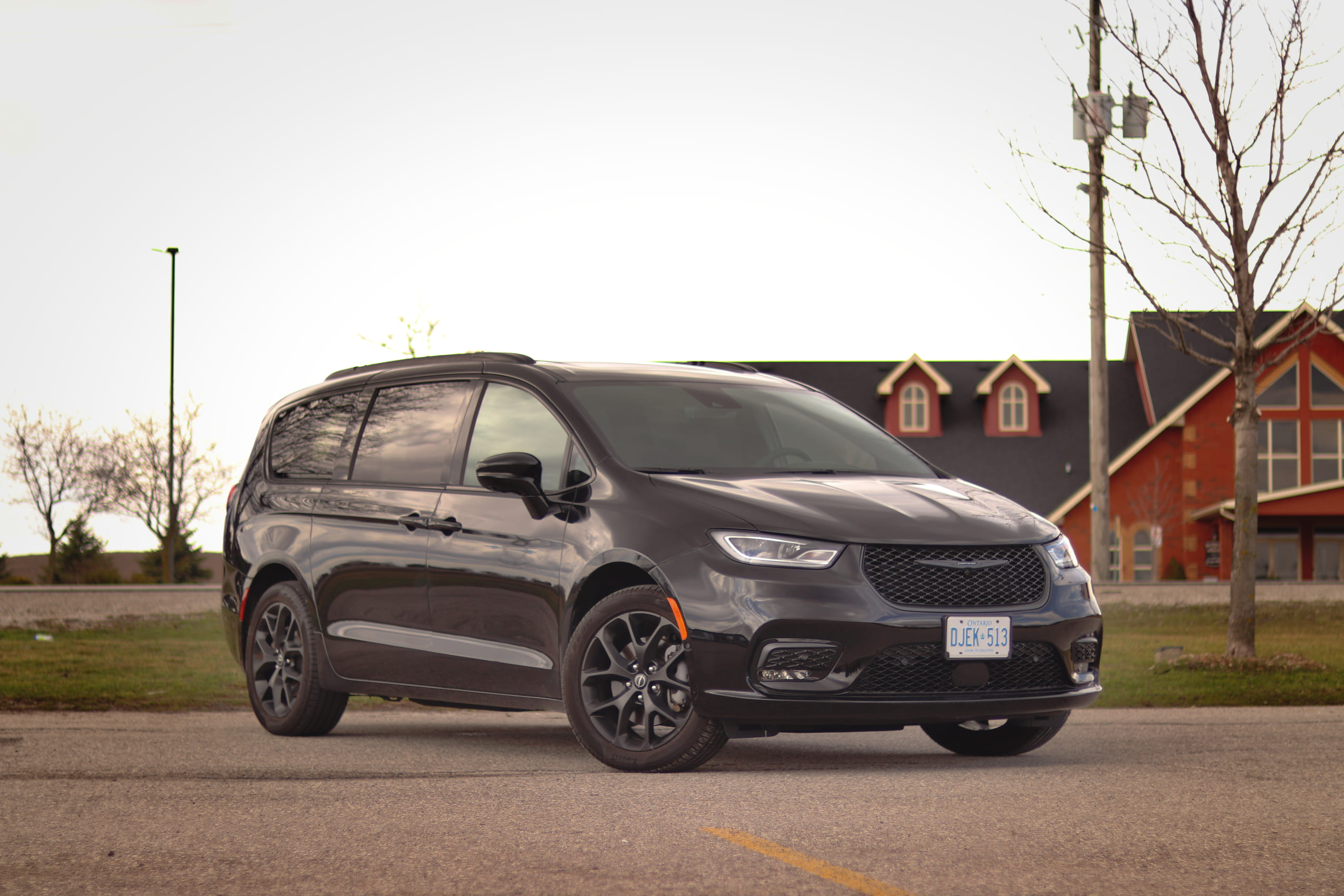
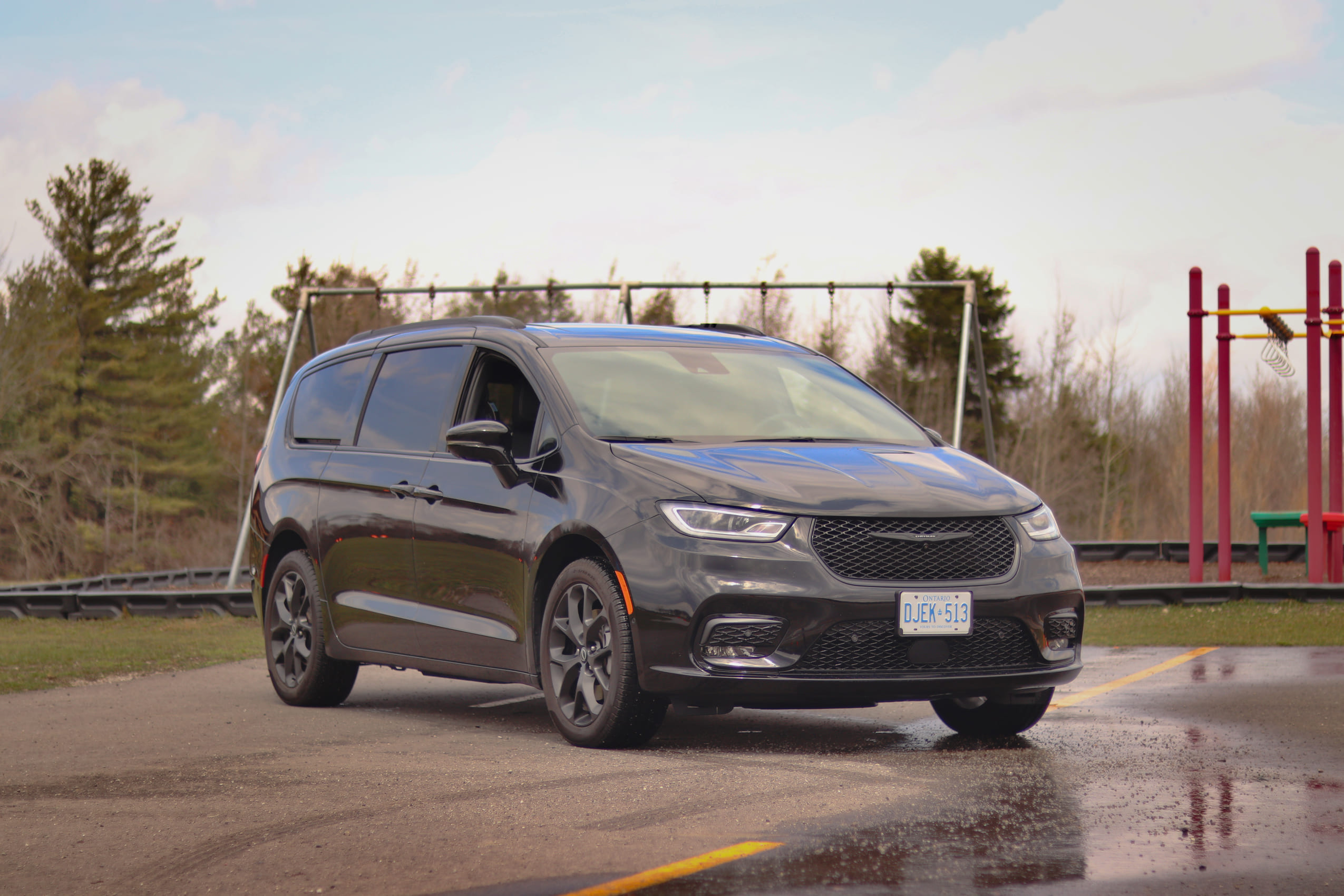
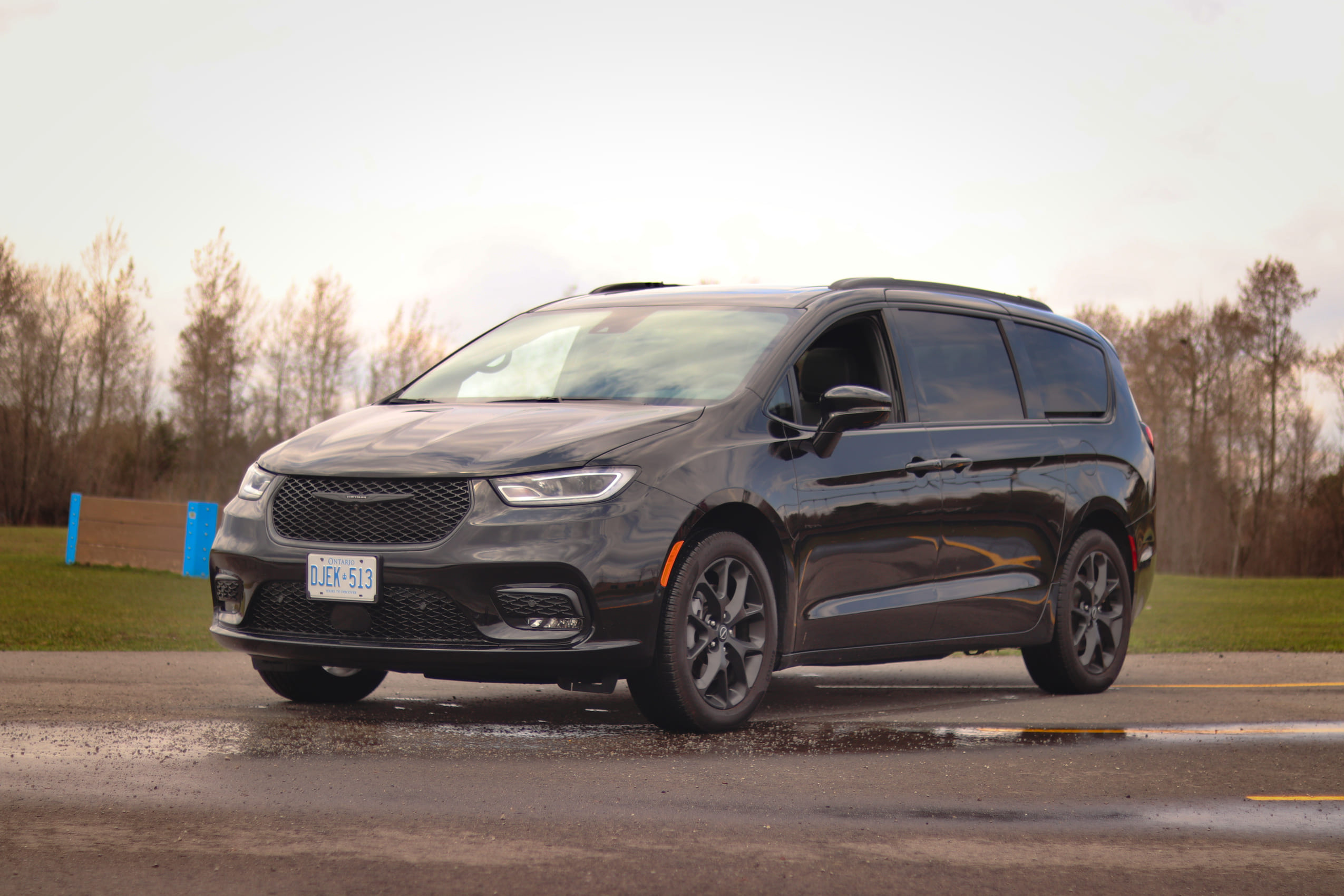
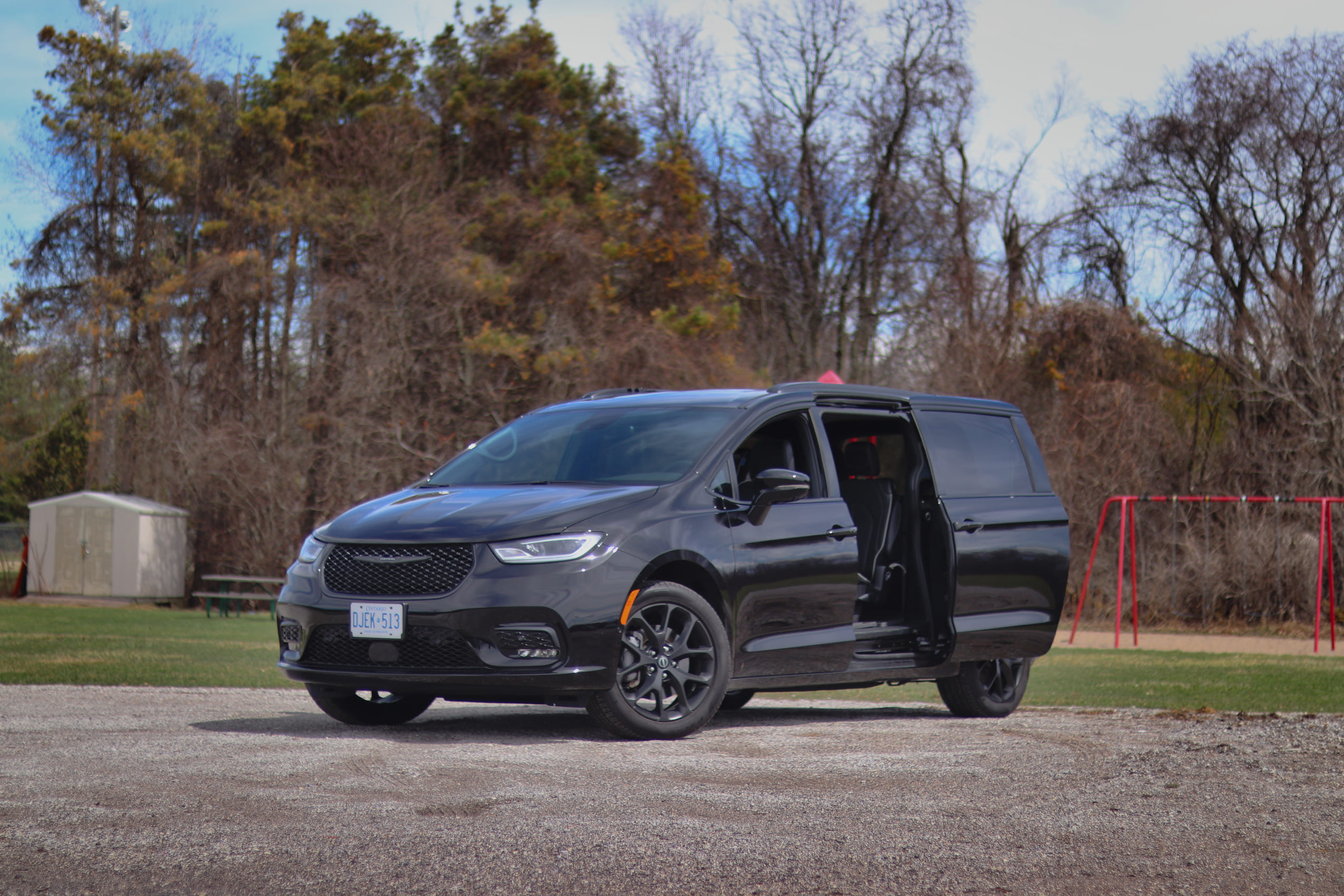
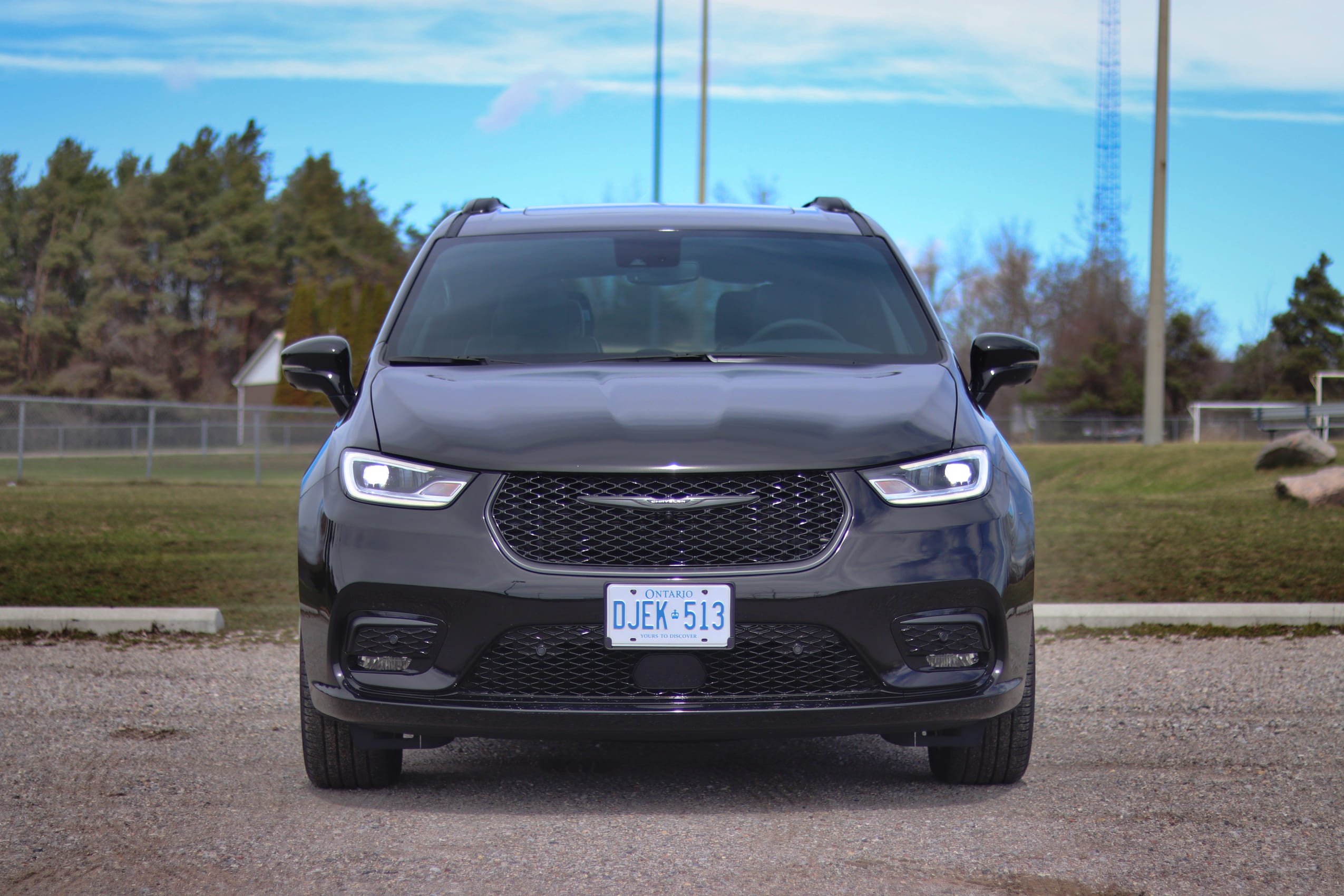
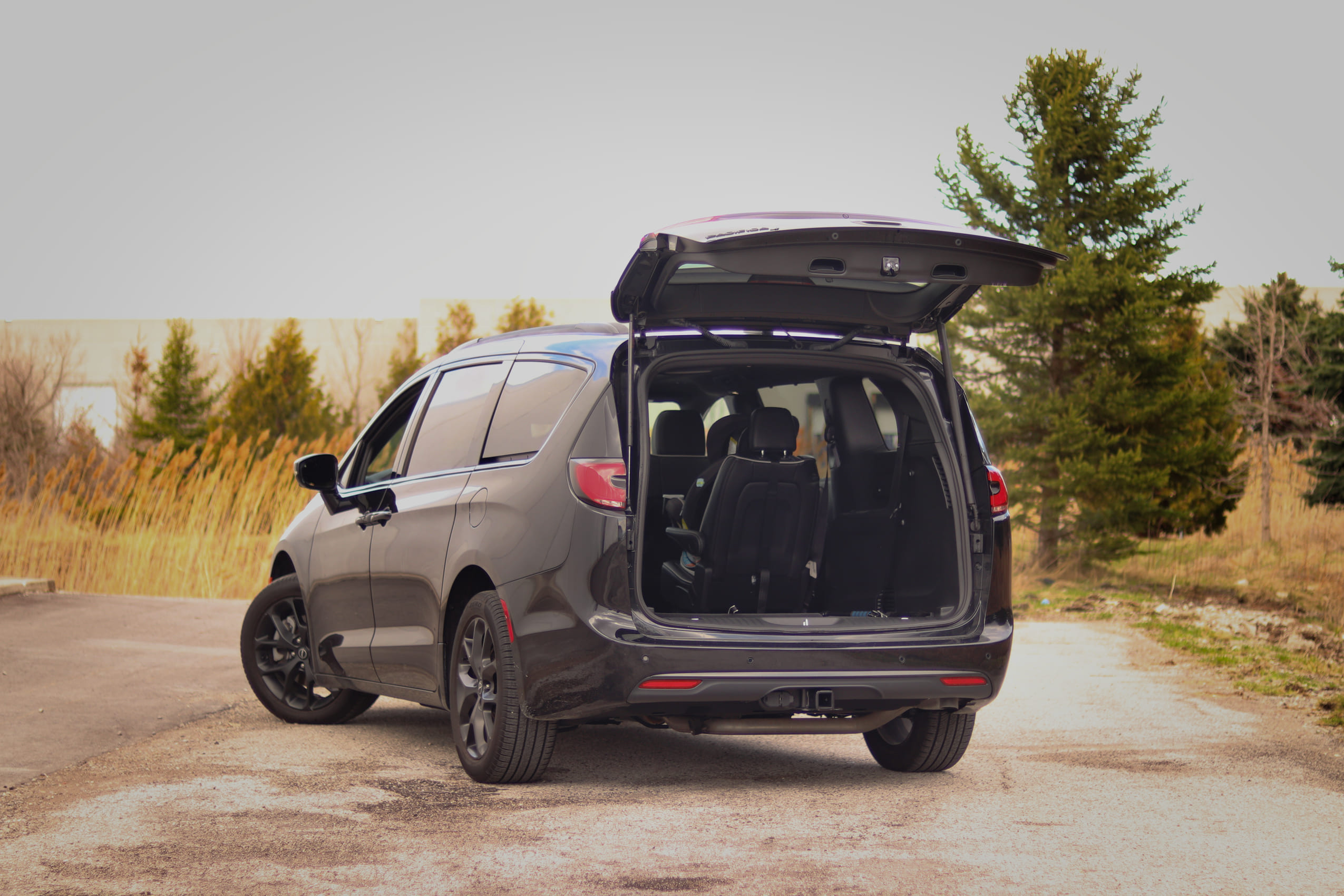
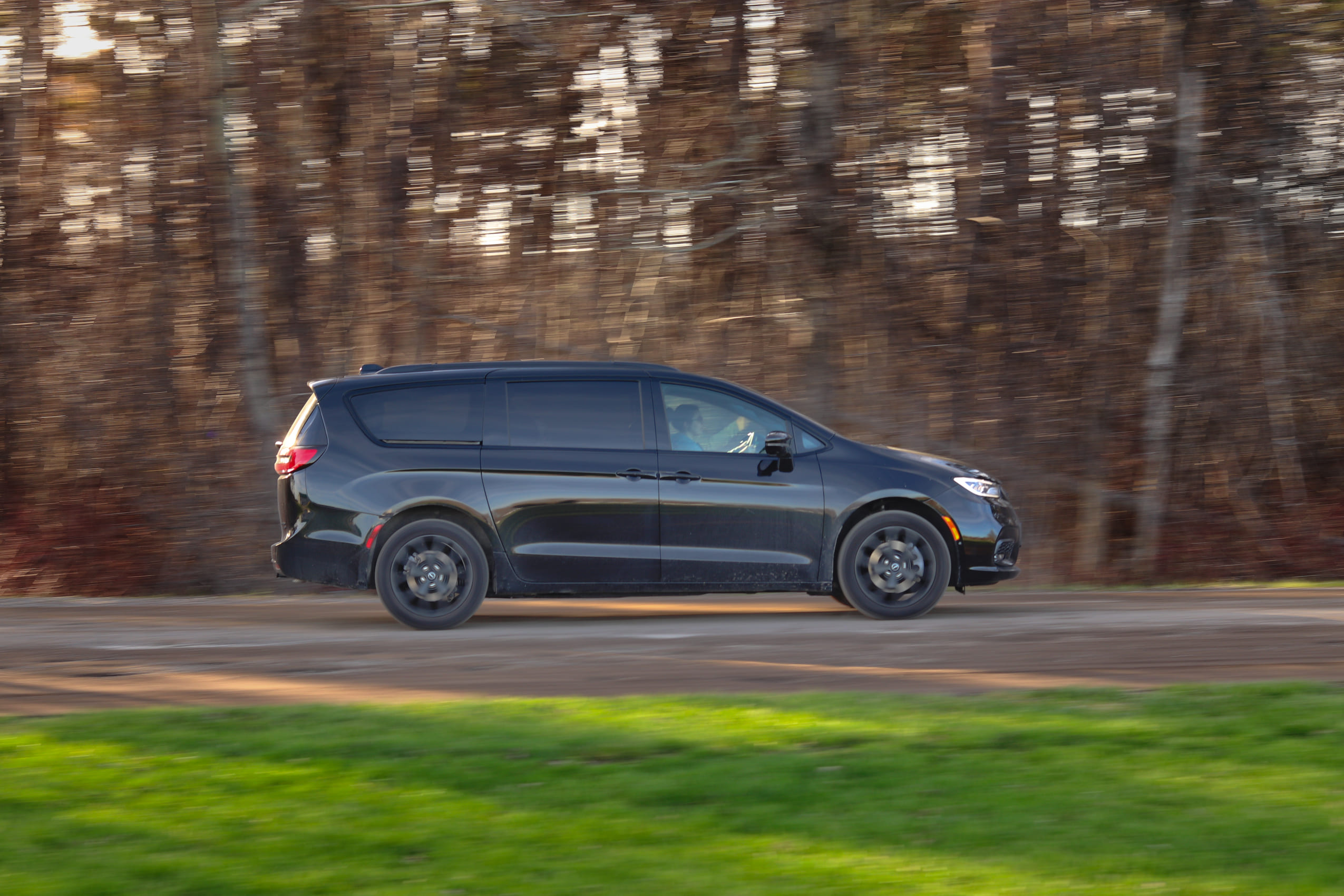
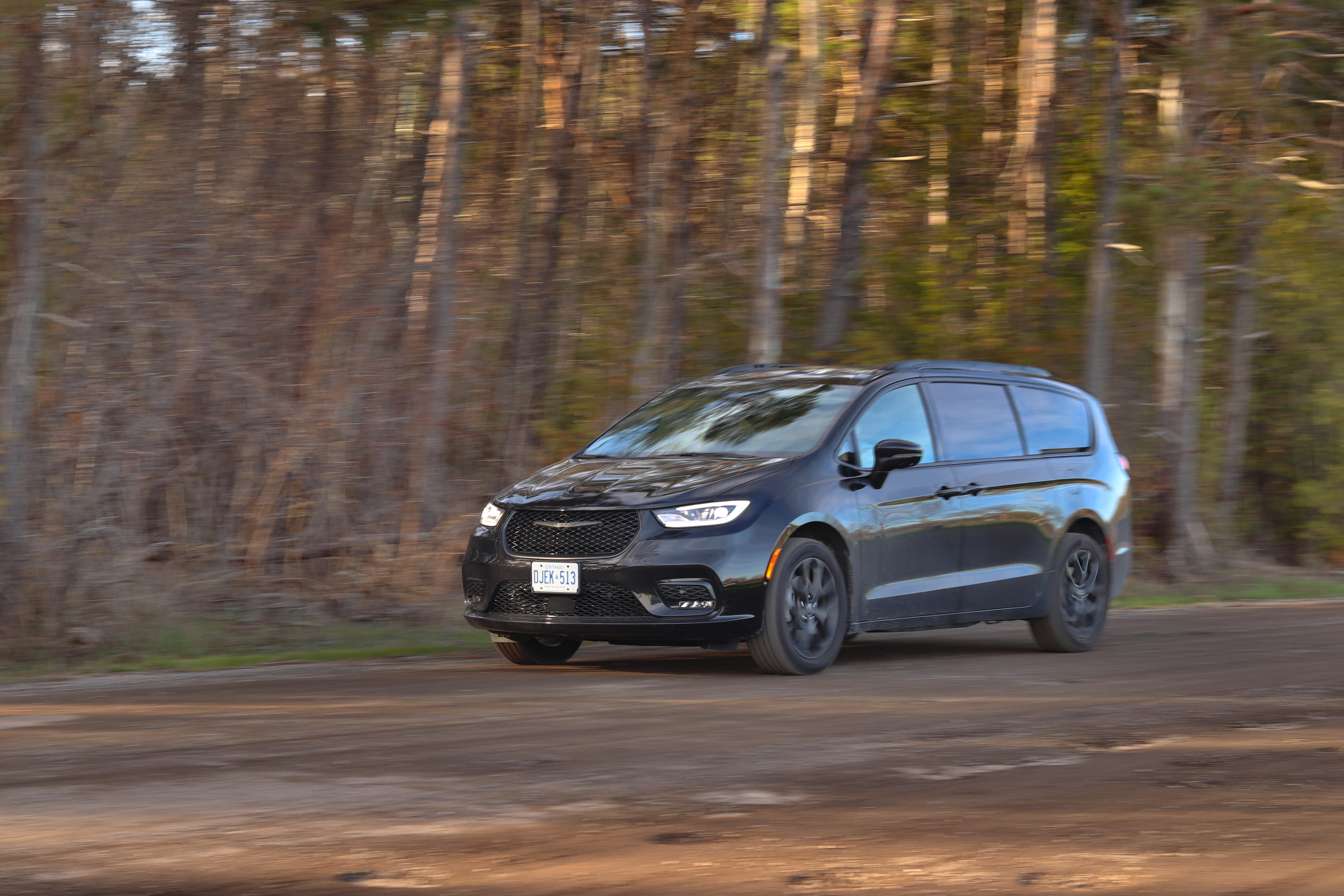
Just look at it. While every other manufacturer is busy grafting the face of a freight train onto the front of a three-row crossover, Chrysler has stayed the course with a shape that actually understands fluid dynamics. The Pacifica’s silhouette is a giant, aerodynamic teardrop—a refreshingly honest admission that height is the enemy of efficiency. In this blacked-out trim, it ditches the “suburban chrome” for a look that is genuinely sophisticated, trading the “smiling loaf of bread” aesthetic for something that wouldn’t look out of place parked outside a modern art gallery.
The front end has been sharpened into a squint, drawing heavily from the Halcyon concept to create a face that is wide, low, and blissfully free of the fake plastic skid plates that plague the rest of the industry. It’s a clean, technical look that flows into a side profile defined by function. Those sliding doors aren’t just a convenience; they’re a geometric triumph. They don’t swing out to assault the car parked next to you; they slide back with a silent, electric precision that makes the traditional SUV door feel like a relic of the Bronze Age.
Even the roof is a nerd’s paradise. The crossbars for the rack don’t just sit there whistling in the wind like a set of pan flutes; they fold neatly into the side rails when you aren’t using them. It’s the kind of obsessive detail that improves your drag coefficient while your neighbor’s “rugged” SUV is busy fighting a losing battle against physics. Around back, the full-width LED light bar remains the gold standard for van design—crisp, modern, and far more elegant than the clunky, vertical blocks found on its rivals. It’s a vehicle designed by people who actually live in the real world, proving that you don’t need a lift kit and a mountain of plastic cladding to have a presence on the road.
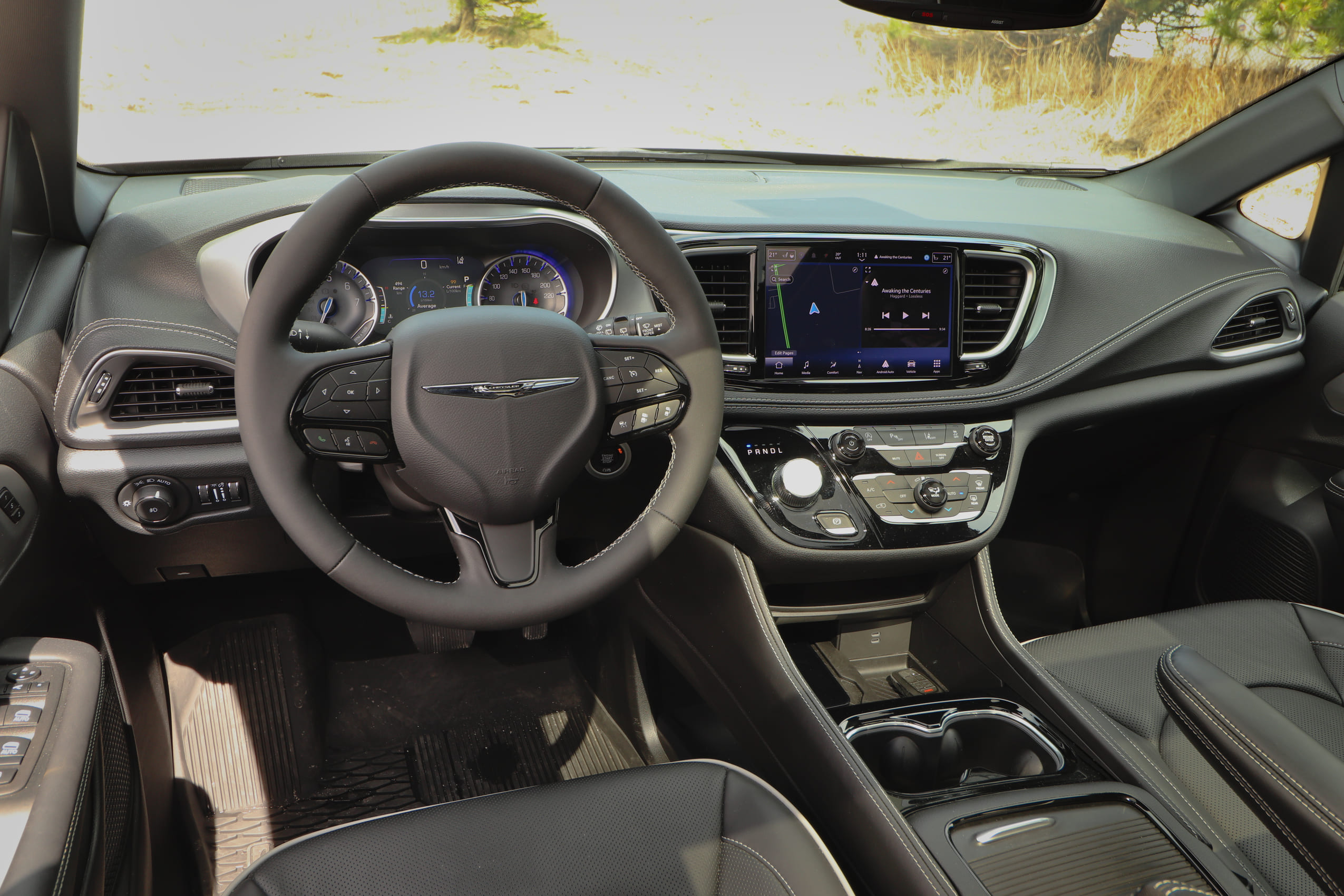
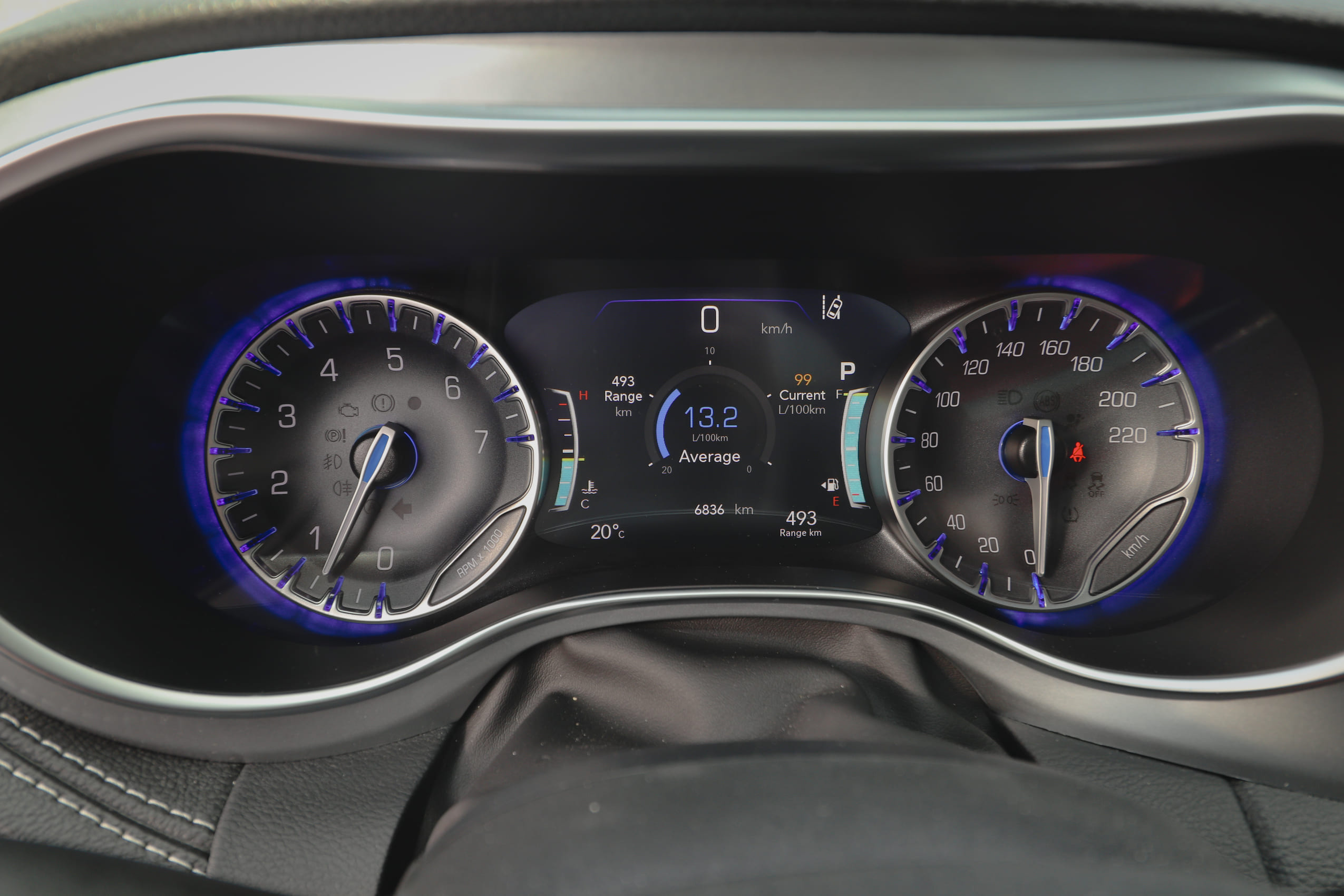
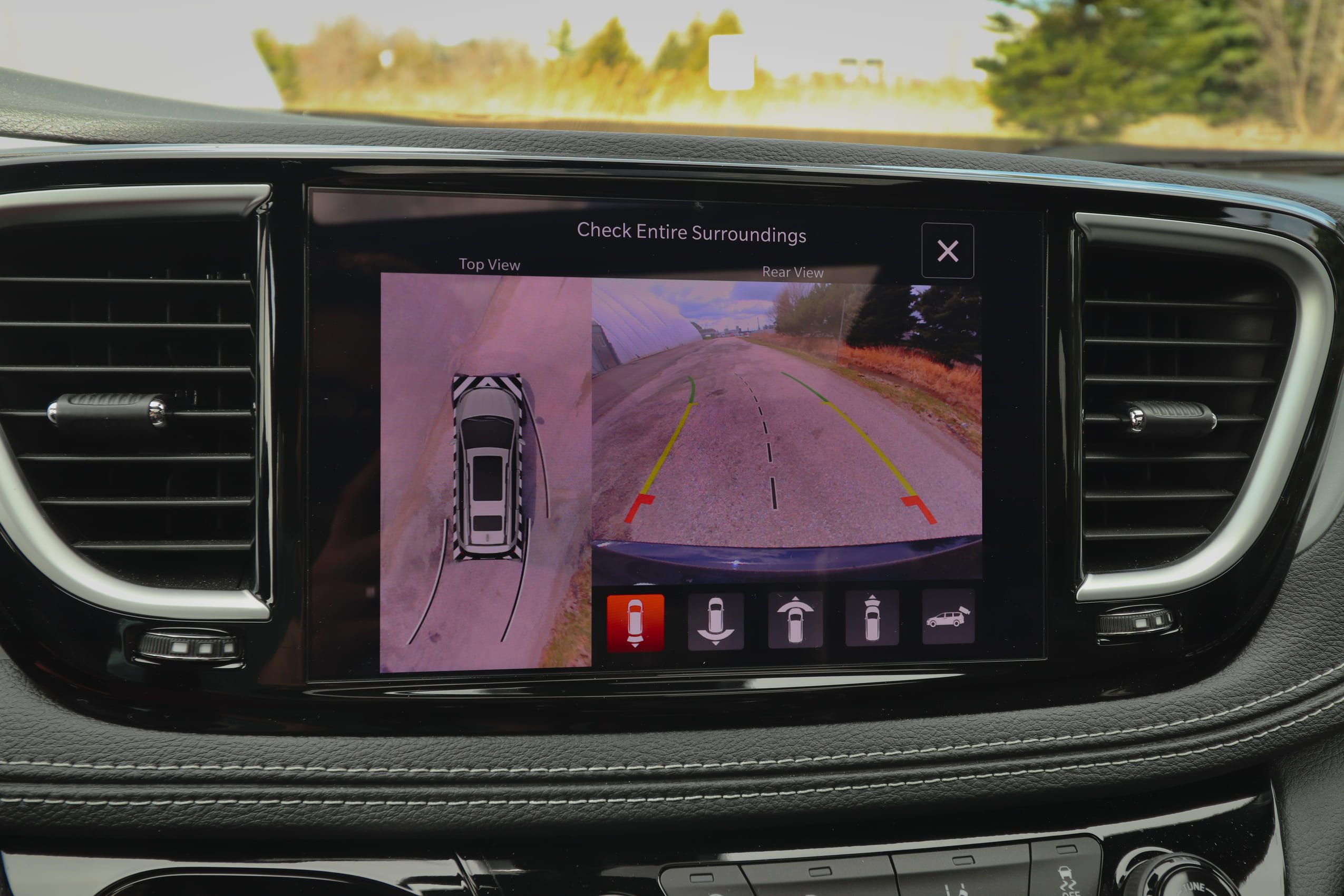
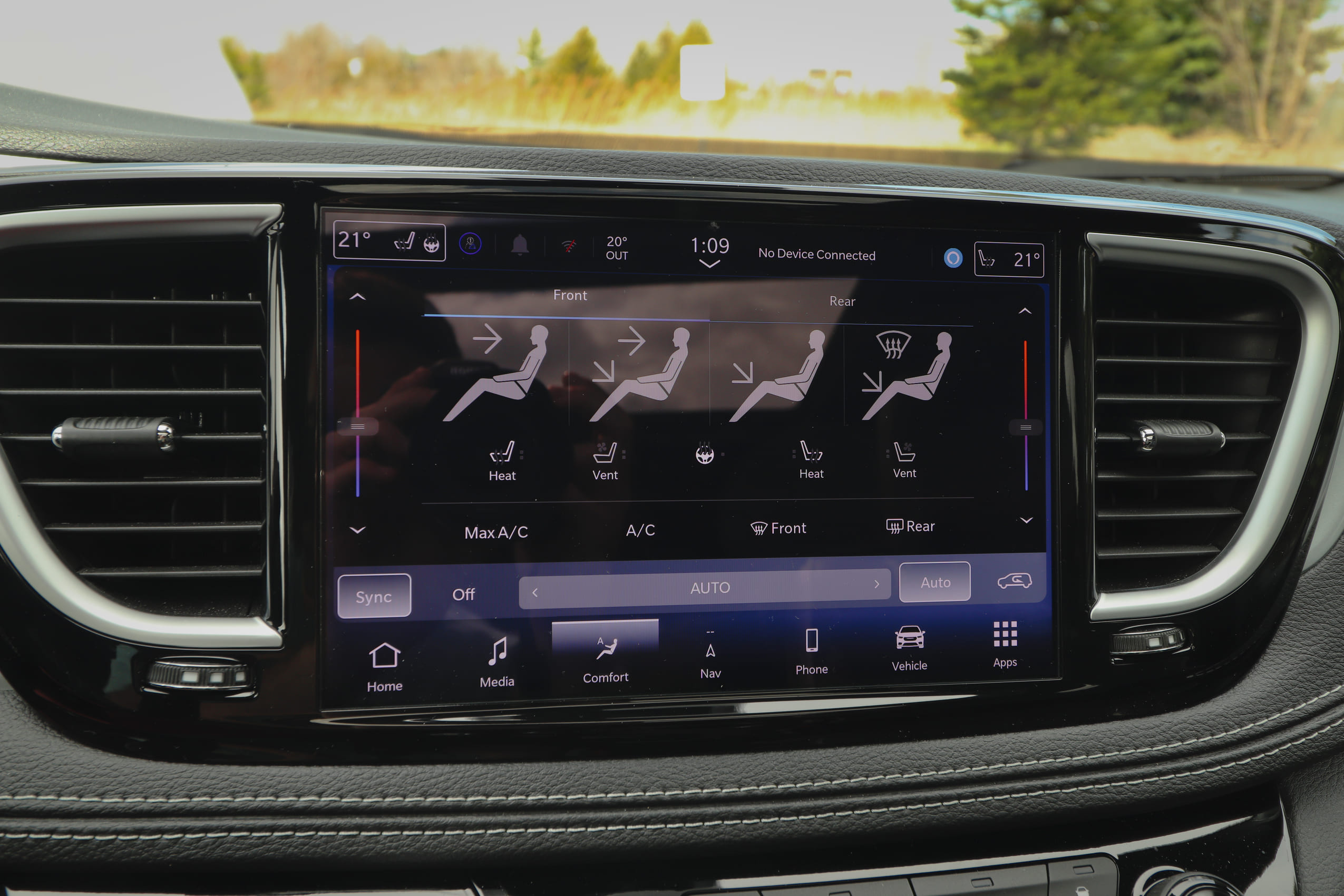
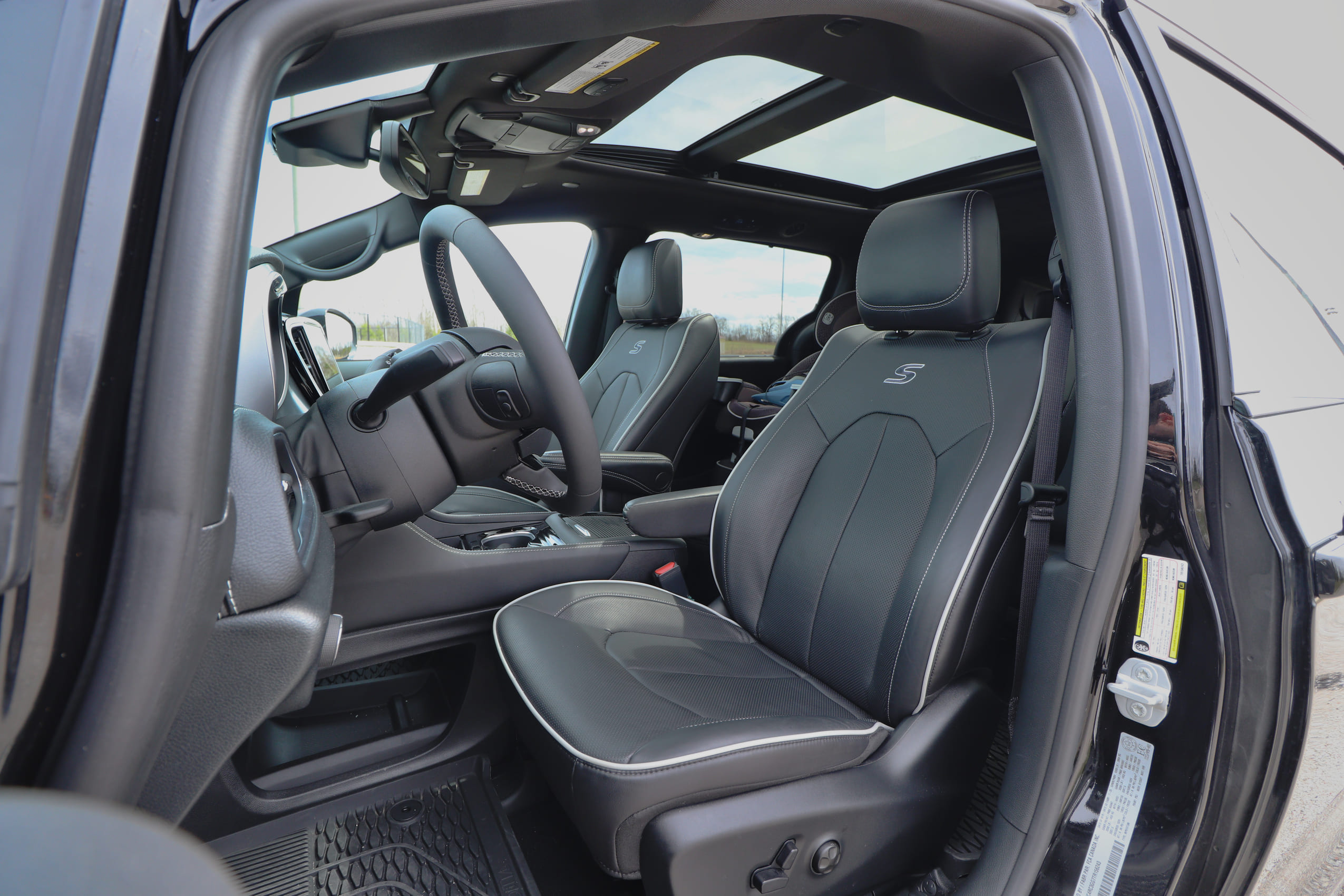
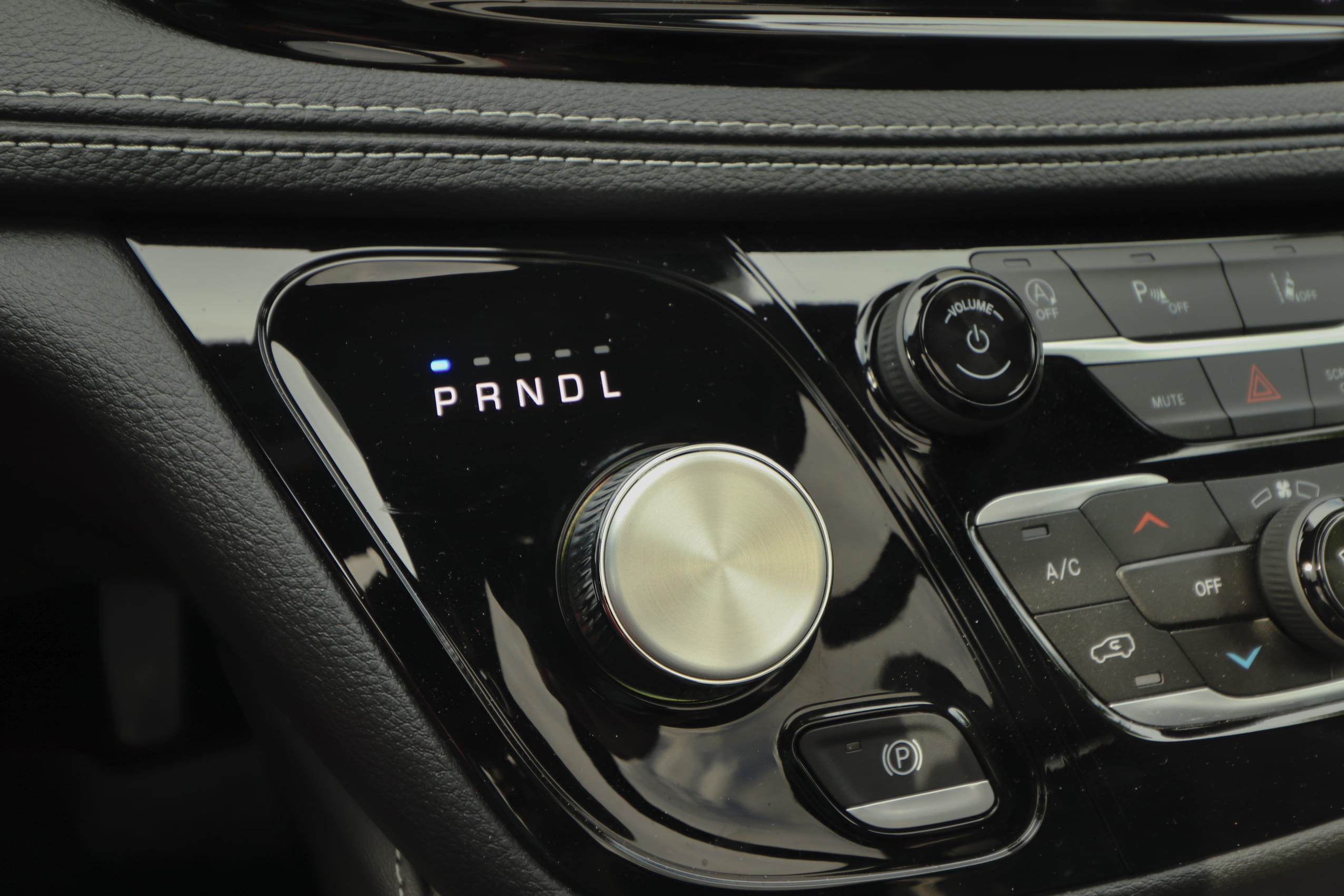
Open the door and you’ll find a cabin that has successfully avoided the “spaceship” trap. Instead of a dashboard that looks like it was designed by a committee of software engineers with a grudge against physical buttons, the Pacifica gives you a clean, driver-centric layout with actual knobs for things like volume and tuning. It’s anchored by a 10.1-inch Uconnect 5 touchscreen that is—refreshingly—among the fastest and most intuitive in the business. But while the dashboard is nice, the real genius of the Pacifica isn’t what’s on the surface; it’s what’s happening underneath the floor mats.
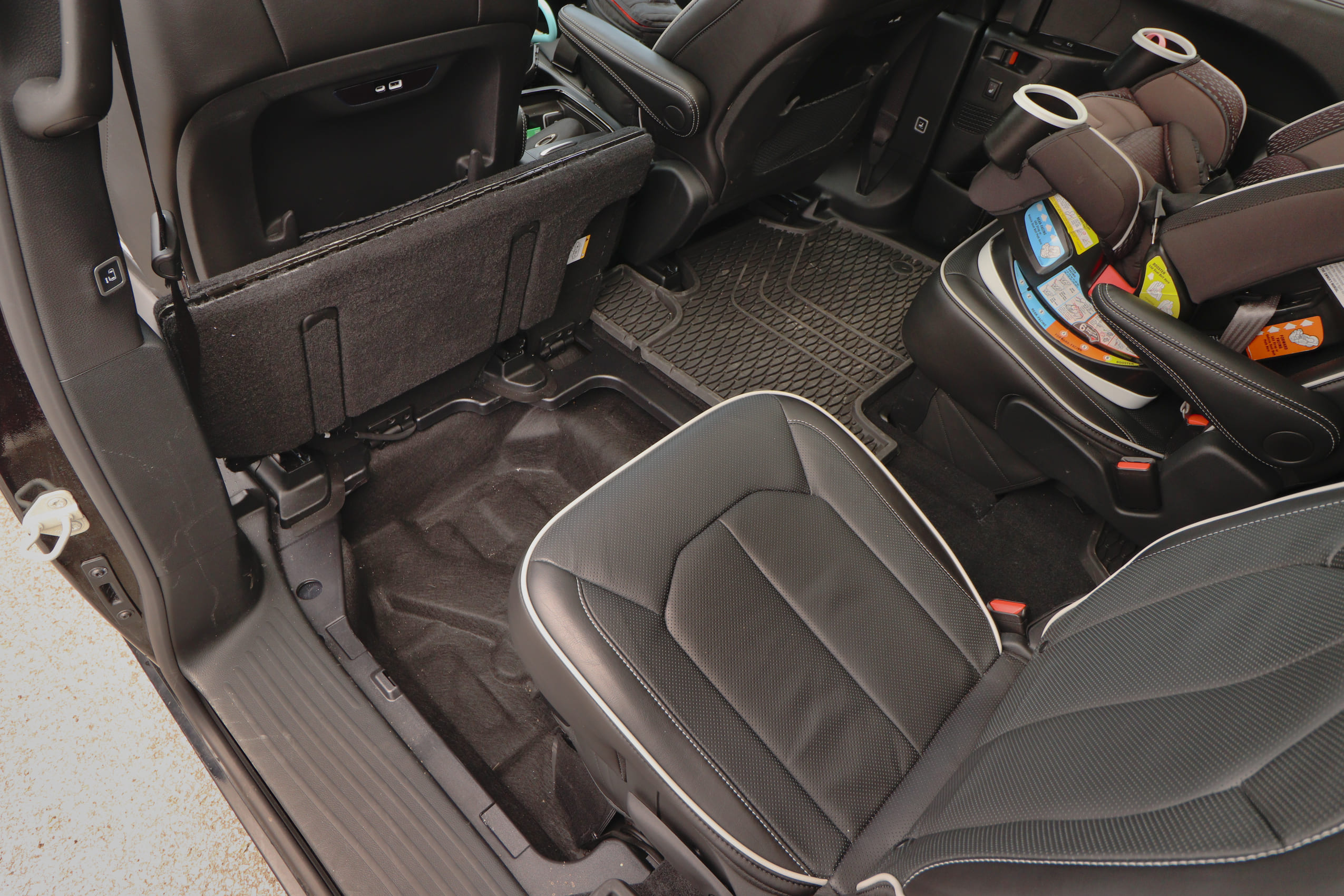
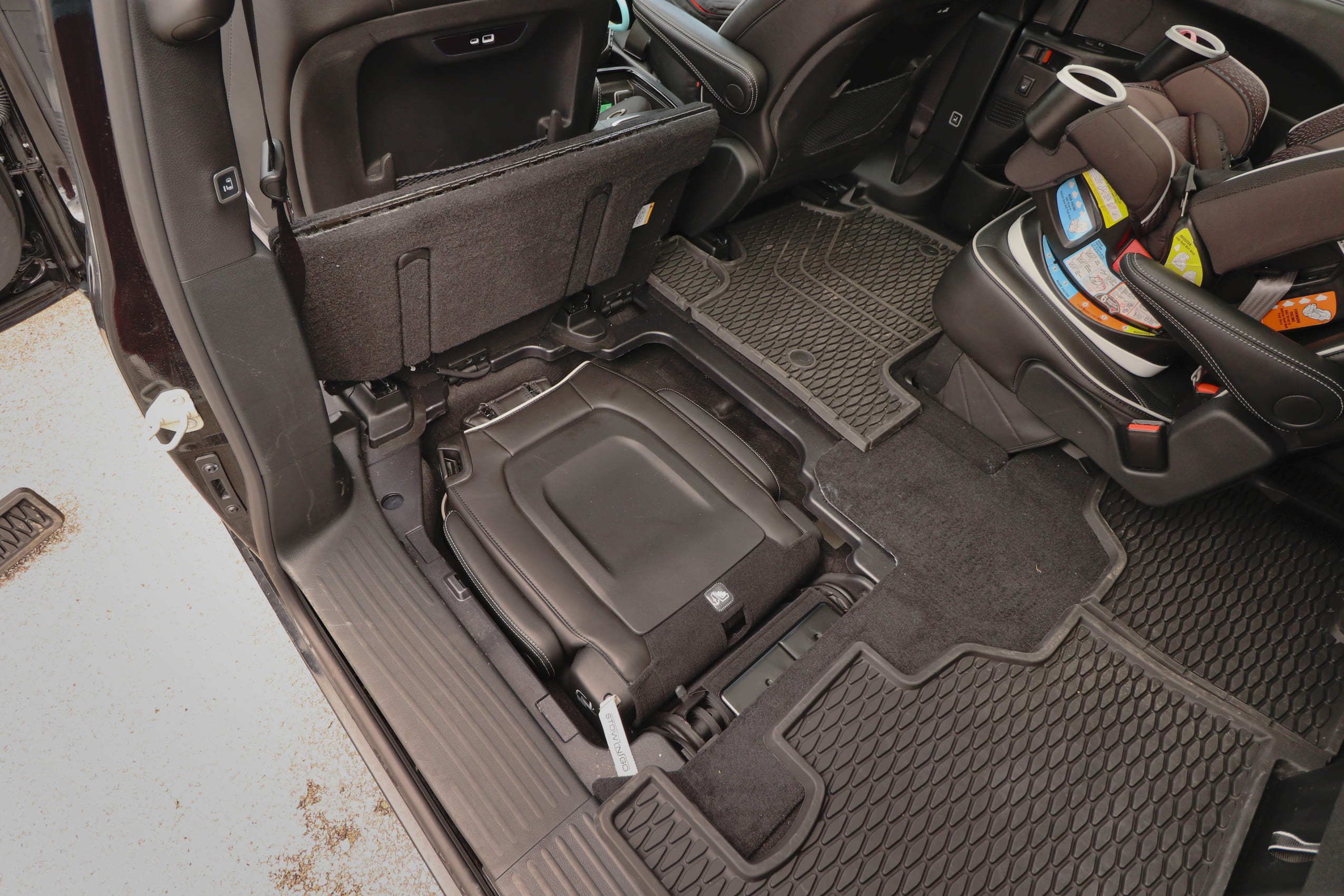
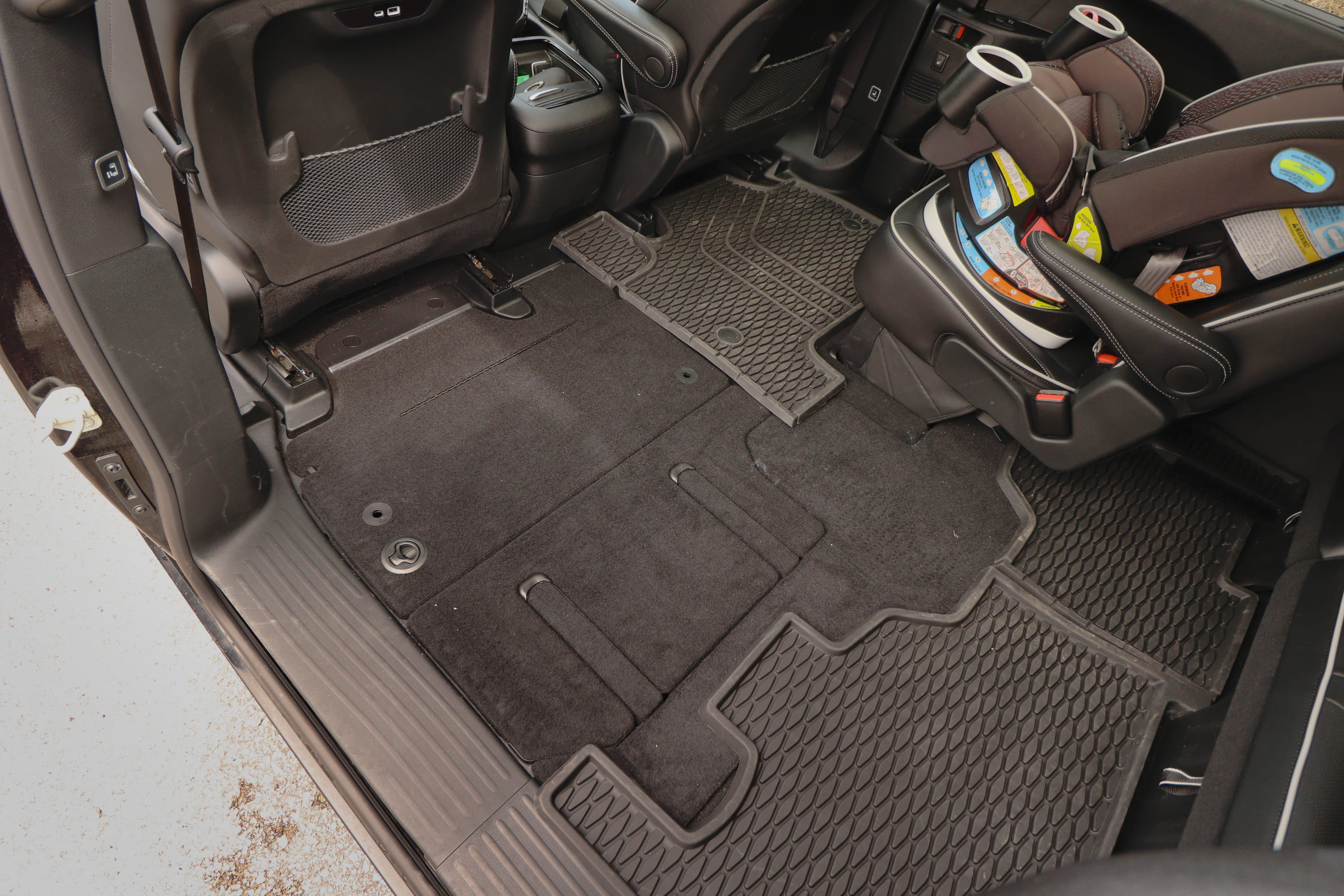
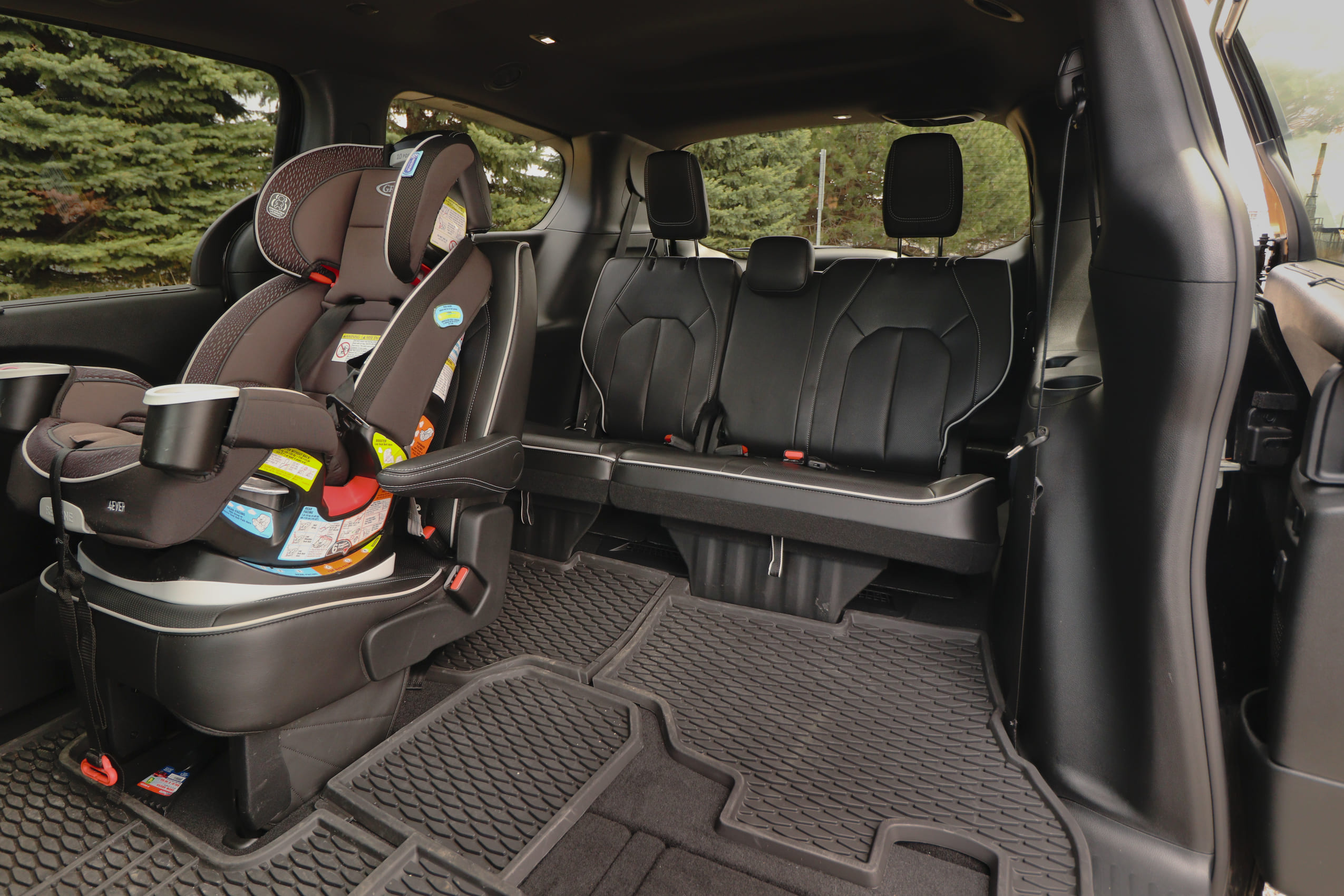
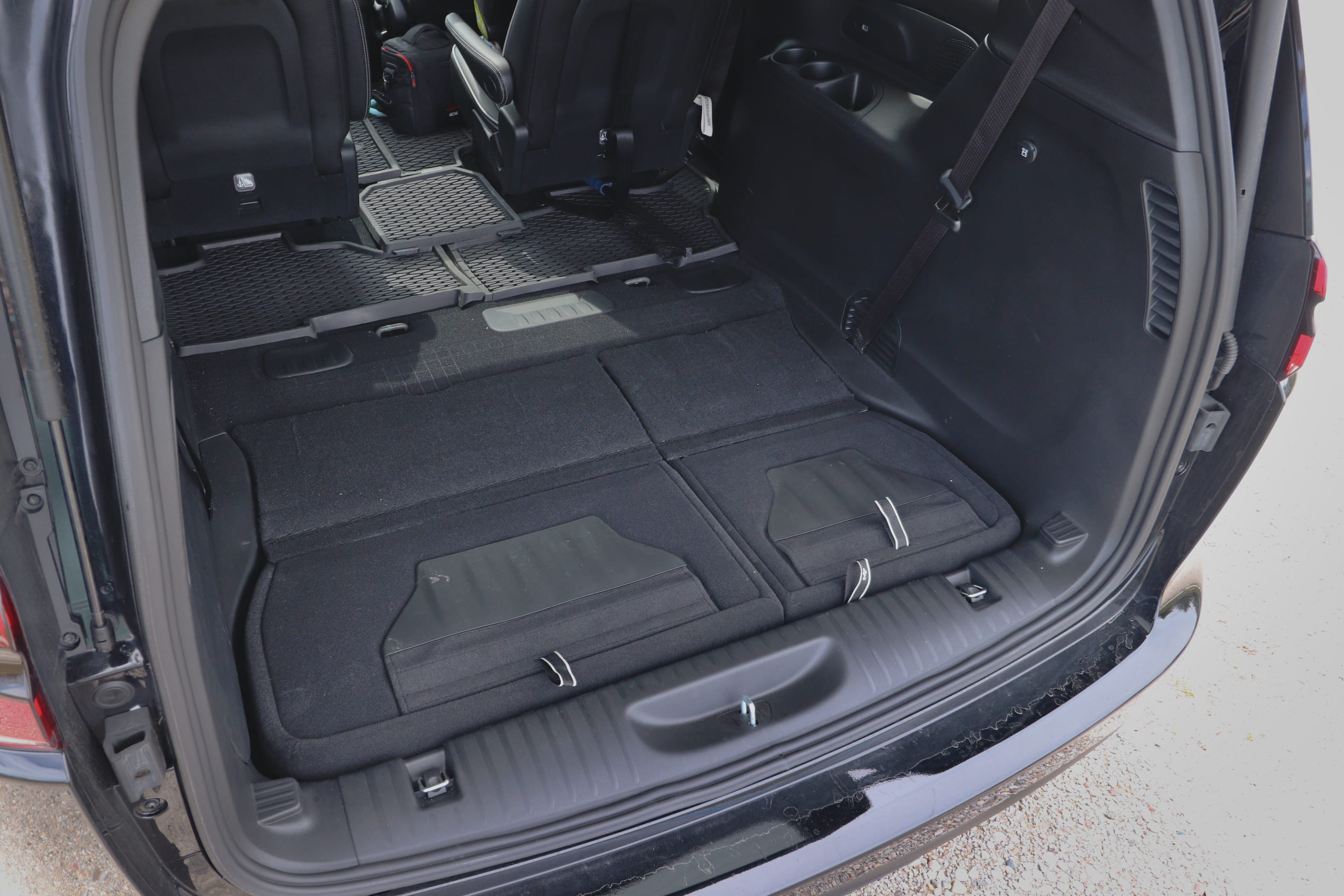
This is the only vehicle on sale that understands the fundamental problem with the modern family: we have too much stuff and not enough time to move furniture. Every other “versatile” vehicle—from the Toyota Sienna to your neighbor’s shiny new Tahoe—demands a sacrifice. To get a flat load floor in an SUV, you lose the third row. To get it in an Odyssey, you have to physically wrestle 70-pound second-row seats out of the car and find a place to store them in your garage. In the Pacifica, you just pull a strap. The Stow ‘n Go system is a mechanical masterclass that allows all five rear seats to simply vanish into the floor in a matter of seconds.
When those seats are tucked away, you aren’t left with a lumpy, carpeted compromise; you have 140.5 cubic feet of perfectly flat, unobstructed cargo space. That’s more room than many “full-size” SUVs, and you didn’t have to leave half your interior in the driveway to get it. When the seats are up, those floor bins don’t just sit empty—they become massive, hidden storage compartments for the endless debris of family life. It’s a vehicle that can transition from a luxury shuttle for seven to a legitimate cargo van before you’ve even finished your coffee.
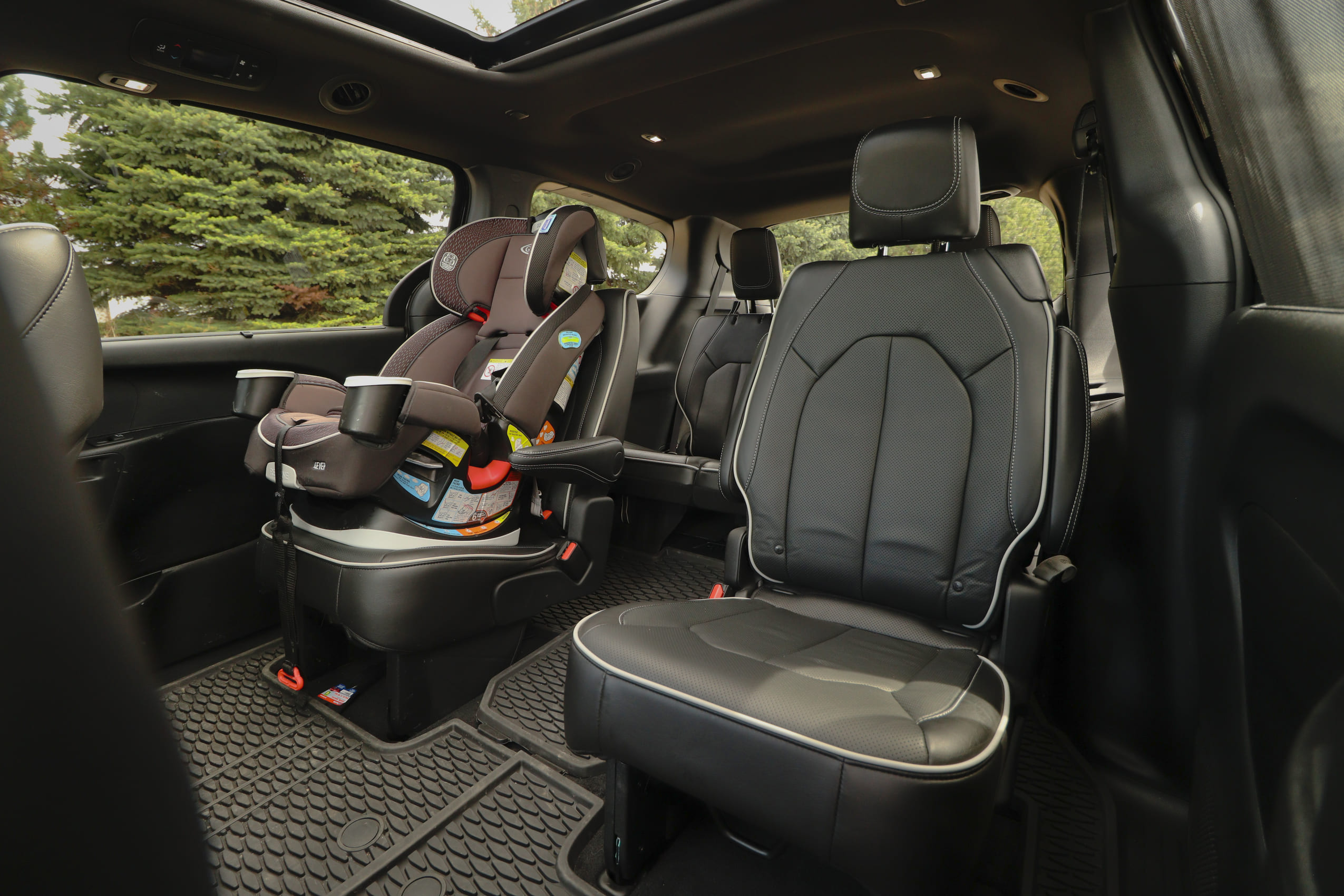
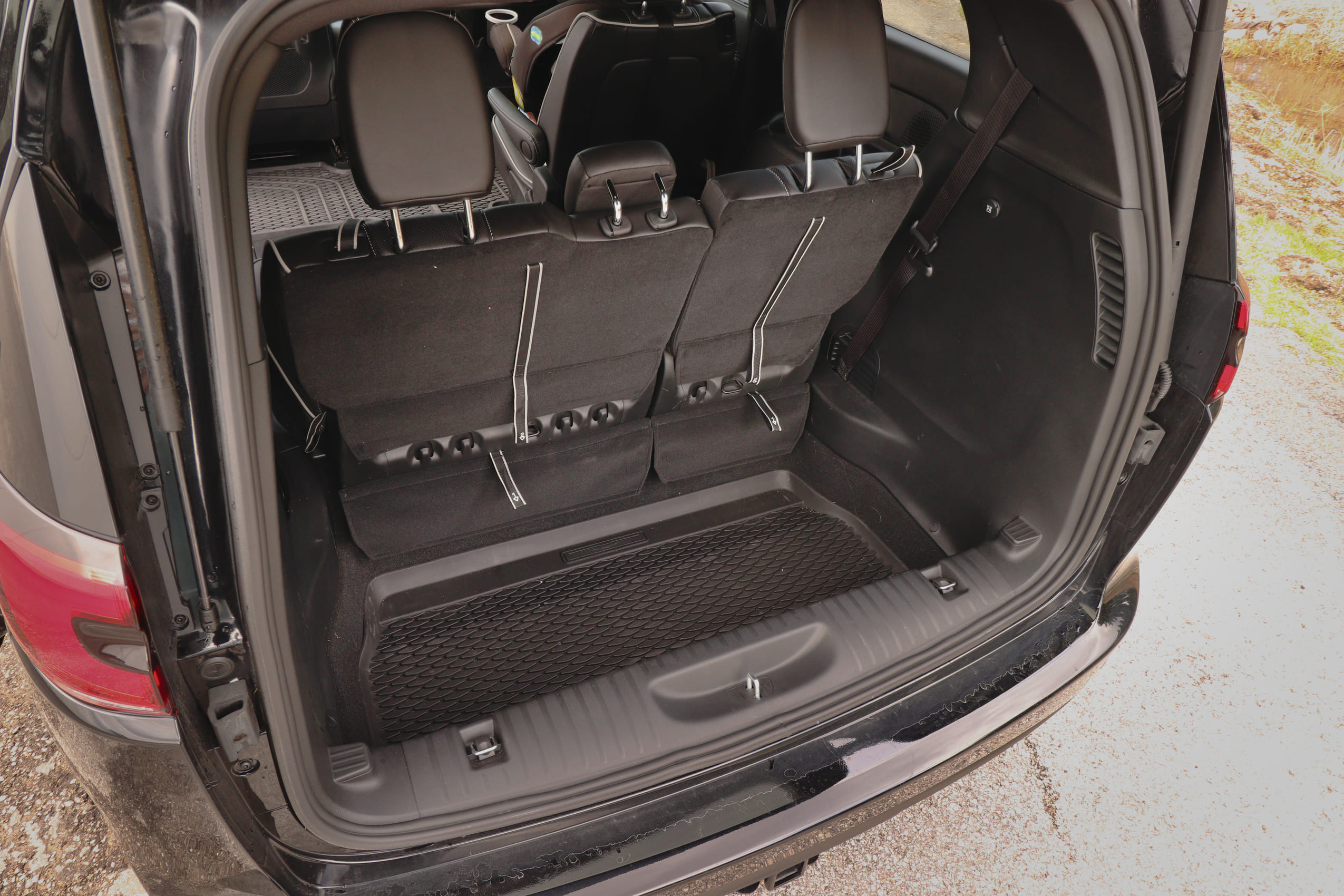
Chrysler also doubled down on the “we know you have kids” details. There’s available FamCAM, which lets you see if the toddler in the third row is actually sleeping or just plotting a coup, and also an available integrated vacuum cleaner that actually has enough suction to deal with the inevitable explosion of Cheerios. It’s an interior designed with a level of common sense that makes you wonder why every other manufacturer is still making us do the heavy lifting. It proves that luxury isn’t just quilted leather and ambient lighting; it’s the luxury of never having to say, “I can’t fit that.”
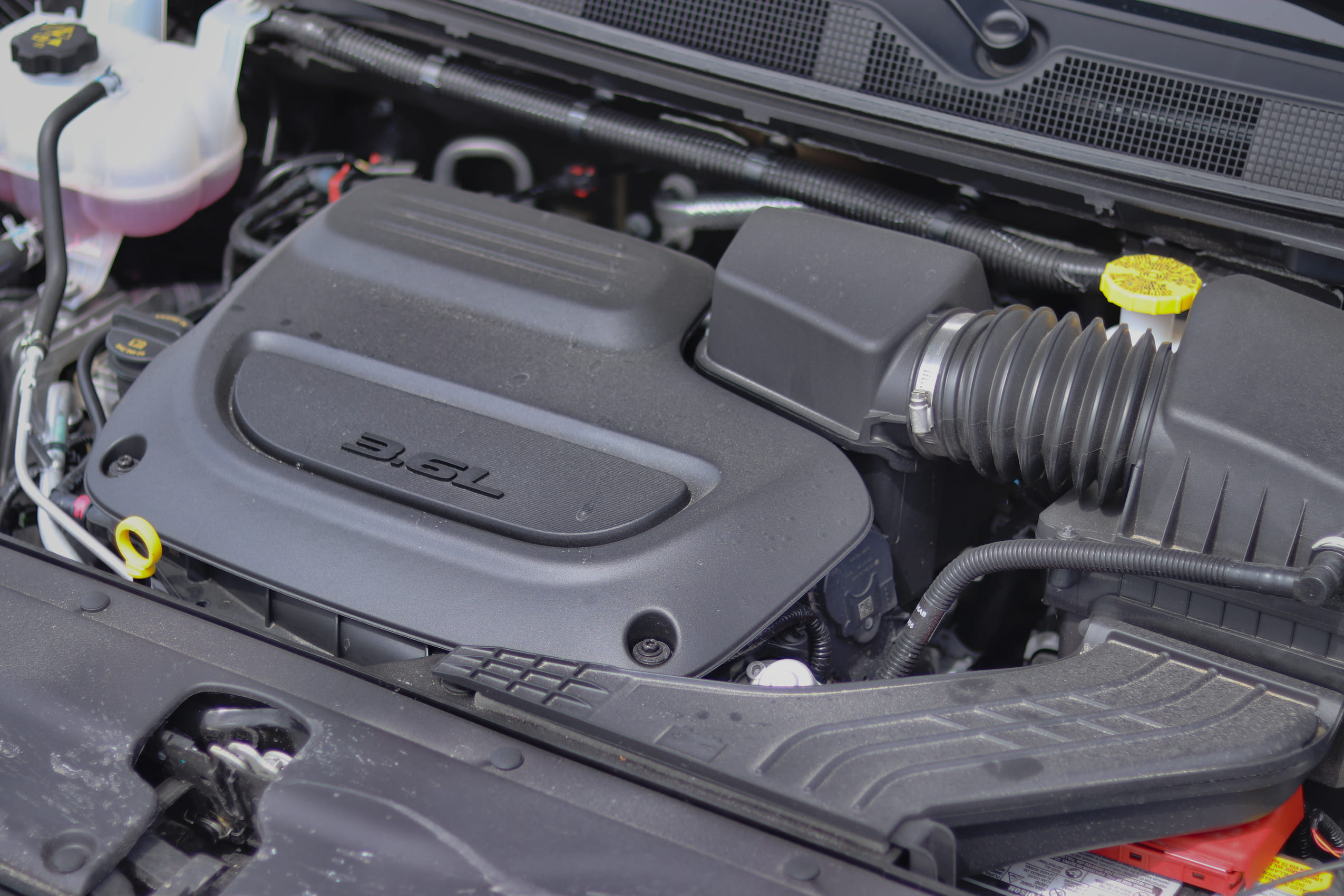
Mechanically, the Pacifica is anchored by the 3.6-liter Pentastar V6—an engine that has been around long enough to have earned a seat in the “Greatest Hits of the 21st Century” hall of fame. Is it a screaming masterpiece of high-revving engineering? No. In fact, if you’re coming from anything with a turbocharger, it might feel a little gutless when you’re trying to merge onto the highway with a full load of humans. But that’s missing the point. In a minivan, you don’t want a hair-trigger throttle; you want the mechanical equivalent of a Valium. The Pentastar delivers exactly that—liquid-smooth power and a level of bulletproof reliability that means you’ll likely be handing the keys over to your kids in ten years.
What sets this drivetrain apart from the “just enough” competition is how much Chrysler actually lets you do with it. While the Honda Odyssey continues to pretend that all-wheel drive is some sort of dark magic it doesn’t want to mess with, the Pacifica offers a legitimate AWD system. It’s a transparent, “set-it-and-forget-it” setup that sends power to the rear wheels before you even realize the front ones have lost grip—a godsend for anyone who has ever tried to navigate a slushy driveway in February.
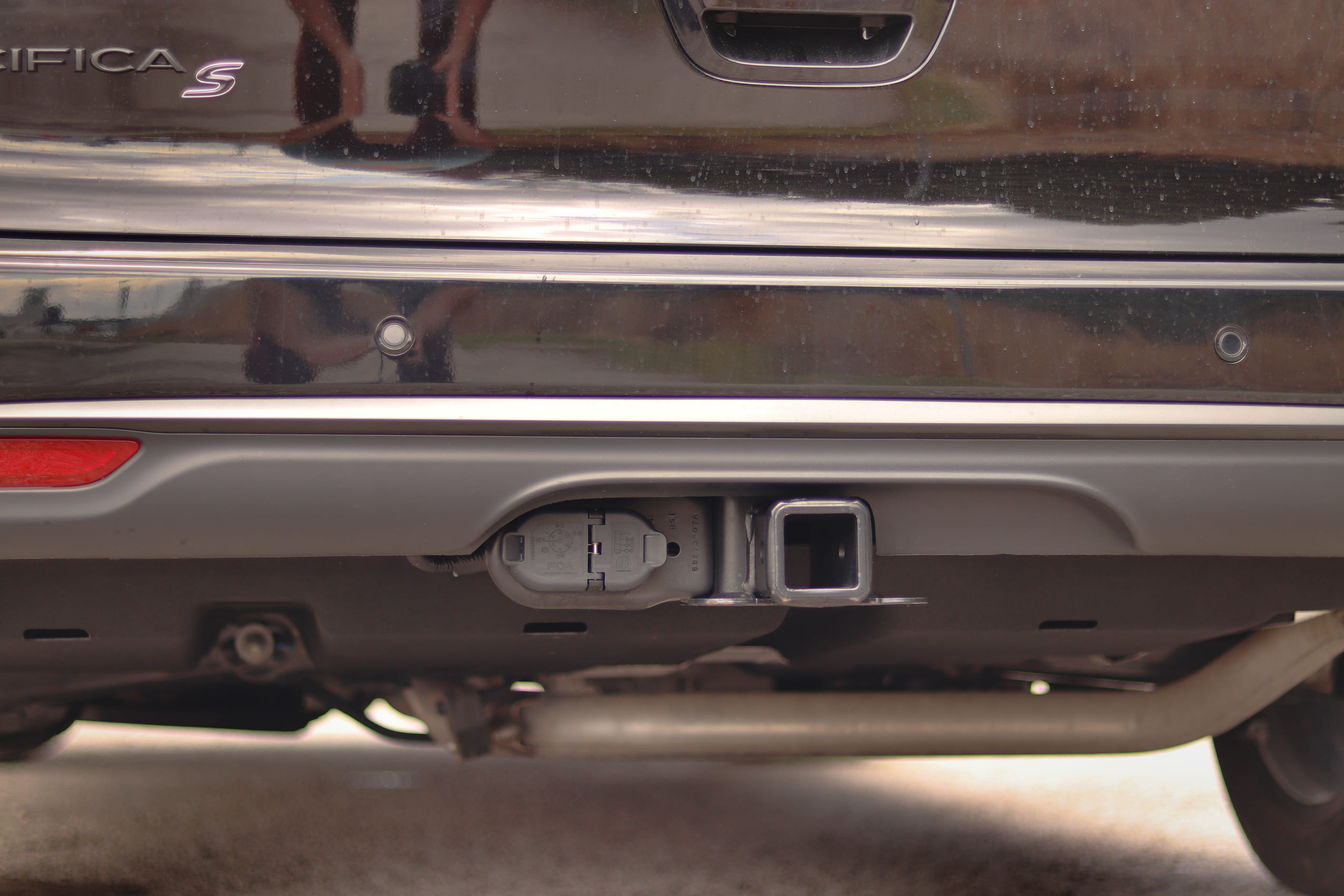
Then there’s the towing. Chrysler has equipped the Pacifica with a Trailer Tow Group that allows it to haul up to 3,600 pounds. That is class-leading territory, out-pulling every other van in the segment. It means this isn’t just a grocery getter; it’s a legitimate utility vehicle capable of pulling a small boat or a camper for a weekend getaway. Most SUVs with “rugged” badges can’t even match that rating, yet here is a minivan doing it while sipping less fuel and offering three times the interior volume. It’s a masterclass in quiet competence, proving that you don’t need a transfer case and 40-inch tires to be the most capable vehicle on the block.
From the driver’s seat, the Pacifica handles exactly the way a two-and-a-half-ton living room should. It doesn’t pretend to be a sport sedan; there is noticeable body lean if you try to treat an on-ramp like the apex at Cayuga, but that’s a small price to pay for a ride that is genuinely plush. The suspension is tuned with a singular focus on isolating the cabin from the catastrophic state of modern infrastructure, soaking up frost heaves and potholes with a muffled “thump” rather than a spine-shattering crash. It’s quiet, too—Chrysler has clearly spent some money on acoustic glass and sound deadening, ensuring that the only thing you hear at 120 km/h is the sound of your own thoughts or the inevitable backseat debate over whose turn it is to use the iPad.
The steering is light enough to let you navigate a crowded Costco parking lot with one finger, but it has just enough weight on the highway to keep you from feeling like you’re piloting a hovercraft. The nine-speed automatic, which used to be the subject of some rather colorful internet forum discussions, has finally been polished into a competent partner for the V6. It shifts with a transparency that stays out of the way, prioritizing smooth progress over snappy engagement. In a world where the Toyota Sienna’s hybrid setup can sound like a vacuum cleaner under hard acceleration, the Pacifica’s traditional V6 remains a more refined, if slightly thirstier, companion. It’s an easy, low-stress driving experience that reminds you why the minivan was the king of the road before everyone decided they needed a “lifestyle” SUV to buy groceries.
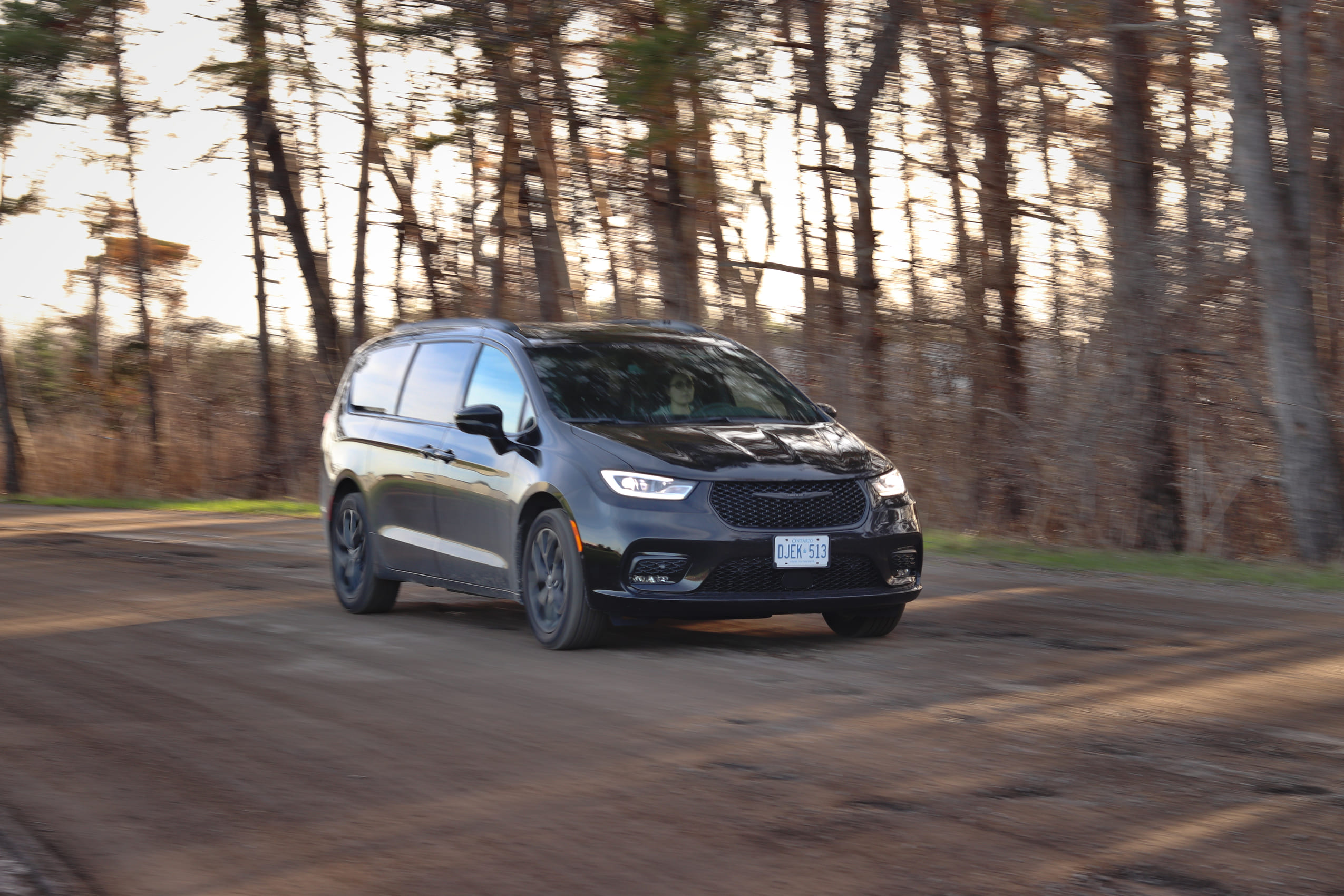
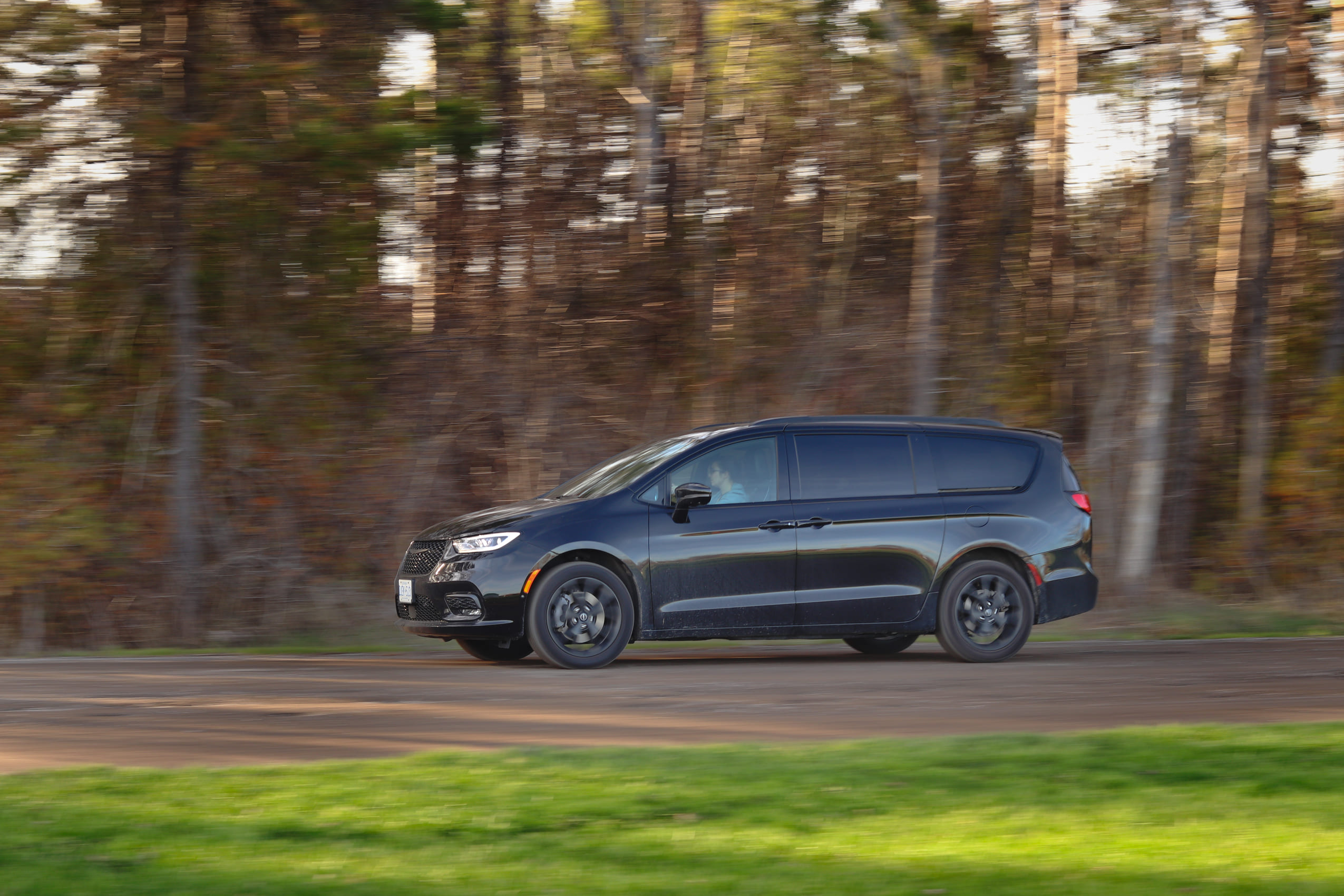
Ultimately, the 2026 Pacifica is the only vehicle in its class that refuses to make you choose between being a parent and being a person who appreciates clever engineering. While the competition asks you to remove seats, settle for front-wheel drive, or deal with lower towing capacities, the Chrysler just says “yes.” It’s a 3,600-pound-towing, all-wheel-drive, cargo-hauling marvel that can swallow a 4×8 sheet of plywood one minute and act as a luxury shuttle for seven the next. Despite its age, it’s still the smartest tool in the shed—not because it’s the flashiest, but because it’s the most honest. If you can get over the outdated “soccer mom” stigma and look at the sheer mechanical utility, you’ll realize this isn’t just the best minivan on the market; it’s likely the most useful vehicle ever made. Period.
| Specification | Details |
|---|---|
| Engine | 3.6L Pentastar™ VVT V6 with Stop/Start technology |
| Horsepower | 287 hp @ 6,400 rpm |
| Torque | 262 lb-ft @ 4,000 rpm |
| Drivetrain | Front-Wheel Drive (FWD) or Available All-Wheel Drive (AWD) |
| Transmission | 9-Speed Automatic |
| Curb Weight | 4,520 lbs (2,050 kg) |
| Fuel Economy (as tested) | 11.2 L / 100 km |
| Cargo Space | 32.3 cu. ft. – 915 L (behind 3rd row) 87.5 cu. ft. – 2,478 L (behind 2nd row) 140.5 cu. ft. – 3,979 L (max with Stow ‘n Go) |
| Towing Capacity | 3,600 lbs (1,633 kg) |
| Base Price (MSRP) | $52,195 CAD |
| Official Website | www.chrysler.ca |
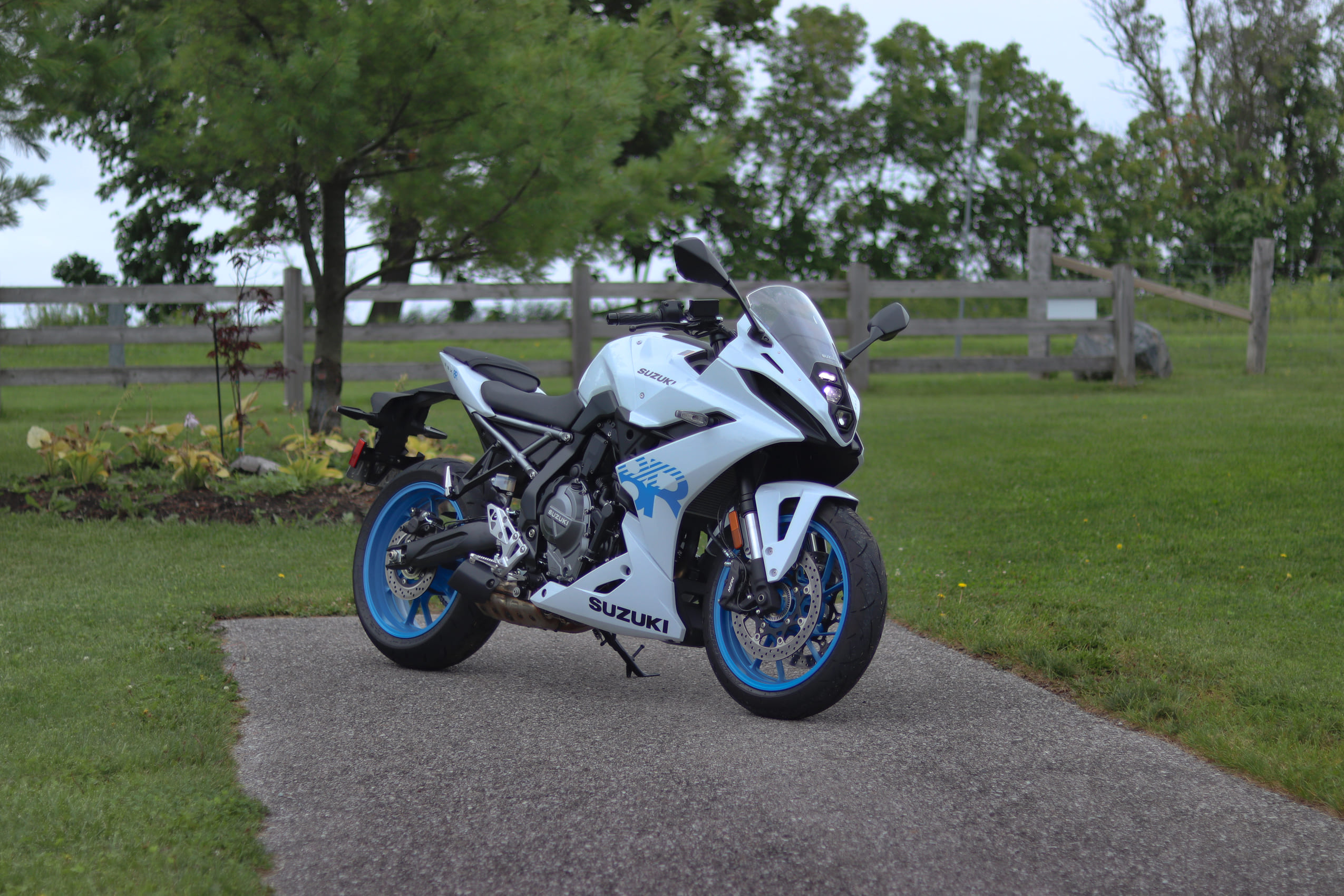
2026 Suzuki GSX-8R: The Middleweight Sport Bike Formula Done Right
The motorcycle world has spent the last decade trapped in a profoundly stupid dick-measuring contest, obsessed with building 200-horsepower, track-focused…

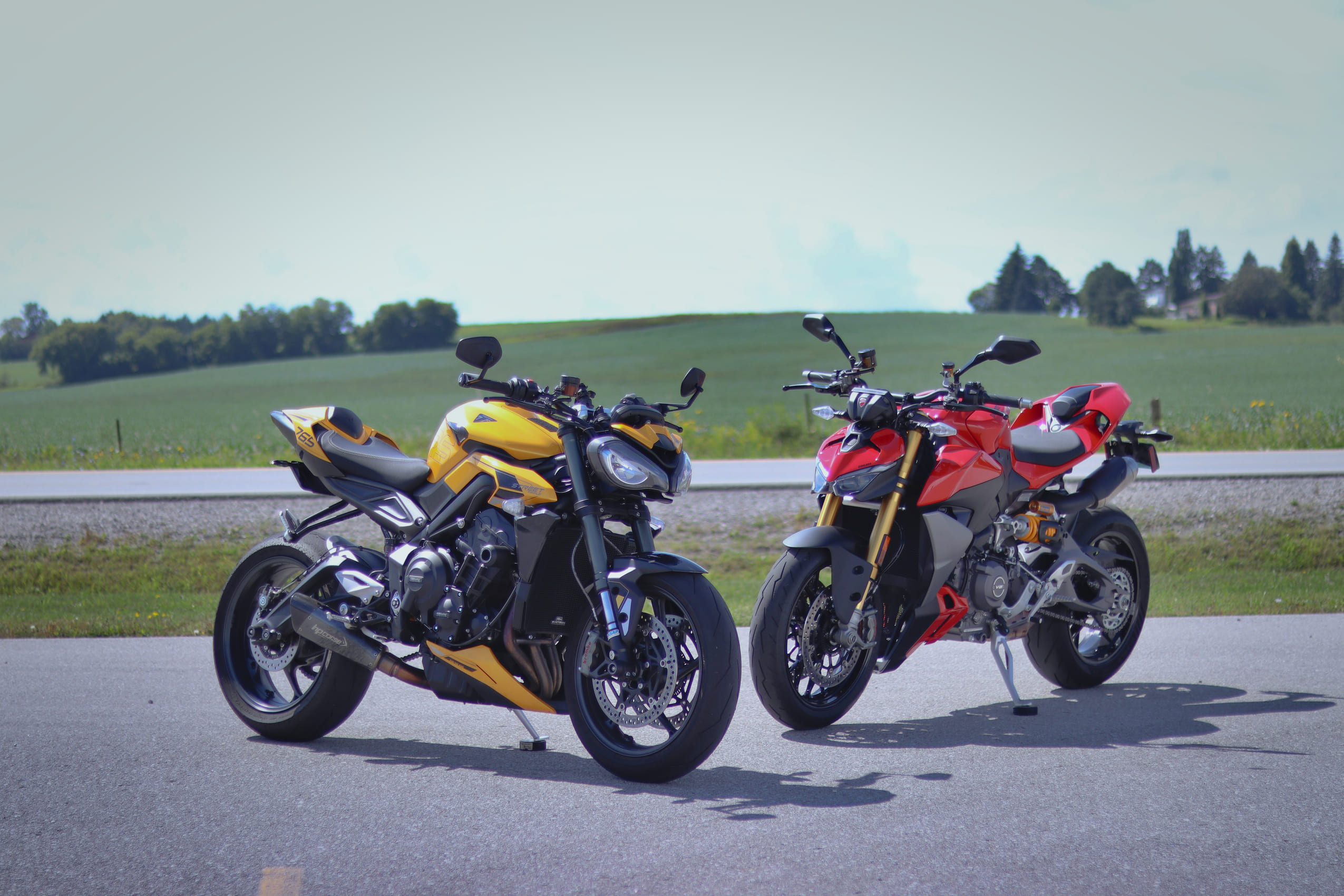
British Precision vs. Italian Violence: 2026 Ducati Streetfighter V2S vs.
Human beings are inherently absurd creatures, but nowhere is that absurdity more evident than in our willingness to strap our…
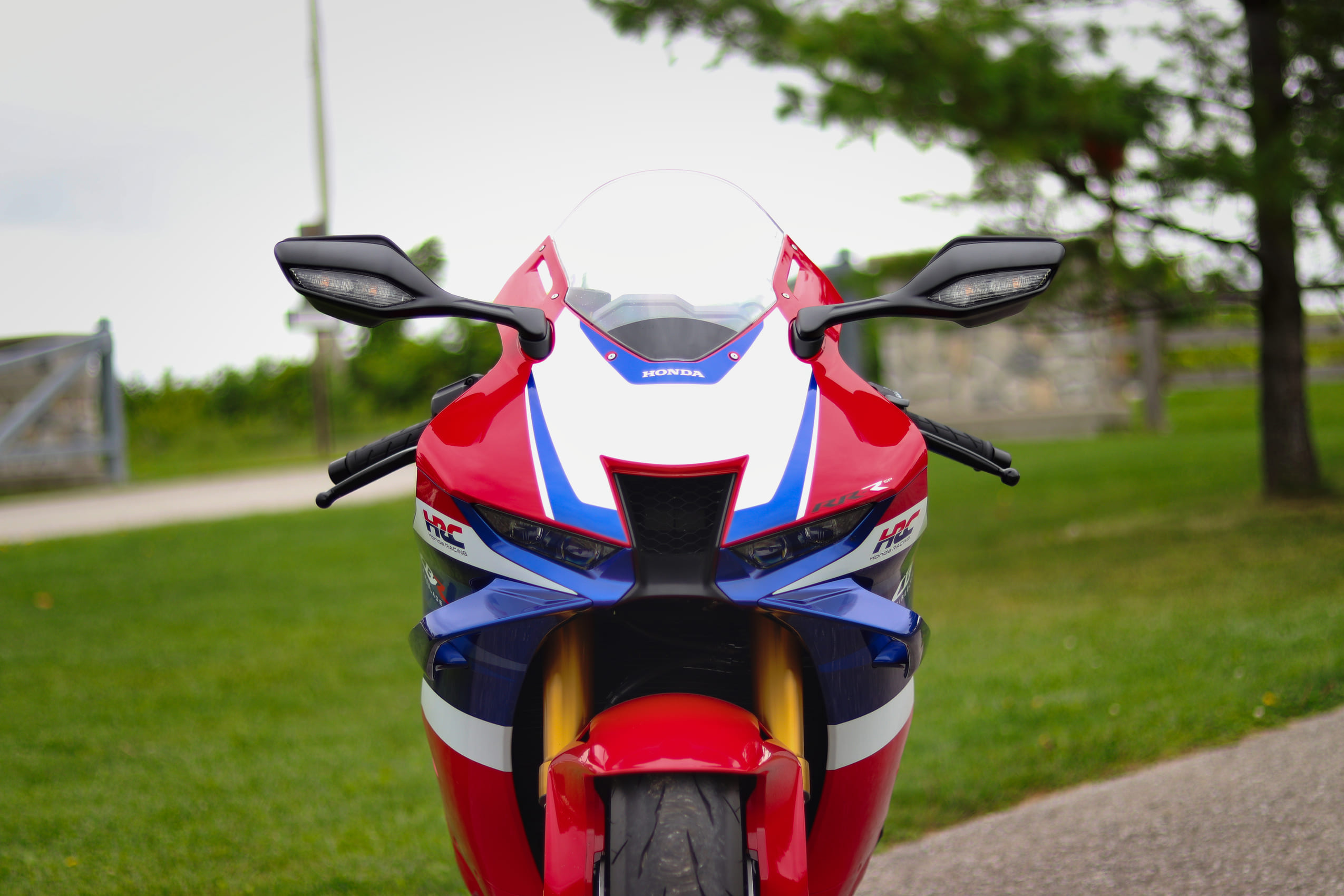
2026 Honda CBR1000RR-R Fireblade SP Review: Pure Mechanical Violence
The 2026 Honda CBR1000RR-R Fireblade SP is not a motorcycle; it is a clinical, unrelenting exercise in absolute mechanical insanity…
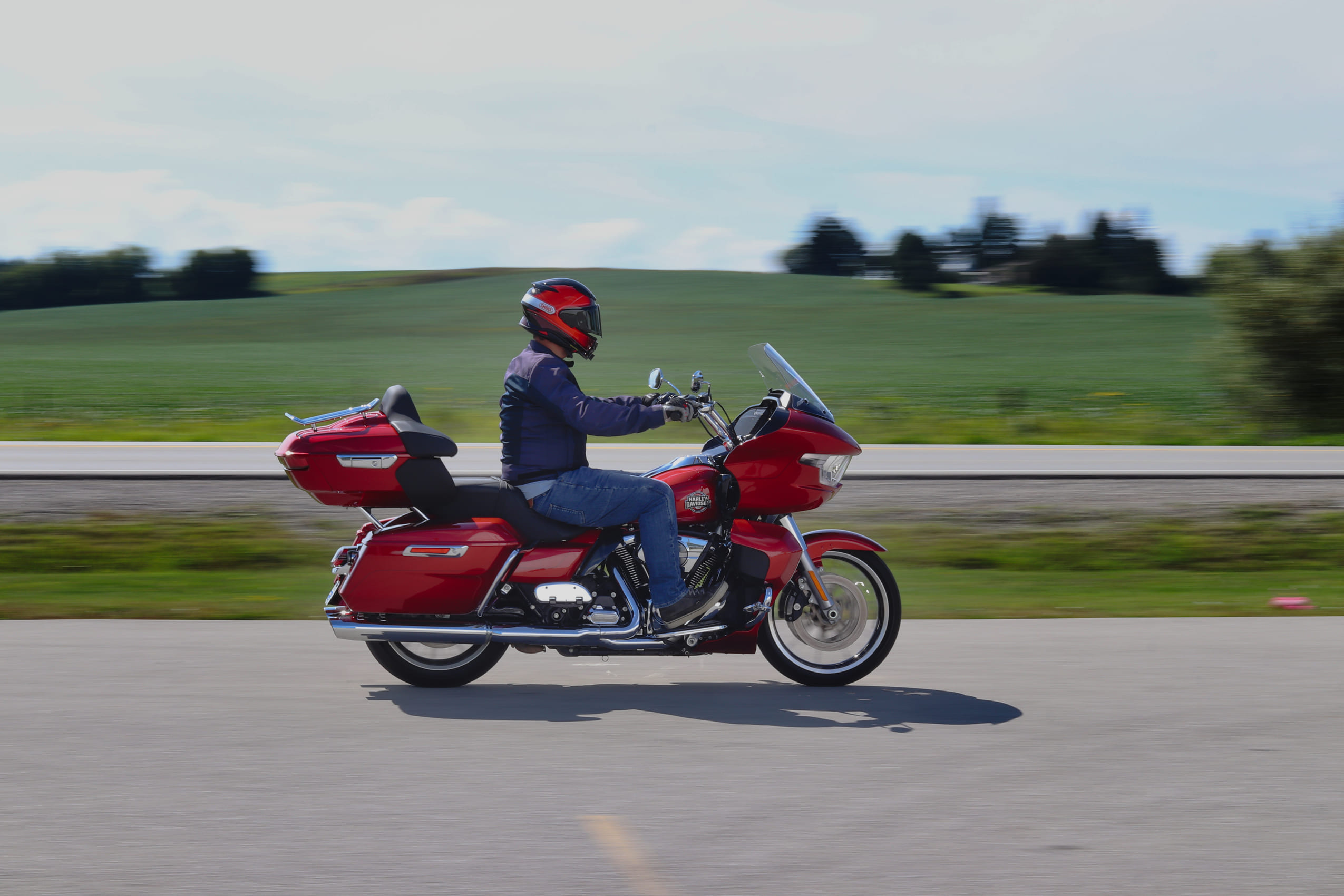
Sharknose Supremacy: Driving the 2026 Harley-Davidson Road Glide
Let’s get one thing straight: the 2026 Harley-Davidson Road Glide shouldn’t make sense. It’s a rolling, 800-pound contradiction—a massive, frame-mounted…
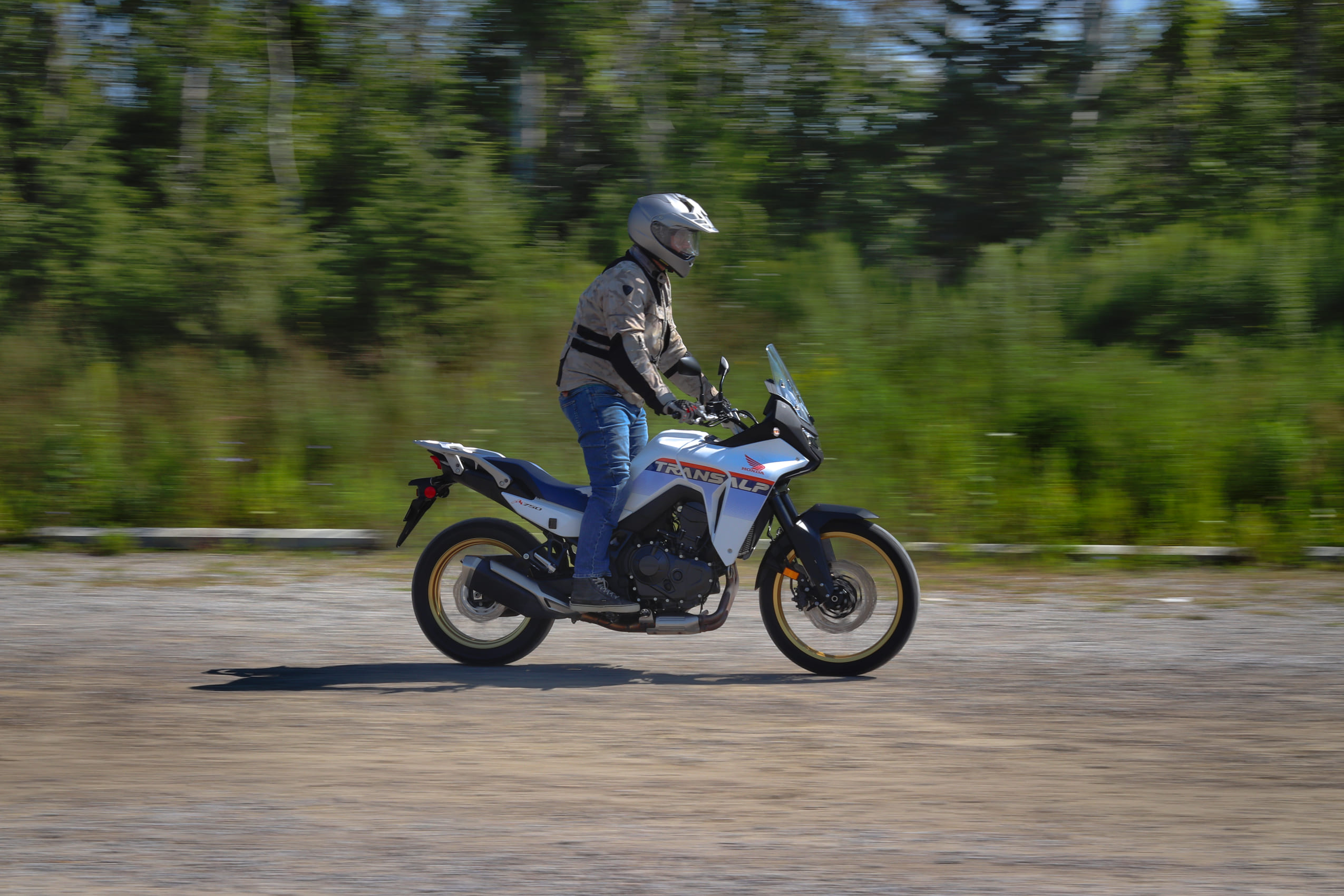
The Anti-ADV Hero: Why the 2026 Honda Transalp is the
Leave it to Honda to look at the entire, absurdly over-engineered, $25,000 middleweight adventure segment—a market flooded with hyper-focused rally…
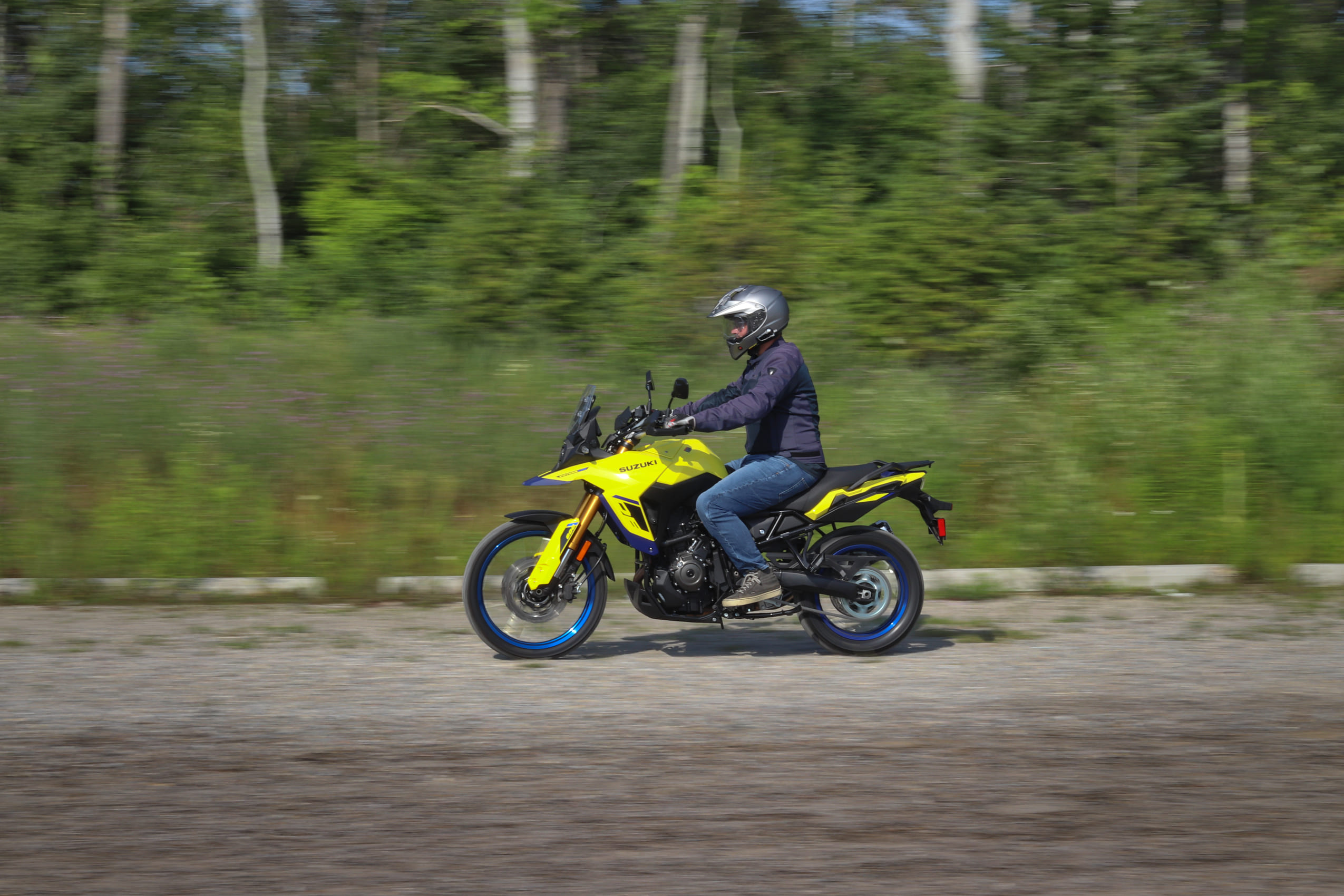
2026 Suzuki V-Strom 800DE: No V-Twin, No Problem
Words are supposed to mean things. The “V” in V-6 means a V-layout, and for two decades, the “V” in…