This is the all-new 2025 Volkswagen Tiguan – and no, VW didn’t forget it exists. They just pretended not to notice it was getting stale. Which is odd, considering this is their bestselling model globally and one of the few Volkswagens that moves in serious numbers without needing a GTI badge or TikTok hype. So now, after years of refined stagnation, we get a completely re-engineered Tiguan with fresh styling, a new interior, and -shocker- a conventional gas engine. No hybrid trickery, no EV distraction at least for now. Just good old internal combustion, wrapped in a suit that finally looks like it was tailored for this decade.


Volkswagen says the new Tiguan has a “cleaner, more modern face.” What they mean is: it’s got a giant LED unibrow and a grille that looks like someone copy-pasted it from an ID.4 and said “eh, good enough.” The headlights are sleeker, yes, but they are also practically whispering “please take me seriously.” There is a weird tension here – it’s aggresive in the brochure, but in person, it still gives off strong “I’m picking up my kids from soccer” energy. It’s not ugly. It’s just incredibly safe. Which, for a Volkswagen, might be the point.
From the side, the Tiguan plays its usual conservative game – slabby panels, high beltline, and just enough character lines to avoid being mistaken for a rental. But here is the kicker: It finally looks tight. The proportions are more balanced thanks to a slightly lower stance and longer wheelbase, and the roofline doesn’t scream minivan anymore. The wheels? The R-Line trim comes with 20″ inches now, which is great, because nothing says “urban adventure” like rubber-band tires on a crossover that’s never leaving the pavement. Still, it’s clean, cohesive, and quietly handsome – like a guy who wears Allbirds and reads design blogs.
Ah yes, the rear – because no modern crossover is complete without a full-width light bar and badging big enough to see from low orbit. The Tiguan’s taillights are now thin, connected, and vaguely futuristic, while the bumper looks like it’s hiding 17 sensors and a small army of radar pods. It’s busy, but polished, with just enough gloss-black plastic to remind you that it is still a fashionable appliance. There is even a fake diffuser down low, in case you thought this family hauler might moonlight a track day. It won’t. But you will look adequately European pulling out of Whole Foods.


Inside the 2025 Tiguan, Volkswagen has finally caught up with the times. The dashboard design is clean and horizontal, with a more modern layout that immediately feels more upscale than the outgoing model. The centerpiece is a large, crisp touchscreen perched confidently on the dash, paired with a fully digital instrument cluster that’s easy to read and quick to respond. VW’s new infotainment system is vastly improved – it’s faster, more intuitive, and finally starting to feel more premium. Yes, there are still touch sliders instead of physical knobs, but they are backlit now, and far more usable than before.
Materials throughout the cabin feel solid and thoughtfully chosen. Soft-touch surfaces are used where it counts, and the overall fit and finish echo VW’s typical restrained, high-quality approach. The seats strike an excellent balance between firmness and comfort, offering great support for long drives without feeling punishing. Front-seat comfort is excellent, and both driver and passenger seats come with massage feature, which is quite rare in this segment. The rear seat passengers will find plenty of legroom thanks to Tiguan’s long wheelbase. It’s not a luxury car, but it absolutely delivers a refined, comfortable environment for everyday life.
Practicality remains one of the Tiguan’s strongest assets, with some important changes. The third row is now gone, which wasn’t very usable with the outgoing generation. The new Tiguan feels less boxy, but the cargo capacity numbers are still impressive at 28 cubic feet of space behind the second row, expanding to over 65 cubic feet with the rear seats folded. In typical Volkswagen fashion, there is underfloor storage for added flexibility, wide door bins that can accommodate giant water bottles.


Powering the 2025 Tiguan is Volkswagen’s latest-generation EA888 evo4 2.0-litre turbocharged four-cylinder engine now puts out 201 hp (up from 184 hp in the outgoing model) with torque rated at 221 lb-ft. It runs on the Miller combustion cycle for improved thermal efficiency and lower emissions, aided by a variable turbocharger for flatter torque curve and improved throttle response, particularly at midrange where the previous engine often felt lethargic.
Just like the previous generation, VW wisely stuck with a recalibrated 8-speed torque-converter automatic, and honestly, that’s a good thing. It shifts smoothly, doesn’t lurch in traffic, and doesn’t get confused when you ask for power. This isn’t trying to be a GTI with a lift kit – it’s a family SUV that behaves like it’s been trained properly, and the powertrain reflects that with no issues.
And then there’s 4MOTION, Volkswagen’s full-time, front-biased all-wheel-drive system that’s always thinking two steps ahead. On dry pavement, it chills in front-wheel drive to save fuel. But the moment traction disappears – or you get a little heavy with your right foot – it shuffles power to the rear with near-instant urgency. Add in a few drive modes and a lighter overall chassis, and you’ve got a crossover that doesn’t just look sharper – it drives sharper too. It’s not going to light up a back road, but for a Tiguan, it’s the most awake it’s ever felt.


Behind the wheel, the 2025 Tiguan feels like a crossover that’s finally grown into its own skin. The updated turbo-four delivers solid low-end torque, with just enough urgency to make merges and passes feel effortless – not thrilling, but satisfyingly competent. The new calibration of the 8-speed auto is a big win: shifts are smooth, responsive, and drama-free. Around town, it behaves exactly how a daily-driven SUV should – relaxed, predictable, and quiet, without any weird throttle lag or transmission indecision that plagued older models. It just does what you ask, when you ask, and that’s more valuable in the real world than ten extra horsepower.
Ride quality is another clear area of improvement. The chassis has been reworked with new suspension geometry, and it shows – especially in how the Tiguan handles bumps and broken pavement. It’s firm but never harsh, soaking up rough roads without the floatiness you sometimes get in this segment. Body control is excellent for a tall-ish SUV, and while it’s not going to carve corners like a GTI, the steering is well-weighted and confidence-inspiring. There is a quiet composure here, like the chassis was tuned by people who understand that good road manners matter more than fake sportiness.
Noise, vibration and harshness levels are impressively low. Wind and road noise are kept in check, even at highway speeds, and the engine stays mostly in the background unless you really push it. The EA888 engine continues to be one of the smoothest modern 4-cylinder engines available, and the trend continues here. The cabin feels solid, insulated, and refreshingly mature – especially in an era where some rivals try to distract you from mediocrity with fake engine sounds and flash. In daily life, the Tiguan simply works: it’s comfortable, refined, and now finally has a powertrain that doesn’t feel like an afterthought. It’s not trying to be exciting. It’s just really good at being a car – and that’s what makes it so satisfying to live with.


The 2025 Volkswagen Tiguan isn’t just better than the model it replaces – it might quietly be the best compact SUV you can buy right now. It finally delivers the performance, refinement, and tech this segment demands, without falling into the trap of overdesign and gimmicks. No, it doesn’t have the sheer cargo volume of a CR-V, and it won’t sip fuel like a RAV4 Hybrid – but what you get in return is a crossover that feels genuinely well-engineered, thoughtfully designed, and rewarding to drive every single day. It’s a rare compact SUV that doesn’t shout, doesn’t preteny, and doesn’t try to be something it’s not. In a class full of compromises, that alone makes the Tiguan a standout.
| Engine | 2.0 litre turbocharged inline-4 |
| Transmission & Drivetrain | 8-speed automatic & 4MOTION all-wheel drive |
| Max power | 201 hp @ 5600 rpm |
| Max torque | 221 lb-ft @ 1600-4300 rpm |
| 0-100 km/h | 7.9 sec |
| Curb Weight | 3650 lbs – 1650 kg |
| Fuel Economy (observed) | 27 MPG – 9.7 L/100 km |
| MSRP (starting at) | $39,331 CAD |
| Website: | www.vw.ca |
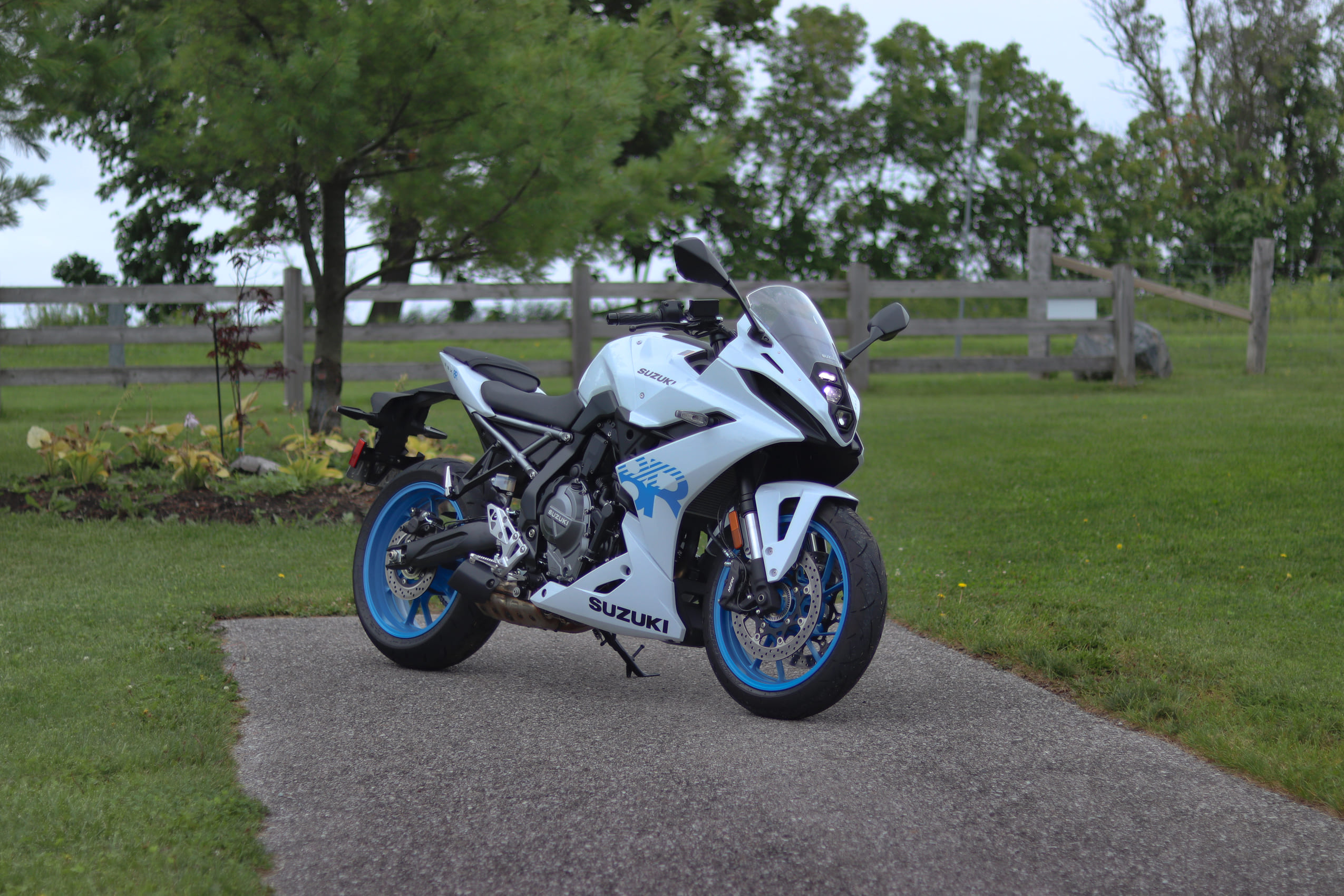
2026 Suzuki GSX-8R: The Middleweight Sport Bike Formula Done Right
The motorcycle world has spent the last decade trapped in a profoundly stupid dick-measuring contest, obsessed with building 200-horsepower, track-focused…

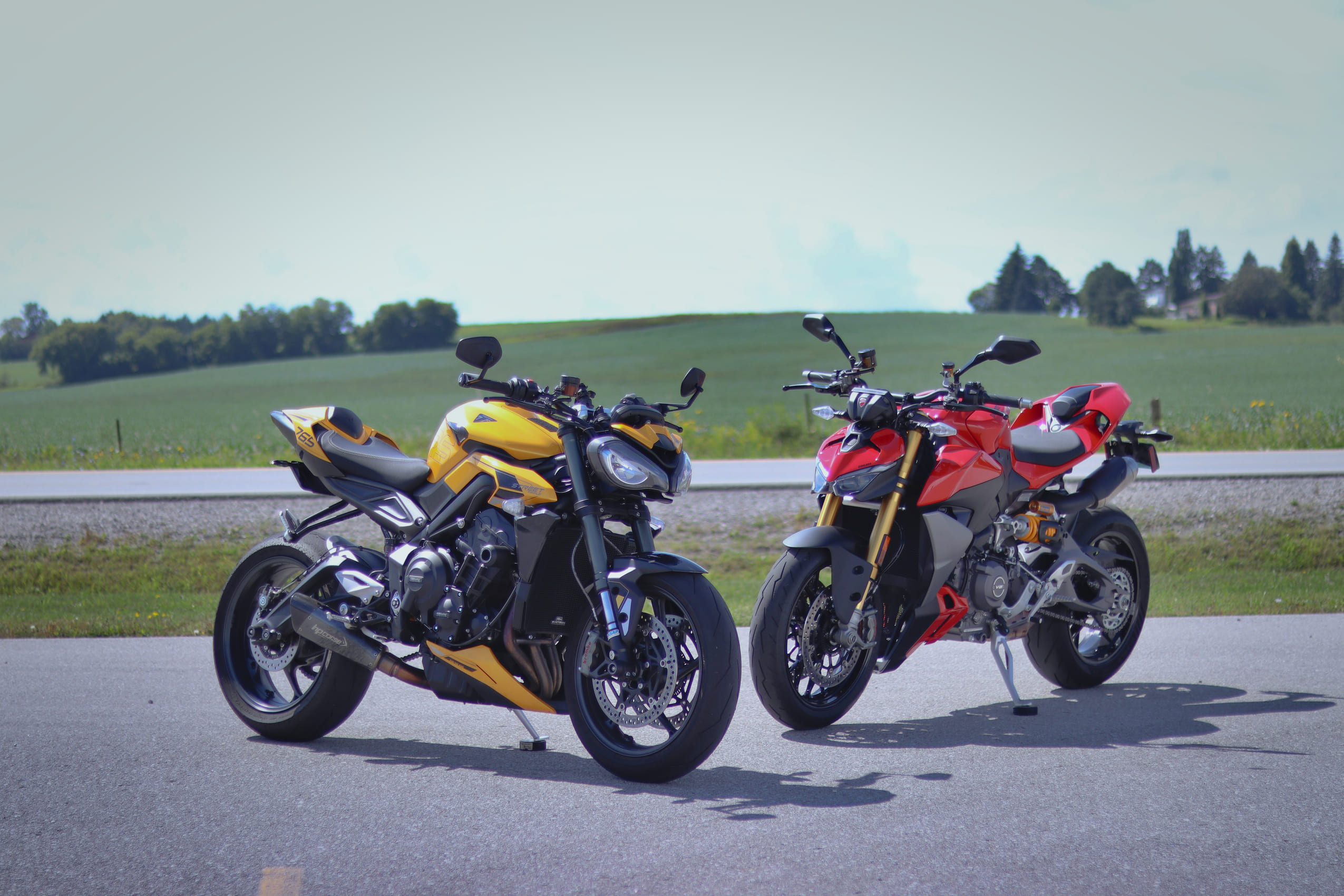
British Precision vs. Italian Violence: 2026 Ducati Streetfighter V2S vs.
Human beings are inherently absurd creatures, but nowhere is that absurdity more evident than in our willingness to strap our…
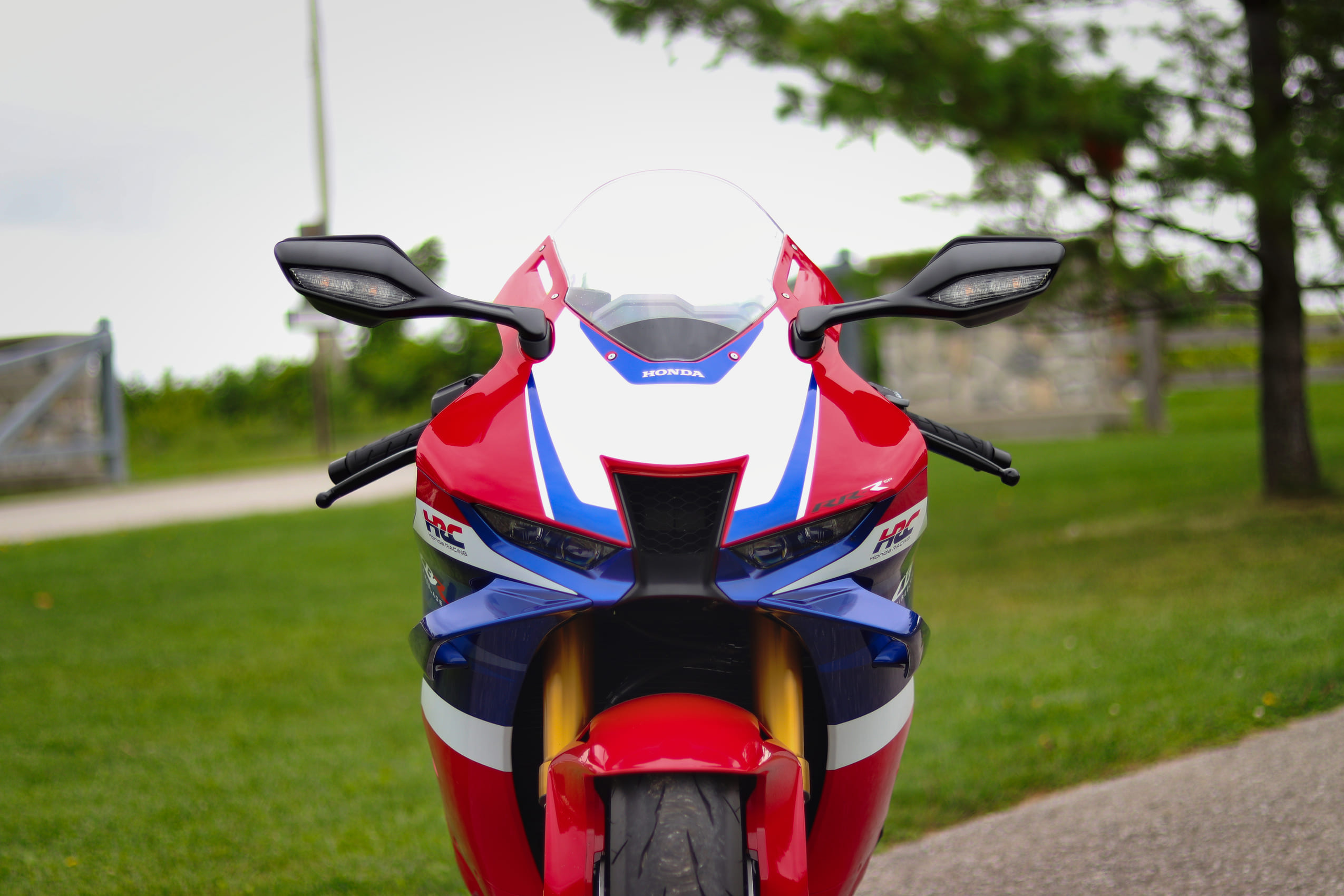
2026 Honda CBR1000RR-R Fireblade SP Review: Pure Mechanical Violence
The 2026 Honda CBR1000RR-R Fireblade SP is not a motorcycle; it is a clinical, unrelenting exercise in absolute mechanical insanity…
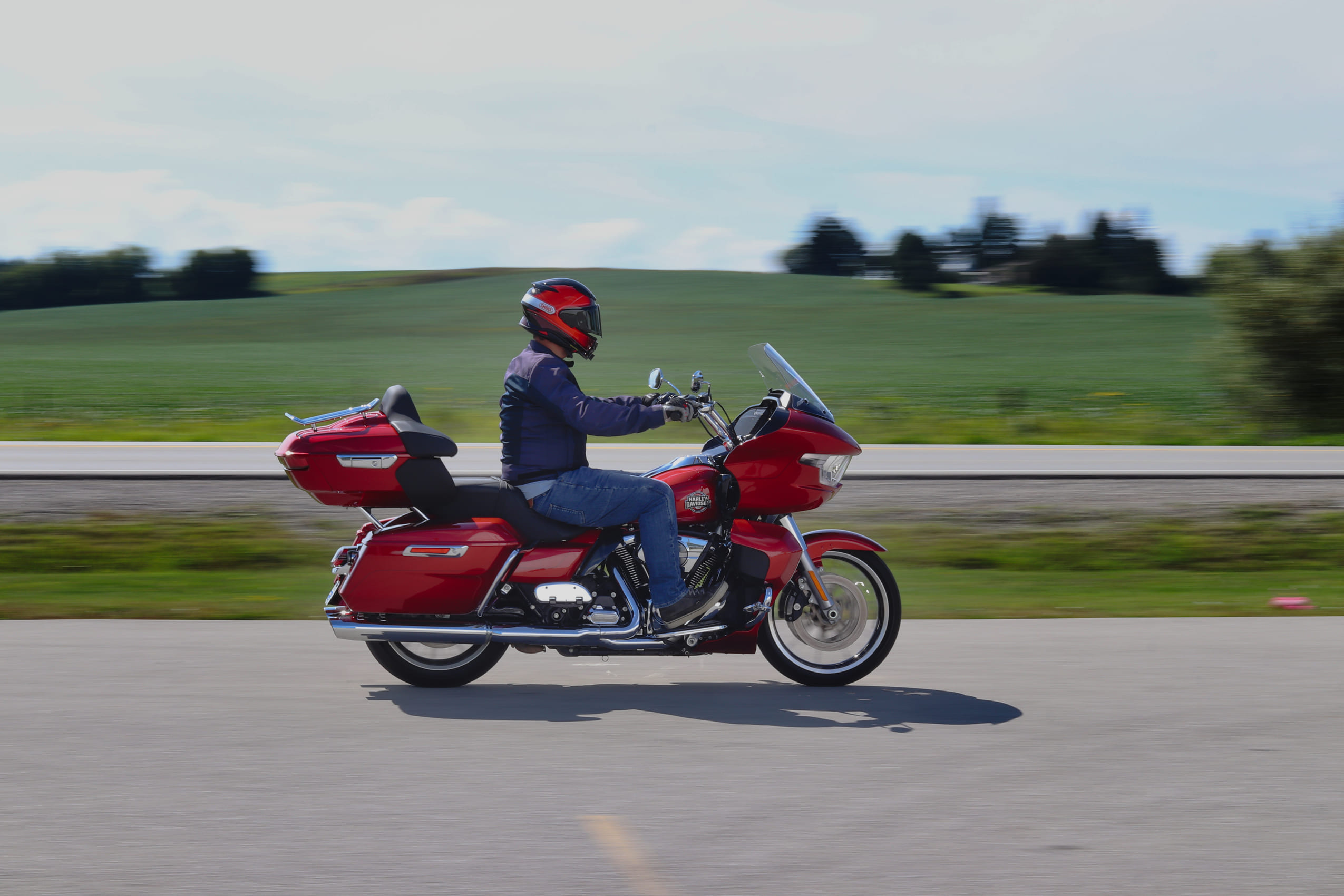
Sharknose Supremacy: Driving the 2026 Harley-Davidson Road Glide
Let’s get one thing straight: the 2026 Harley-Davidson Road Glide shouldn’t make sense. It’s a rolling, 800-pound contradiction—a massive, frame-mounted…

The Anti-ADV Hero: Why the 2026 Honda Transalp is the
Leave it to Honda to look at the entire, absurdly over-engineered, $25,000 middleweight adventure segment—a market flooded with hyper-focused rally…
2026 Suzuki V-Strom 800DE: No V-Twin, No Problem
Words are supposed to mean things. The “V” in V-6 means a V-layout, and for two decades, the “V” in…