The 2025 Honda Gold Wing doesn’t need an introduction — it is the introduction, the main act, and the encore of the touring world. It’s the motorcycle equivalent of a private jet that somehow still wants to corner like a sport bike. By now, it’s less a motorcycle and more a cultural institution — the two-wheeled embodiment of “arrive already arrived.” And yet, every year, Honda manages to tweak, polish and perfect what was already engineering sorcery. The 2025 model keeps its throne, not by reinventing the “Golden” formula, but by reminding everyone that the Gold Wing is still the benchmark for what happens when comfort, precision, and absurd attention to detail collide at 180 km/h with a Bach soundtrack playing through 55 watts of Bluetooth glory.


From a distance, the 2025 Gold Wing Tour DCT looks less like a motorcycle and more like something that should have an autopilot and a flight number. In gold paint that gleams like it’s been dipped in sunlight — accented by deep brown, wood-like trim that wouldn’t look out of place in a Bentley — it has a kind of quiet arrogance. The kind earned, not bought. Every surface has been sculpted by engineers who clearly have too much time and pride on their hands: the broad fairing slices wind like a samurai blade, while the LED lighting signatures make it look part luxury cruiser, part alien spacecraft.
Honda didn’t go wild with the 2025 refresh — because it didn’t need to. The proportions remain that perfect blend of authority and athleticism. The front end’s telepathic balance hides just how massive the machine is, and the DCT Tour’s sleek, fully integrated trunk setup manages to make “two-up with luggage” look elegant instead of excessive. It’s the kind of bike that looks as good rolling into a national park as it does parked outside a five-star hotel — and in this particular gold hue, it dares every chromed cruiser on Earth to admit it’s now officially underdressed.
Swing a leg over the 2025 Gold Wing, and the first thing you notice isn’t the seat height or the handlebars — it’s the ambience. You don’t sit on this motorcycle; you sink into it. The cockpit feels like the command deck of a Japanese bullet train; every control is deliberate, every button sounds like it’s been tuned by an acoustics engineer with OCD. The seats feel more like executive recliners than motorcycle upholstery, and the whole setup radiates that “built-to-last-forever” Honda confidence. This isn’t a machine built for a weekend coffee run — it’s a continent-crushing tourer designed to make 1,000 km feel like a well-earned nap.


Then there’s the tech — and this is where the Gold Wing really flexes. A 7-inch TFT screen sits front and center, flanked by classic analog gauges that make the entire layout feel expensive in that old-school, Japanese hi-fi way. Apple CarPlay, Android Auto, Bluetooth — all integrated with surgical precision. Honda revised the infotainment system a few years ago, and now it feels much simpler and more intuitive.
In typical Gold Wing fashion, it’s packed with features that you usually find in the automobile world. Heated grips? Naturally. Heated seats? For both passengers, of course. And the pièce de résistance: an actual airbag. Yes, Honda’s engineers decided that if you’re going to pilot something this massive and this fast, it might as well bring its own safety net. It’s the kind of overengineering only Honda would even think to attempt.
But here’s the Gold Wing paradox: while it’s the most advanced touring bike on Earth, it still loves a good quirk. Chief among them: those side panniers. They’re sculpted beautifully into the bodywork — aerodynamic, elegant, and heartbreakingly small. Honda’s form-over-function obsession occasionally gets the better of it, and this is one of those times. Thankfully, the top trunk redeems the situation, swallowing luggage for two and still closing with the satisfying click of a luxury sedan door.


Ergonomically, the Gold Wing remains a masterclass. You sit low and balanced, arms wide but relaxed, with a commanding view of the horizon framed by that broad fairing. The windscreen rises and falls with an almost eerie silence, as if gliding on invisible rails. The riding position feels like it was designed by someone who’s actually done cross-country tours on a regular basis — upright, supportive, and somehow still sporty.
Underneath all the chrome, gold paint, and over-engineered luggage hinges beats the same magnificent heart that’s defined the Gold Wing for nearly half a century — a 1,833cc horizontally opposed six-cylinder engine. You could call it a boxer, but that feels too ordinary. This thing doesn’t punch, it purrs. It’s as if Honda took a turbine, added pistons out of politeness, and then tuned it to run smoother than a politician’s apology. Power figures don’t sound earth-shattering on paper — about 125 horsepower and 125 lb-ft of torque — but numbers don’t tell the story. What matters is how it delivers that power: an unbroken, velvety surge that starts just above idle and doesn’t quit until you run out of scenery.
The DCT (Dual Clutch Transmission) transforms that engine from “luxury tourer” into “magic trick.” It’s a seven-speed unit, fully automatic if you want it to be, or completely manual if you prefer to feel like you’re piloting a futuristic train on two wheels. But let’s be honest — it’s not the fastest DCT on the planet anymore. The latest systems from other manufacturers snap off shifts with video-game precision, while the Gold Wing’s version takes its time, making each engagement feel deliberate and mechanical. And when it shifts, you hear it — a satisfying, old-school clunk that reminds you this thing is made of gears and oil, not algorithms.


Of course, the engine itself is a study in mechanical civility. Six cylinders laid flat, sitting low in the frame, keeping the center of gravity somewhere near the Earth’s core. The result? Balance that feels supernatural for an 850-pound motorcycle. Twist the throttle and there’s zero drama — just a linear, turbine-like rush paired with the faintest vibration to remind you that combustion is indeed happening somewhere down there. Honda ditched the old cable-actuated throttle years ago for ride-by-wire, and it’s one of the few systems that actually feels better for it — instant response, predictable control, no digital lag pretending to be soul.
But here’s where the nerds smile: shaft drive. In an era where chain maintenance is still ruining weekends, the Gold Wing’s shaft system is basically a mechanical monument to longevity and convenience. It’s whisper-quiet, clean, and unflappable — the drivetrain is the equivalent of a Lexus V8. It puts all that torque to the ground without ever whining or squatting, and it does it mile after mile, year after year. Add in traction control, multiple ride modes, hill-start assist, and low-speed creep for parking lots, and the Gold Wing ends up being the most unintimidating “big bike” on the planet.
Once you’re rolling, the Gold Wing Tour DCT does its favorite trick: it shrinks. You expect to wrestle an 850-pound barge, but it moves with the grace of something half its size. Low-speed balance is uncanny — the weight simply disappears, like Honda’s hidden a physics-bending gyroscope somewhere under the seat. At speed, the Wing feels planted enough to survive a small earthquake. It doesn’t turn so much as it arcs, holding a line with the kind of stability that makes lesser touring bikes feel like shopping carts.


The trade-off, though, is communication — that front end might as well be sending texts instead of feedback. The double-wishbone suspension (Honda’s telelever-style setup) isolates bumps beautifully, but it also isolates you big-time. It’s super smooth, eerily stable… and about as talkative as a tax auditor.
Push it through a set of corners, and the illusion of weightlessness continues. For something shaped like a grand piano, the Gold Wing flicks side-to-side with surprising agility — helped by its ridiculously low center of gravity and perfectly balanced chassis. But then you find the limits: the lean angle, politely conservative, reminds you this is a luxury tourer, not a canyon carver. Touch the pegs down and the bike basically says, “That’s enough fun for today.” Still, the way it transitions between lean angles is so effortless that it’s easy to forget what you’re piloting — until you hear the soft scrape of metal and remember physics still applies.
Touring comfort, meanwhile, is as good as motorcycling gets — at least for your upper body. The wind protection is flawless, the seat could double as a La-Z-Boy, and the ride quality borders on automotive. But Honda’s ergonomic logic has one Achilles’ heel: the lower body. The rearsets lock your legs into one fixed position, and because that big flat-six takes up the whole real estate up front, there’s nowhere to stretch out your feet like you would on a traditional cruiser. You sit in the perfect posture… until your knees start politely asking for variety after a few hundred kilometers.

The 2025 Honda Gold Wing Tour DCT is less a motorcycle and more a mechanical masterpiece pretending to be one. It’s absurdly comfortable, freakishly stable, and so smooth it feels like Honda reinvented friction. Yes, the DCT clunks a bit, the lean angle is modest, and the front end could use a bit more conversation — but these quirks only make it more human. The Gold Wing doesn’t chase speed or hype; it chases perfection, and gets so close it almost feels unfair. This is the touring bike for people who want to cross countries without drama, arrive rested, and still look like they know something everyone else doesn’t.
2025 Honda Gold Wing Tour DCT – Specifications
| Engine | 1,833 cc liquid-cooled horizontally opposed 6-cylinder (SOHC, 24-valve) |
|---|---|
| Power | Approx. 125 hp @ 5,500 rpm |
| Torque | Approx. 125 lb-ft @ 4,500 rpm |
| Fuel System | PGM-FI (Programmed Fuel Injection) |
| Compression Ratio | 10.5:1 |
| Final Drive | Shaft drive |
| Transmission | 7-speed Dual Clutch Transmission (DCT) with reverse and walking modes |
| Front Suspension | Double wishbone (link-type) with single shock, electronically adjustable |
| Rear Suspension | Pro Arm single-sided swingarm with Pro-Link and electronic preload adjustment |
| Front Brakes | Dual 320 mm rotors with 6-piston calipers (ABS) |
| Rear Brakes | Single 316 mm rotor with 3-piston caliper (ABS) |
| Wheelbase | 66.8 in (1,697 mm) |
| Seat Height | 29.3 in (745 mm) |
| Fuel Capacity | 21.1 L (5.6 US gal) |
| Curb Weight | Approx. 850 lb (386 kg) |
| Notable Features | Integrated airbag, Apple CarPlay & Android Auto, 7-inch TFT display, electronically adjustable windscreen, heated seats & grips, keyless ignition, smart trunk with power lock |
| Price (as tested) | $38,675 CAD |
| Website | motorcycle.honda.ca |
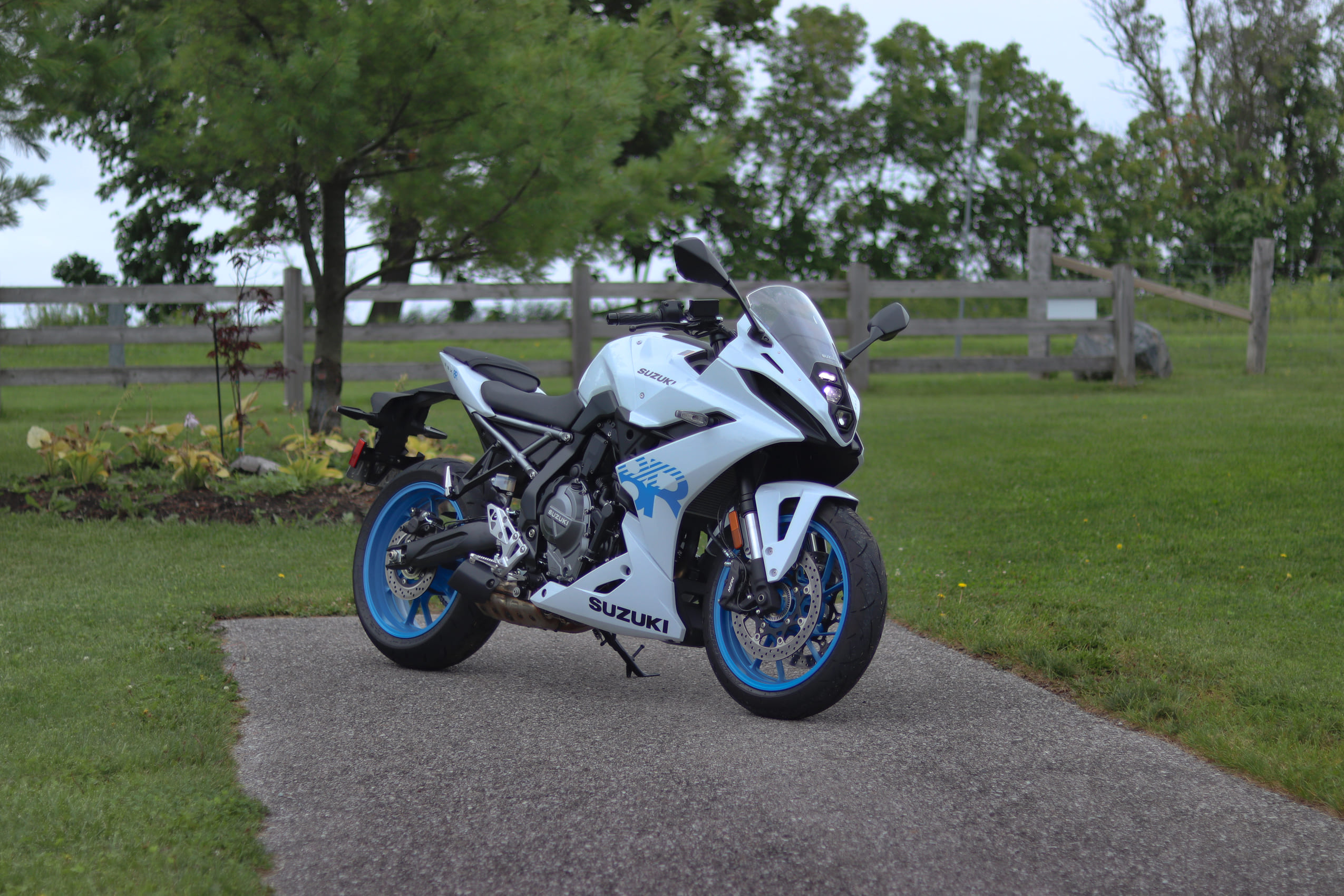
2026 Suzuki GSX-8R: The Middleweight Sport Bike Formula Done Right
The motorcycle world has spent the last decade trapped in a profoundly stupid dick-measuring contest, obsessed with building 200-horsepower, track-focused…

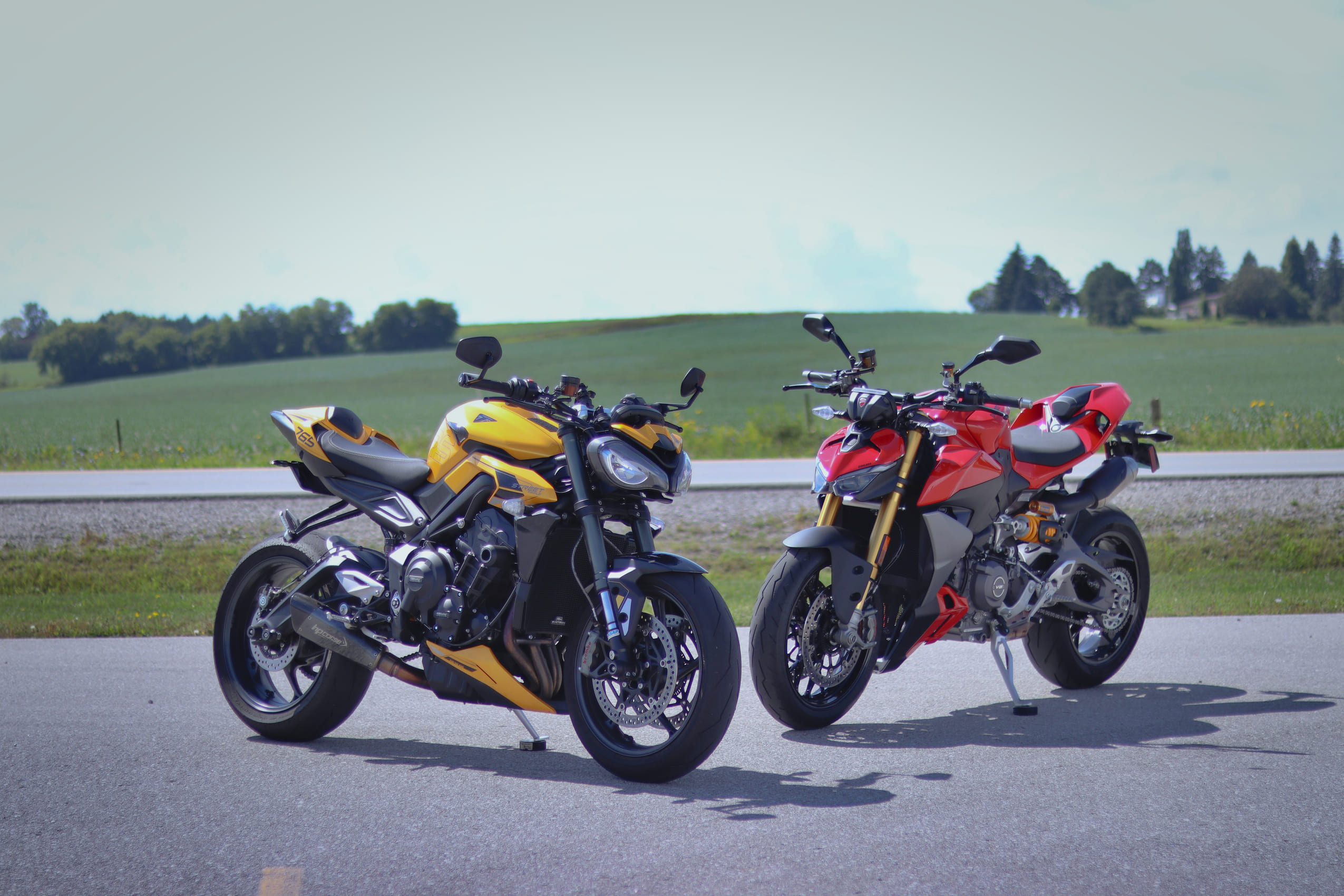
British Precision vs. Italian Violence: 2026 Ducati Streetfighter V2S vs.
Human beings are inherently absurd creatures, but nowhere is that absurdity more evident than in our willingness to strap our…
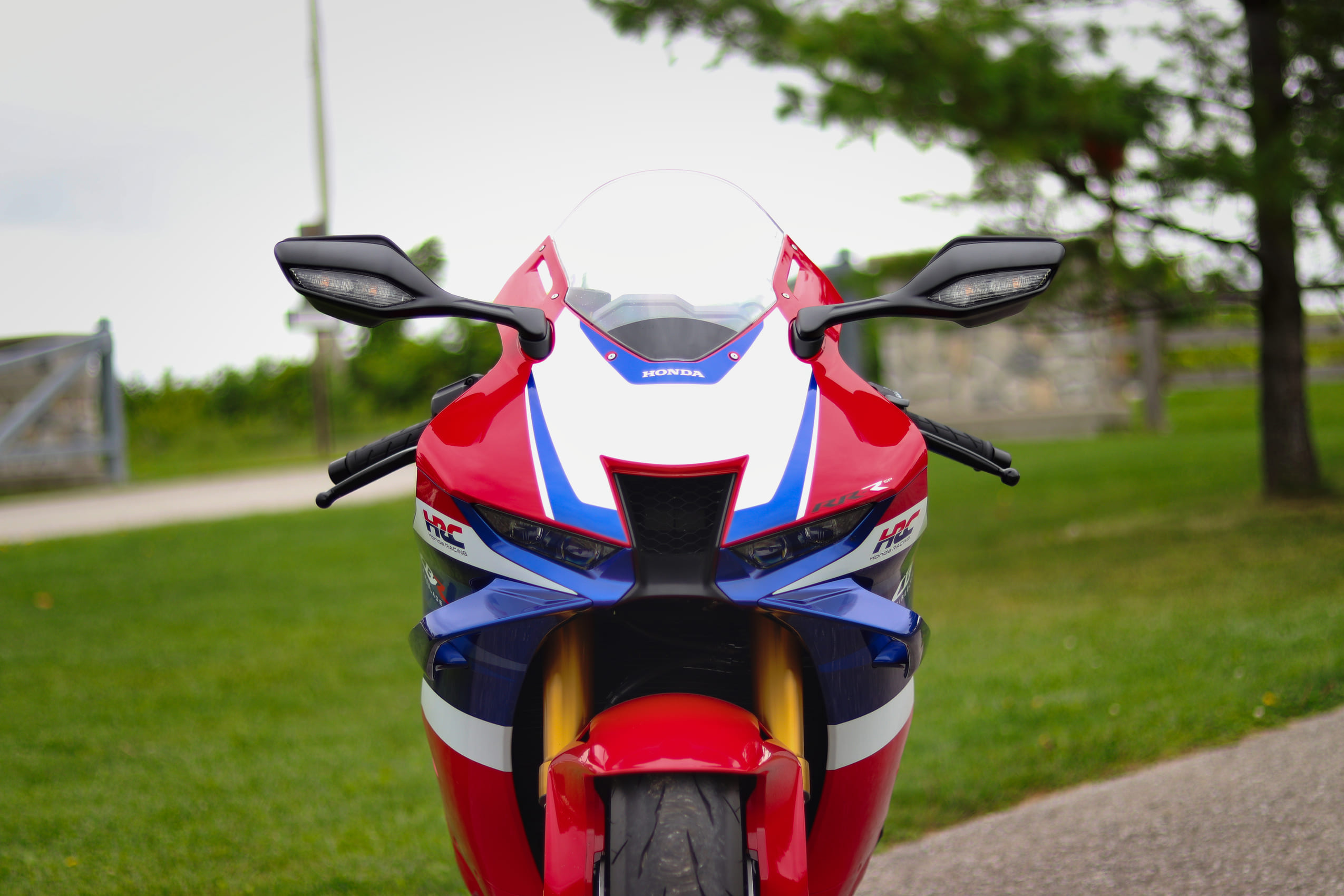
2026 Honda CBR1000RR-R Fireblade SP Review: Pure Mechanical Violence
The 2026 Honda CBR1000RR-R Fireblade SP is not a motorcycle; it is a clinical, unrelenting exercise in absolute mechanical insanity…
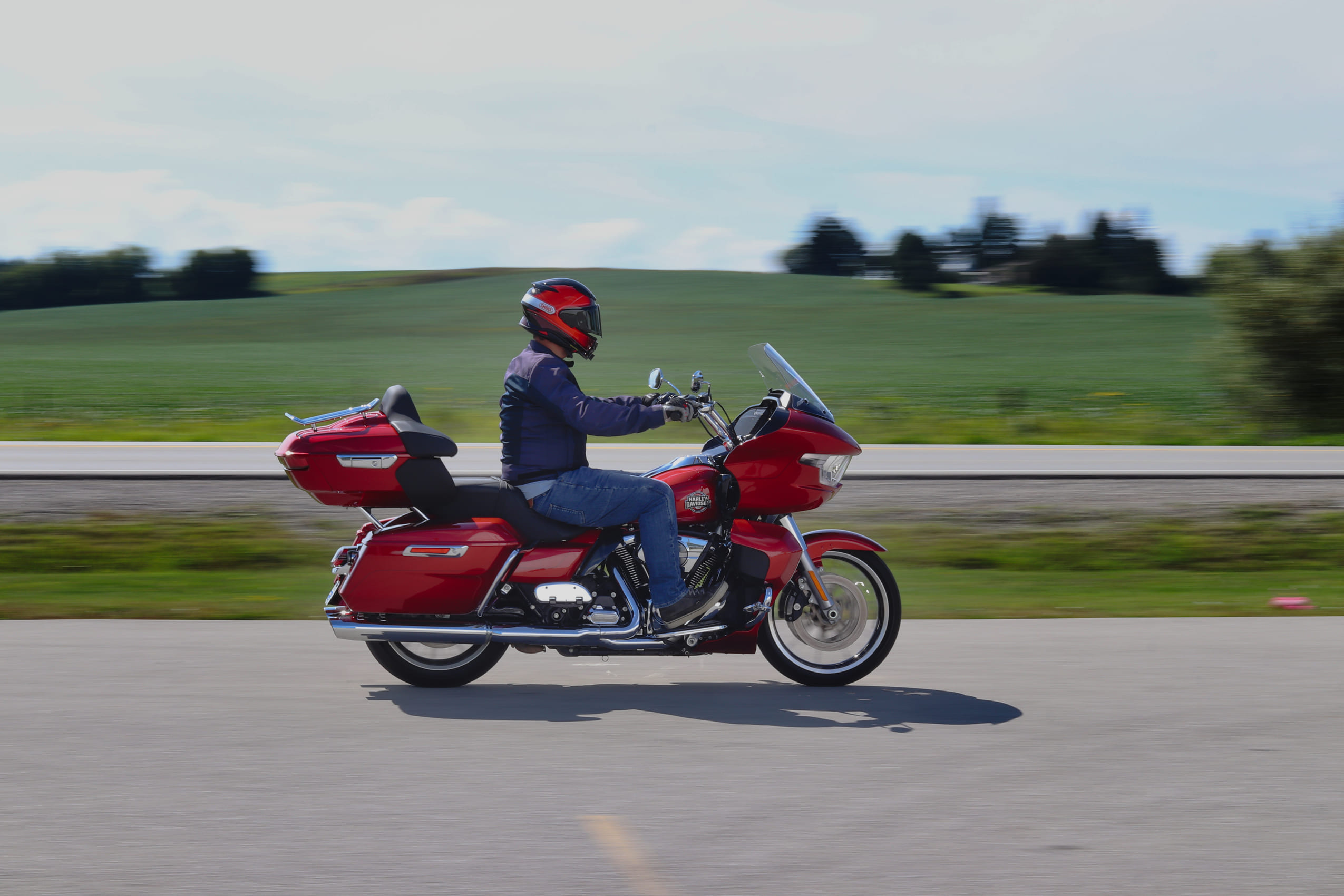
Sharknose Supremacy: Driving the 2026 Harley-Davidson Road Glide
Let’s get one thing straight: the 2026 Harley-Davidson Road Glide shouldn’t make sense. It’s a rolling, 800-pound contradiction—a massive, frame-mounted…
The Anti-ADV Hero: Why the 2026 Honda Transalp is the
Leave it to Honda to look at the entire, absurdly over-engineered, $25,000 middleweight adventure segment—a market flooded with hyper-focused rally…
2026 Suzuki V-Strom 800DE: No V-Twin, No Problem
Words are supposed to mean things. The “V” in V-6 means a V-layout, and for two decades, the “V” in…