The motorcycle world has spent the last decade trapped in a profoundly stupid dick-measuring contest, obsessed with building 200-horsepower, track-focused torture devices that require a spine replacement after every commute. Enter the Suzuki GSX-8R, a machine built on the radical, revolutionary premise that riding on public roads should actually feel good. It actively rejects the miserable, clip-on-induced wrist agony of legacy supersports, offering instead a deeply clever, backroad-carving middleweight that prioritizes sweet, usable torque over spec-sheet bench racing. It proves that when engineers stop building bikes for hyper-obsessive internet commenters and start building them for actual human beings, the result isn’t just sensible—it’s an absolute riot.
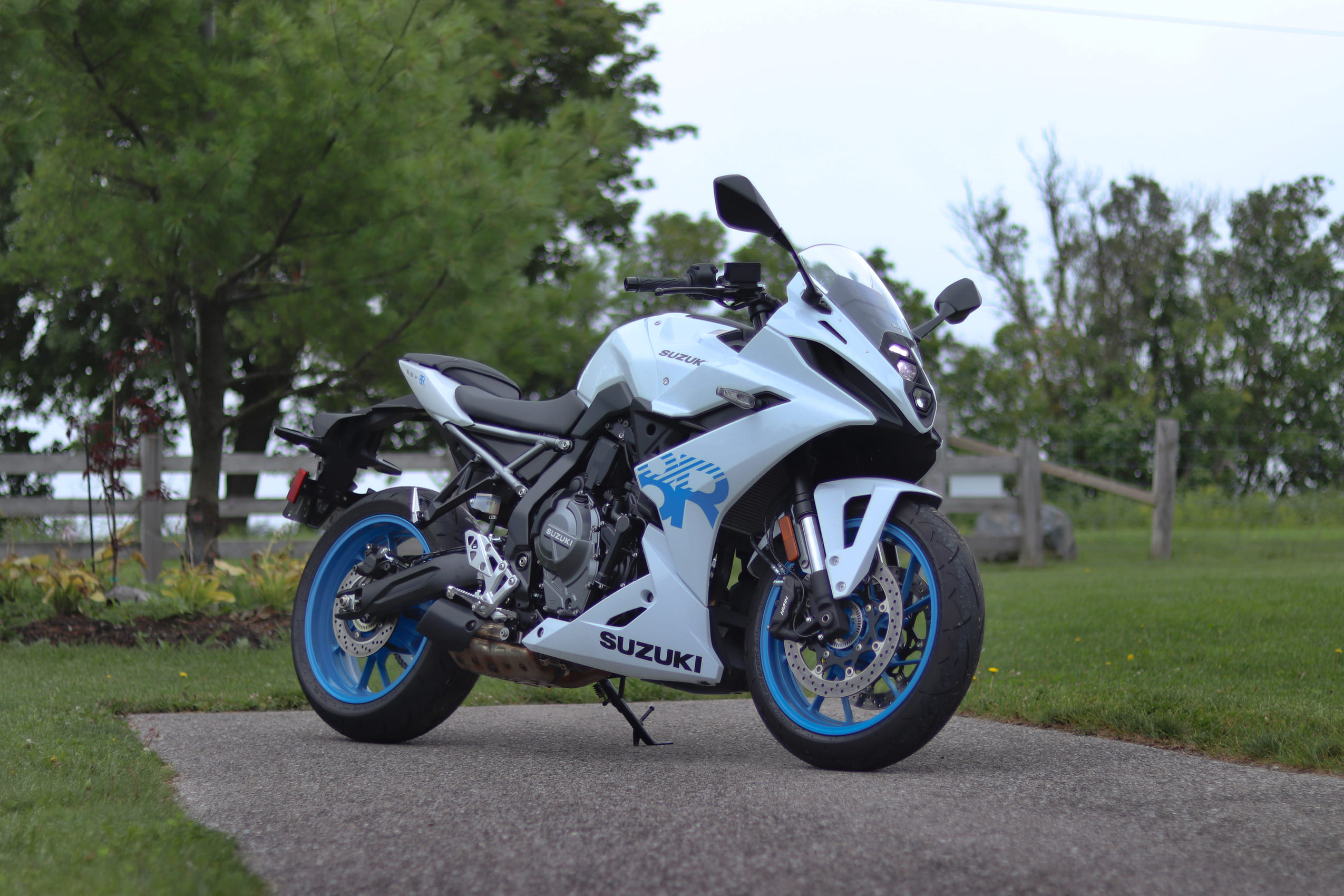
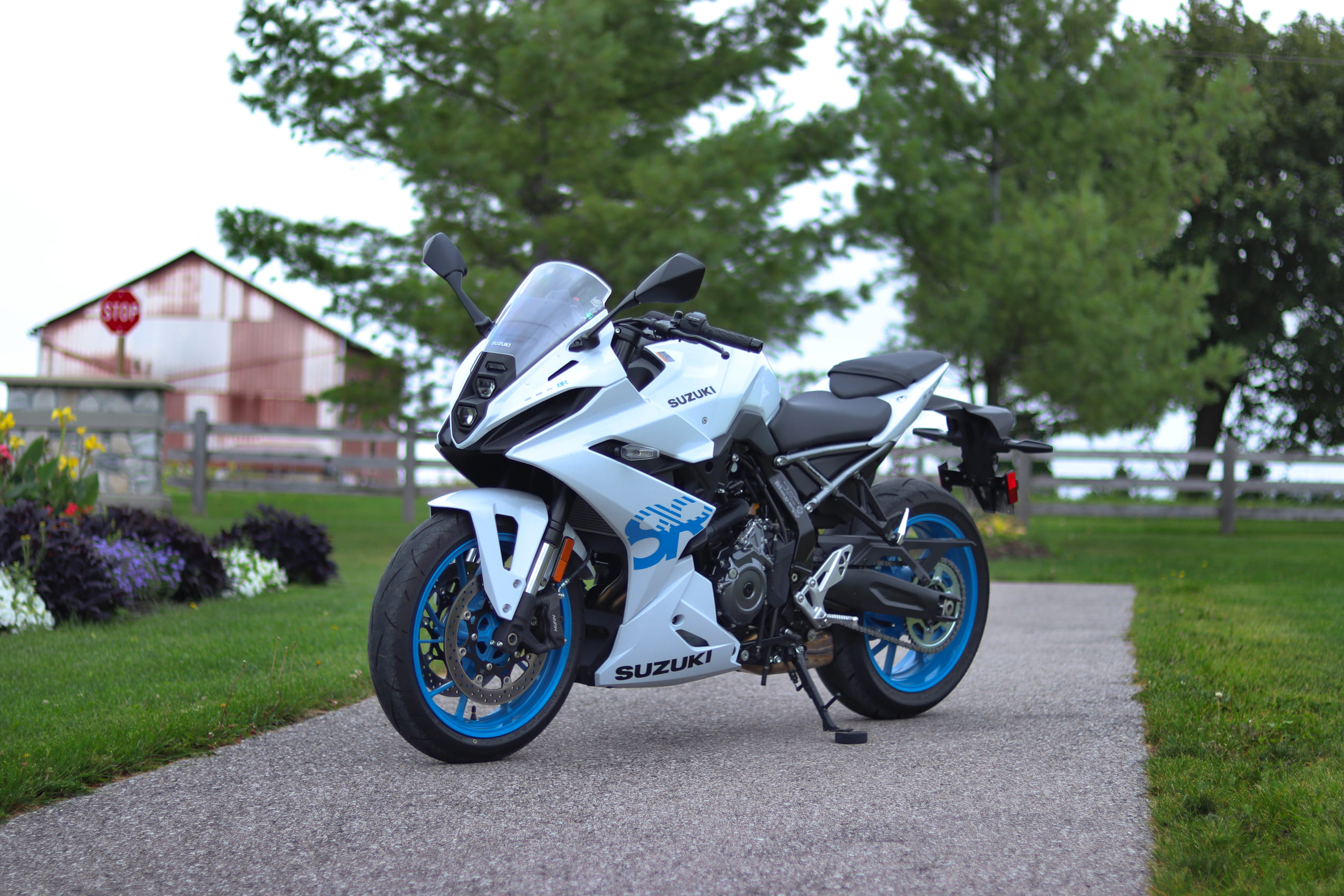
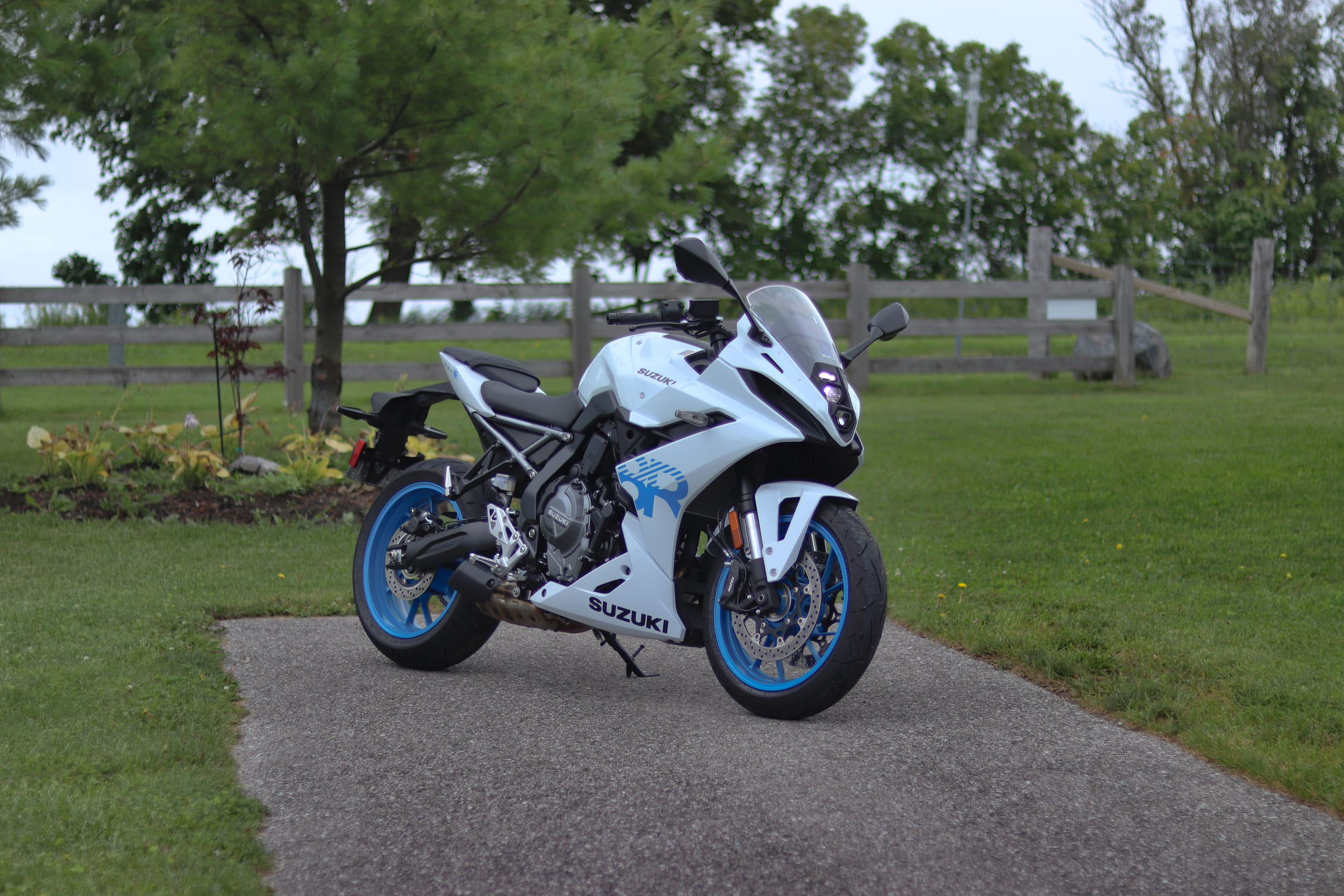
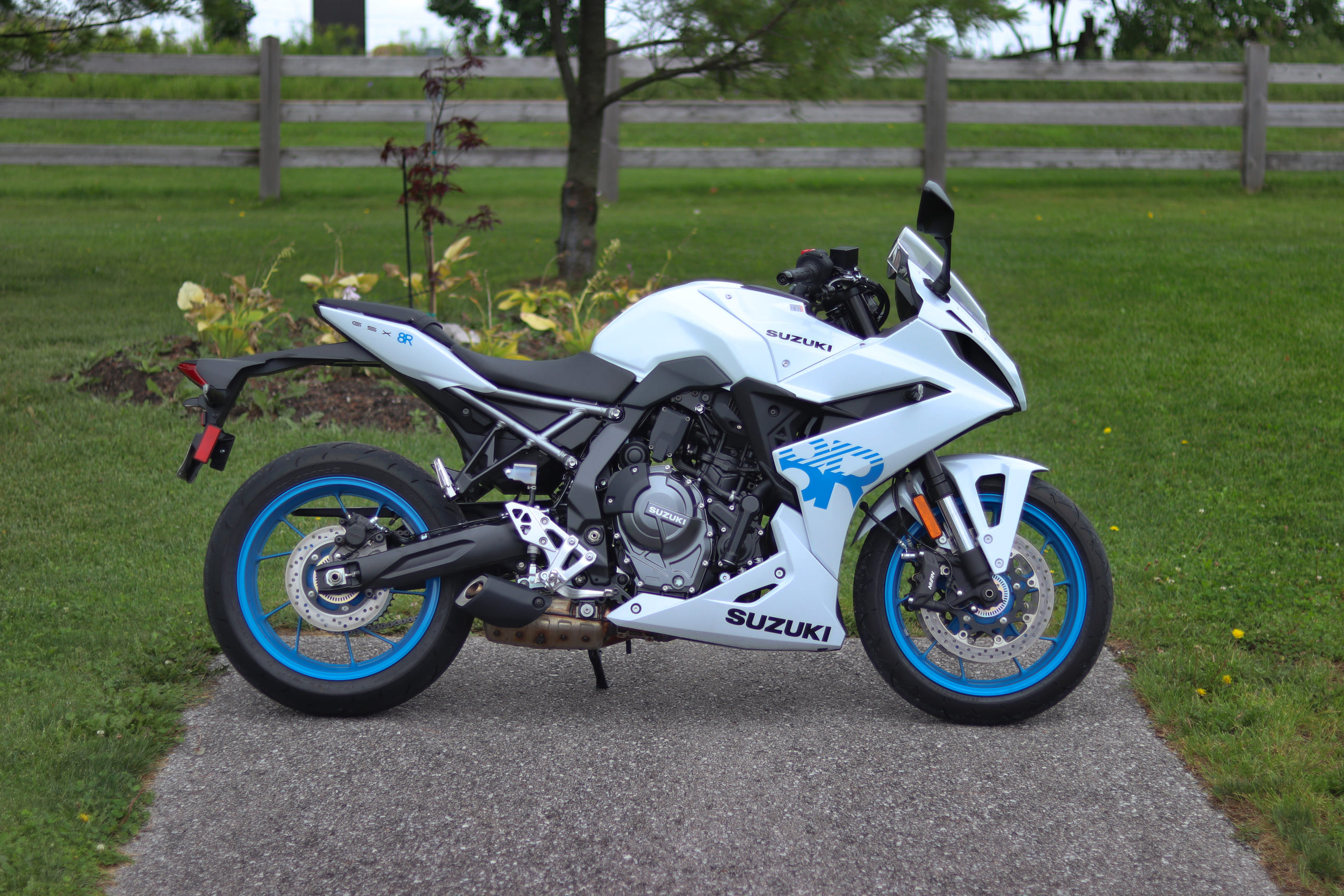
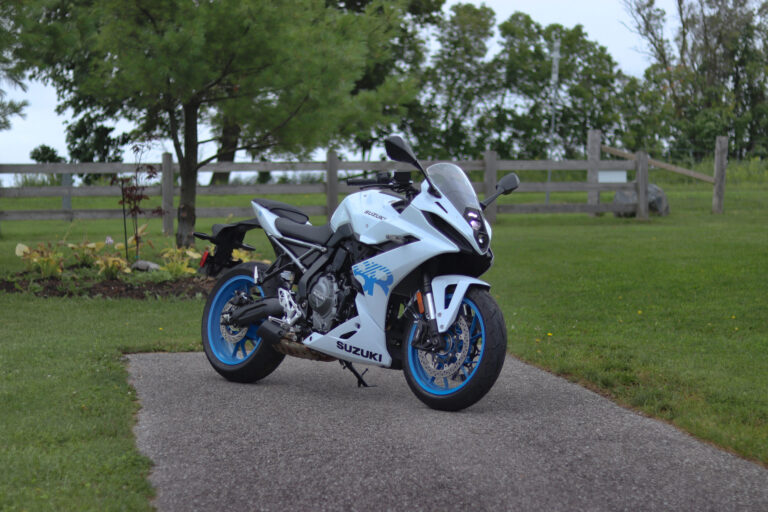
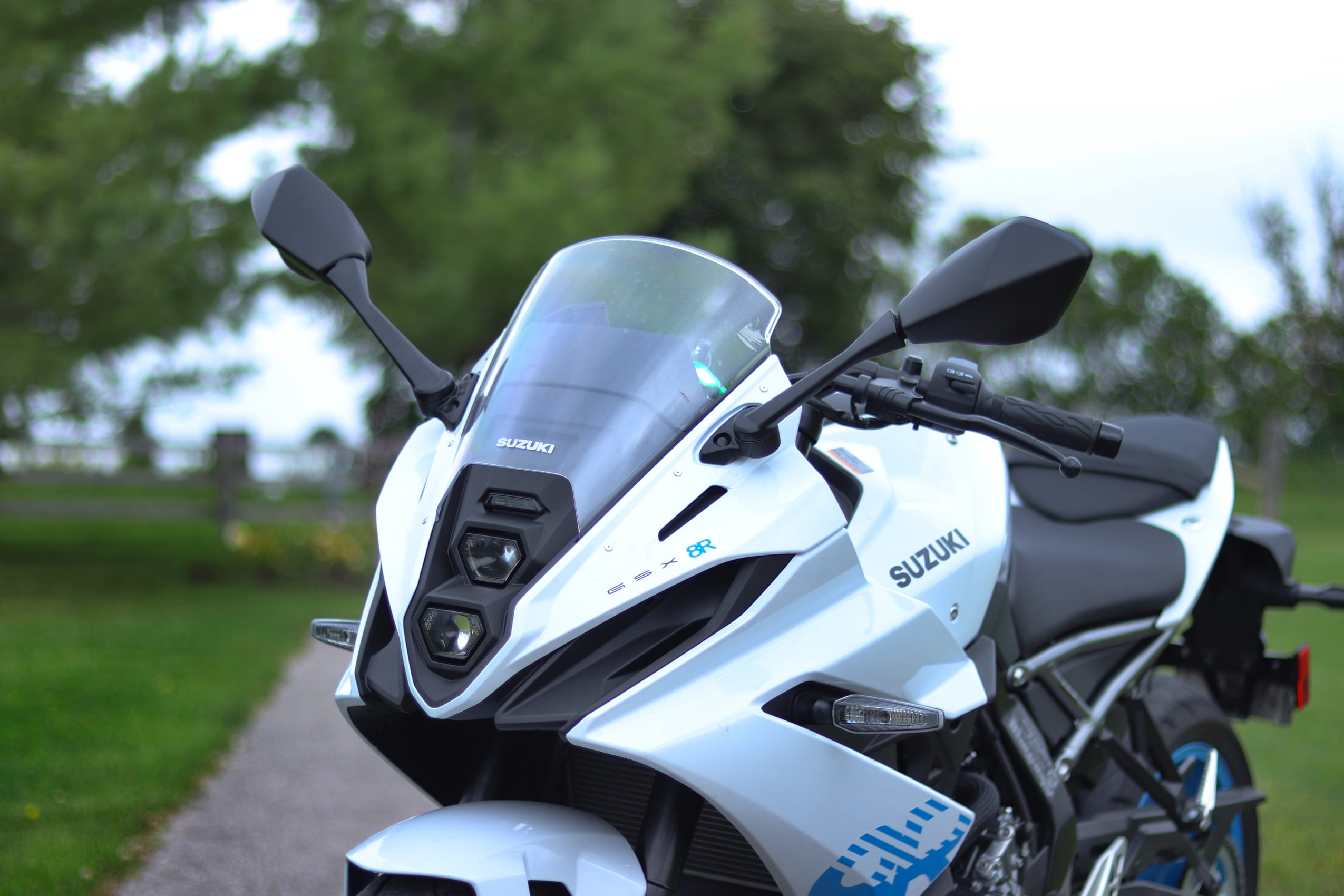
Visually, the GSX-8R looks like Suzuki let the aerodynamics team run wild, only to hand the finished product over to a Japanese origami master with a taste for sharp angles. The stacked LED headlights give it an aggressive, almost predatory front fascia that cleanly cuts through the air without looking like a bloated, bulbous touring rig. There’s a crisp, purposeful line running from the nose straight through the full fairing, wrapping the engine in tight, geometric bodywork that makes it look considerably more expensive—and vastly more exotic—than its mid-tier price tag implies.
Then, you walk around to the back.
The rear end looks like the design department simply ran out of budget on a Friday afternoon, bolting the entire taillight and turn signal assembly onto a massive, dangling plastic fender appendage. It’s objectively awkward, but there is a brilliant, hidden logic to the madness: Suzuki knew precisely what track-day enthusiasts were going to do with this bike. By isolating the entire lighting harness and license plate bracket onto that single removable stalk, converting the GSX-8R into a clean, drag-free track weapon requires removing roughly three bolts instead of spending an entire afternoon rewiring the tail section. It’s ugly by design, purely so you can make it fast in twenty minutes.
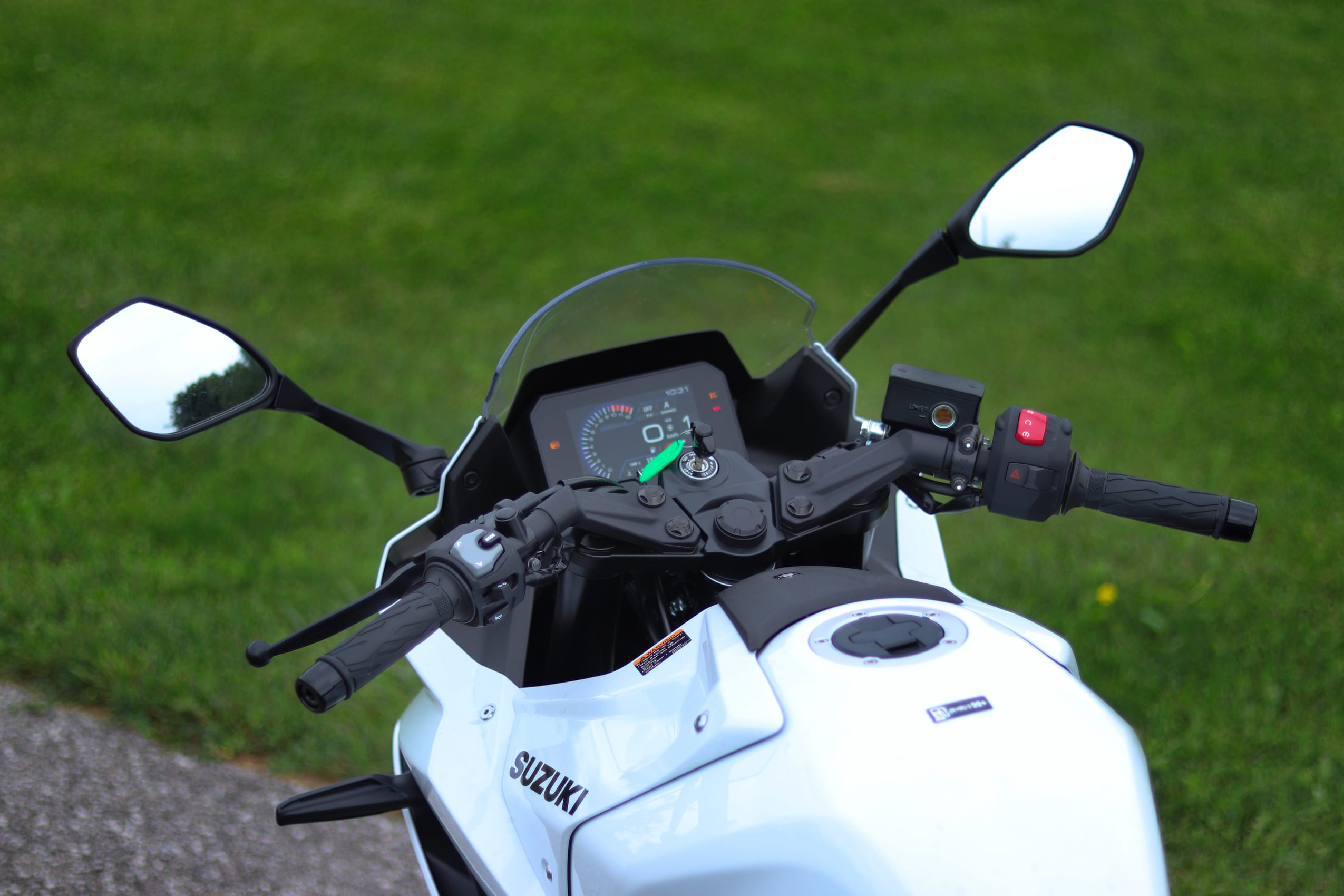
And that thoughtful, rider-first approach carries right over to the dashboard. Flipping the ignition wakes up a crisp, 5-inch color TFT display that completely shames the outdated digital alarm clocks still lingering on some of its rivals. It’s clean, razor-sharp, and uncluttered, showing you precisely what you need—gear position, speed, and revs—without forcing you to navigate through a labyrinth of menus just to read the clock. Better yet, Suzuki resisted the urge to cram the handlebars with twenty identical toggle switches; the menu controls are so intuitive you can adjust settings on the fly without taking your eyes off the apex.
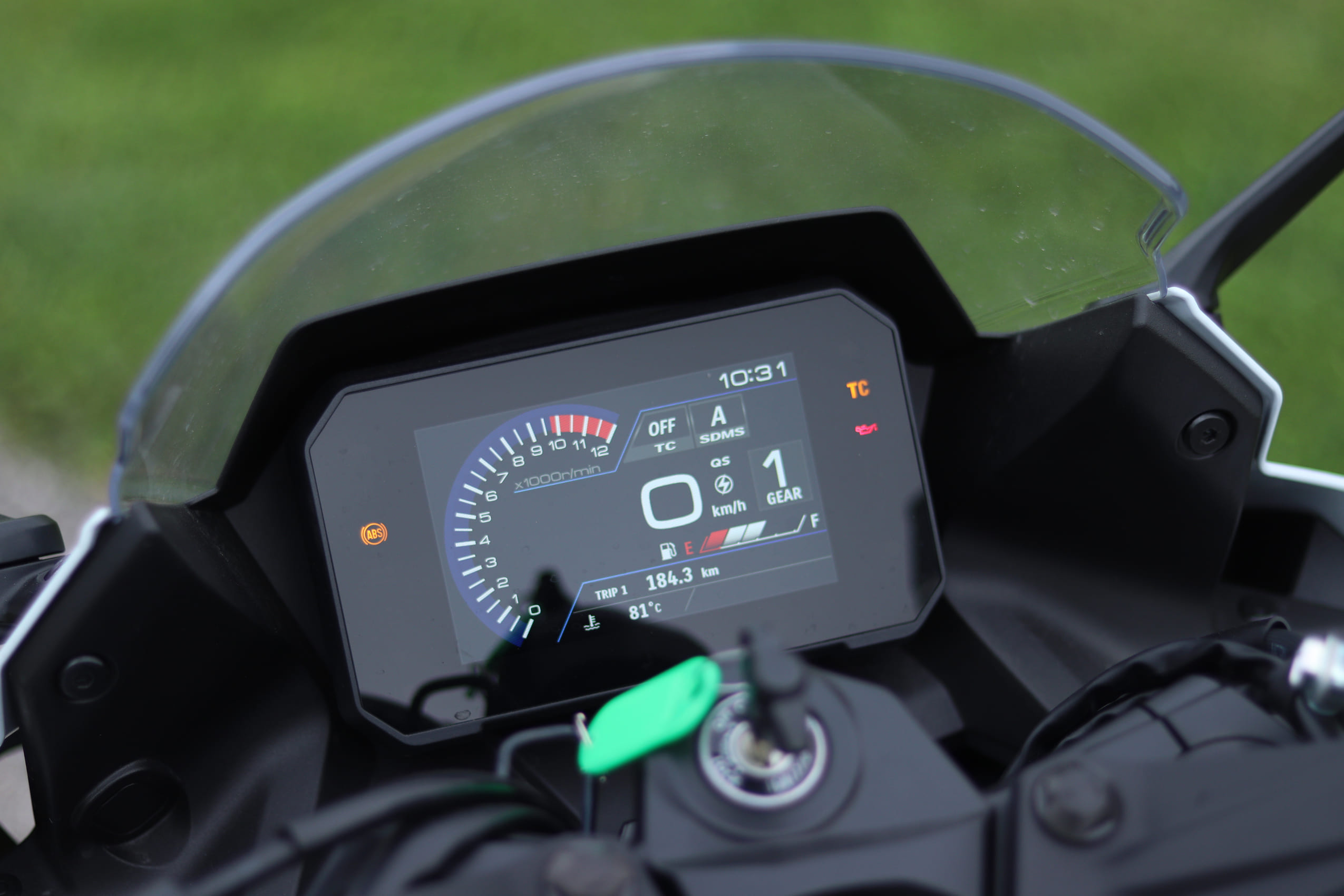
Through that screen, you manage the Suzuki Intelligent Ride System (SIRS), which delivers a suite of electronic rider aids tuned for actual riding rather than marketing brochure point-scoring. You get three selectable drive modes—A, B, and C—that map the throttle response from razor-sharp to rain-ready, alongside a multi-level traction control system that steps in with smooth, unobtrusive precision instead of chopping power like a worried parent. And because Suzuki knows you’re going to ride this thing like you stole it, the system comes standard with a bi-directional quickshifter. The result is a tech package that works silently in the background, making you feel like a telepathic riding god without ever getting in the way of the mechanical connection between your wrist and the rear tire.
Now, step into the engineering bay, where Suzuki’s accountants surprisingly didn’t ruin the fun. The heart of the matter is a liquid-cooled 776cc parallel-twin, but before you groan about another sterile, appliance-like engine layout, listen up. Suzuki stuffed in a 270-degree crankshaft and a patented Cross Balancer system. The result? It completely tricks your brain into thinking there’s a snarling, V-twin rumble between your knees, punching out roughly 83 horsepower and 58 lb-ft of glorious, usable torque right where you actually spend your time riding. It doesn’t force you to wring its neck at 14,000 RPM just to make pass maneuvers; it simply hooks up and hauls from down low, backed by a six-speed transmission that clicks through gears with pure Japanese precision.
To keep all that real-world grunt pinned to the tarmac, Suzuki dumped the cheap budget suspension found on its naked sibling and upgraded the 8R to inverted 41mm Showa SFF-BP forks up front and a Showa shock out back. While the front lacks full adjustability, the damping calibration is so spot-on for aggressive canyon carving that you won’t care. Stopping duties are handled by dual radial-mount four-piston Nissin calipers biting onto massive 310mm floating discs, giving you initial bite sharp enough to toss your brain into your visor without feeling grabby or wooden. Wrap cast aluminum wheels in a set of sticky Dunlop Sportmax Roadsport 2 tires (120/70 front, 180/55 rear), and you’re left with a middleweight chassis that feels planted, predictable, and delightfully telepathic through every twisty sector.
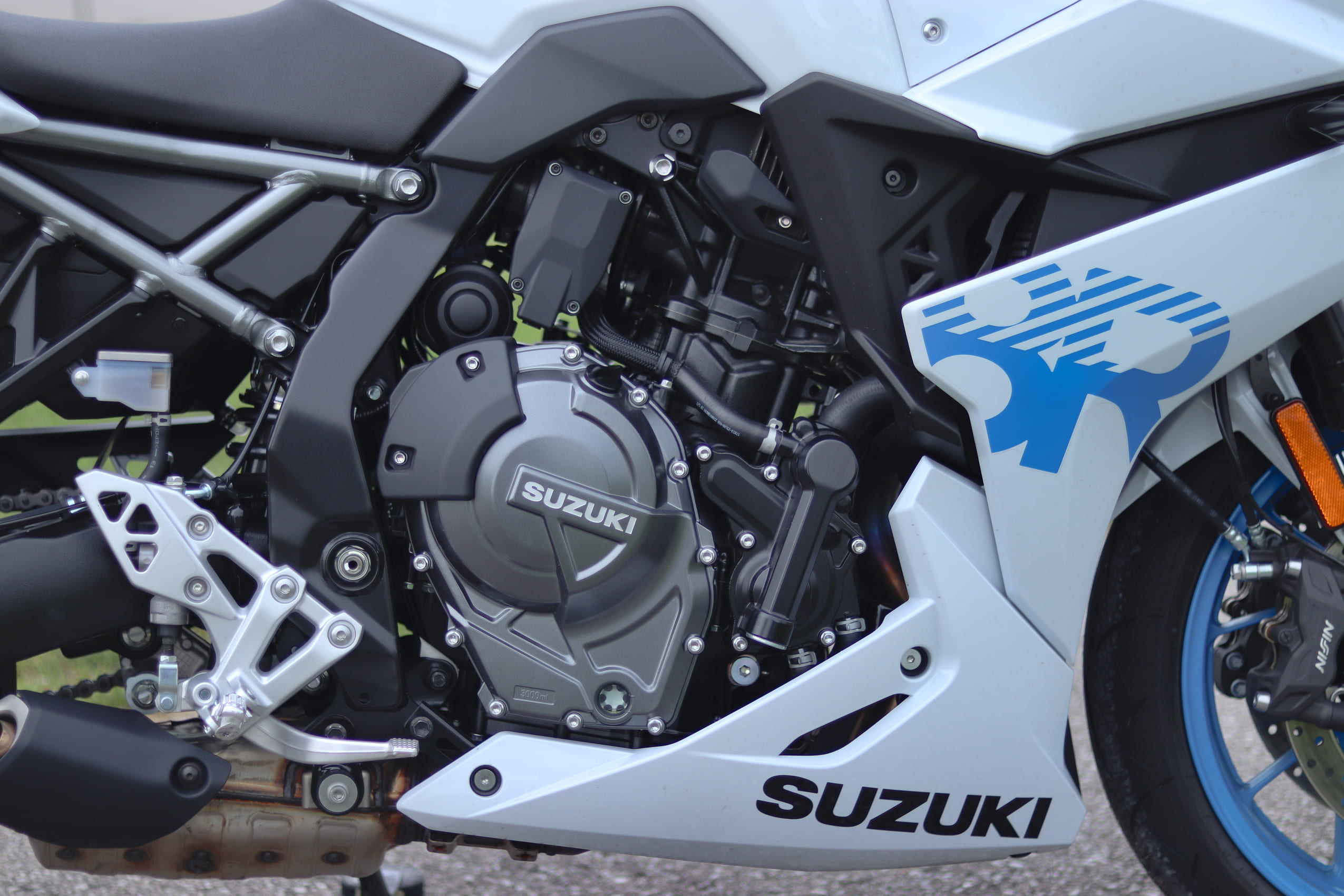
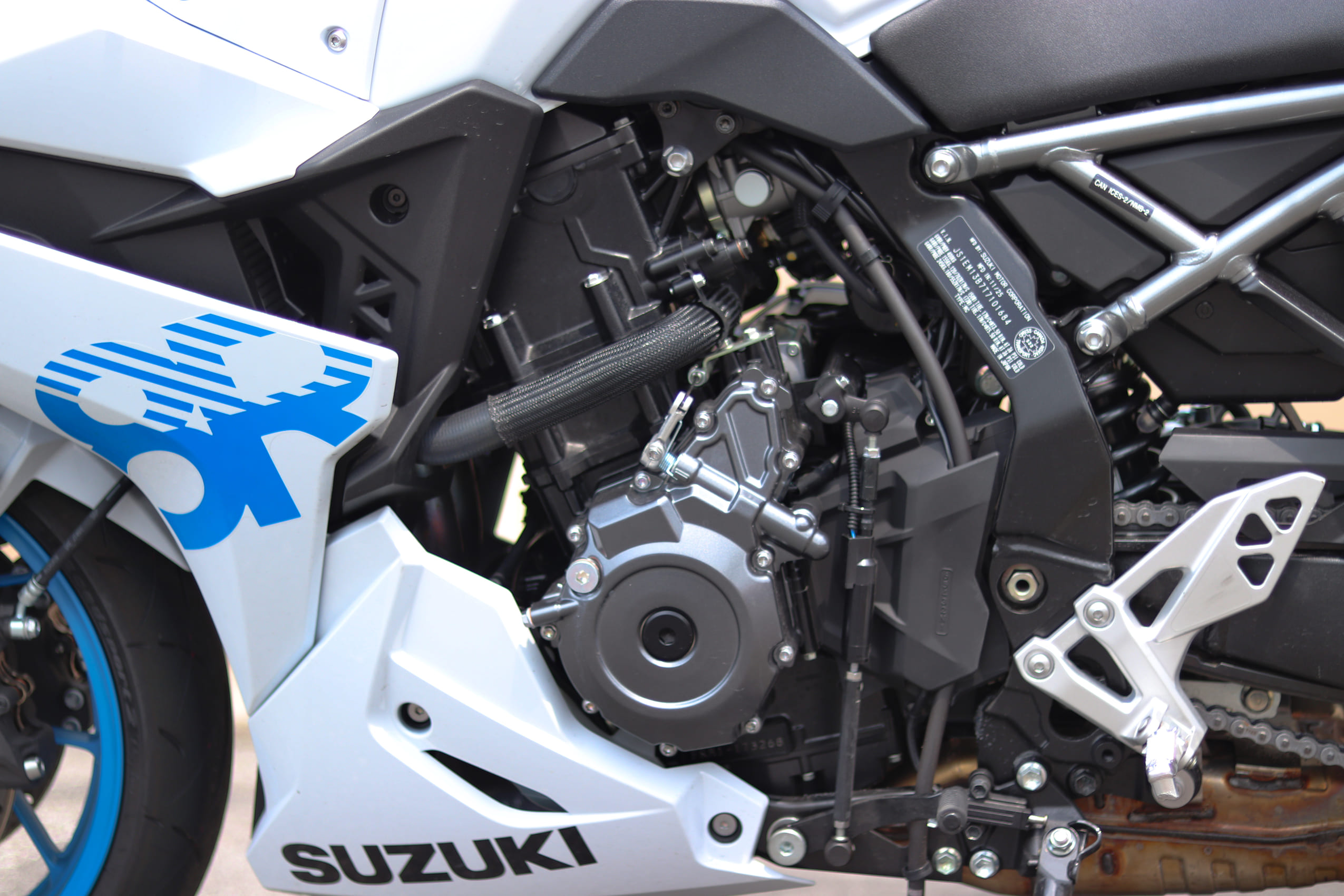
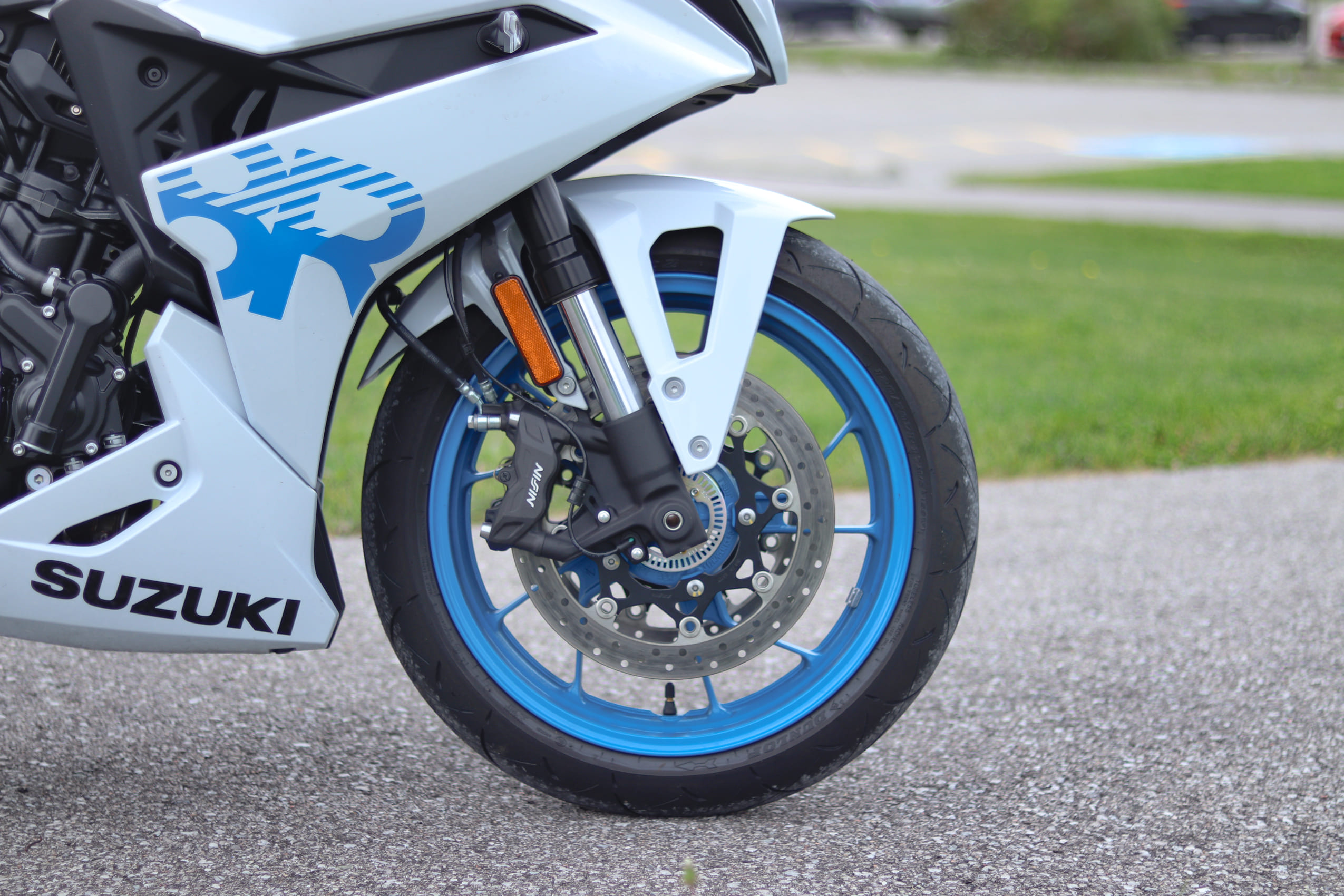
Out on the road, the GSX-8R pulls off a brilliant vanishing act, completely shedding the intimidating baggage that usually comes with a full set of fairings. It is, above all else, disarmingly easy to live with every single day. Yet, the moment the traffic clears and the tarmac begins to snake, it flips a switch—retaining just enough sporty bite and chassis poise to remind you that it can comfortably run a blisteringly quick pace with “proper” fast bikes without sweating its fairings off.
That effortless, everyday capability is anchored by an absolute peach of an engine. The 776cc parallel-twin dumps a mountain of usable torque right into your lap anywhere above 2,000 RPM. Out in the real world, this means you aren’t constantly slapping the gear lever like a madman just to keep the bike in its powerband; you simply lean on that bottom-end grunt and let it pull you out of corners or zip past traffic with minimal fuss.
When you do decide to bang through the gears, however, you’ll encounter one of the bike’s few noticeable quirks: the bi-directional quickshifter. While upshifts are decent under load, downshifts can feel surprisingly notchy, occasionally delivering a sharp, clunky engagement that sends your head lurching forward over the tank. It’s far from a dealbreaker, but it lacks the butter-smooth sophistication found on some of its higher-end European rivals.
Fortunately, the rest of the rolling package gets back to business with cool, calculated predictability. The Showa suspension setup effortlessly swallows up day-to-day road imperfections—potholes, expansion joints, and frost heaves—without feeling like a mushy, under-damped mess, yet it stays remarkably composed when you start pushing a hot pace through sweeping backroads. Matched with a braking system that offers strong, progressive bite without triggering early ABS panic, the chassis gives you total confidence to push without ever feeling like it’s trying to bite you back.
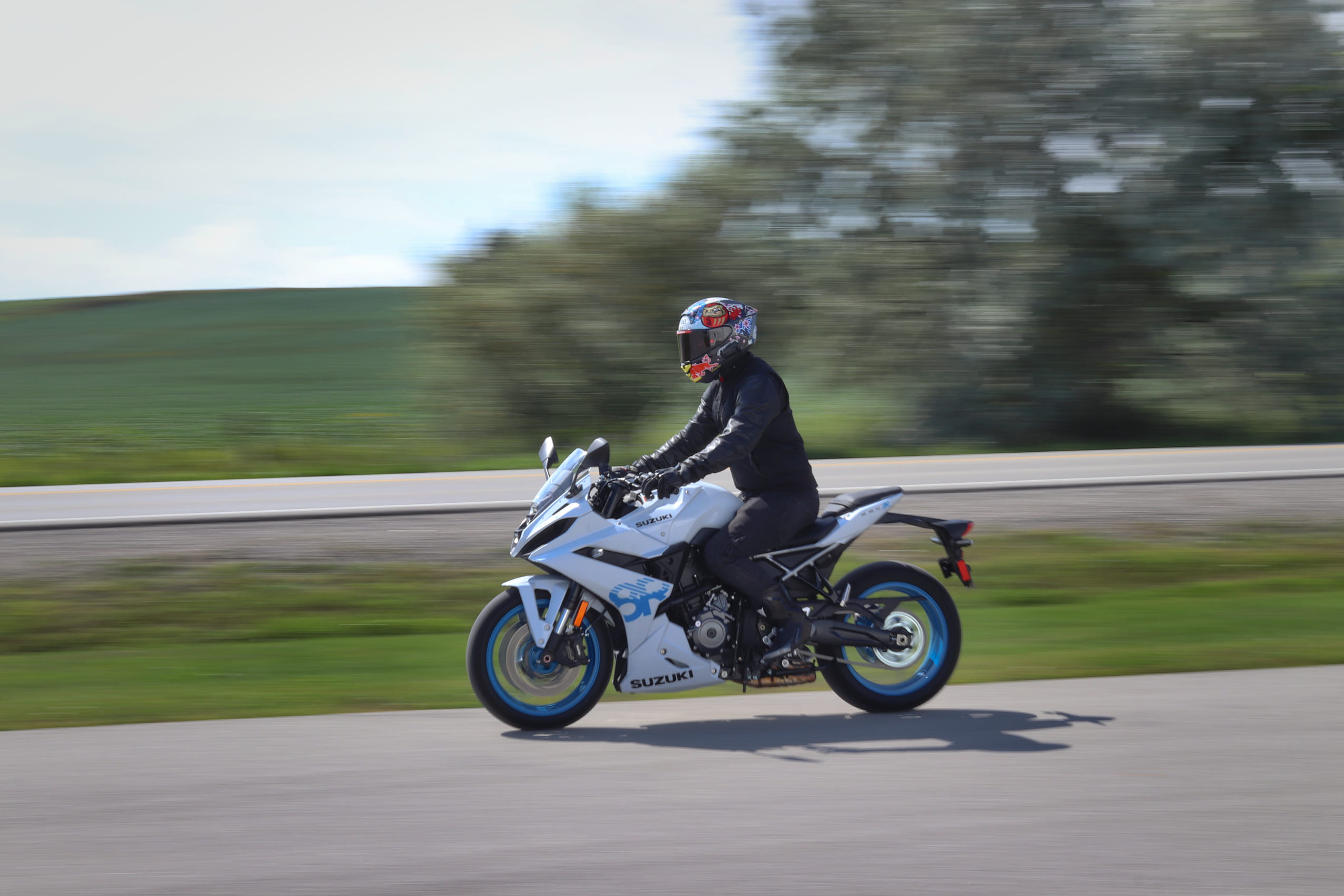
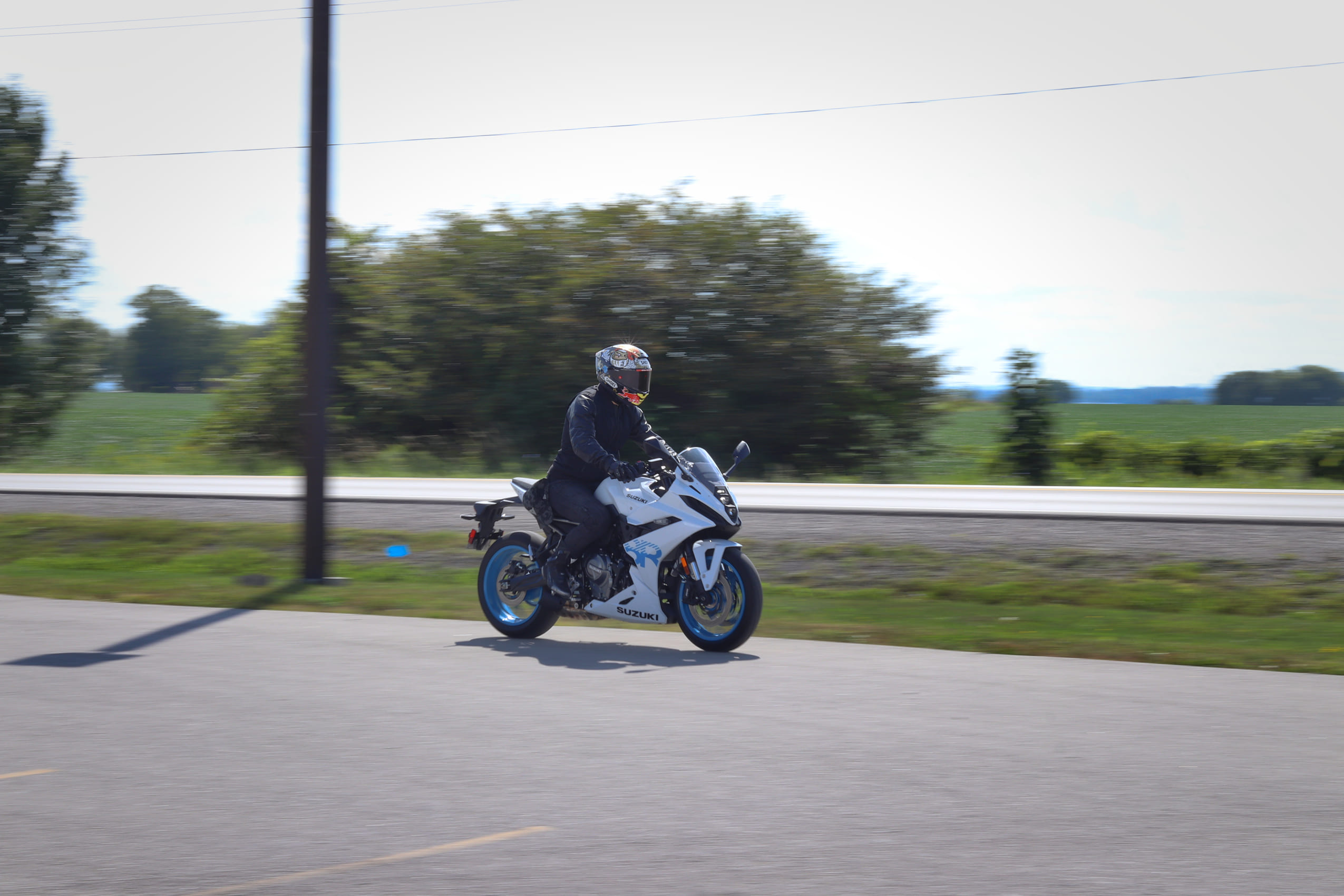
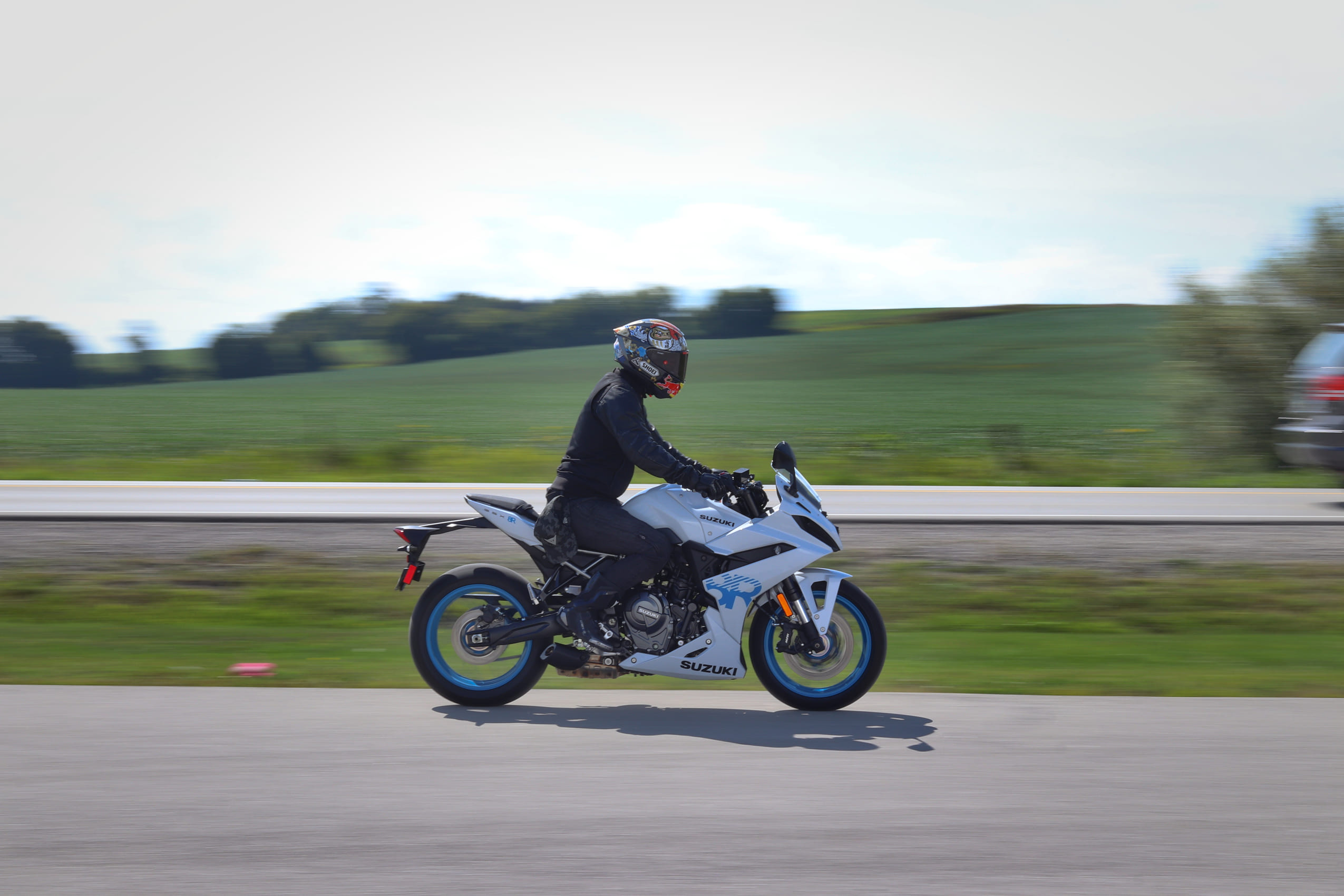
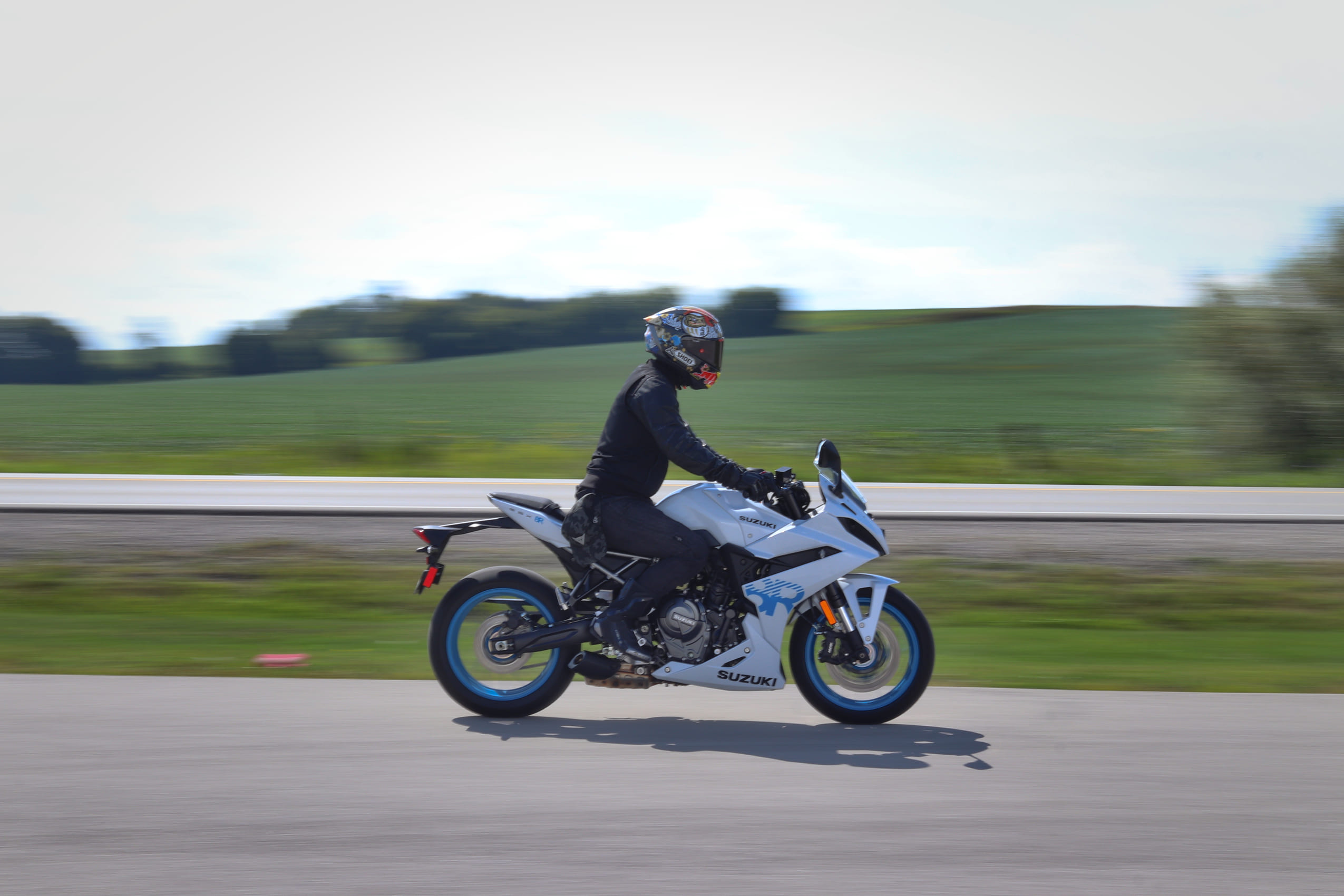
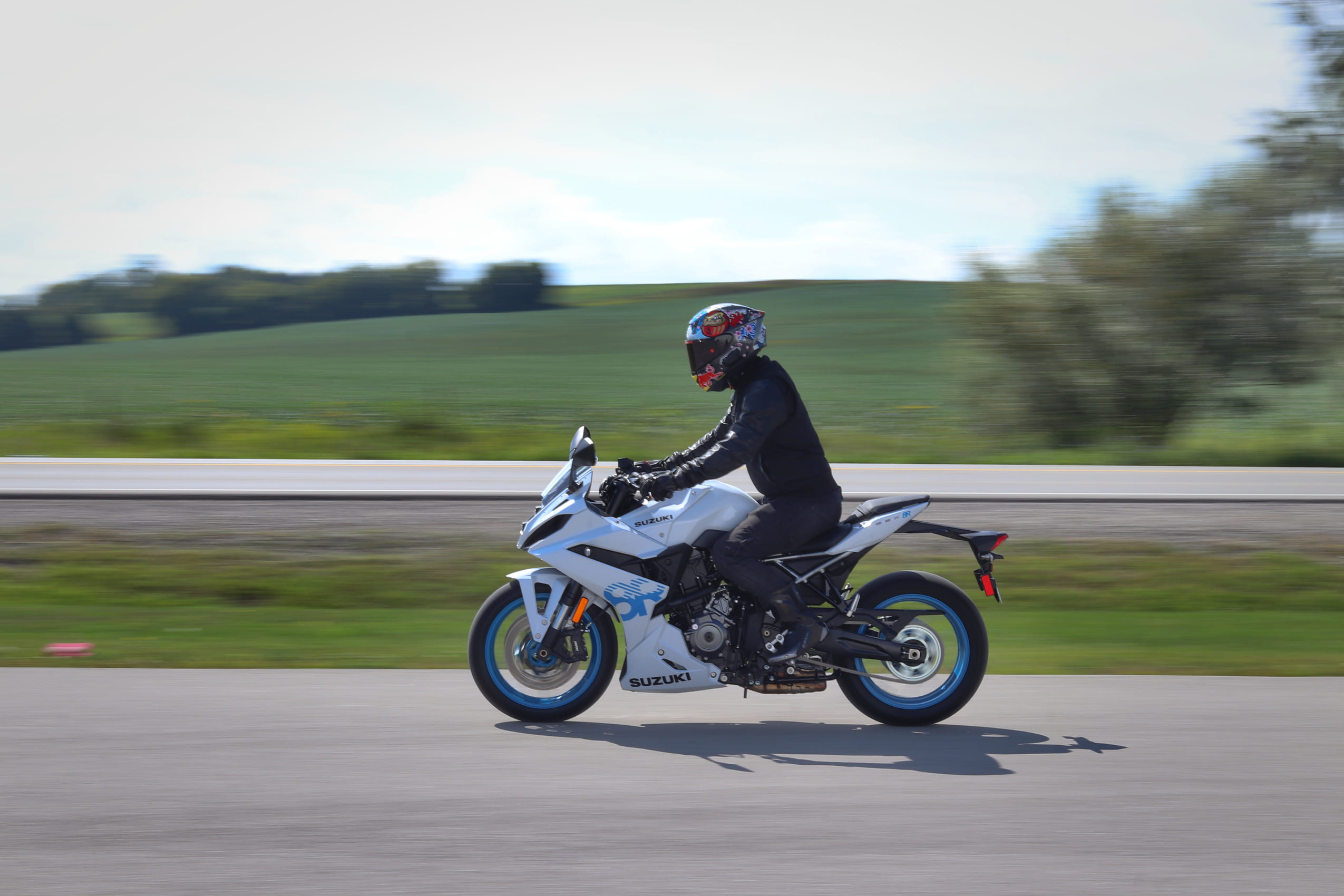
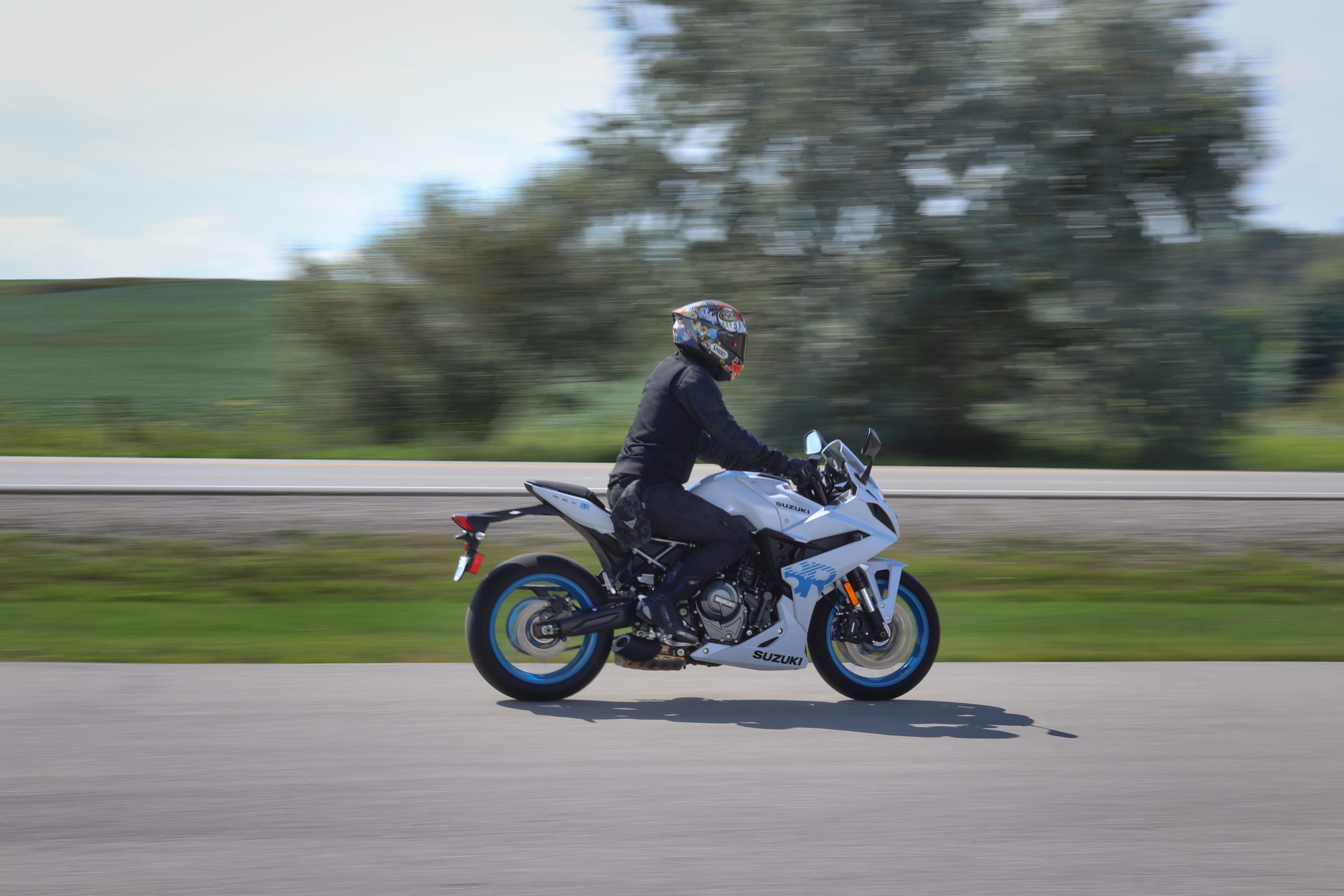
Ultimately, a long stint in the saddle confirms what the spec sheet only hints at: on public roads, the GSX-8R feels far more like a agile, deeply capable sport tourer than a relentless, single-focus supersport. It completely bypasses the punishing, wrist-snapping, spine-compressing torture of a traditional GSX-R600, offering instead a machine that lets you carve up a canyon all morning and still arrive at your destination with your back, wrists, and sanity entirely intact.
The traditional, high-strung 600cc supersport segment is effectively dead, buried under the weight of its own uncompromising ergonomic misery and unusable top-end powerbands. Taking its place is the modern middleweight sport bike revolution—and the Suzuki GSX-8R steps squarely into the arena to trade blows directly with heavyweights like the Aprilia RS660 and Yamaha R7. By masterfully blending real-world ergonomics, punchy low-end torque, and surprisingly robust chassis hardware, Suzuki has built a machine that proves you don’t need to suffer to ride fast on public roads. It stands as a brilliant, versatile testament to where the sport bike market is headed—though how this comfortable daily commuter holds up when pushed to its absolute limits around a proper circuit is another story entirely. Stay tuned for our full track review coming up next.
| 2026 Suzuki GSX-8R Specifications – www.suzuki.ca | |
|---|---|
| Engine | 776cc parallel-twin, DOHC, 4-stroke, liquid-cooled, 270-degree crankshaft |
| Power / Torque | 82.0 hp @ 8,500 rpm / 57.5 lb-ft @ 6,800 rpm |
| Curb Weight | 452 lbs (205 kg) |
| Front Suspension | Inverted 41mm Showa SFF-BP (Separate Function Fork – Big Piston), non-adjustable |
| Rear Suspension | Showa shock with adjustable spring preload |
| Front Brakes | Dual radial-mount Nissin 4-piston calipers, 310mm floating discs, ABS |
| Rear Brakes | Single-piston Nissin caliper, 240mm disc, ABS |
| Seat Height | 31.9 in (810 mm) |
| Fuel Capacity | 3.7 US gal (14.0 L) |
| Electronics | 5-inch full-color TFT display, Suzuki Intelligent Ride System (SIRS), 3 Ride Modes (SDMS), 4-mode Traction Control (STCS), Bi-directional Quickshifter, Suzuki Easy Start System, Low RPM Assist |
| Price (MSRP) | $11,995 CAD |
2026 Suzuki GSX-8R: The Middleweight Sport Bike Formula Done Right
The motorcycle world has spent the last decade trapped in a profoundly stupid dick-measuring contest, obsessed with building 200-horsepower, track-focused…

British Precision vs. Italian Violence: 2026 Ducati Streetfighter V2S vs.
Human beings are inherently absurd creatures, but nowhere is that absurdity more evident than in our willingness to strap our…
2026 Honda CBR1000RR-R Fireblade SP Review: Pure Mechanical Violence
The 2026 Honda CBR1000RR-R Fireblade SP is not a motorcycle; it is a clinical, unrelenting exercise in absolute mechanical insanity…
Sharknose Supremacy: Driving the 2026 Harley-Davidson Road Glide
Let’s get one thing straight: the 2026 Harley-Davidson Road Glide shouldn’t make sense. It’s a rolling, 800-pound contradiction—a massive, frame-mounted…
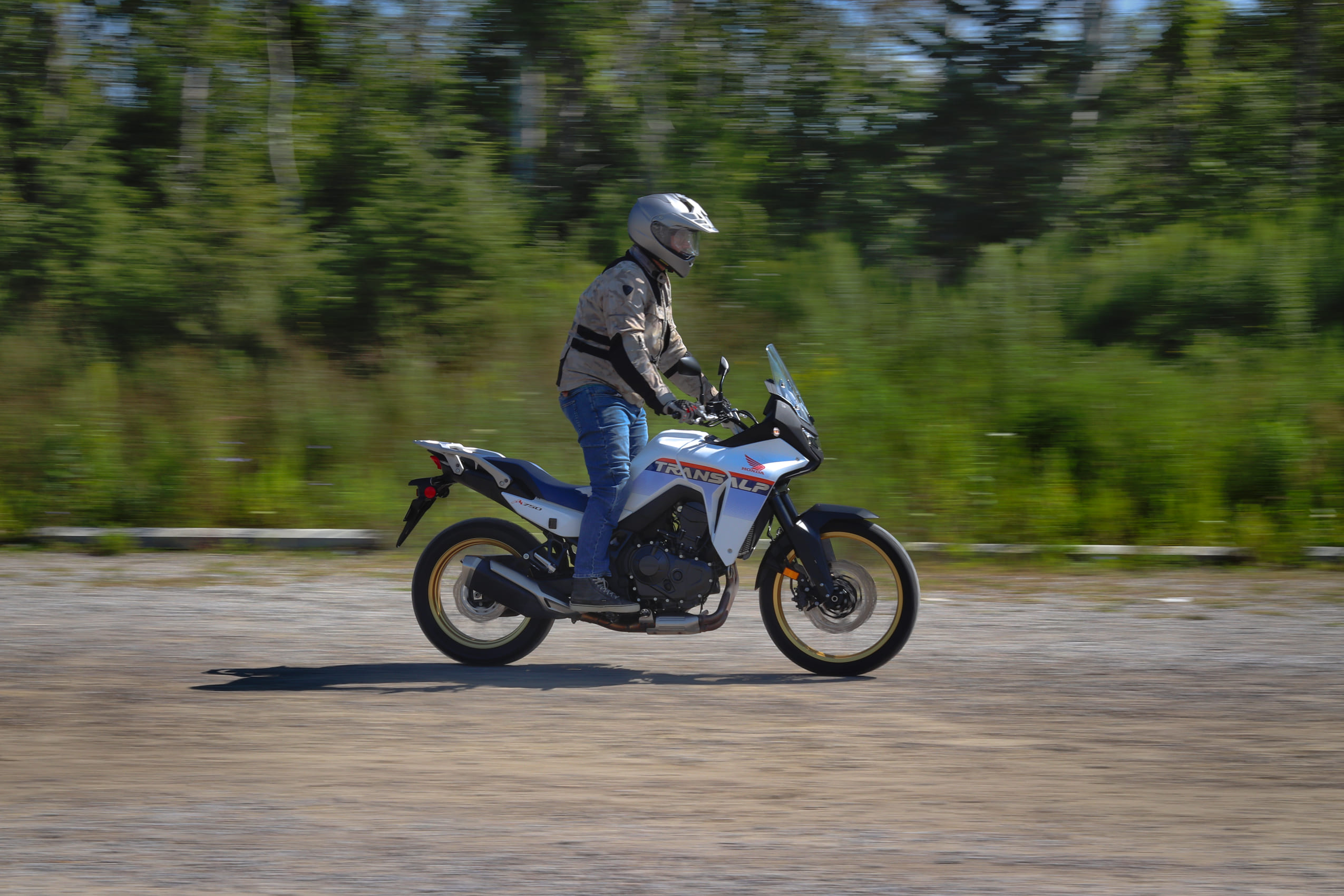
The Anti-ADV Hero: Why the 2026 Honda Transalp is the
Leave it to Honda to look at the entire, absurdly over-engineered, $25,000 middleweight adventure segment—a market flooded with hyper-focused rally…
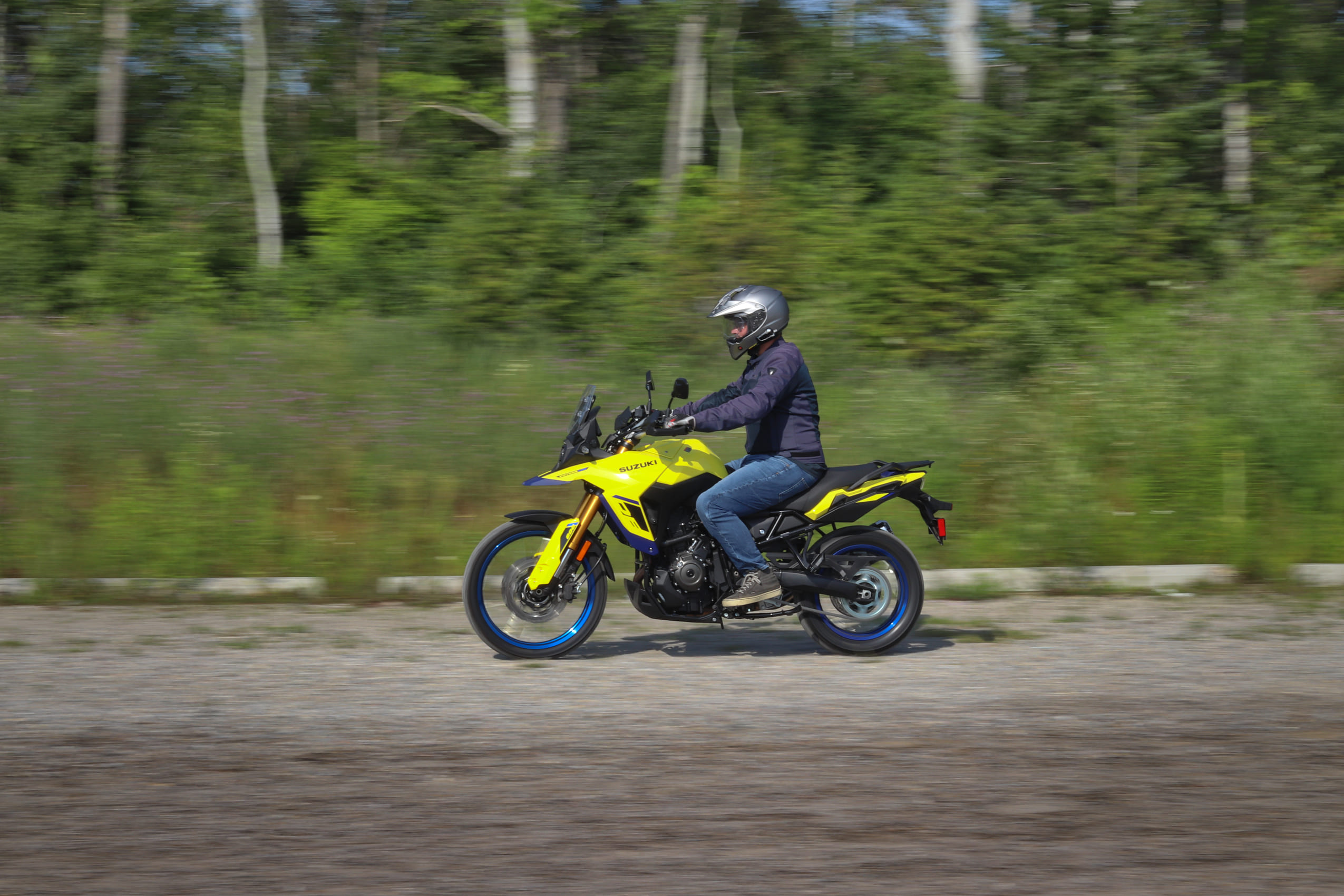
2026 Suzuki V-Strom 800DE: No V-Twin, No Problem
Words are supposed to mean things. The “V” in V-6 means a V-layout, and for two decades, the “V” in…