The 2026 Honda CBR1000RR-R Fireblade SP is not a motorcycle; it is a clinical, unrelenting exercise in absolute mechanical insanity that exists for the sole purpose of turning your self-preservation instincts into a pile of ash. It makes zero sense on a public road—it’s loud, it’s uncomfortable, and riding it anywhere near civil society is like bringing a surgical scalpels-and-napalm rig to a butter knife fight. But the second you stop trying to make logical excuses for its existence and let Honda’s obsessed engineers kidnap your nervous system, you realize this isn’t just another hyper-literbike—it is a manic, redlining masterpiece built by people who clearly care way more about lap times than your spinal integrity.
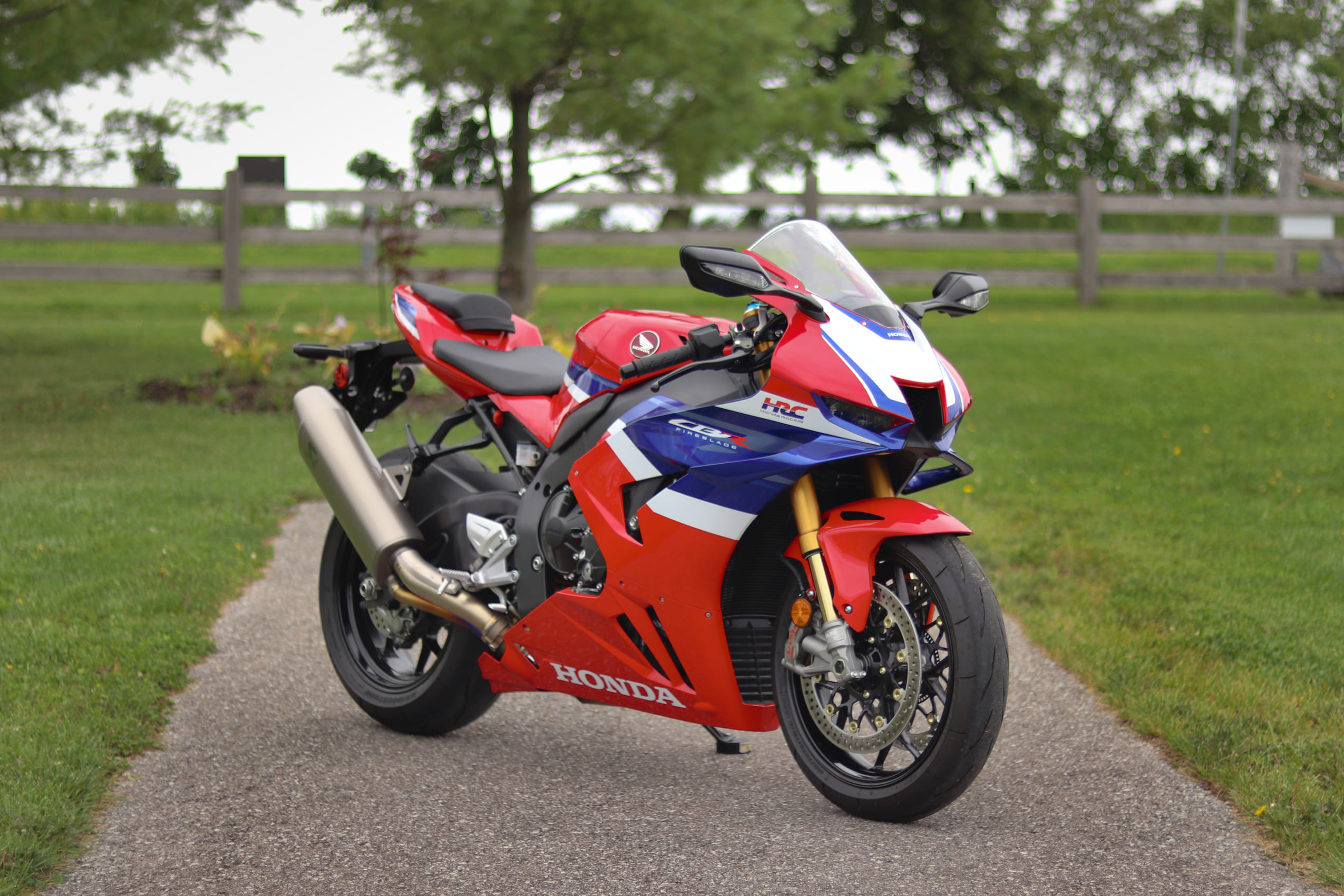
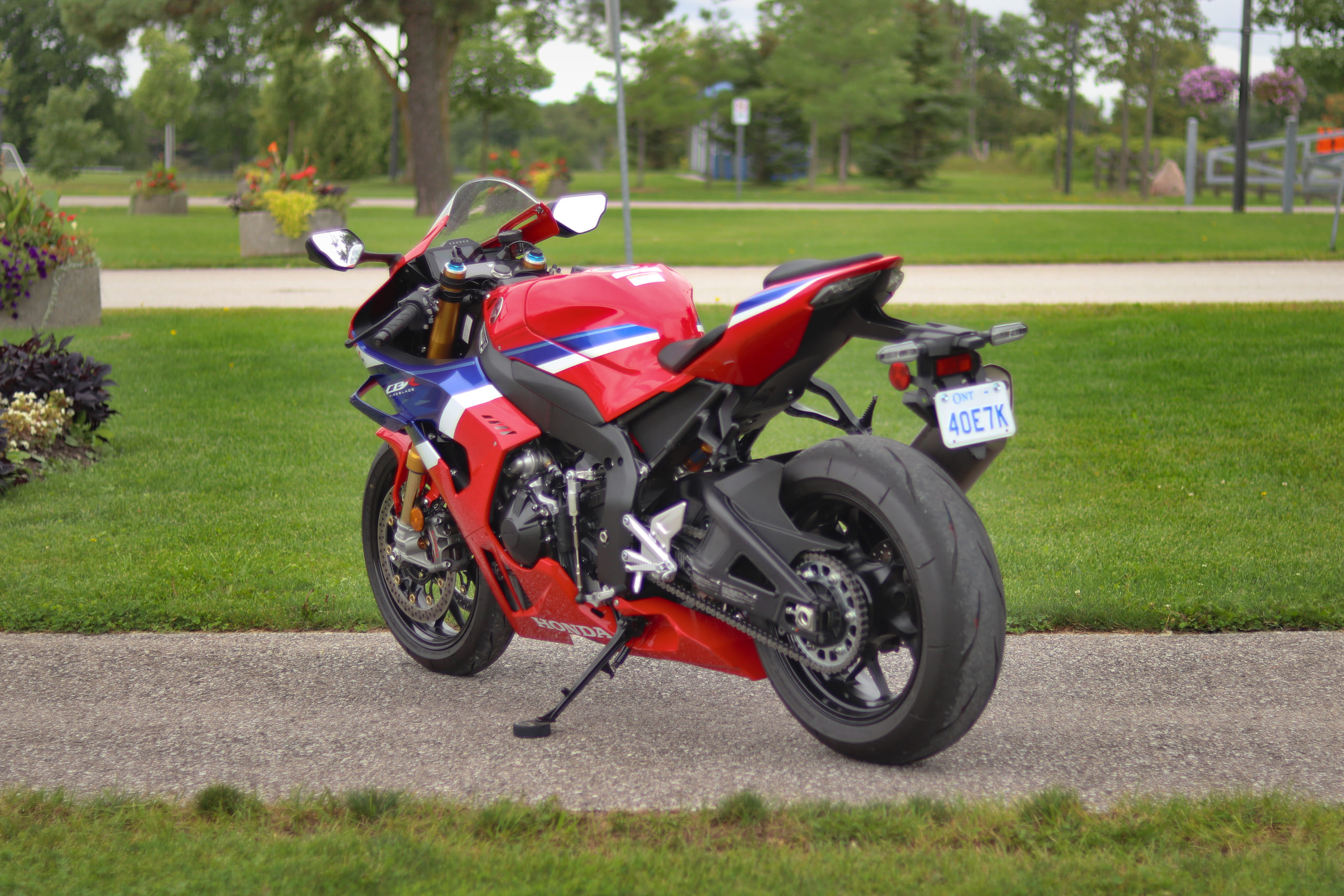
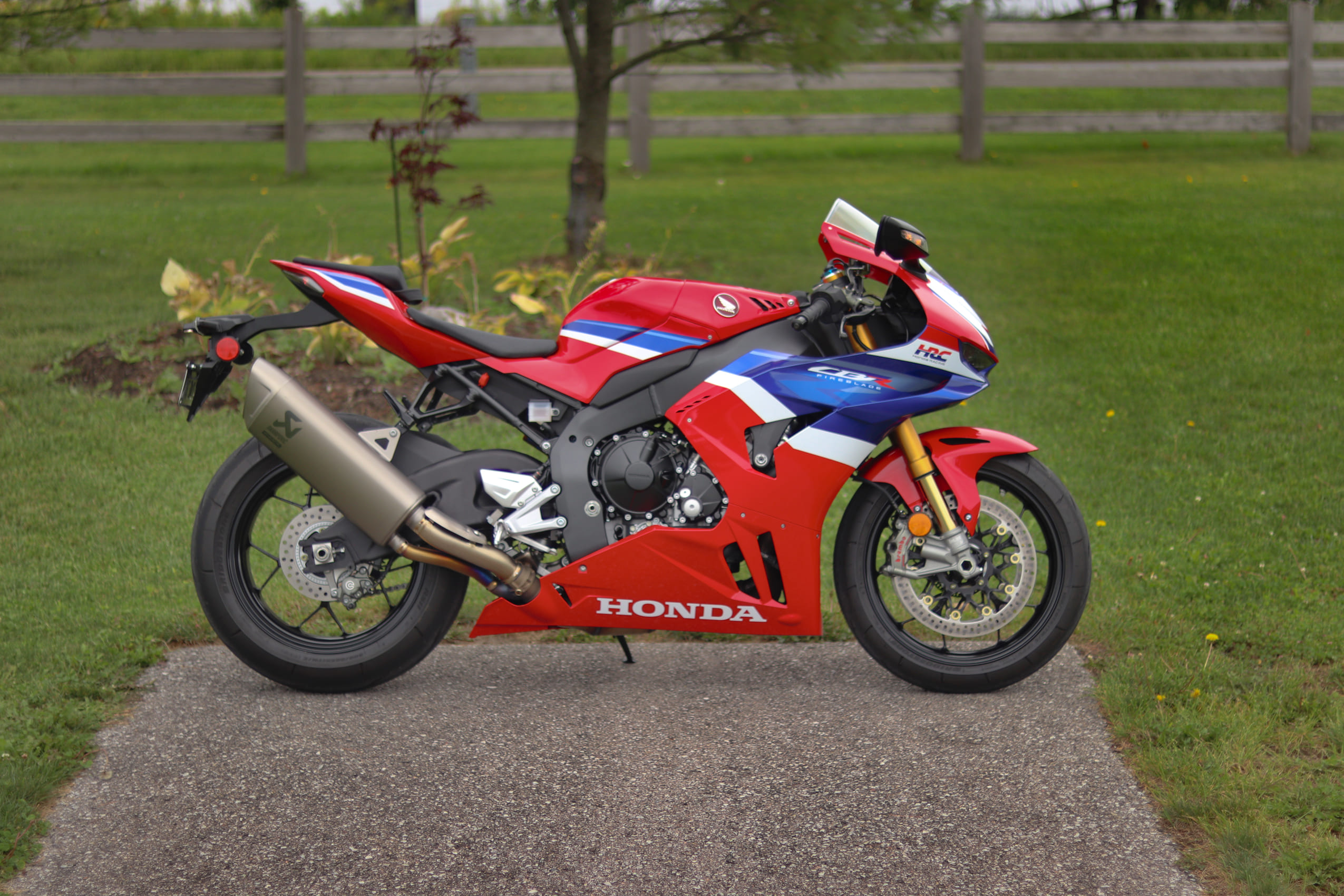
The 2026 Honda CBR1000RR-R Fireblade SP is not a motorcycle; it is a clinical, unrelenting exercise in absolute mechanical insanity that exists for the sole purpose of turning your self-preservation instincts into a pile of ash. It makes zero sense on a public road—it’s loud, it’s uncomfortable, and riding it anywhere near civil society is like bringing a surgical scalpels-and-napalm rig to a butter knife fight. But the second you stop trying to make logical excuses for its existence and let Honda’s obsessed engineers kidnap your nervous system, you realize this isn’t just another hyper-literbike—it is a manic, redlining masterpiece built by people who clearly care way more about lap times than your spinal integrity.
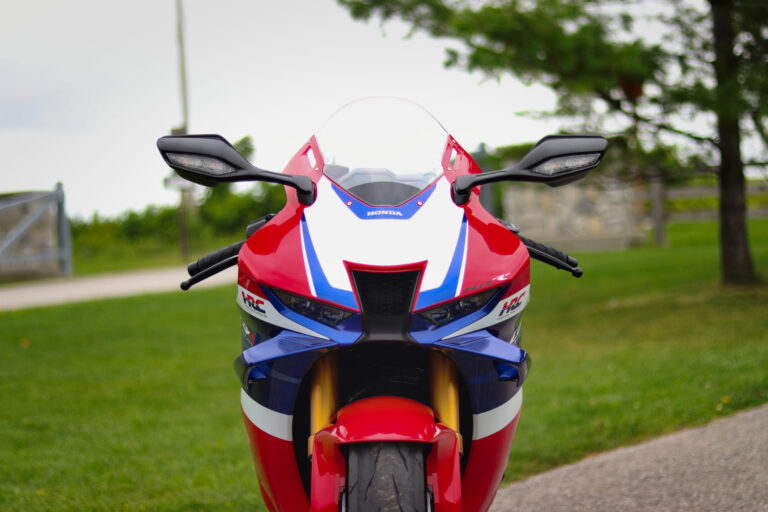
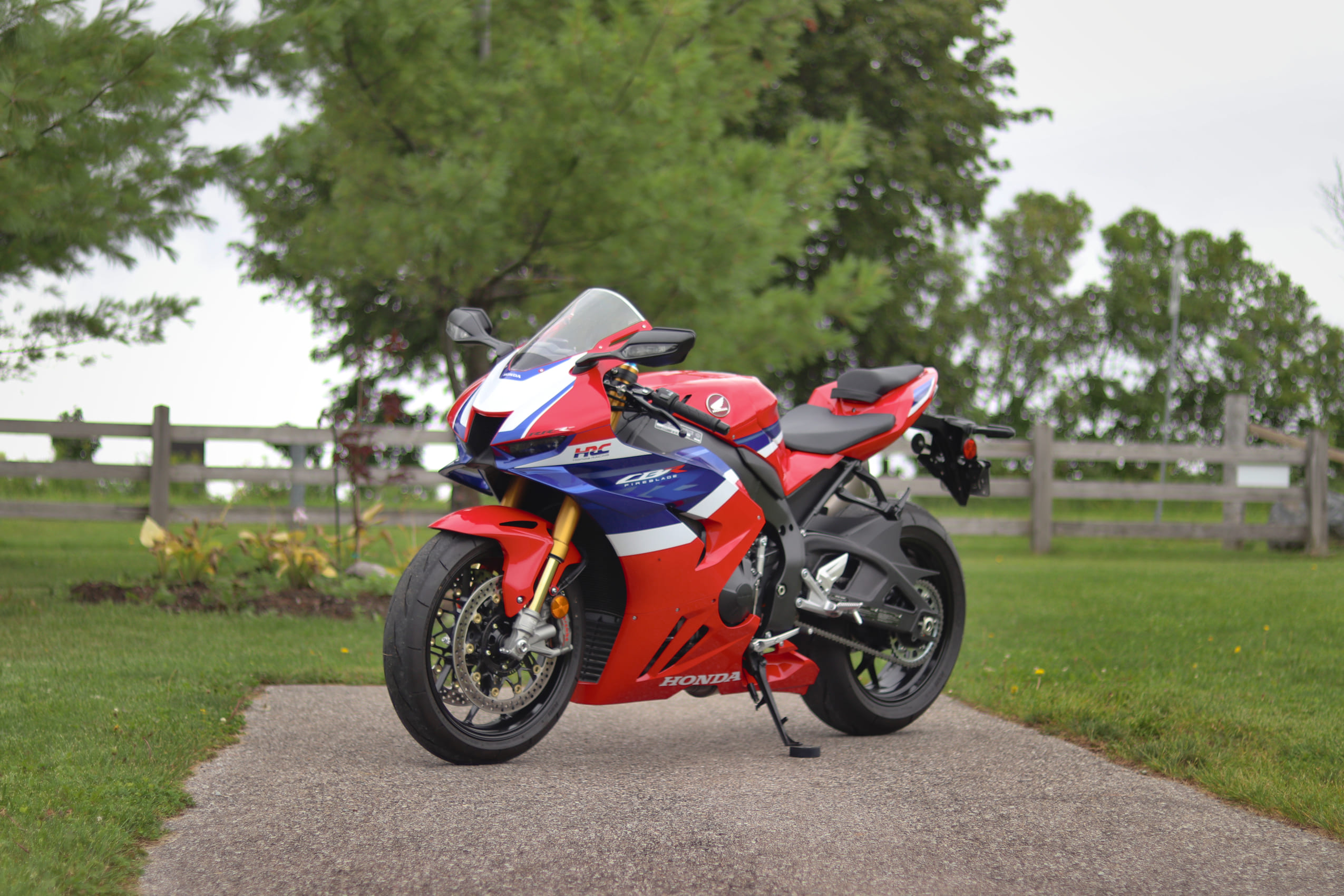
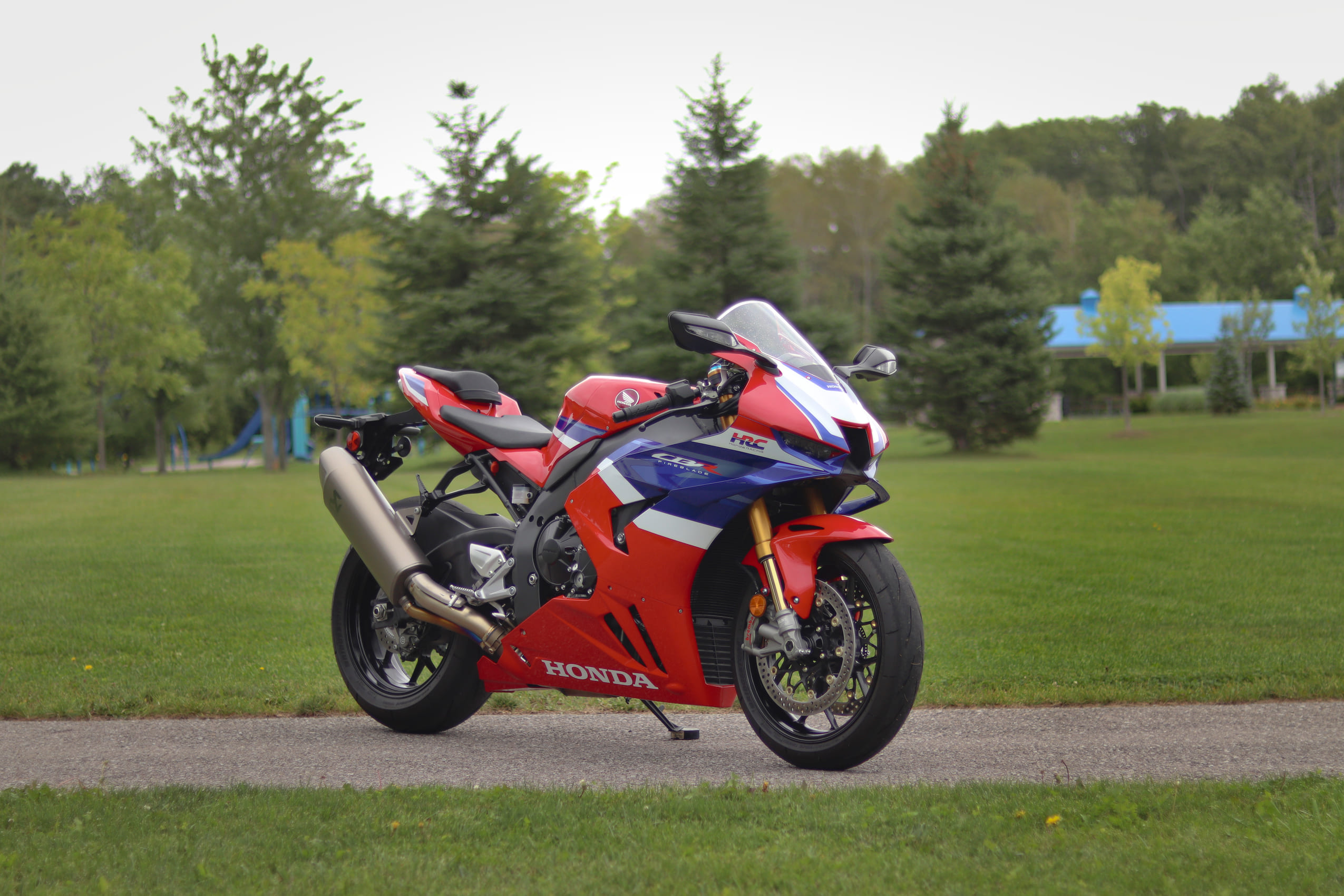
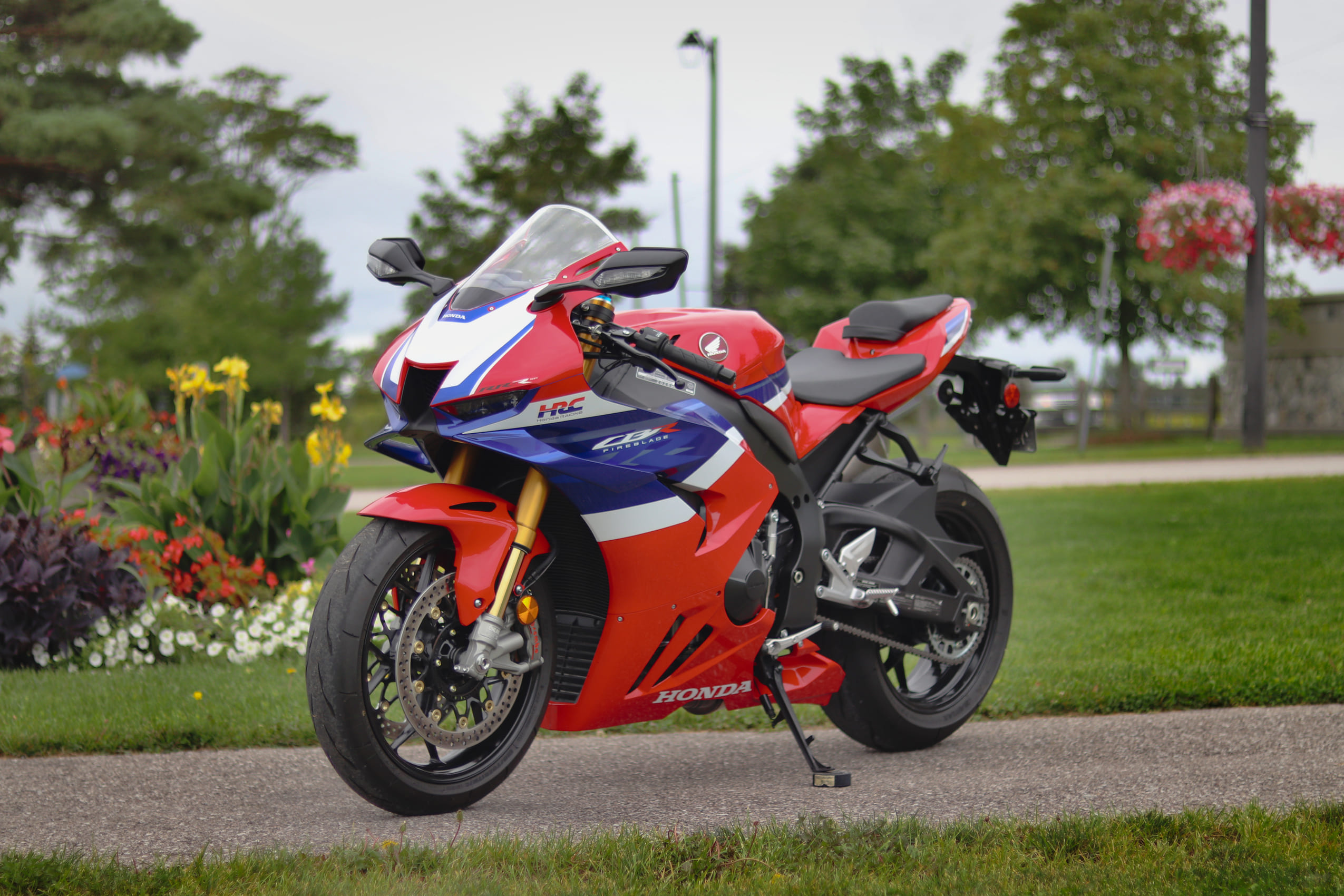
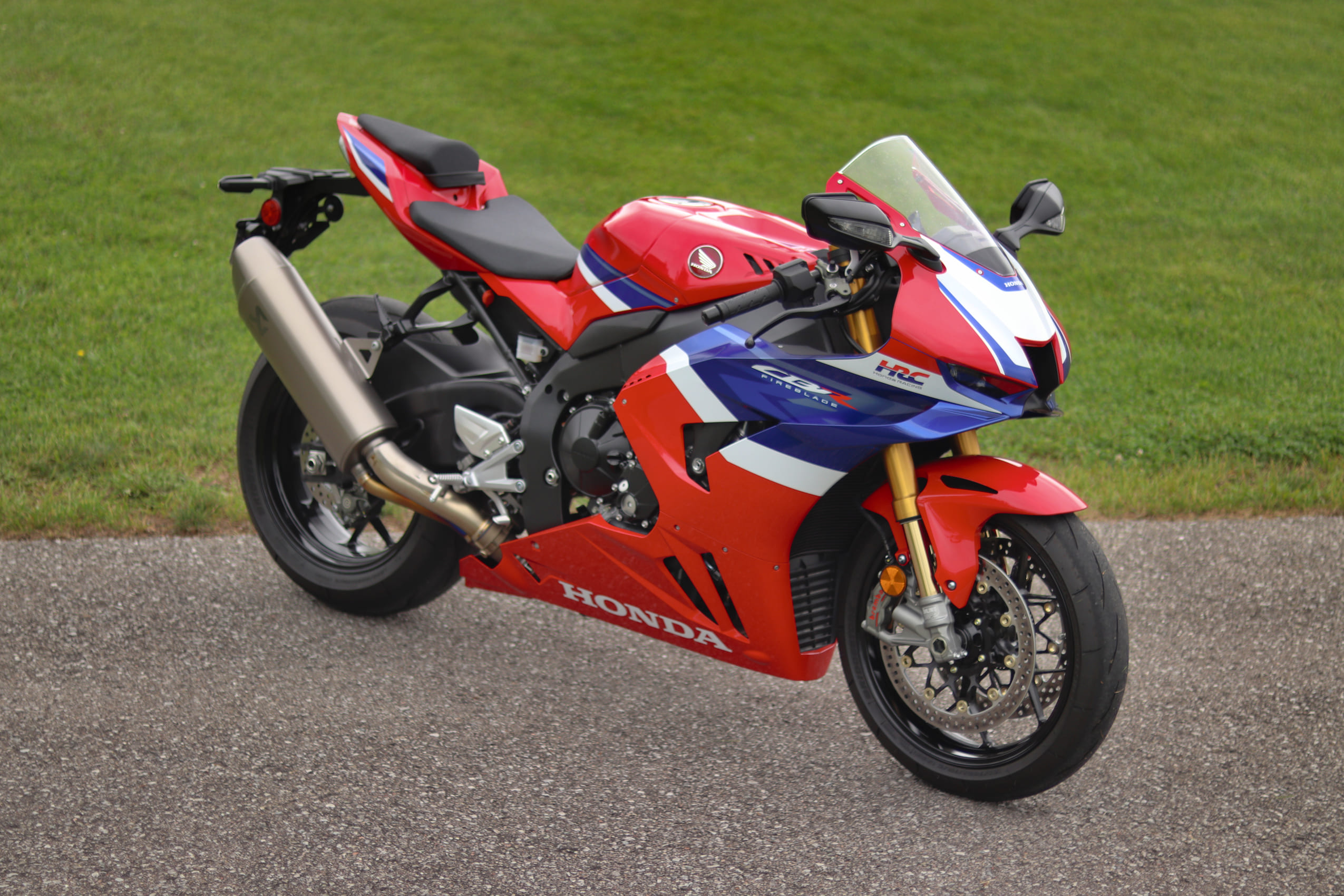
Look at the thing. It doesn’t just look fast; it looks thoroughly pissed off that it has to obey the laws of physics. Honda threw out the idea of styling a “pretty” motorcycle and instead let fluid dynamics and World Superbike telemetry dictate every single edge. Those aggressive winglets sprouting out of the front fairing aren’t aesthetic jewelry to flex at bike night—they are direct, functional refugees from WSBK homologation, designed to physically smash the front tire into the tarmac so the front wheel stays down when you pin the throttle. Every air duct, shark-fin vent, and razor-sharp angle exists solely to slice through air, manage high-speed downforce, and remind everyone in the paddock that HRC doesn’t do “decorative.”
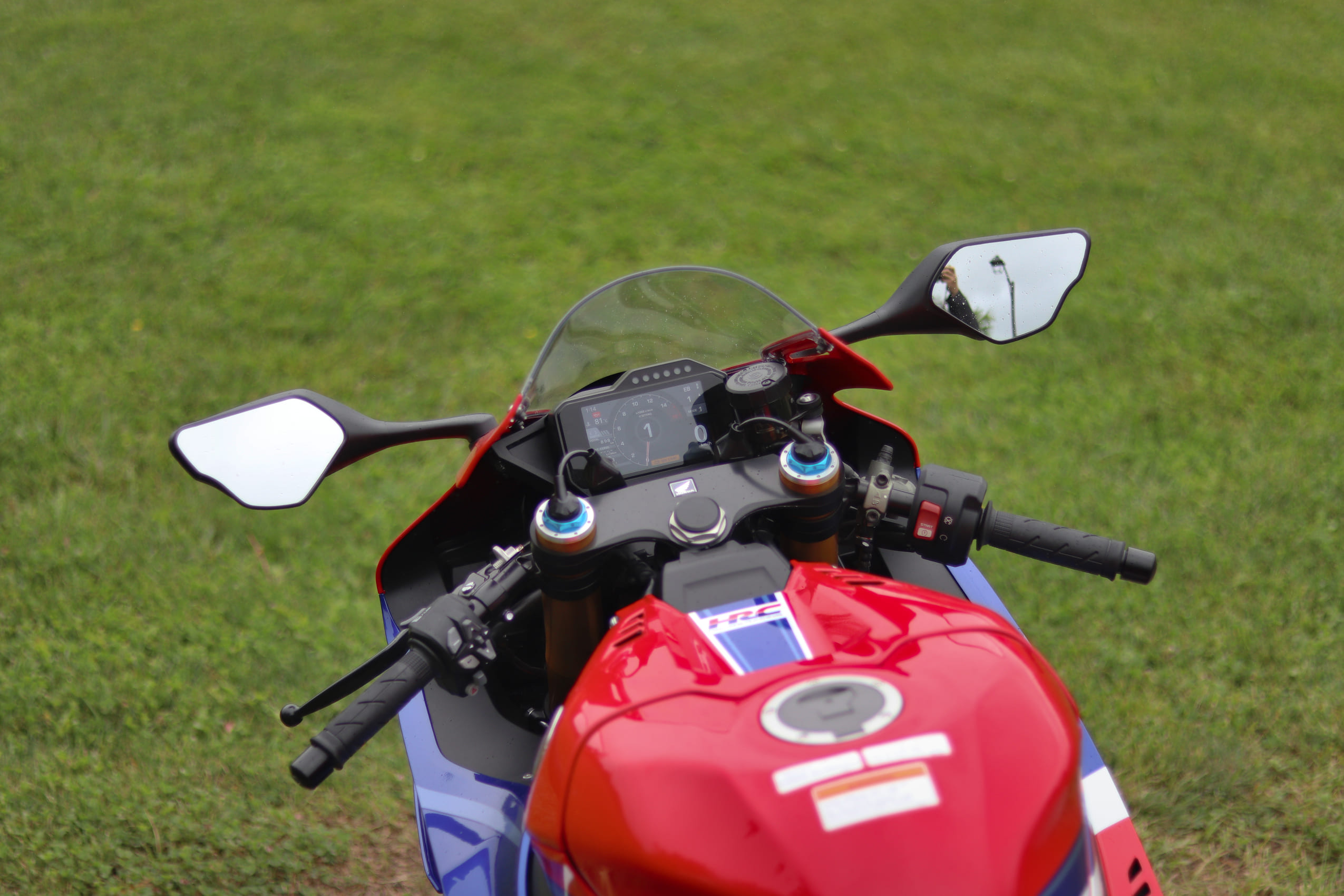
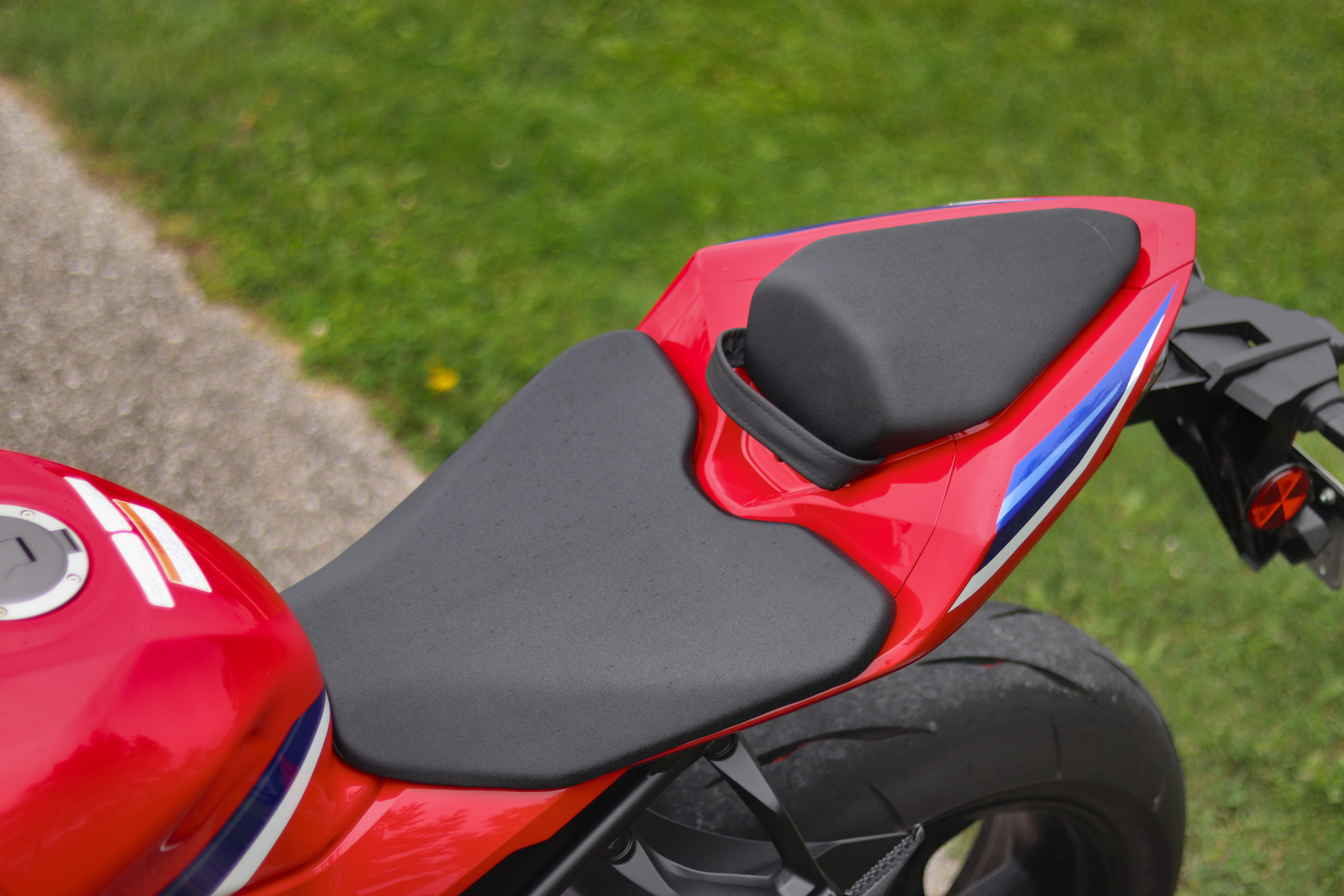
Fireblade’s visual aggression dictates the entire physical experience of being on the bike. Honda clearly threw ergonomic comfort into the bin, dropping the clip-ons low, pulling the footpegs high and back, and sculpting the fuel tank so you can lock your knees into it like a vice while hanging off. It forces you into a committed, folded-up race tuck whether you’re trying to set a track record or just idling at a stoplight. Yet tucked into this track tool are genuine premium touches: a full LED lighting setup with razor-thin headlights, and a keyless Smart Key ignition. Honda actually ditched the traditional ignition barrel for that keyless system so they could route a massive, unobstructed ram-air intake straight through the steering head—a pure race-bike quirk where convenience was just a lucky side effect of chasing airflow.
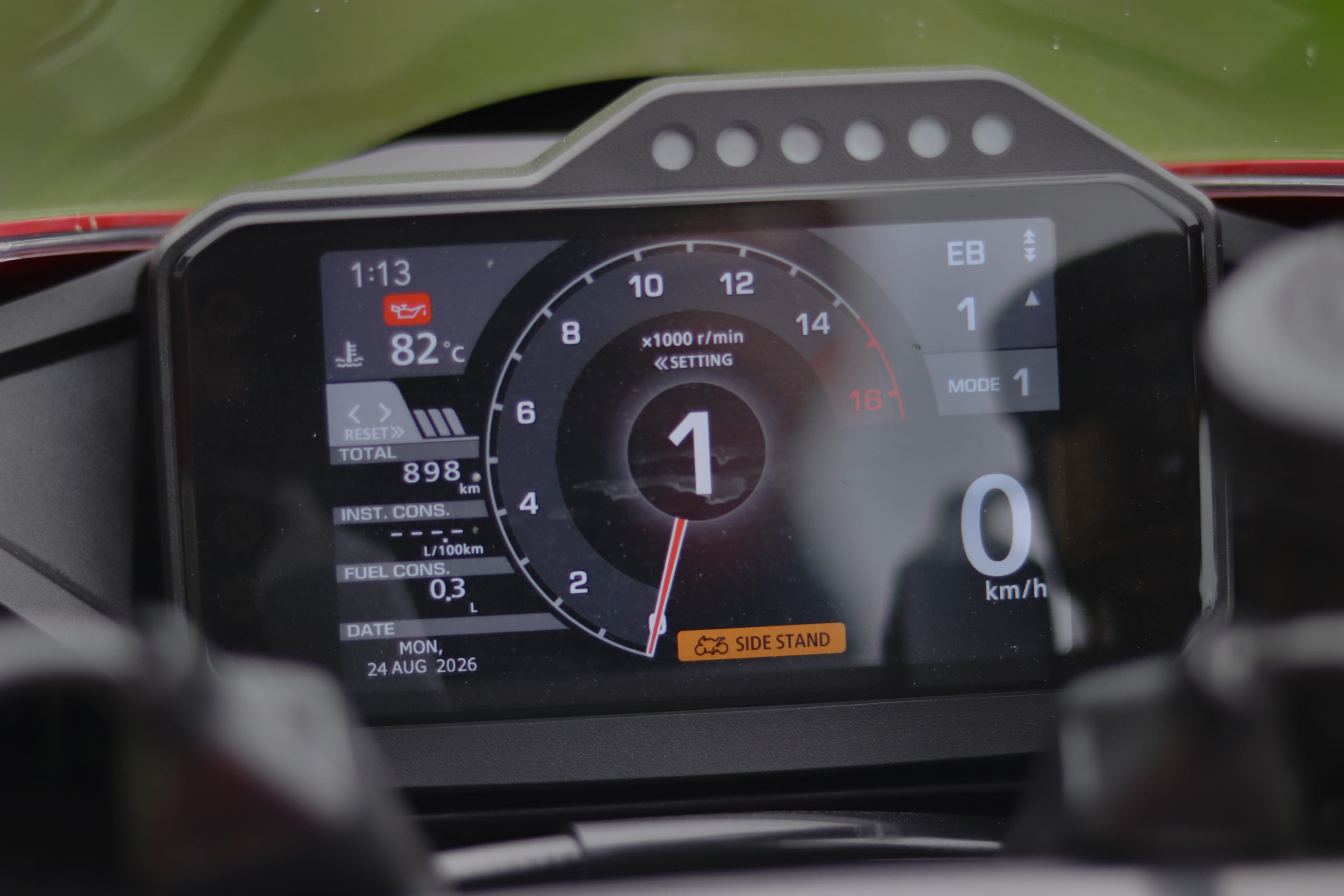
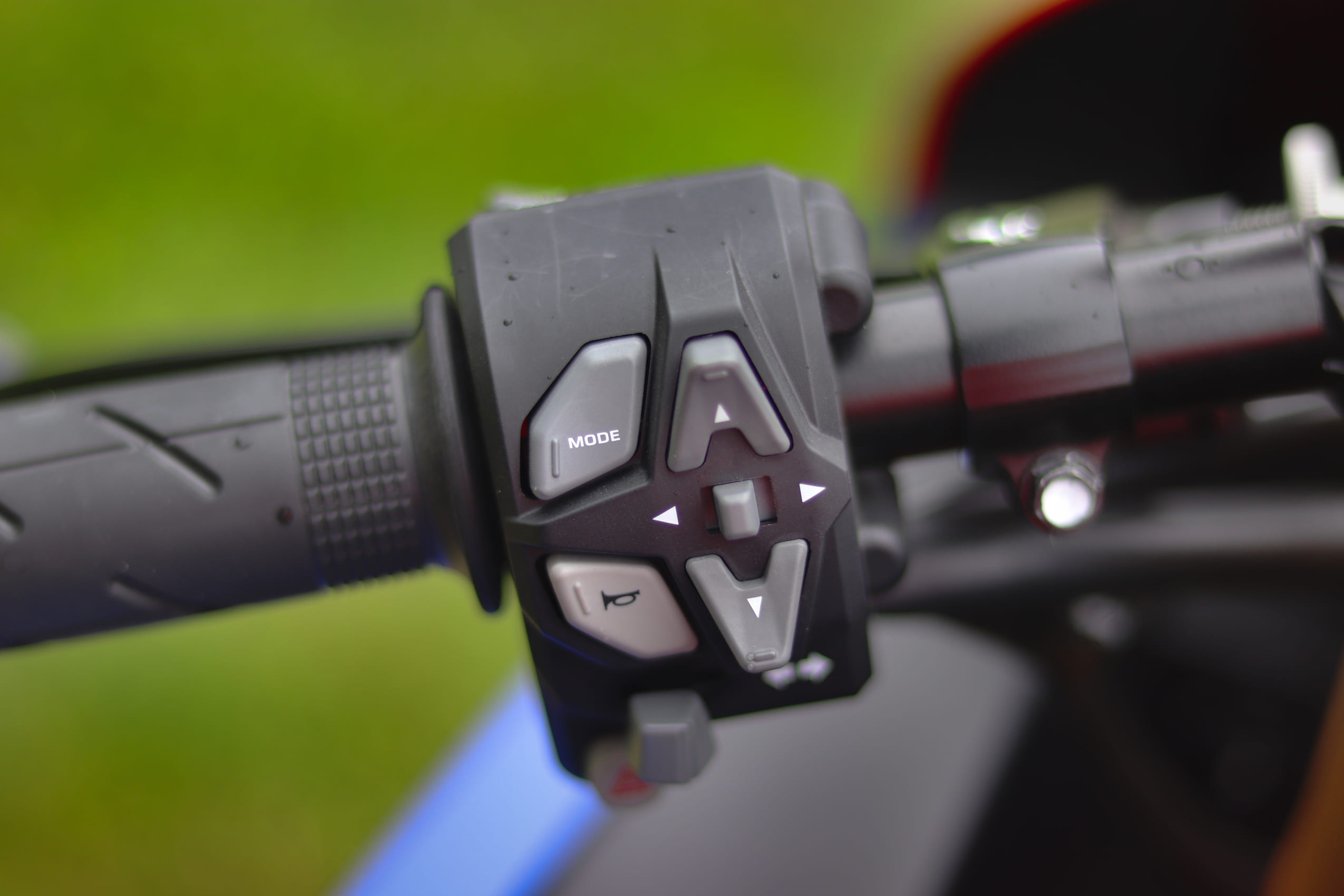
Move past the minimalist switchgear, and you’re greeted by a full-color TFT dashboard that acts as mission control for a frighteningly sophisticated brain. Driven by a six-axis Inertial Measurement Unit (IMU), the electronic rider-aid suite reads pitch, roll, and yaw thousands of times a second to keep you from hurling yourself into orbit. You get multi-level lean-sensitive traction control, adjustable wheelie control, selectable engine braking profiles, and cornering ABS—all configurable through distinct display layouts like ‘Street’ and ‘Circuit’ mode. Tied directly into that brain is the semi-active electronic suspension, which dynamically tweaks damping on the fly based on whether you’re mashing the front brakes or launching out of an apex. The whole system feels less like a safety net and more like a hyper-advanced flight computer translating your panicking human inputs into blistering, flawless forward motion.
The 2026 Honda CBR1000RR-R Fireblade SP isn’t really a motorcycle. It’s a clinical, unrelenting exercise in mechanical insanity built to turn your self-preservation instincts into a pile of ash. It makes almost zero sense on a public road. It’s loud, it’s brutally stiff, and riding it anywhere near civil society is like bringing a scalpel-and-napalm rig to a butter knife fight. But the second you stop trying to justify it logically and just let Honda’s obsessed engineers kidnap your nervous system, you realize this isn’t just another hyper-literbike—it’s a manic, high-revving weapon built by people who clearly care way more about lap times than your spinal integrity.
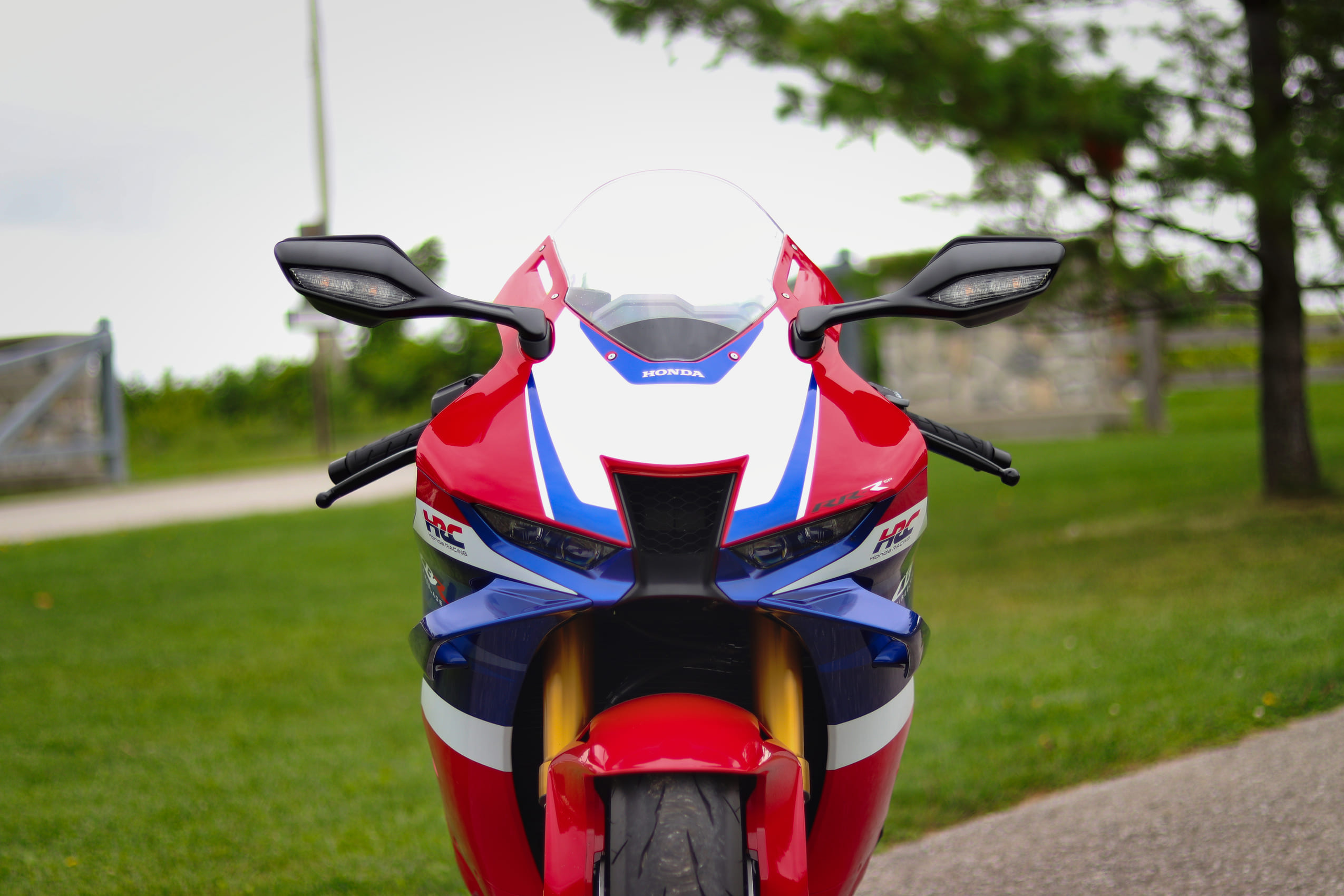
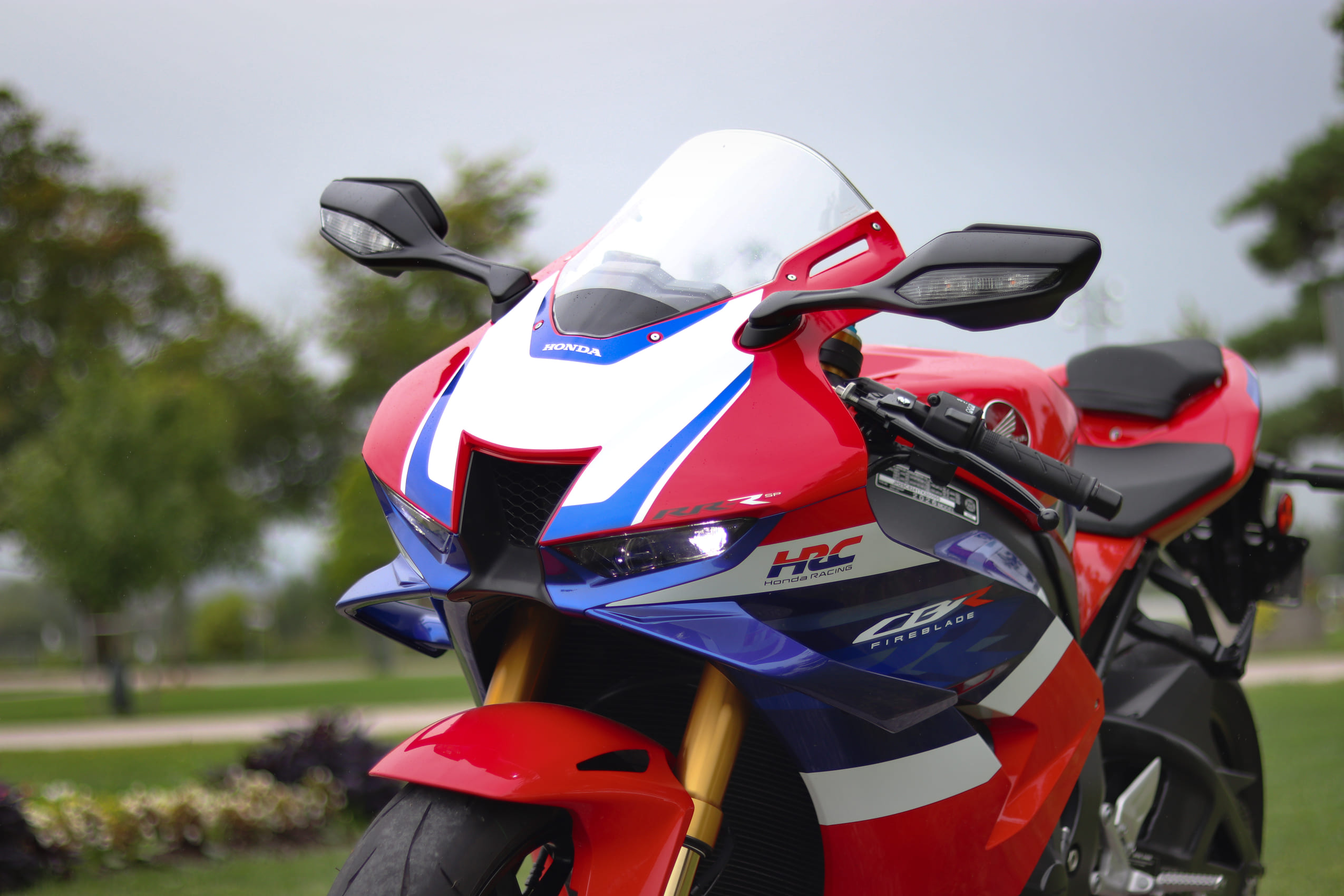
Look at it. The Fireblade doesn’t just look fast; it looks thoroughly pissed off that it has to obey physics. Honda threw out the idea of styling a “pretty” bike and let fluid dynamics and World Superbike telemetry dictate every single line. Those aggressive winglets sprouting out of the front fairing aren’t aesthetic flexes for bike night. They are functional refugees from WSBK homologation, designed to physically smash the front tire into the tarmac so the wheel stays down when you pin the gas. Every air duct, shark-fin vent, and razor-sharp panel exists solely to manage high-speed downforce and remind everyone in the paddock that HRC doesn’t do “decorative.”
That visual aggression dictates how you actually ride the thing. Ergonomic comfort was tossed straight into the bin. The clip-ons sit low, the footpegs are high and set back, and the tank is sculpted so you can lock your knees in like a vice while hanging off. It forces you into a committed race tuck whether you’re chasing a lap record or stuck at a red light. Yet tucked into this track tool are genuine premium touches: full LED lighting with razor-thin headlights, and a keyless Smart Key setup. Honda actually ditched the standard ignition barrel for keyless start just so they could route a massive, unobstructed ram-air intake straight through the steering head—a pure race-bike quirk where daily convenience was just a happy accident of chasing airflow.
Move past the minimalist switchgear and you’re looking at a full-color TFT dash acting as mission control for a terrifyingly smart brain. Driven by a six-axis IMU, the electronic rider aids read pitch, roll, and yaw thousands of times a second to keep you from launching into orbit. You get multi-level lean-sensitive traction control, wheelie control, selectable engine braking, and cornering ABS—all tweakable through distinct display layouts like ‘Street’ and ‘Circuit’ mode. Tied directly into that brain is semi-active electronic suspension, which dynamically tweaks damping on the fly based on whether you’re mashing the front brakes or launching out of a apex. The whole system feels less like a safety net and more like an advanced flight computer translating your panicking inputs into clean, relentless forward motion.
At the heart of the Fireblade is a 1,000cc inline-four that is essentially a street-legal execution of Honda’s RC213V-S MotoGP motor. Honda went with an extreme 81mm bore and ultra-short 48.5mm stroke—matching their MotoGP prototype’s exact cylinder geometry. Friction was treated like the enemy here: DLC-coated finger-follower rocker arms, forged aluminum pistons, and lightweight forged titanium connecting rods let the engine rev with instantaneous violence. Titanium valves feed a high 13.6:1 compression ratio, while dual-motor Ride-by-Wire throttle bodies allow independent control over cylinder pairs for telepathic throttle response.
Europe gets the full-fat, unadulterated spec, cranking out an insane 214.6 hp (217 PS) at 14,000 rpm and 83.3 lb-ft (113 Nm) of torque at 12,000 rpm. North America, however, gets choked out by stringent EPA noise and emissions regulations. Thanks to restricted ECU mapping and altered throttle valve openings, the US/Canadian-spec bike gets neutered down to roughly 188 hp at the crank, though the peak torque sits roughly around the same 83 lb-ft mark. It’s a massive gap on paper, though almost every owner over here flashes the ECU on day one to unlock the European power map.
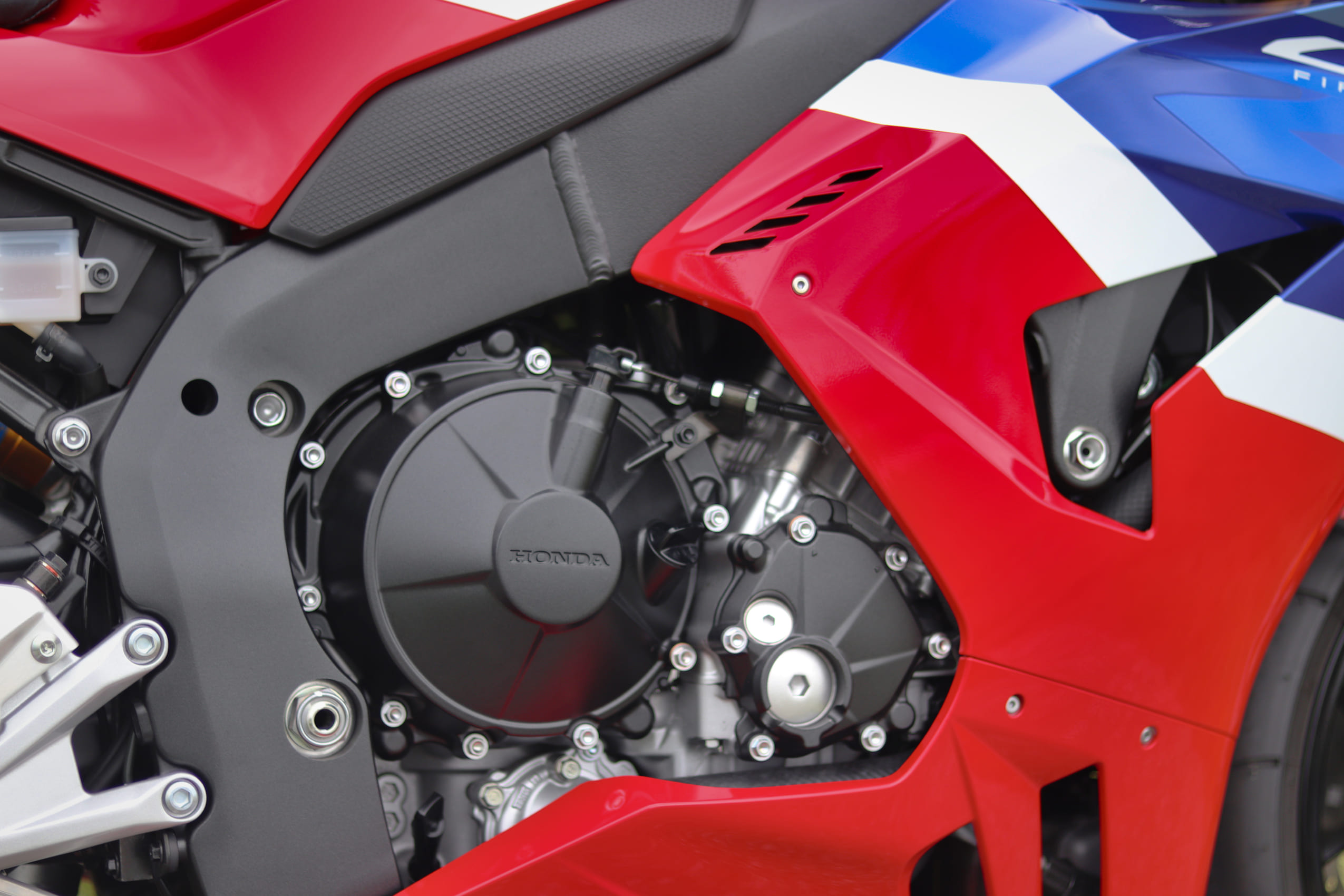
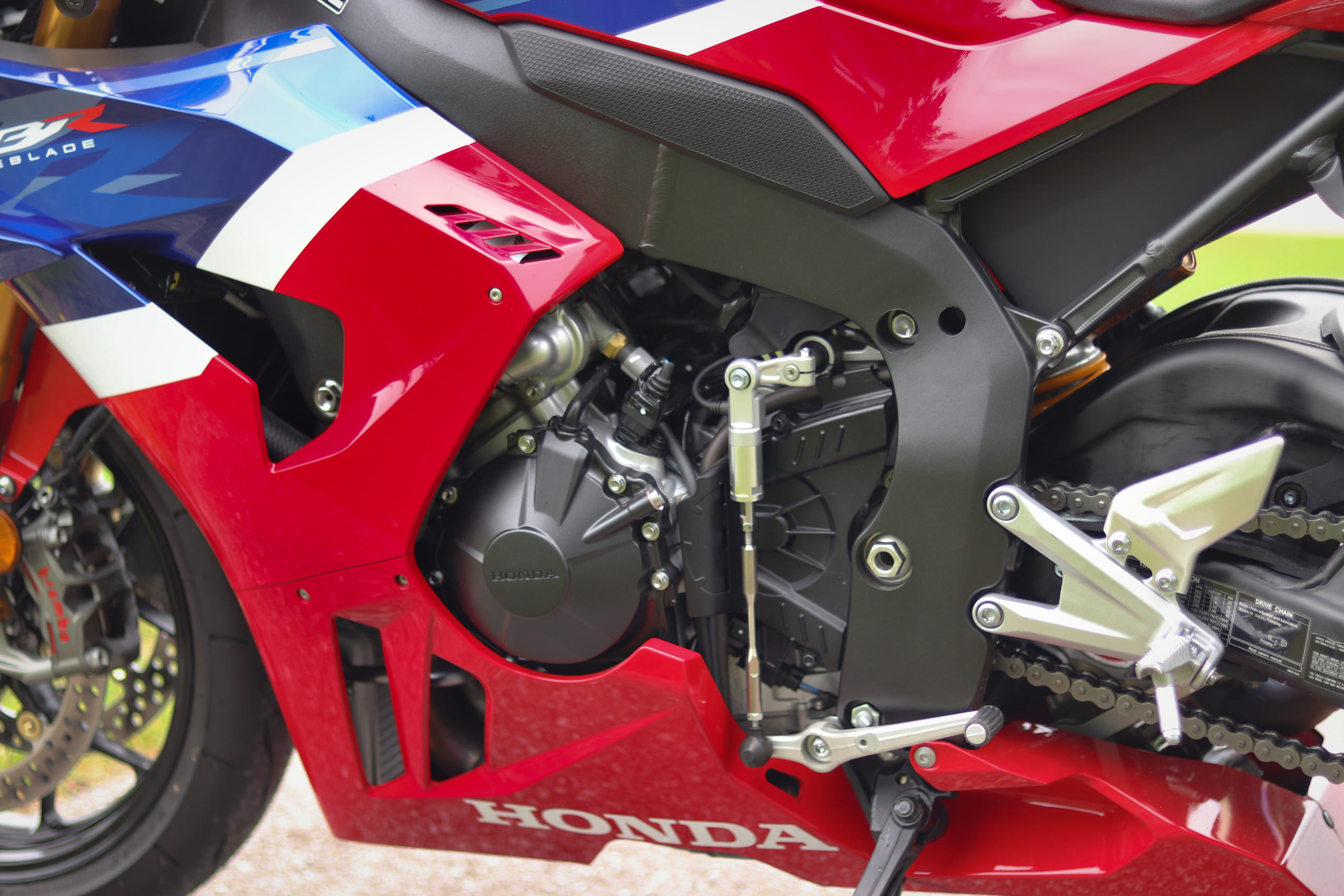
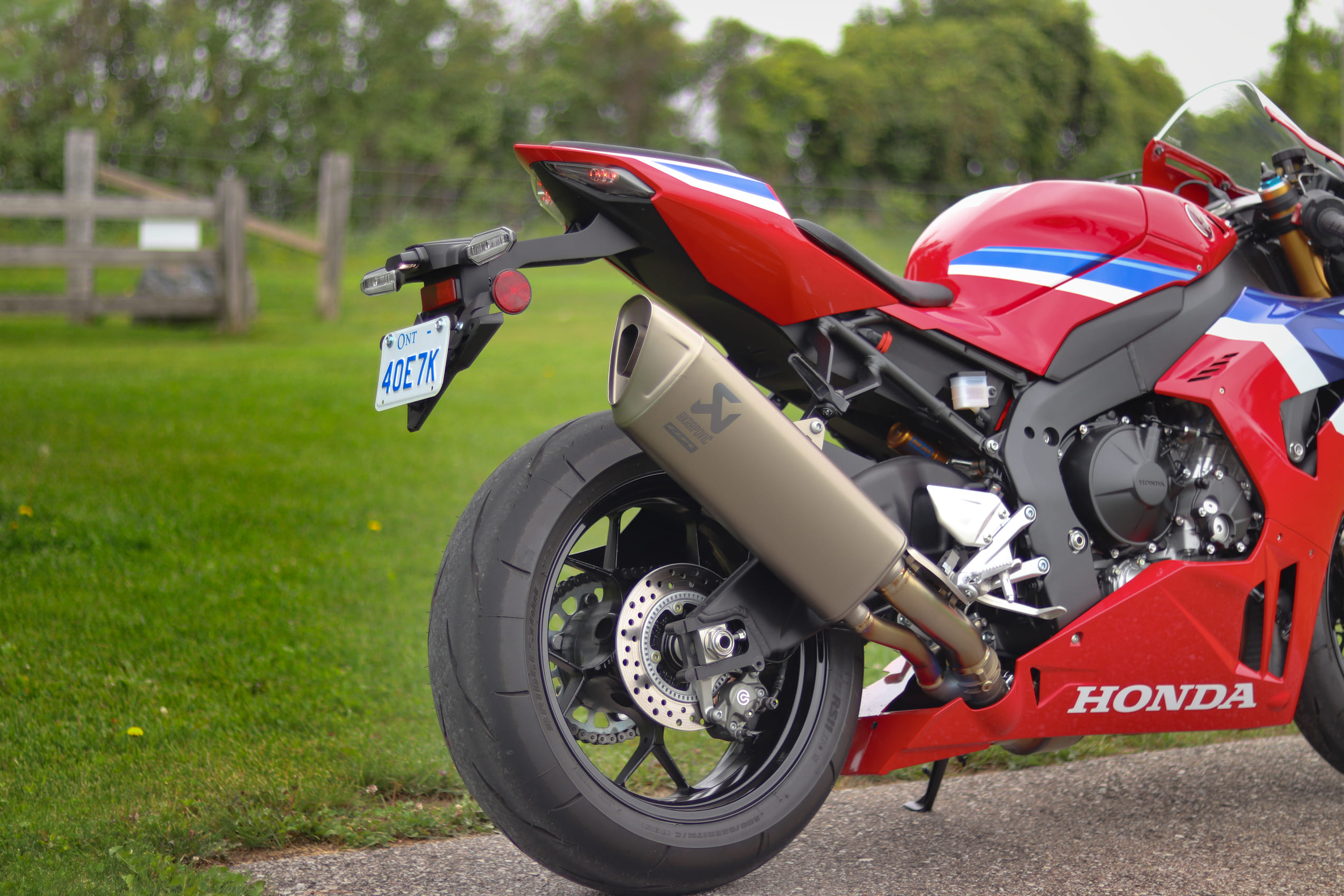
What makes the Fireblade sickeningly fast, though, isn’t just peak horsepower—it’s how the mechanical package translates that power to the ground. The six-speed gearbox is stacked tight with short primary ratios to punch out of corners with relentless drive. The engine exhales through a lightweight 4-2-1 titanium Akrapovič exhaust with an integrated valve that manages backpressure for mid-range punch before fully opening up at high RPMs to let the motor scream. An updated bi-directional quickshifter comes standard, delivering lightning-fast, seamless clutchless shifts that keep the chassis settled when you’re bang-shifting under load or dumping gears on decel.
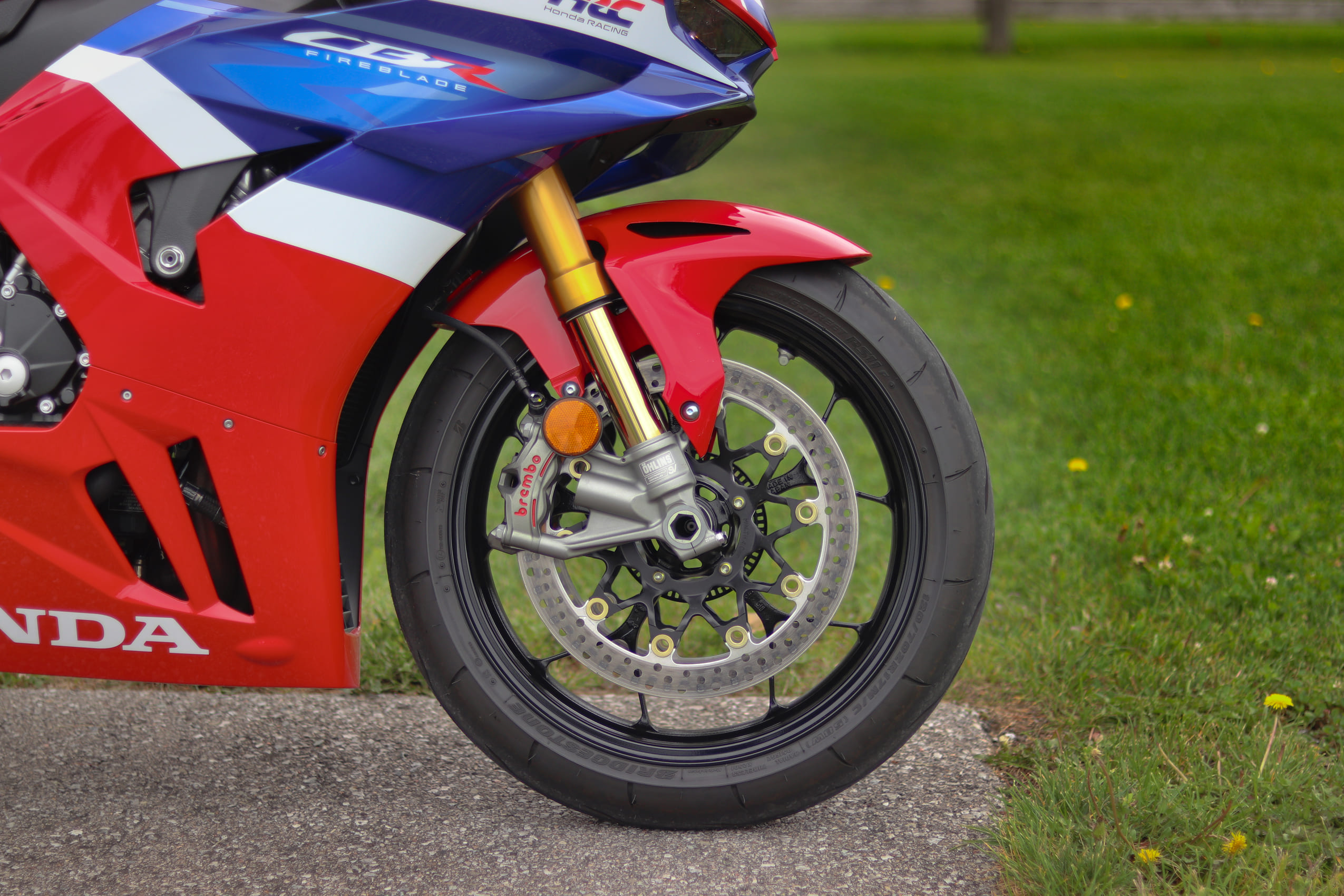
To haul all that speed down when you run out of straightaway, Honda bolted on a chassis and braking setup straight out of a race trailer. Up front, third-gen Öhlins Smart-EC 43mm NPX pressurized forks and a TTX36 rear shock actively adjust compression and rebound in real time, fighting dive under heavy trail braking and squat under acceleration. Scrubbing off speed is handled by massive 330mm front discs clamped by monoblock Brembo Stylema R four-piston calipers. They even feature built-in cooling fins to purge heat during repeated hot laps, keeping the lever firm and fade-free no matter how deep you dive into the braking zone. Every single piece works in sync to ensure that speed isn’t just generated, but completely weaponized.
On the street, without a track to let it breathe, the Fireblade is a completely miserable experience at normal road speeds. Below 6,000 rpm and under 40 mph, the chassis feels rigid to the point of punishment, the wrist pressure is relentless, and the motor just feels bogged down, chugging along impatiently. You feel every single expansion joint ripple straight up your spine. But once you clear the traffic, find an open stretch of tarmac, and actually push the pace, the bike suddenly makes sense. The chassis compliance wakes up, the semi-active Öhlins suspension starts working in its intended window, and the whole package transforms from an uncomfortable torture rack into a laser-guided missile.
A big chunk of that high-speed feedback comes down to the rubber, but it’s a double-edged sword. The Bridgestone Battlax Racing R11 tires offer phenomenal, almost bottomless dry grip levels when they’re in their element, letting you lean on the front end with supreme confidence. The catch is that they are intensely temperature-sensitive. If you’re out on a cooler morning or rolling along at highway speeds without loading up the carcass, they take a surprisingly long time to hold heat. Push them cold and they feel greasy and numb; get some real heat into them, and they turn into hot glue.
Engine character is classic high-strung, large-bore four-cylinder. Down low, the throttle response from that dual-motor drive-by-wire system is surprisingly buttery and precise, with zero abrupt snatchiness when you crack the grip open mid-corner. But while it runs smoothly through the mid-range, a high-frequency buzz creeps through the clip-ons and footpegs right around that cruising sweet spot on the highway—a constant physical reminder of those ultra-short-stroke pistons whirring away underneath you.
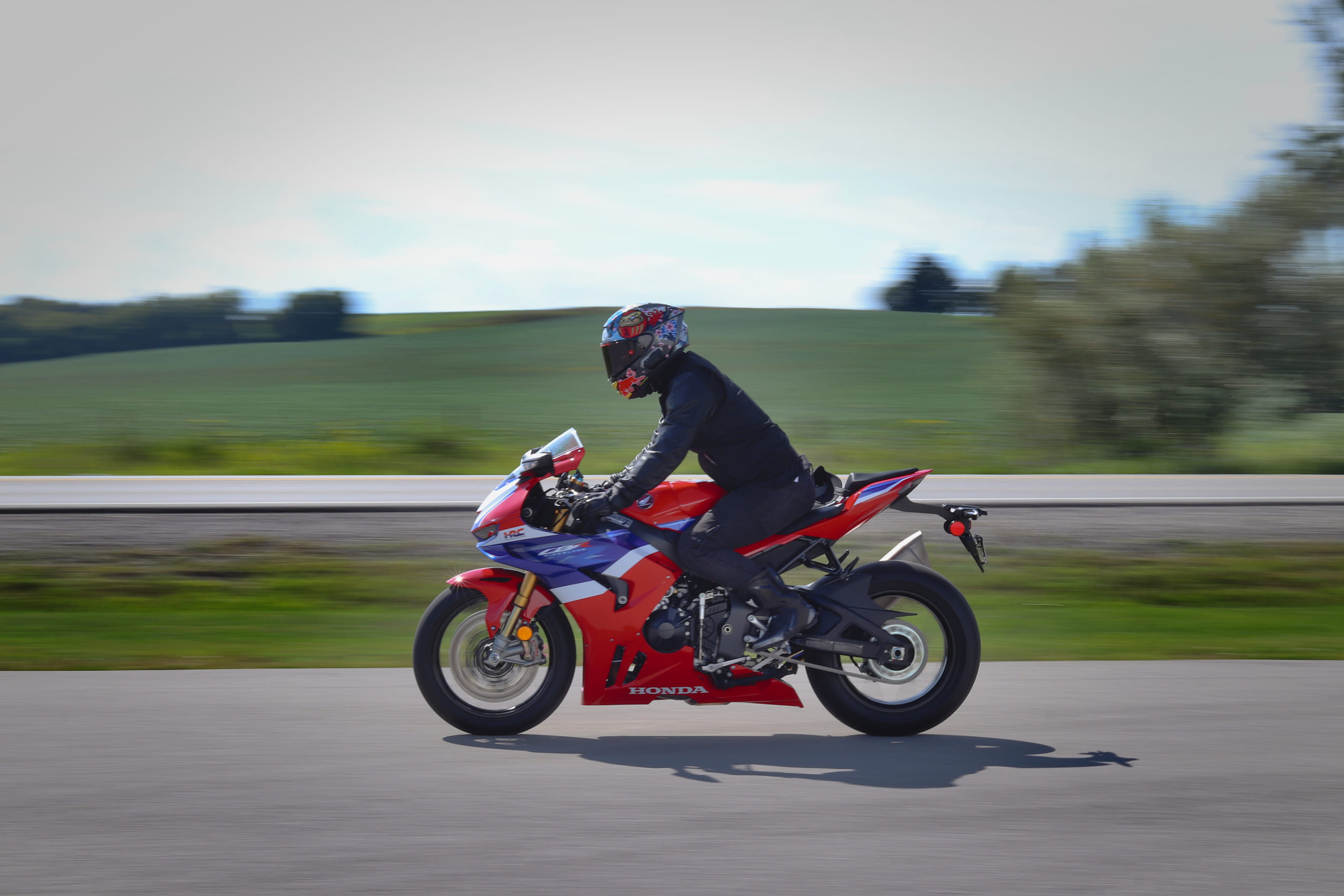
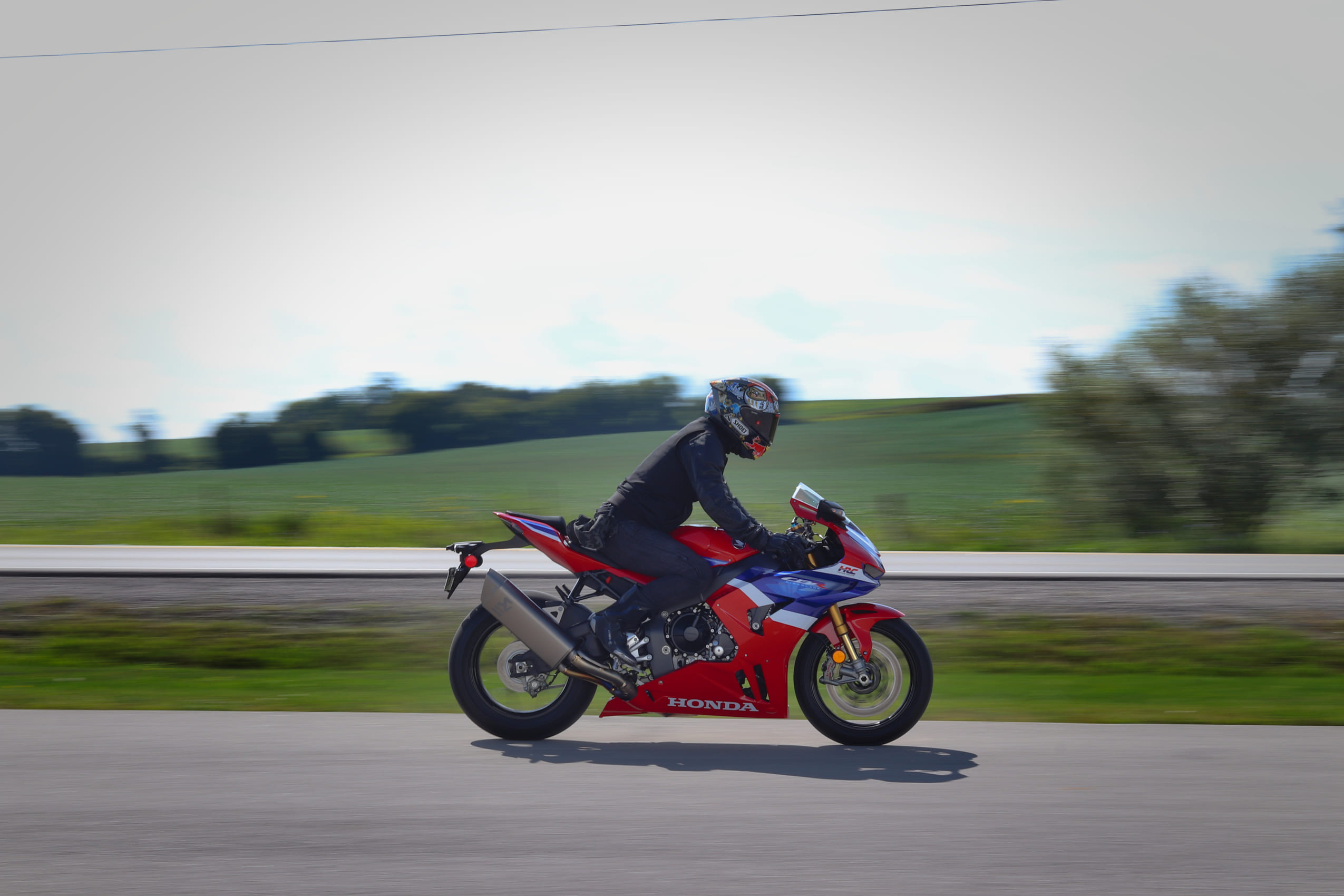
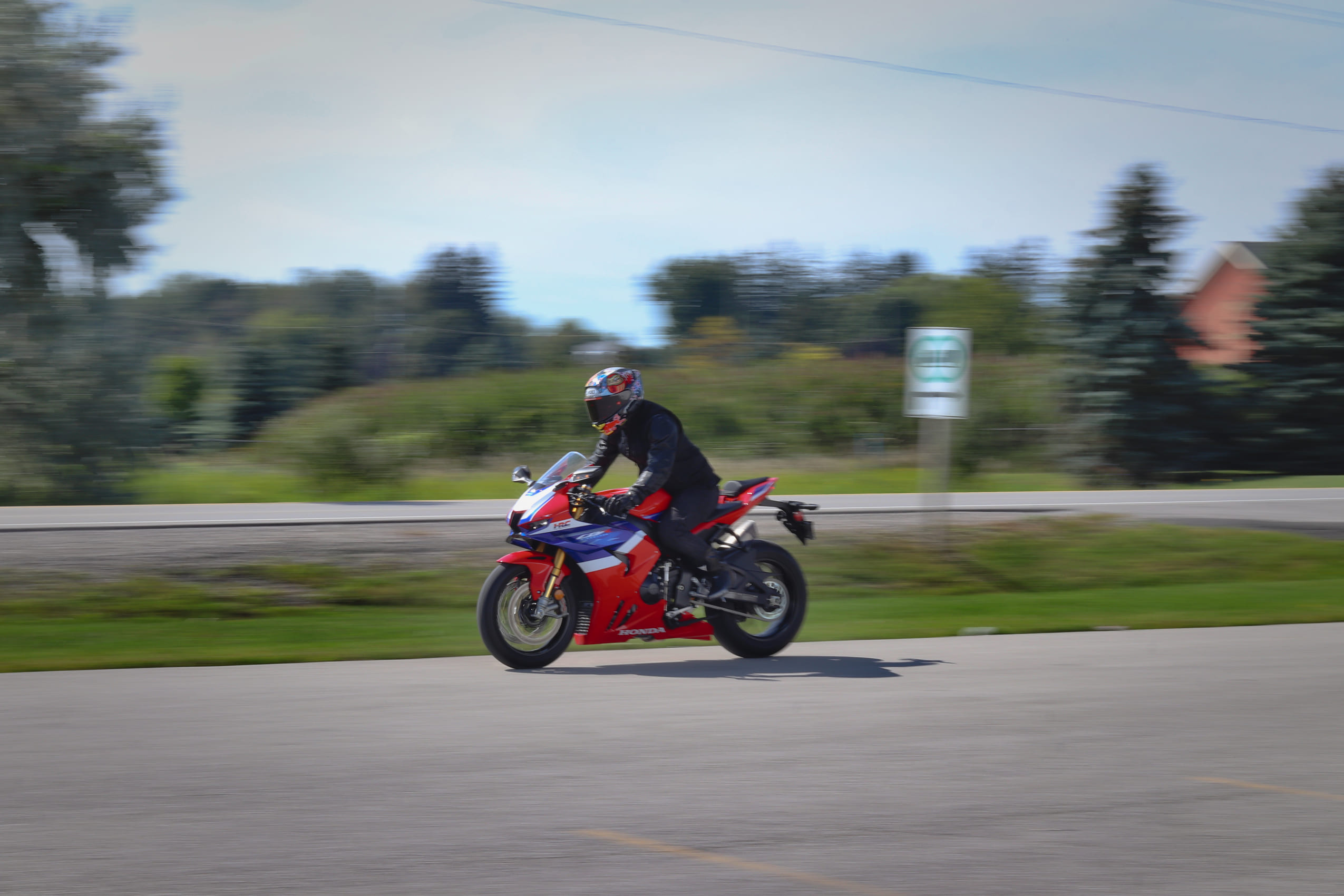
Then you cross 7,000 rpm, and the bike completely loses its mind. The exhaust valve opens, the intake honk deepens, and the Fireblade literally hurls itself toward the horizon with a violence that makes your chest feel heavy. The revs climb so fast that you’re just banging through the quickshifter trying to keep up with the dash flashing at you. It’s an intoxicating rush, but the reality hits you almost instantly: on any public road, you are doing deep felony speeds before you even finish wringing out second gear. It is magnificent, totally unhinged, and absurdly overkill for anything short of a closed circuit.
At the end of the day, the Fireblade SP stands as an extraordinary engineering flex, but its staggering price tag makes it a deeply irrational purchase for almost anyone without a racing license. When you consider that competing Japanese liter-bikes offer nearly identical real-world thrills for significantly less money, and established European exotics bring equal track prestige without the need to immediately reflash an ECU, Honda’s asking price becomes remarkably tough to swallow. It remains a magnificent, single-minded weapon for deep-pocketed track purists who demand HRC pedigree at any cost, but for everyone else, the math simply doesn’t add up.
| 2026 Honda CBR1000RR-R Fireblade SP | |
|---|---|
| Engine | 999cc liquid-cooled 16-valve DOHC inline four-cylinder; 81.0mm x 48.5mm bore & stroke |
| Power / Torque | EU: 214.6 hp @ 14,000 rpm / 83.3 lb-ft @ 12,000 rpm NA: ~188 hp (factory restricted) / 83.3 lb-ft @ 12,000 rpm |
| Fueling | PGM-DSFI fuel injection with dual-motor Ride-by-Wire throttle bodies |
| Front Suspension | 43mm Öhlins NPX Smart-EC 3.0 pressurized inverted fork; 4.9 in. travel |
| Rear Suspension | Pro-Link with Öhlins TTX36 Smart-EC 3.0 shock; 5.6 in. travel |
| Front Brakes | Dual 330mm discs with radial-mount Brembo Stylema R 4-piston calipers; Cornering ABS |
| Rear Brakes | Single 220mm disc with Brembo 2-piston caliper; Cornering ABS |
| Seat Height | 32.7 inches (830 mm) |
| Curb Weight | 443 lbs (201 kg) |
| Fuel Capacity | 4.36 gallons (16.5 liters) |
| Electronics | 6-axis IMU, 5-inch TFT display, Öhlins S-EC 3.0, HSTC Traction Control, Wheelie Control, Launch Control, Keyless Smart Key, Full LED Lighting, Bi-directional Quickshifter |
| Price (MSRP) | $37,808 CAD |
| Website | powersports.honda.ca |
2026 Honda CBR1000RR-R Fireblade SP Review: Pure Mechanical Violence
The 2026 Honda CBR1000RR-R Fireblade SP is not a motorcycle; it is a clinical, unrelenting exercise in absolute mechanical insanity…

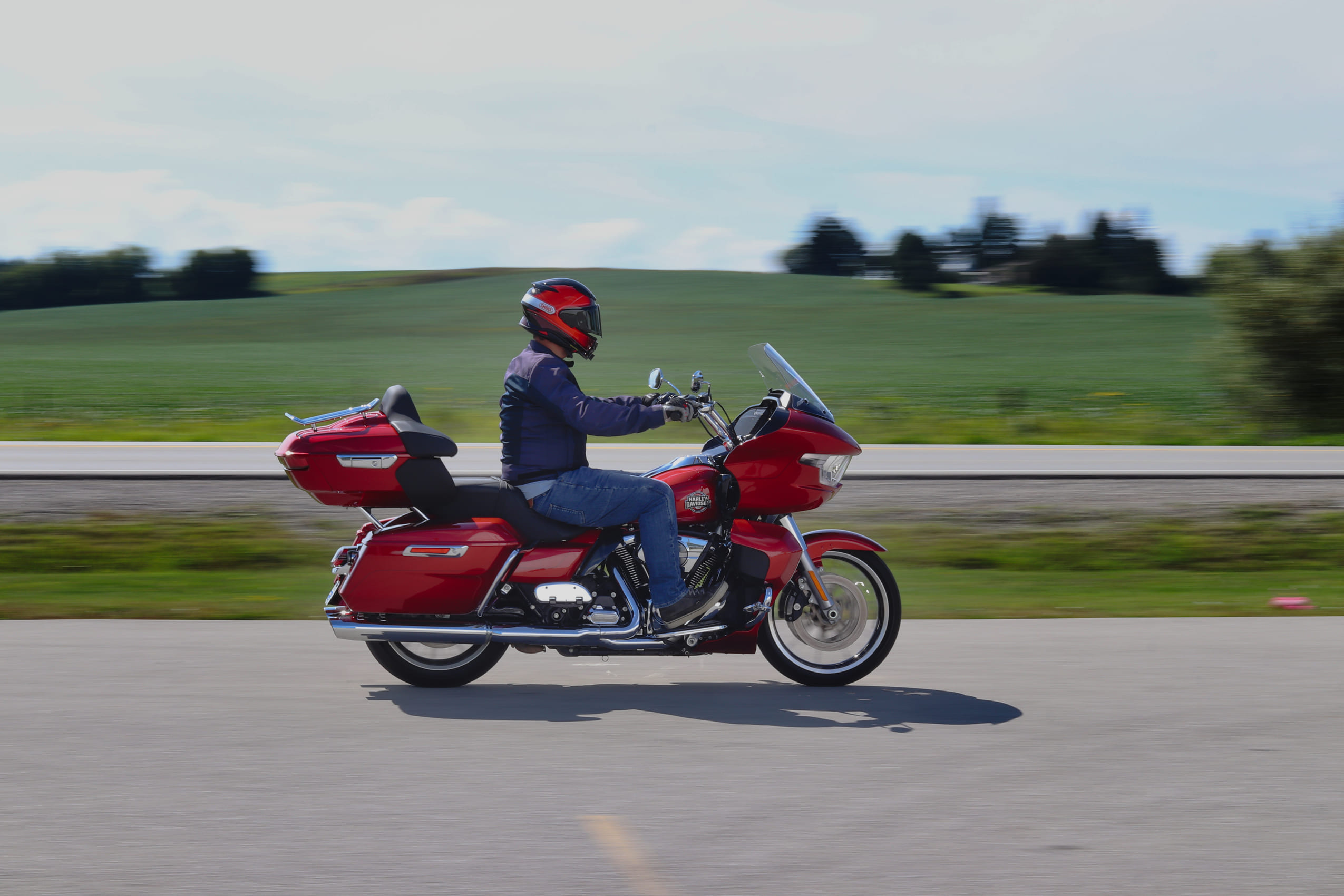
Sharknose Supremacy: Driving the 2026 Harley-Davidson Road Glide
Let’s get one thing straight: the 2026 Harley-Davidson Road Glide shouldn’t make sense. It’s a rolling, 800-pound contradiction—a massive, frame-mounted…
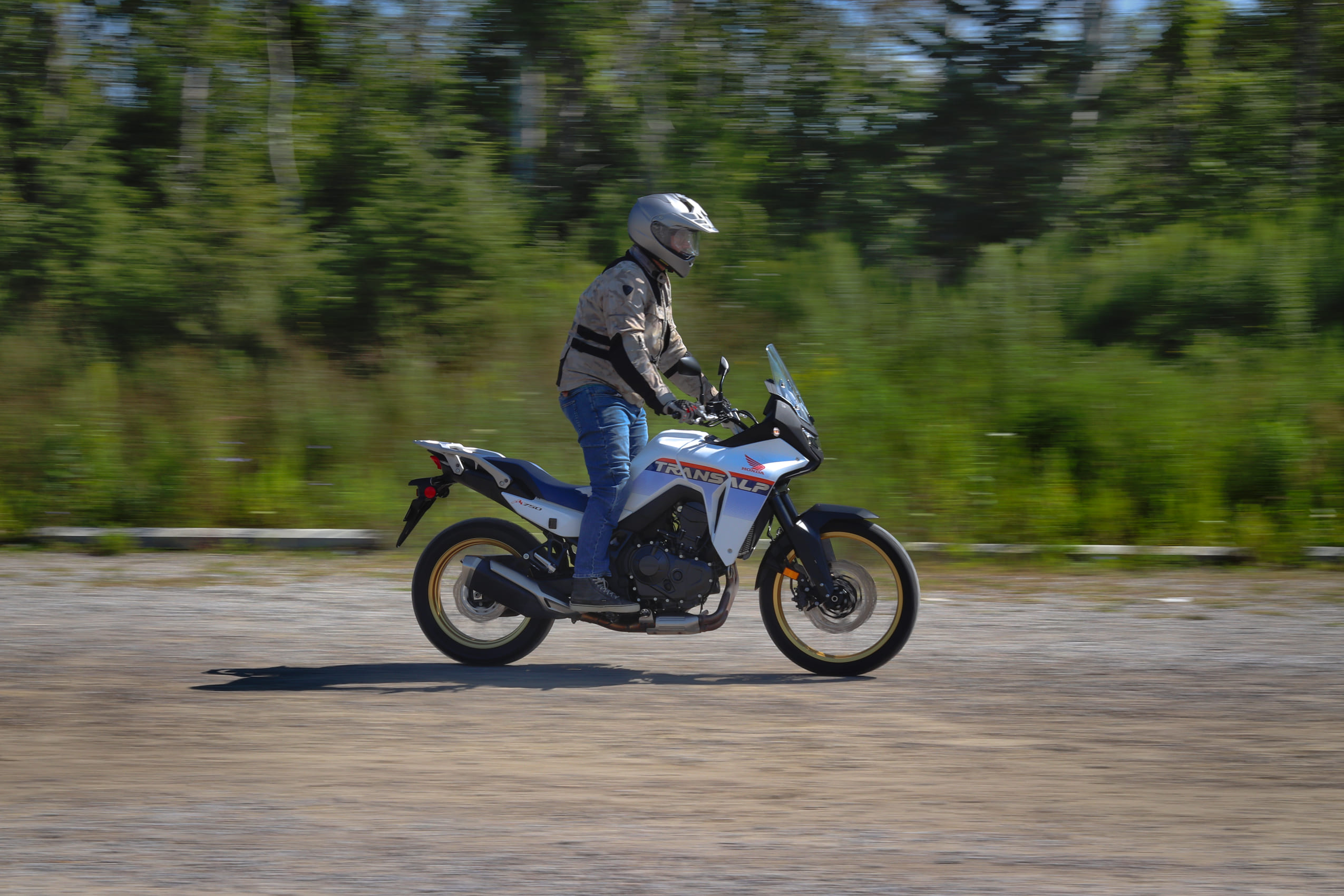
The Anti-ADV Hero: Why the 2026 Honda Transalp is the
Leave it to Honda to look at the entire, absurdly over-engineered, $25,000 middleweight adventure segment—a market flooded with hyper-focused rally…
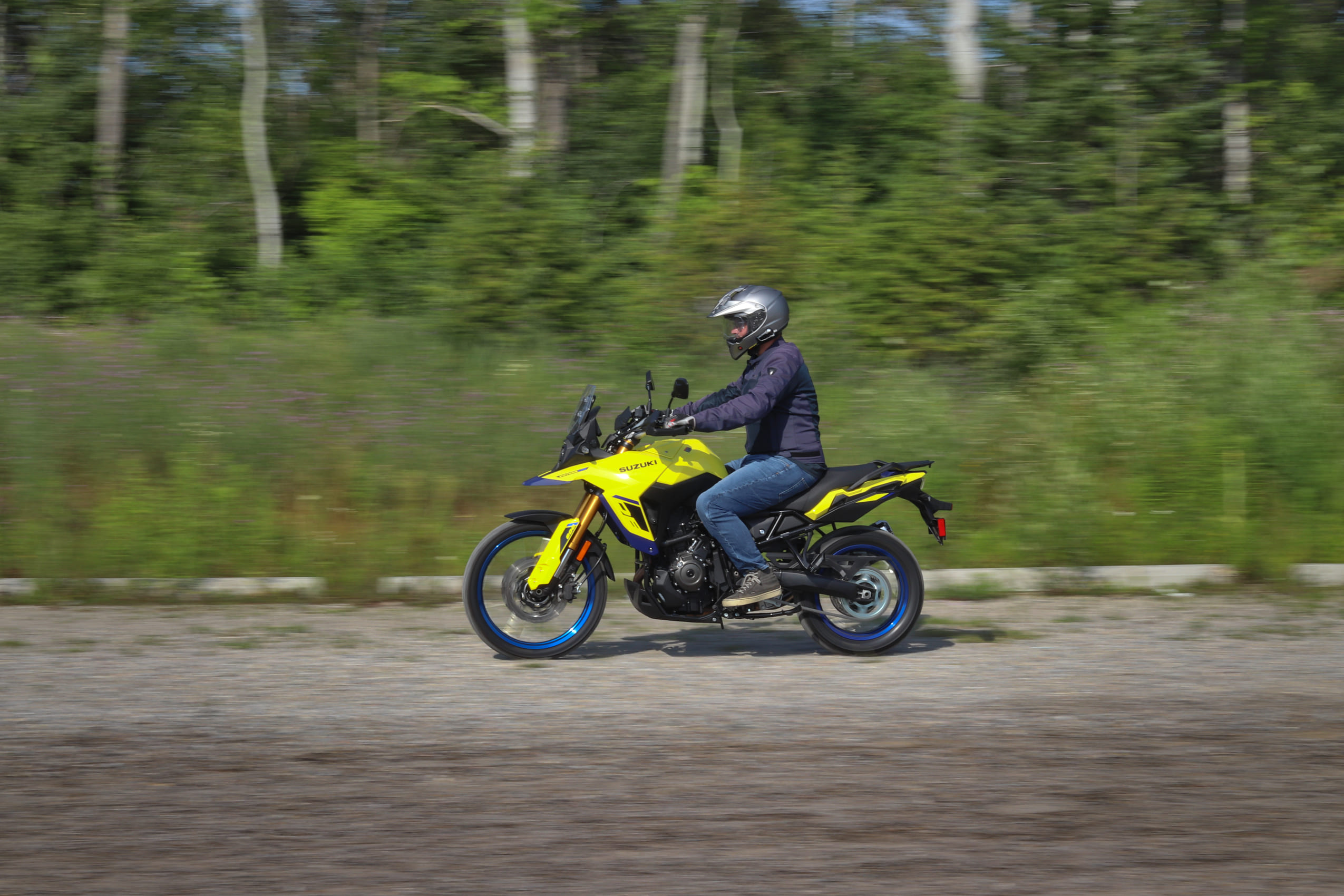
2026 Suzuki V-Strom 800DE: No V-Twin, No Problem
Words are supposed to mean things. The “V” in V-6 means a V-layout, and for two decades, the “V” in…
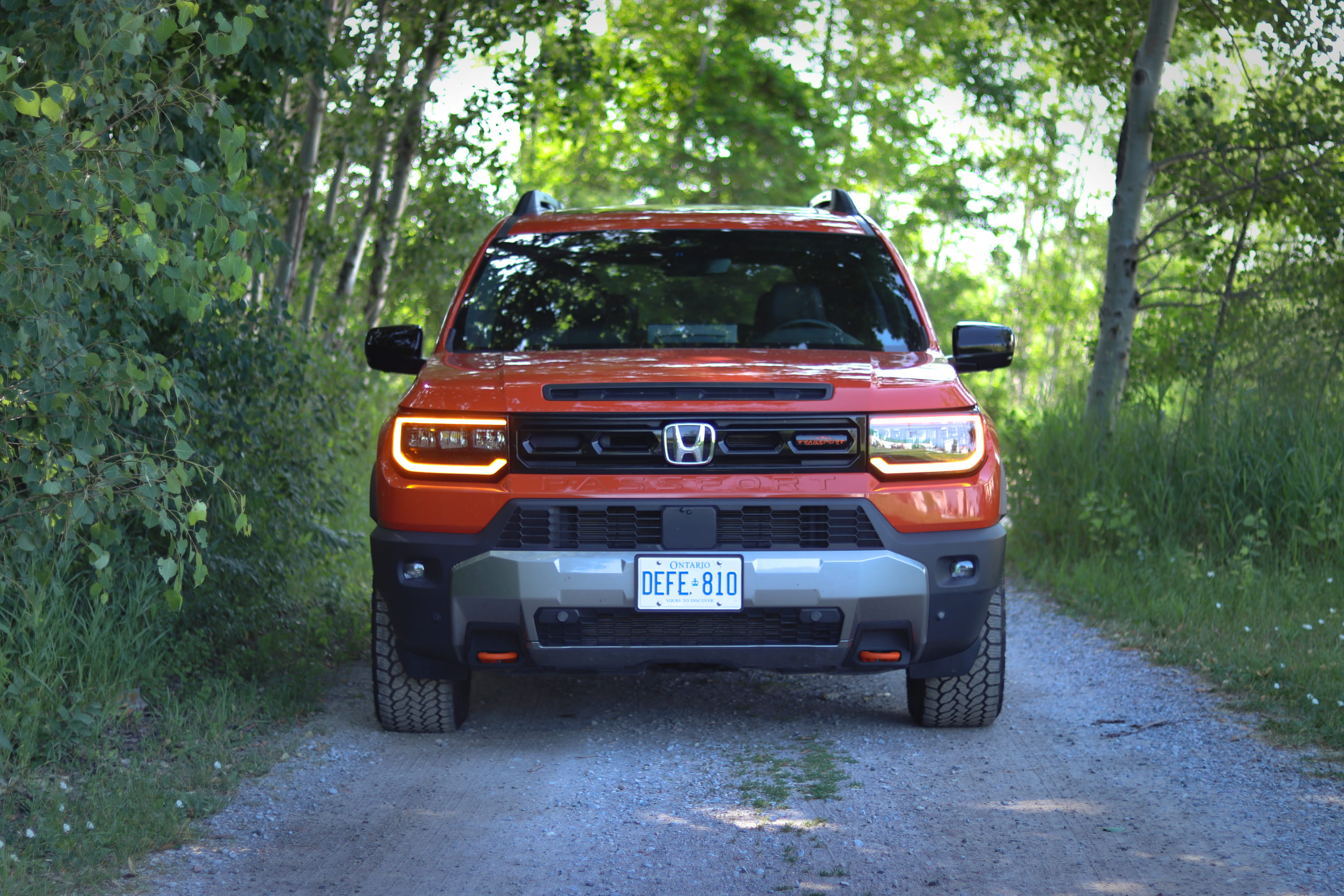
2026 Honda Passport TrailSport Review: The World’s Most Charming Anti-Wrangler
Let’s be honest about what’s actually happening here. Honda knows as well as you do that nobody is taking a…
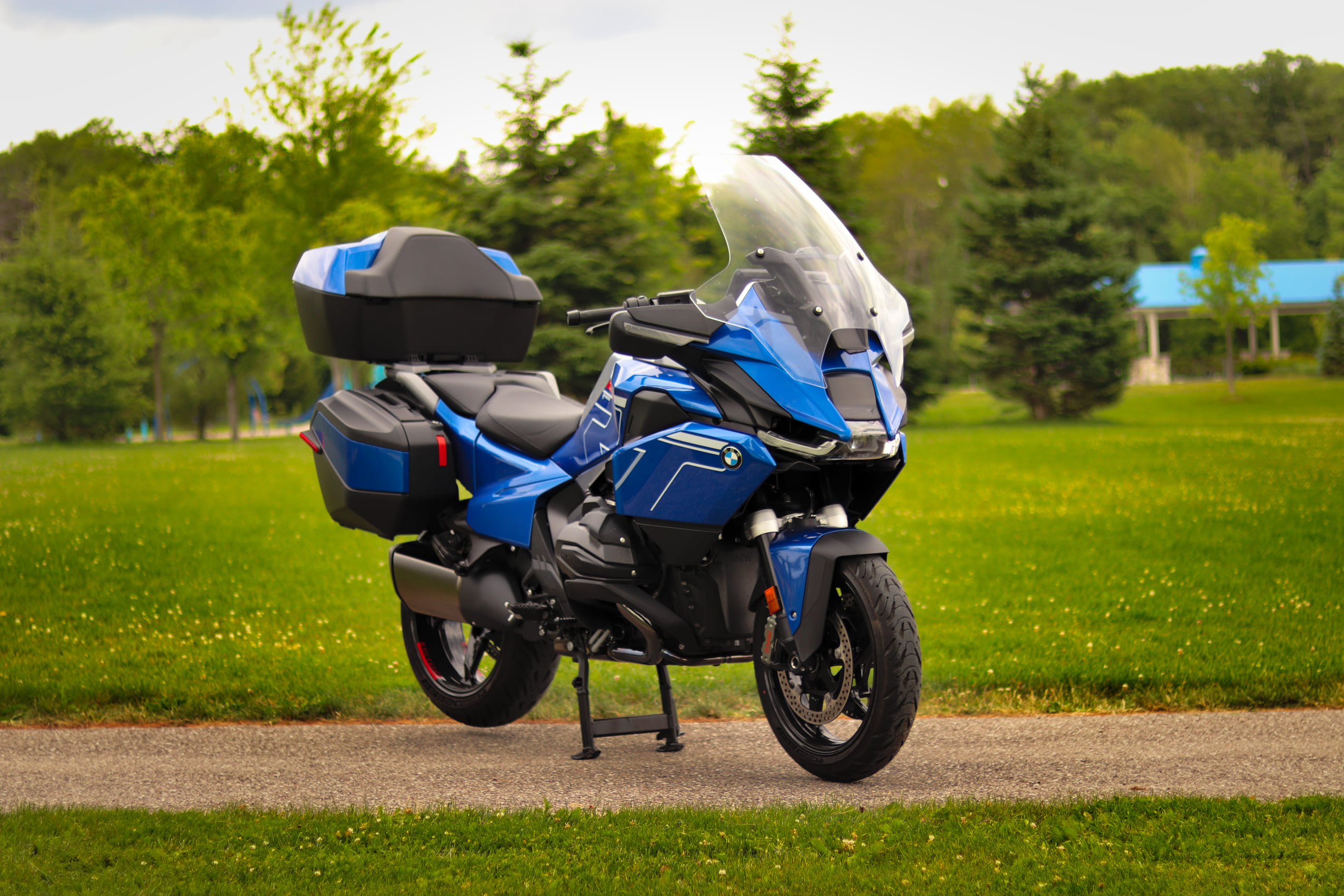
2026 BMW R1300RT: Radar-Guided, Clutchless, and Unreasonably Capable
It is a biological impossibility to look at a 620-pound, radar-guided Bavarian land-yacht and think, “Ah, yes—what this needs is…