Let’s be honest about what’s actually happening here. Honda knows as well as you do that nobody is taking a unibody family crossover up Hell’s Revenge, no matter how many orange accents or knobby sidewalls you bolt onto it. But in an era where every mainstream manufacturer is slapping a “rugged” badge on a standard commuter pod and charging a $4,000 markup for a plastic skid plate, the 2026 Passport TrailSport is perhaps the most honest piece of theater on four wheels.
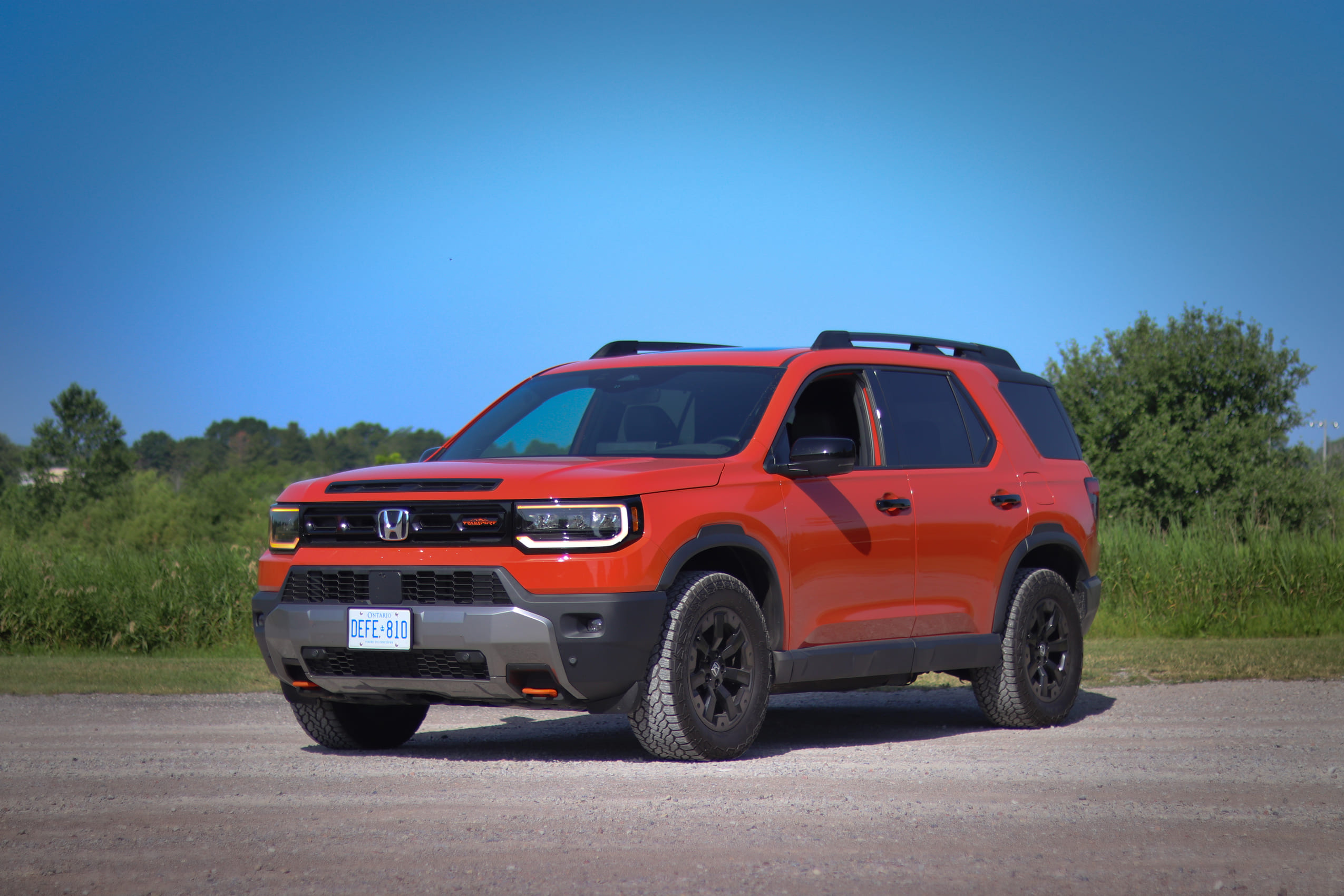
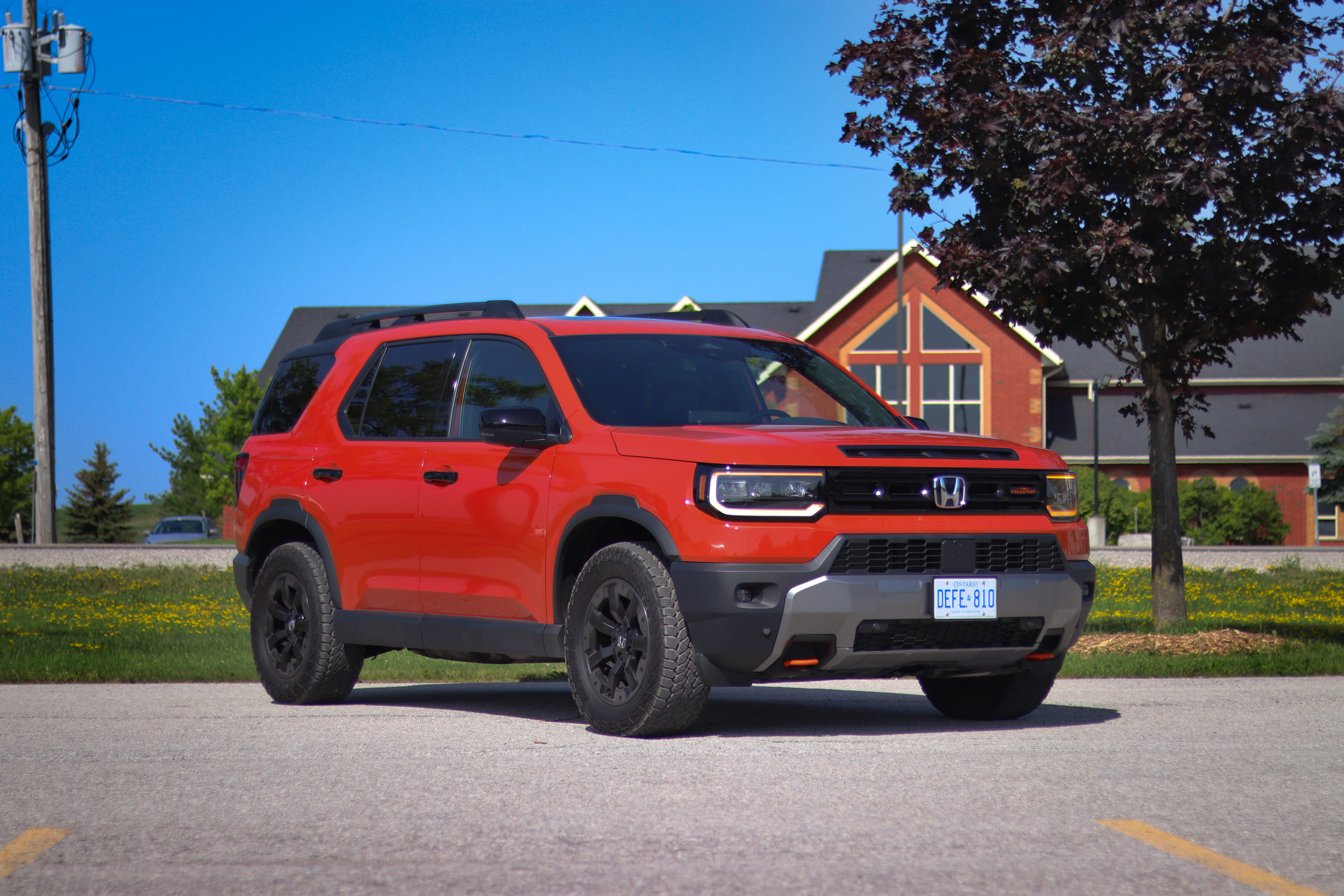
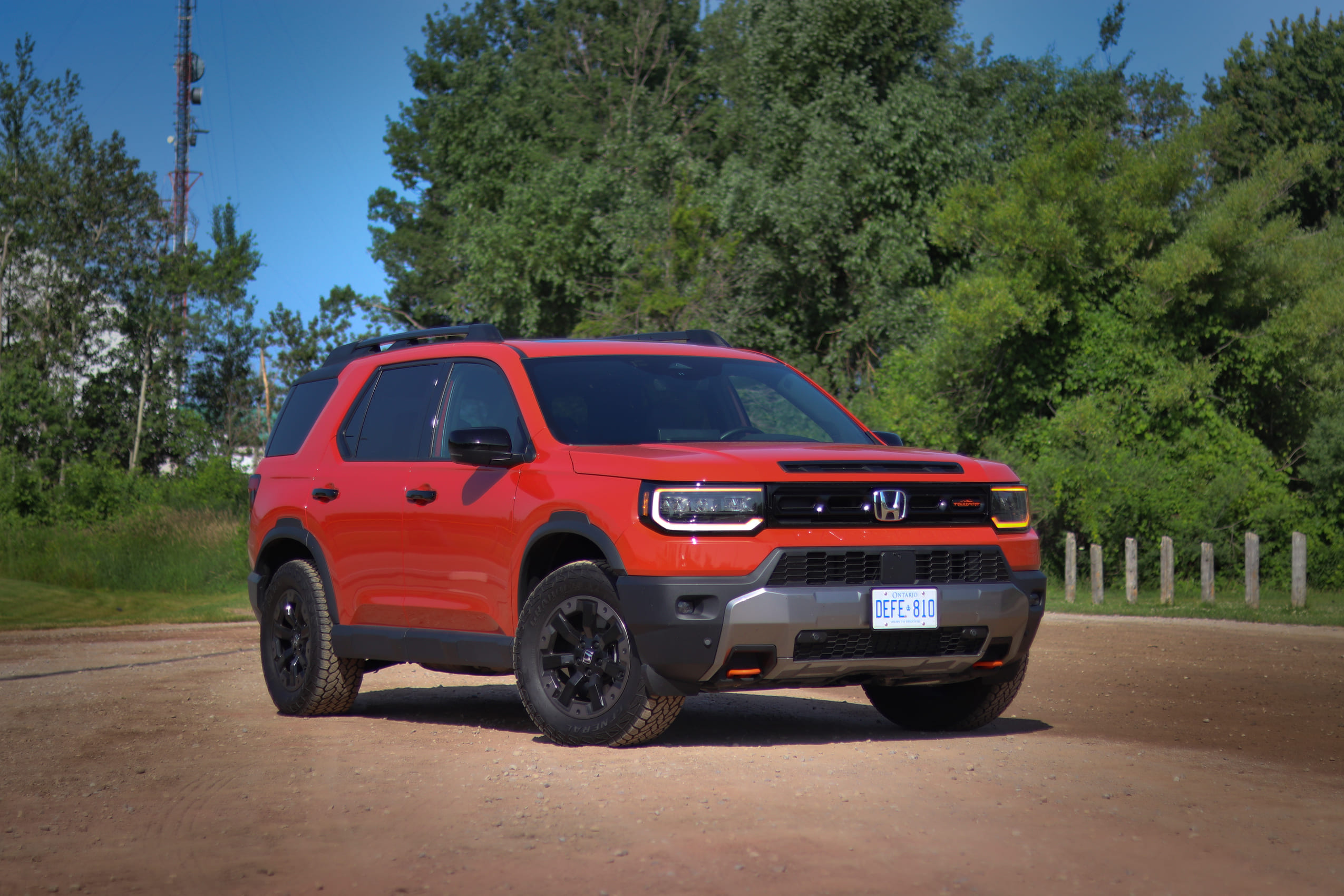
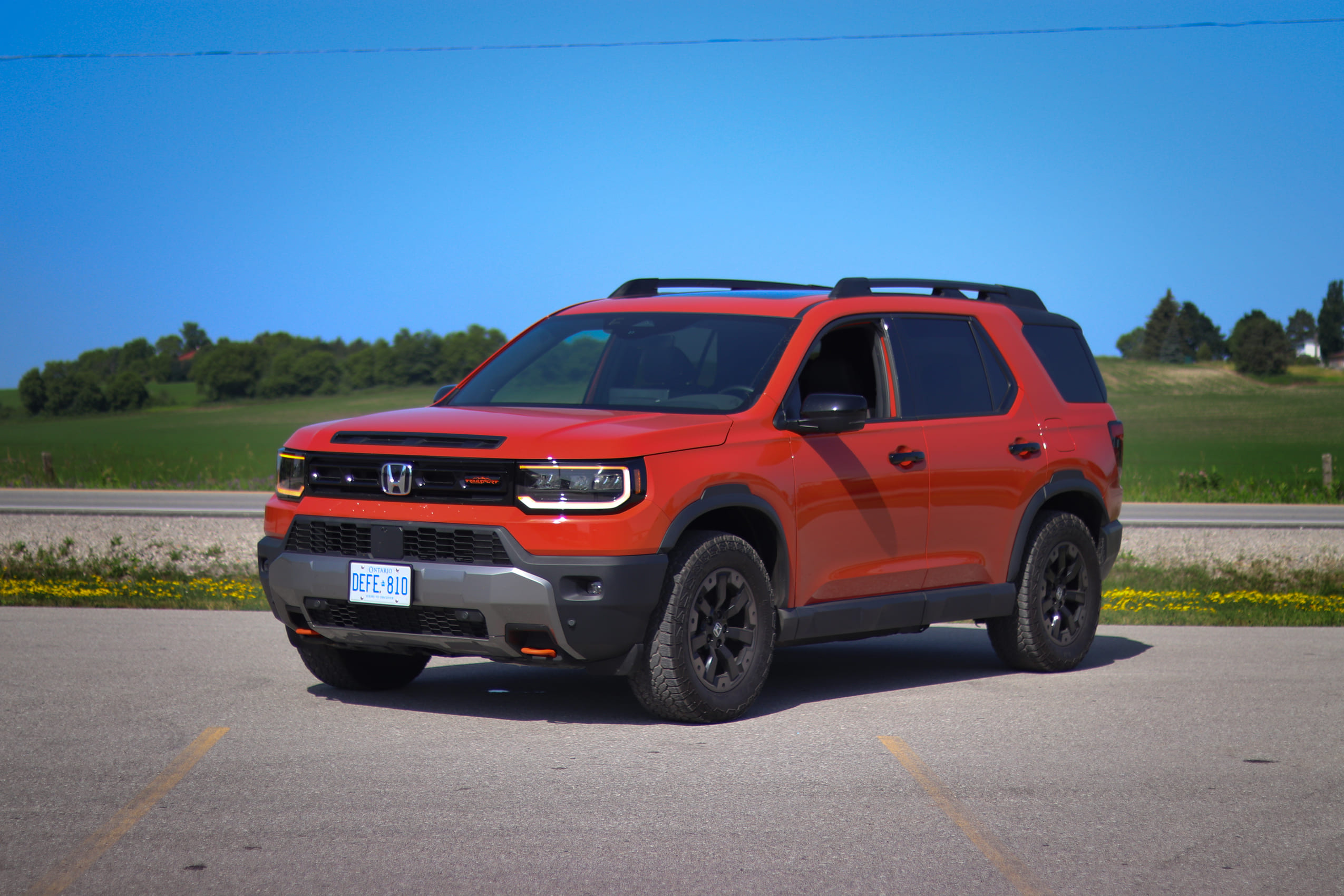
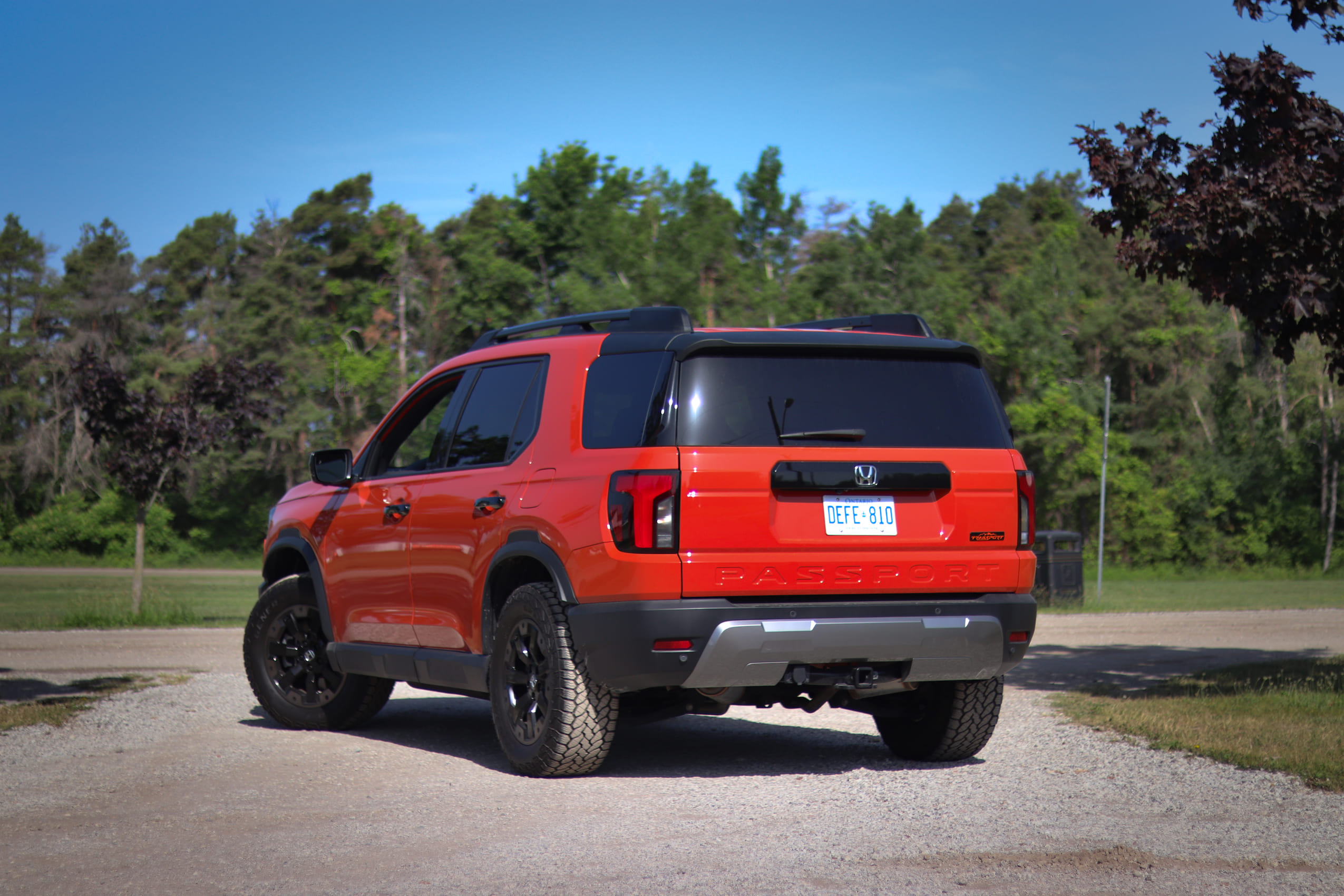
It isn’t pretending to be a Jeep Wrangler—and thank God for that, because it actually rides like a modern automobile instead of an agricultural implement. Instead, Honda gave it a boxy, retro-tonka silhouette, fitted a set of genuine all-terrain tires, and leaned entirely into the fantasy. It’s a masterclass in realistic expectation: giving suburban weekenders the rugged, trail-ready aesthetic they desperately want, paired with the everyday road manners and bulletproof usability they actually need.
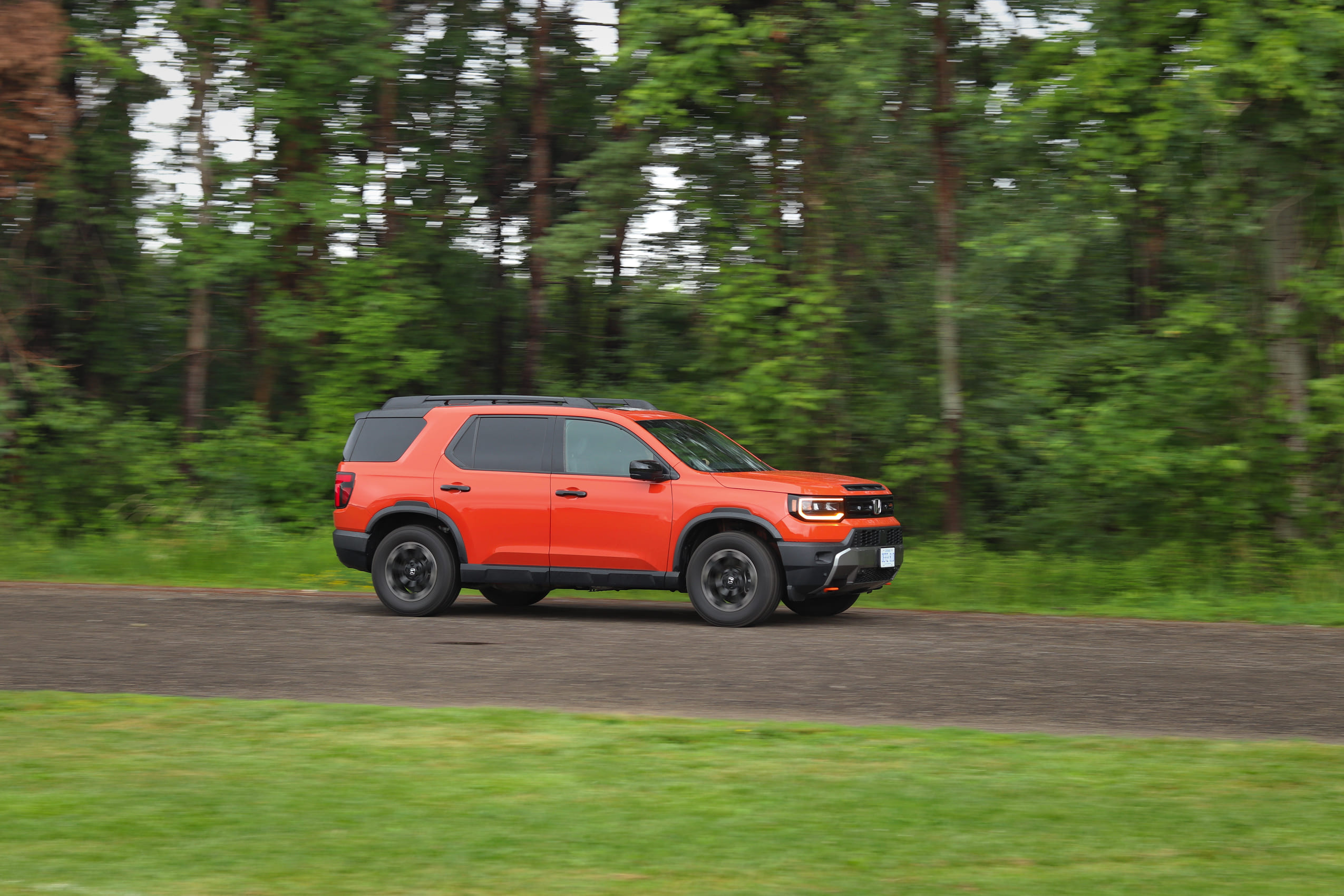
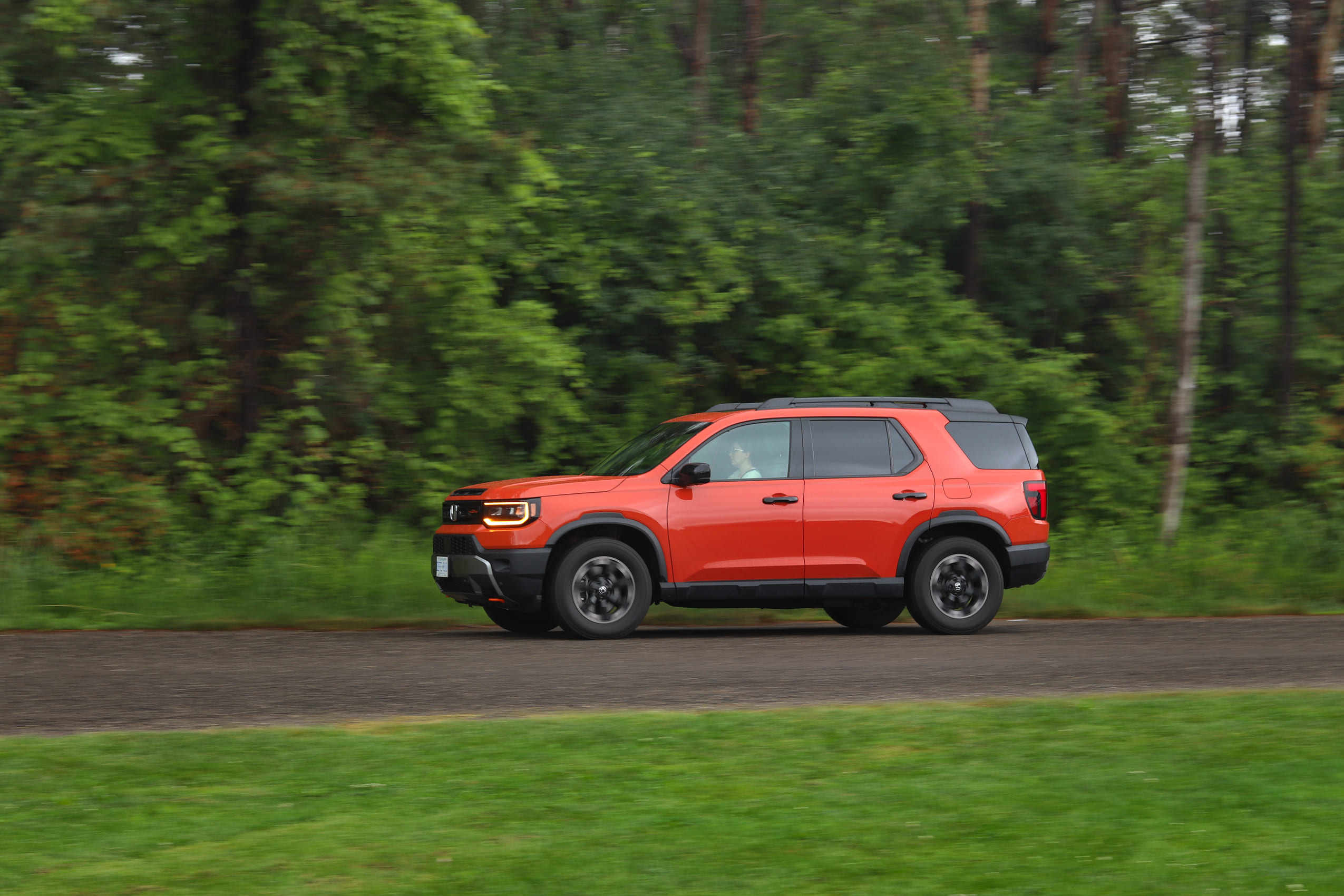
To see how Honda pulled off this optical illusion, you have to look at the side-by-side with its three-row platform sibling, the Pilot. On paper, they share the same underlying architecture and stiffened floorpan, but while the Pilot wears the long, stretched-out proportions of a sensible suburban shuttle attempting to look rugged, the Passport gets the automotive equivalent of a tail-docking. By chopping several inches off the rear overhang, Honda completely transformed the vehicle’s visual center of gravity. It no longer looks like a station wagon in disguise; it looks squat, wide, and intentionally Tonka-like.
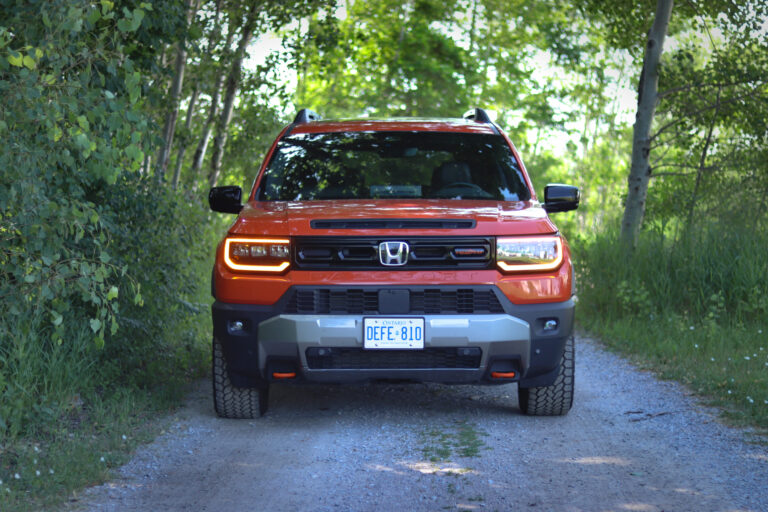
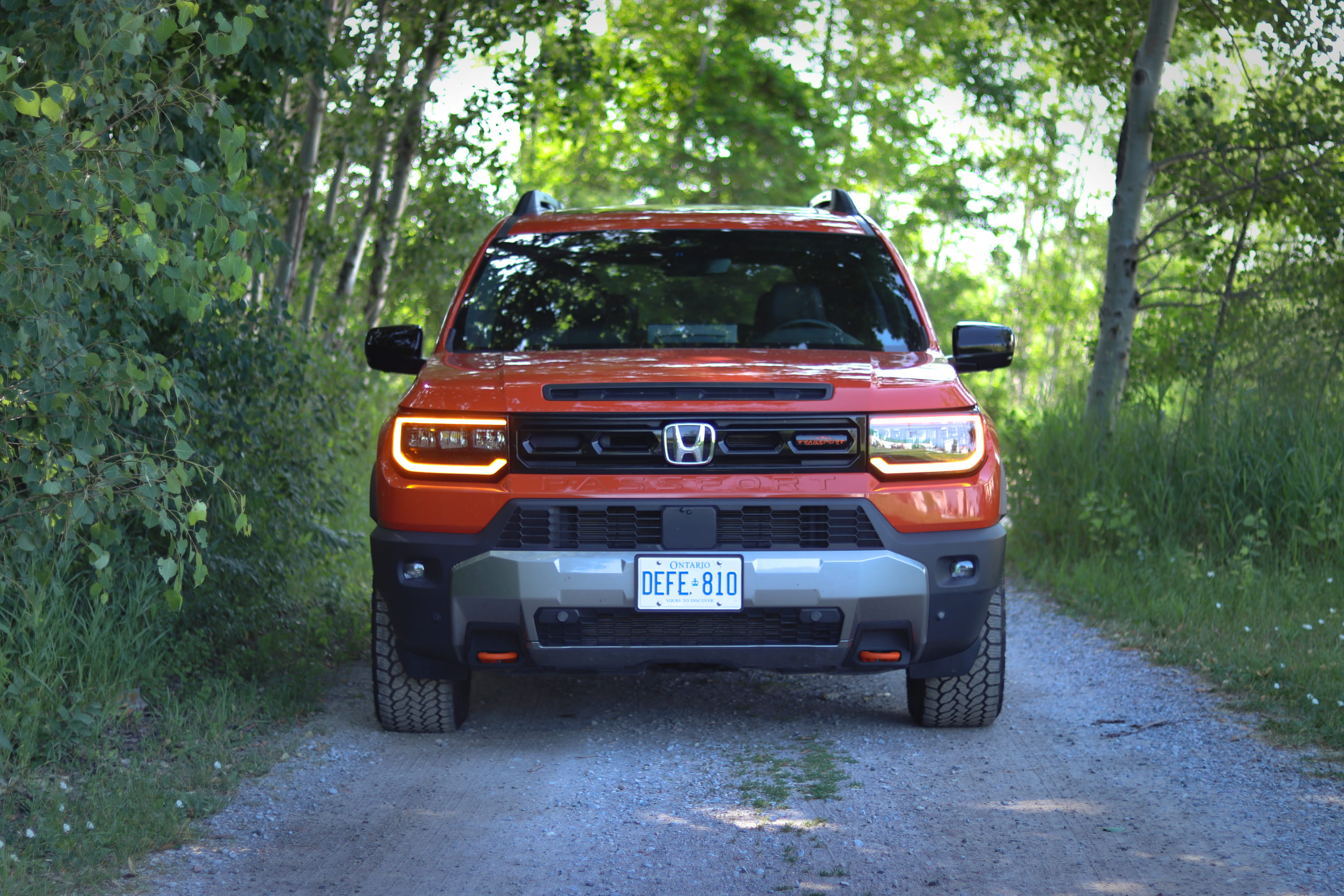
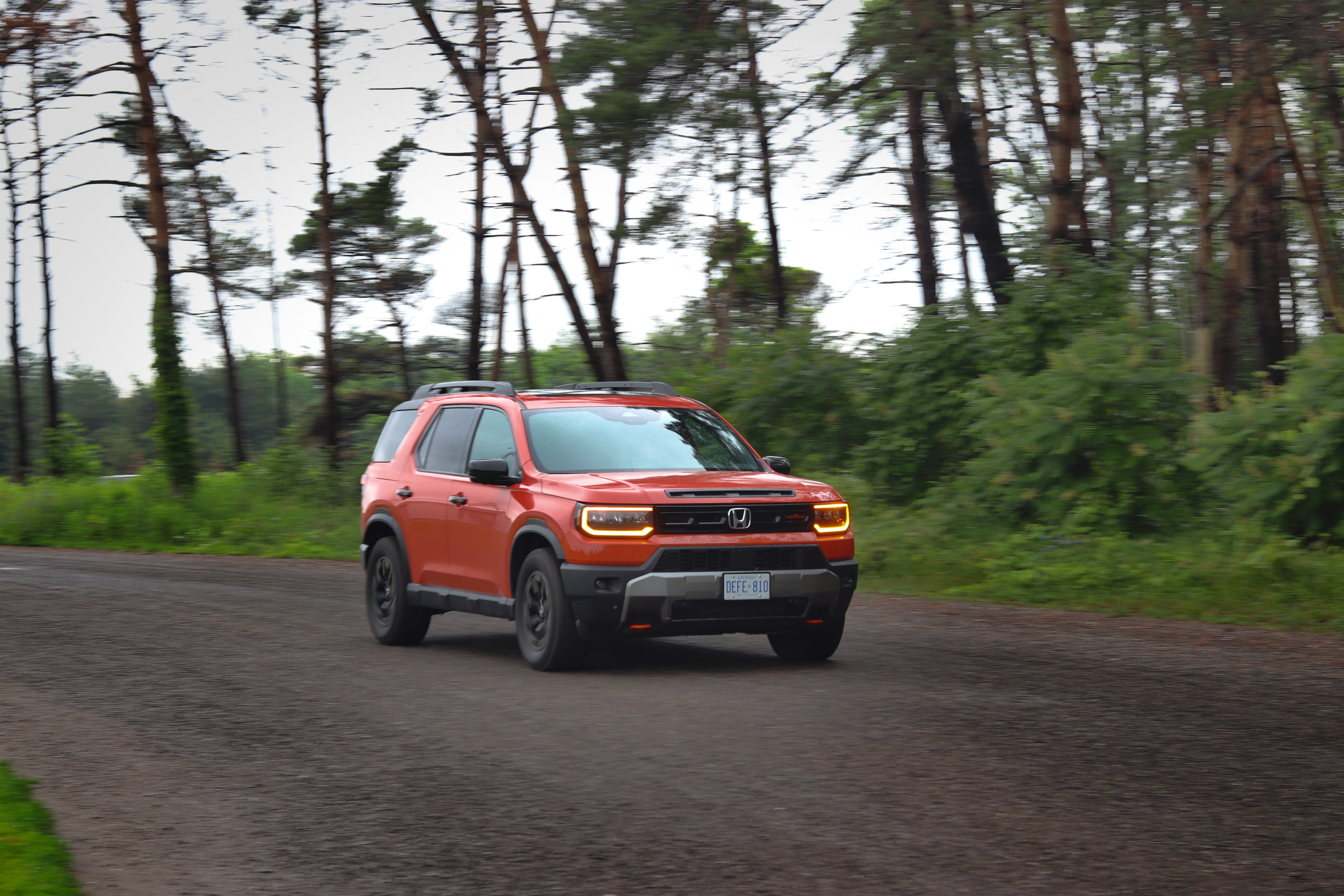
The TrailSport treatment then takes that stubby, square-jawed silhouette and dials up the theater. Up front, the delicate corporate grille is swapped for an aggressive, wide-mouth mesh structure framed by an upright header bar and amber lighting accents. Peeking out from the lower bumper are high-visibility, bright orange recovery hooks that look ready to win an off-road rescue competition—even if their most frequent assignment will be securing a kayak at a campsite.
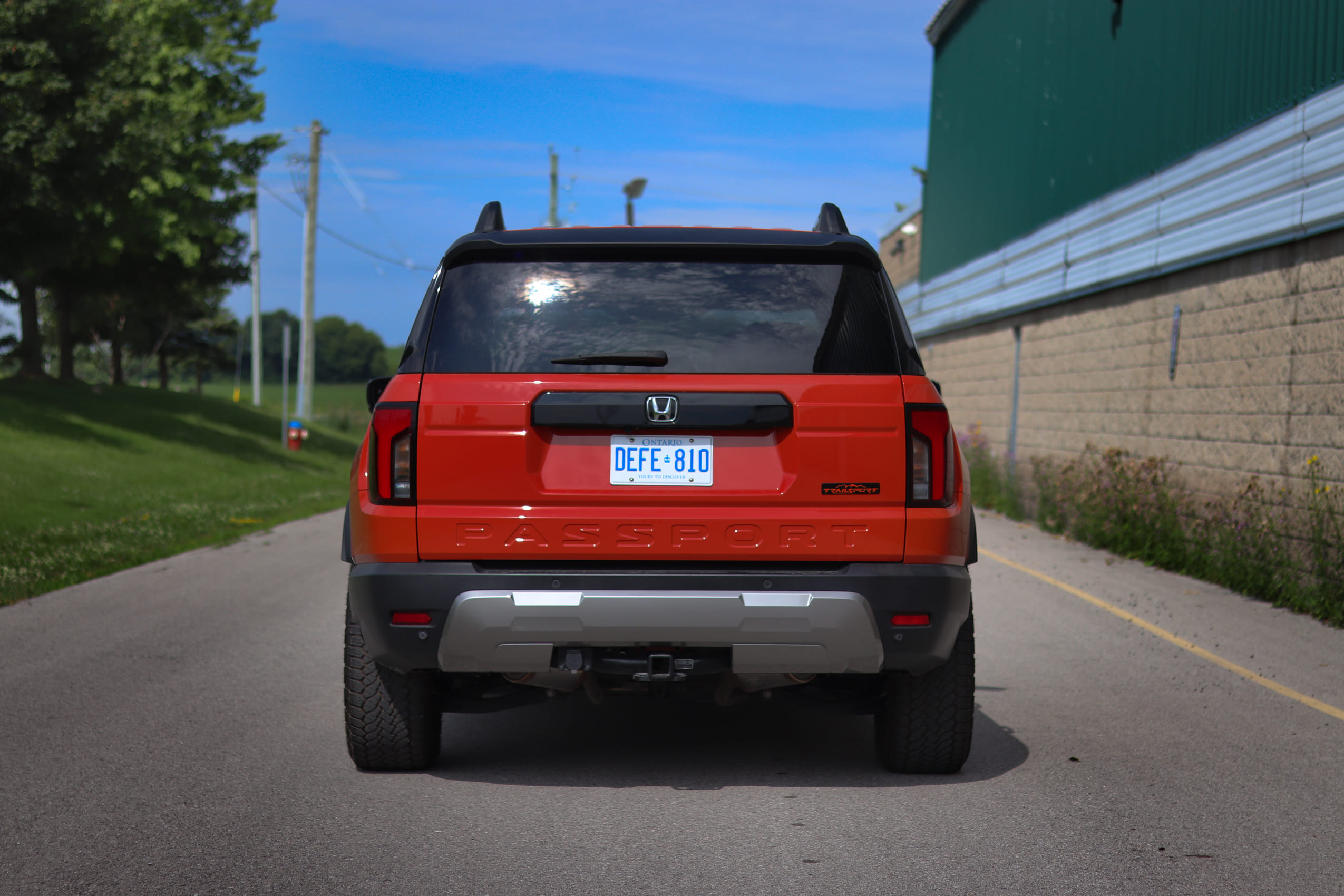
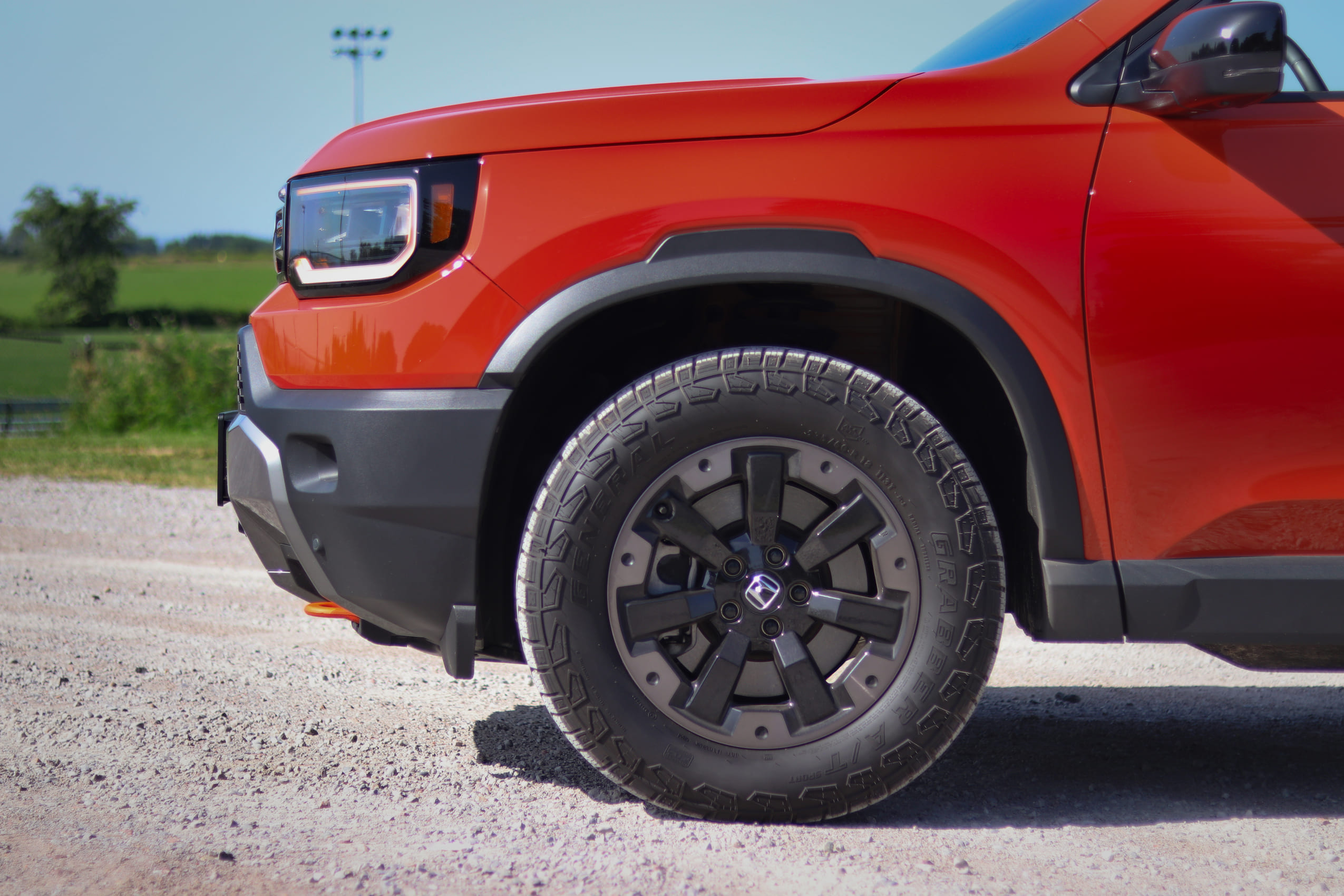
Then there are the tires, which are the single biggest cheat code in modern automotive design. Honda didn’t just slap a “Trail” sticker on standard rubber; they bolted on proper 18-inch Shark Gray wheels wrapped in thick-sidewall, aggressive all-terrain tires that sit wider than what you’ll find on a standard Pilot. The extra tread width and knobby shoulder blocks fill out the squared-off wheel arches so effectively that the entire vehicle looks like it was drawn for a comic book.
Add in unpainted black lower body cladding designed to take a beating from gravel spray, a heavy-duty steel skid plate casually visible beneath the front chin, and blacked-out roof rails, and the end result is surprisingly cohesive. Where a Pilot TrailSport can look like a minicab wearing hiking boots to a soccer match, the Passport TrailSport actually looks like it was conceived this way from day one—a short-wheelbase, broad-shouldered exercise in how to make a sensible two-row family commuter look like a genuine expedition rig.
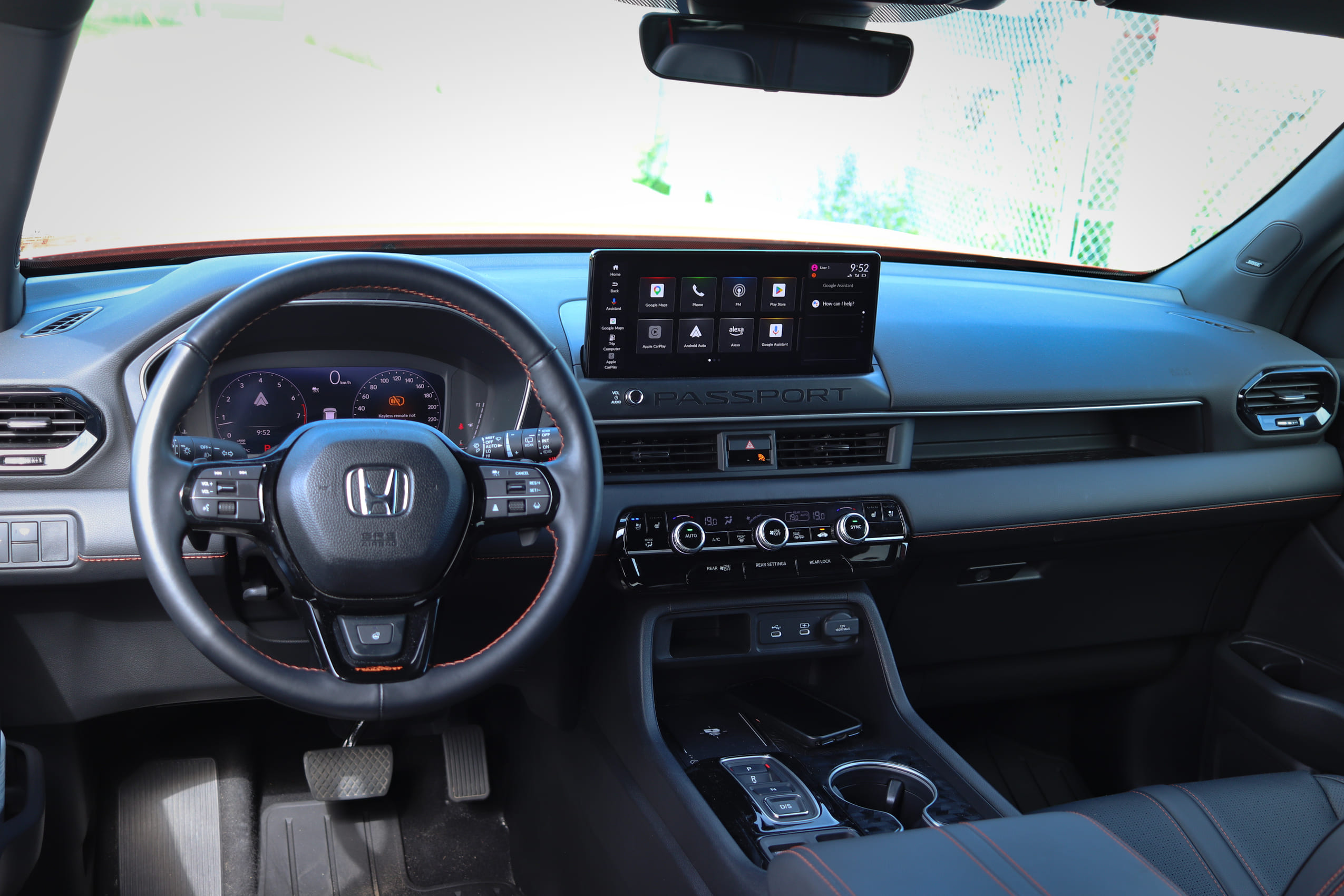
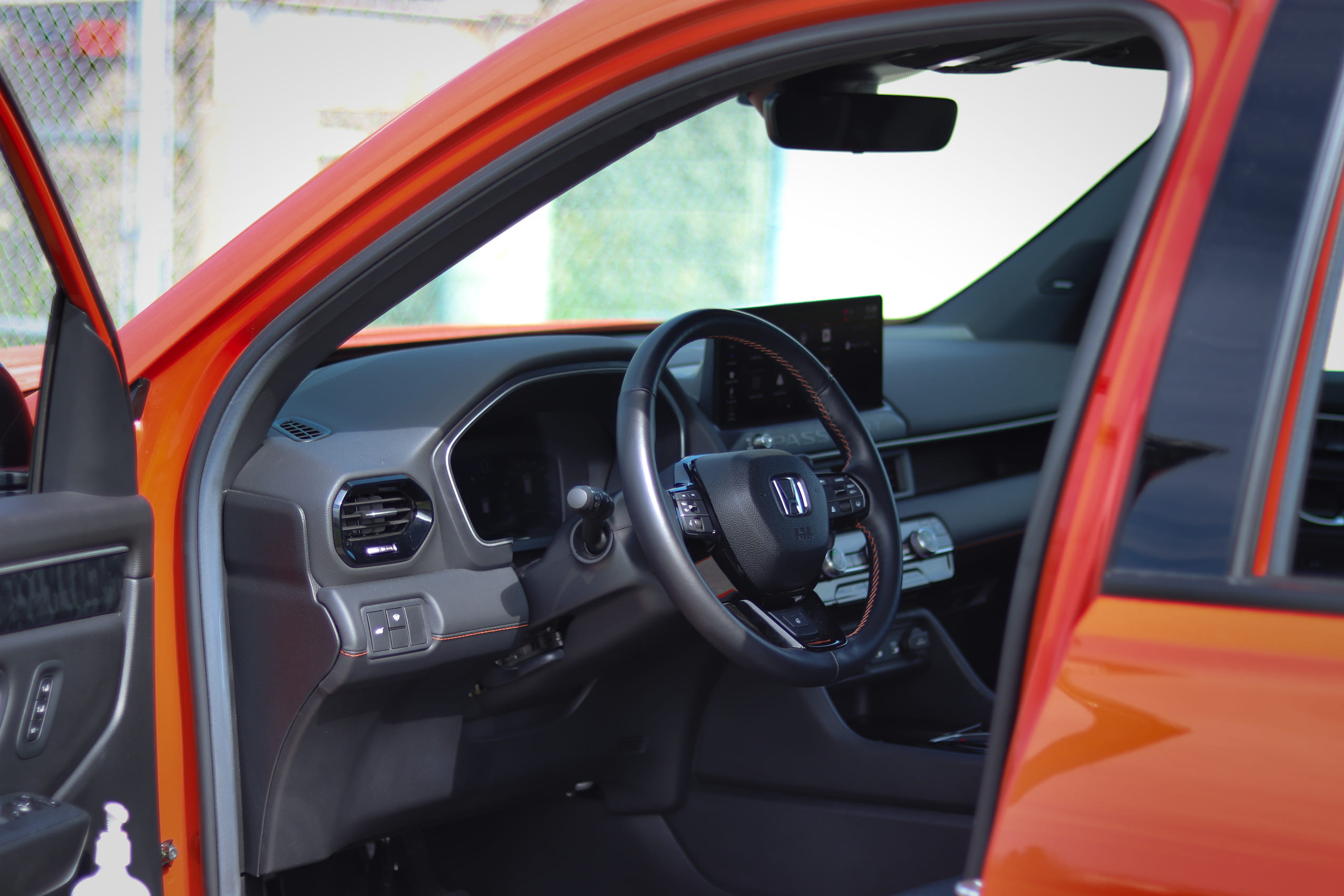
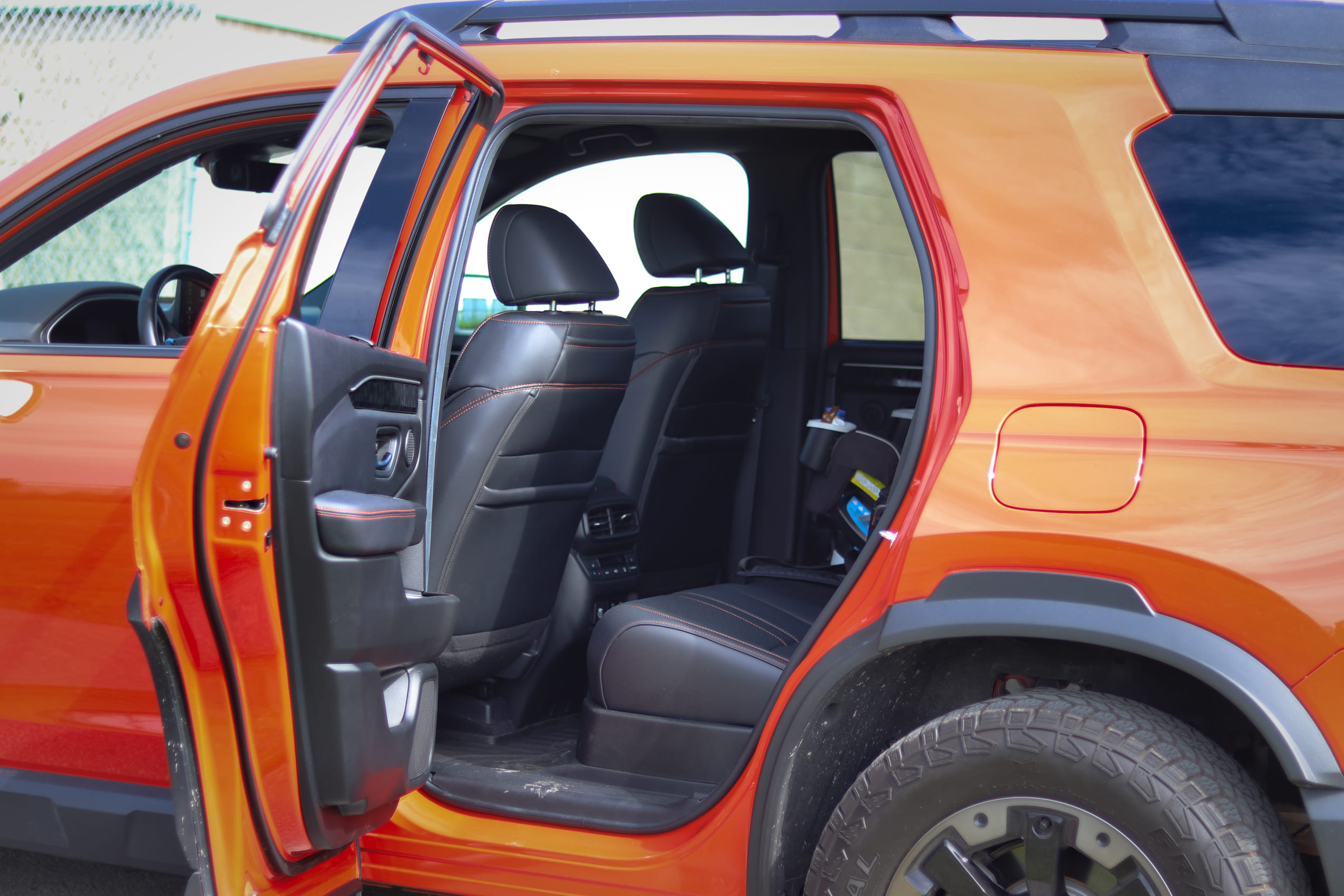
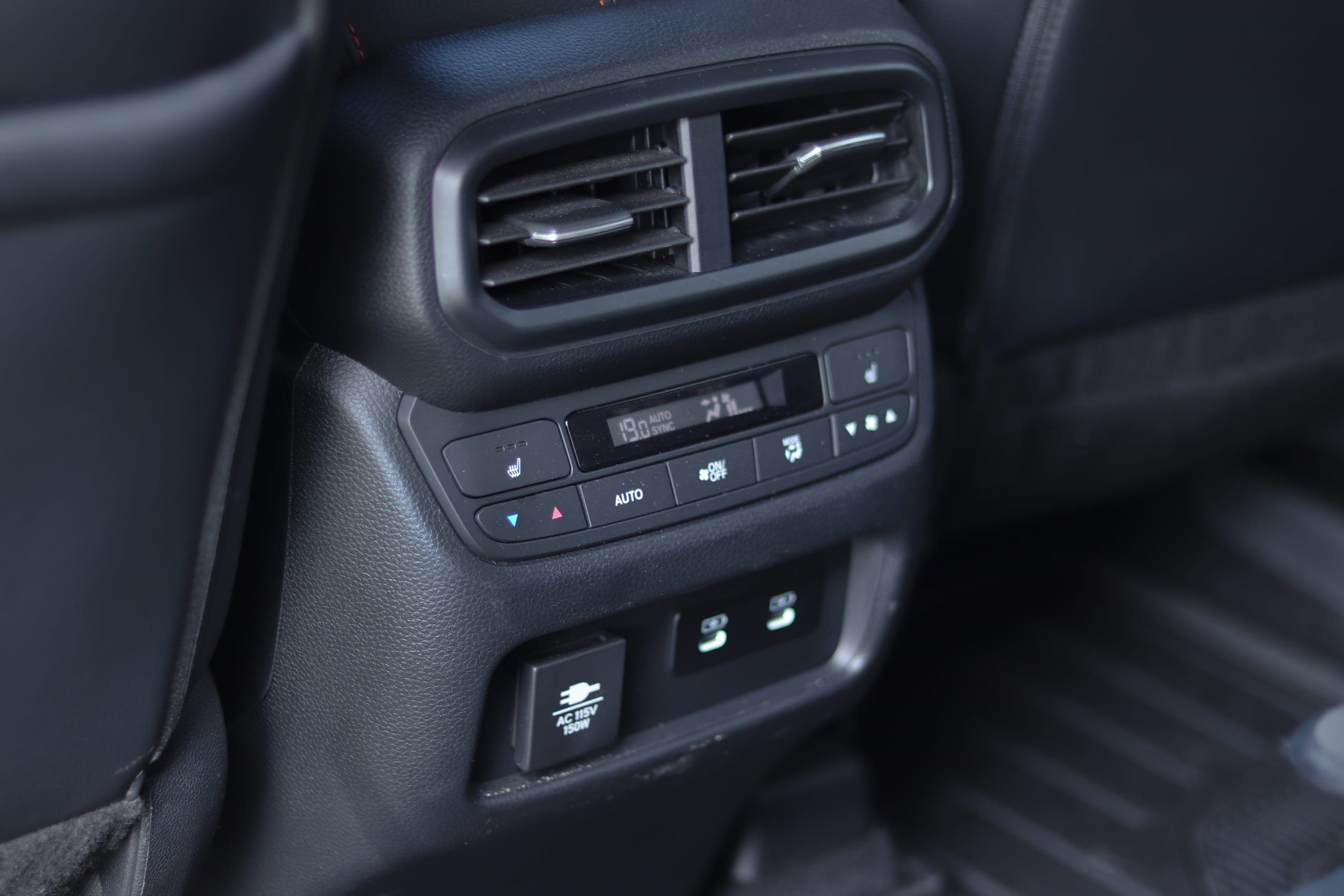
Step inside, and the Passport’s “tonka-truck-meets-daily-driver” theme continues uninterrupted, though Honda clearly spent more time thinking about cup holders than interior ambiance. The cabin design is resolutely boxy, upright, and function-first. In an industry currently obsessed with sweeping ambient light strips, sweeping curved glass, and glossy piano-black surfaces that show every single fingerprint, the Passport feels refreshingly utilitarian. The dash is a high, vertical wall of durable, soft-touch materials that echo the exterior’s blocky geometry. It’s spacious—almost ridiculously so for a two-row—giving front passengers the kind of elbow room usually reserved for full-size pickups.
Storage is where Honda’s interior engineers continue to flex their usual packaging black magic: the center console looks large enough to swallowed a small cooler, the door pockets could fit two-liter bottles, and there are random nooks, crannies, and rubberized shelves carved into every available surface. If you manage to run out of places to stow your phone, keys, or snacks in this thing, you have an intervention-worthy hoarding problem.
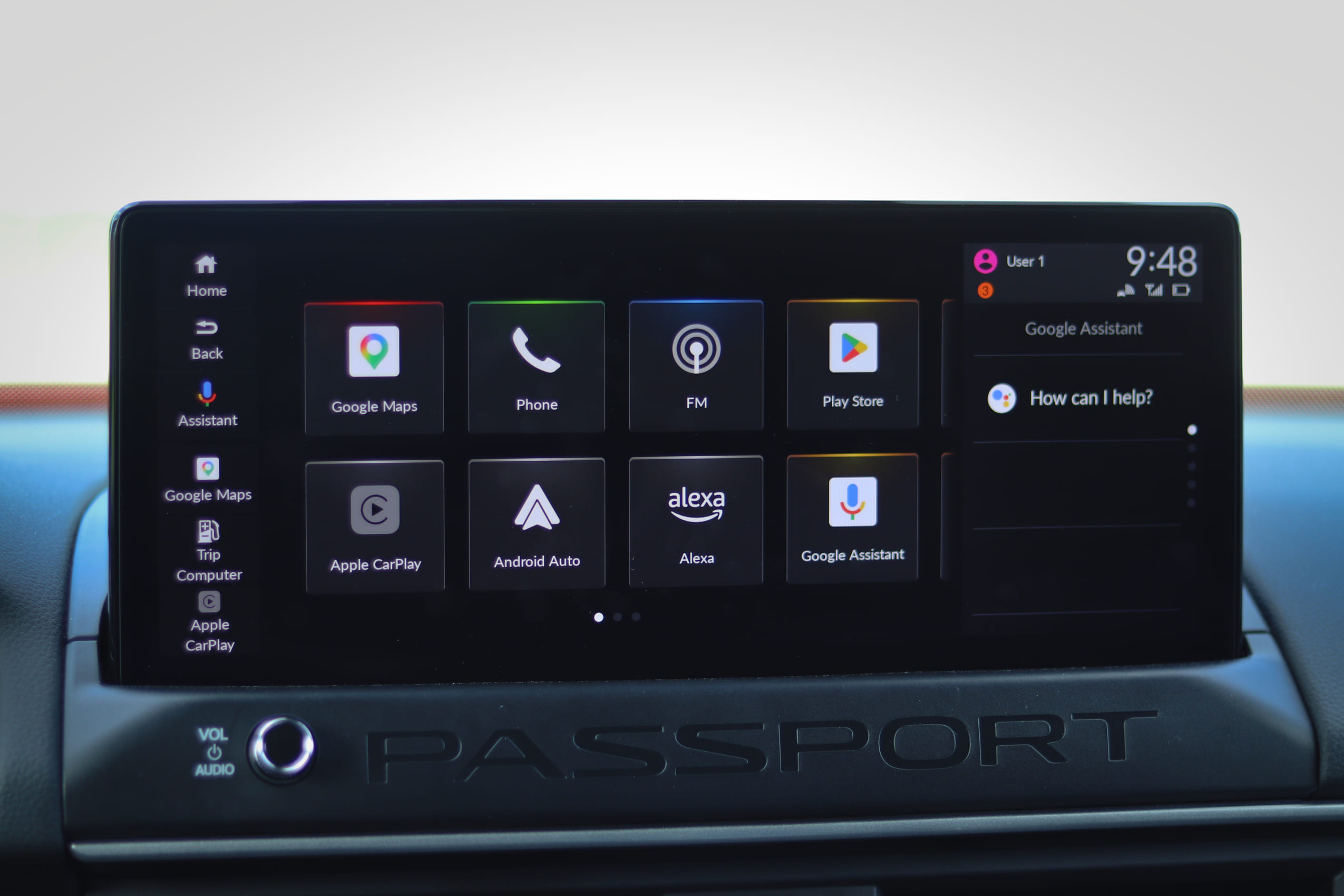
The massive upgrade for the current generation, however, is the infotainment setup. Honda finally put the old, laggy, micro-sized display out of its misery, swapping it for a substantially larger, crisp touchscreen that sits right at eye level. It instantly drags the interior out of 2018, giving you snappy touch responses, wireless phone mirroring, and readable graphics that don’t look like they were designed for an early-2000s Garmin unit.
It’s not all sunshine and perfect ergonomics, though. The Passport’s cabin is aggressively monochromatic—a sea of dark gray and black plastics that can feel a bit like sitting inside a very practical cave, even with the TrailSport’s signature orange accent stitching doing its absolute best to inject some life into the party. And then there’s the transmission selector. Honda insists on sticking with its electronic push-pull button array on the center console.
It remains a needlessly complex, deeply unintuitive solution to a problem that was solved decades ago by the humble mechanical shift lever. Trying to execute a quick three-point turn on a narrow trail turns into a frustrating game of looking down, guessing, and double-checking buttons instead of just driving. It’s a minor blemish on an otherwise masterclass in brainless everyday usability.
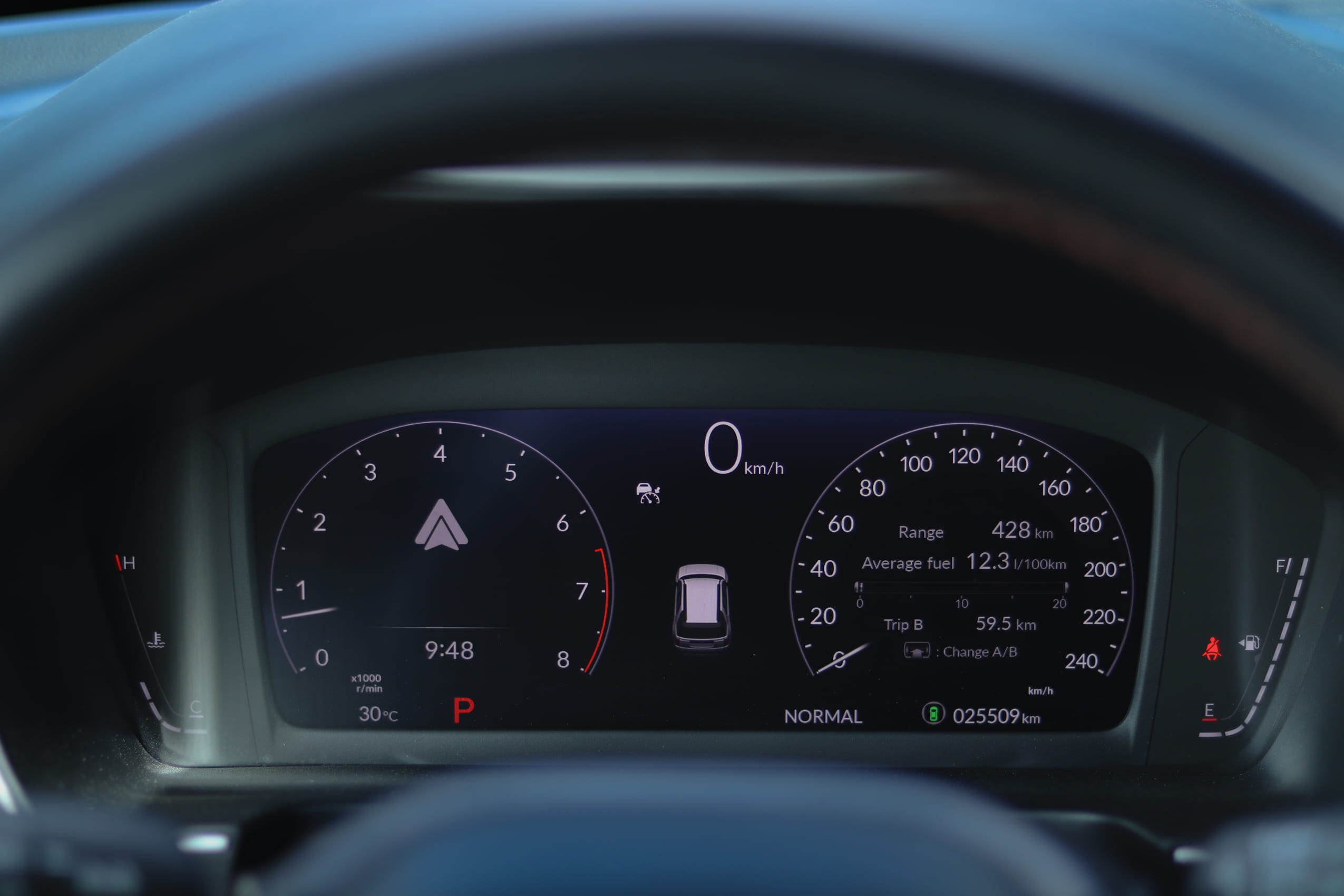
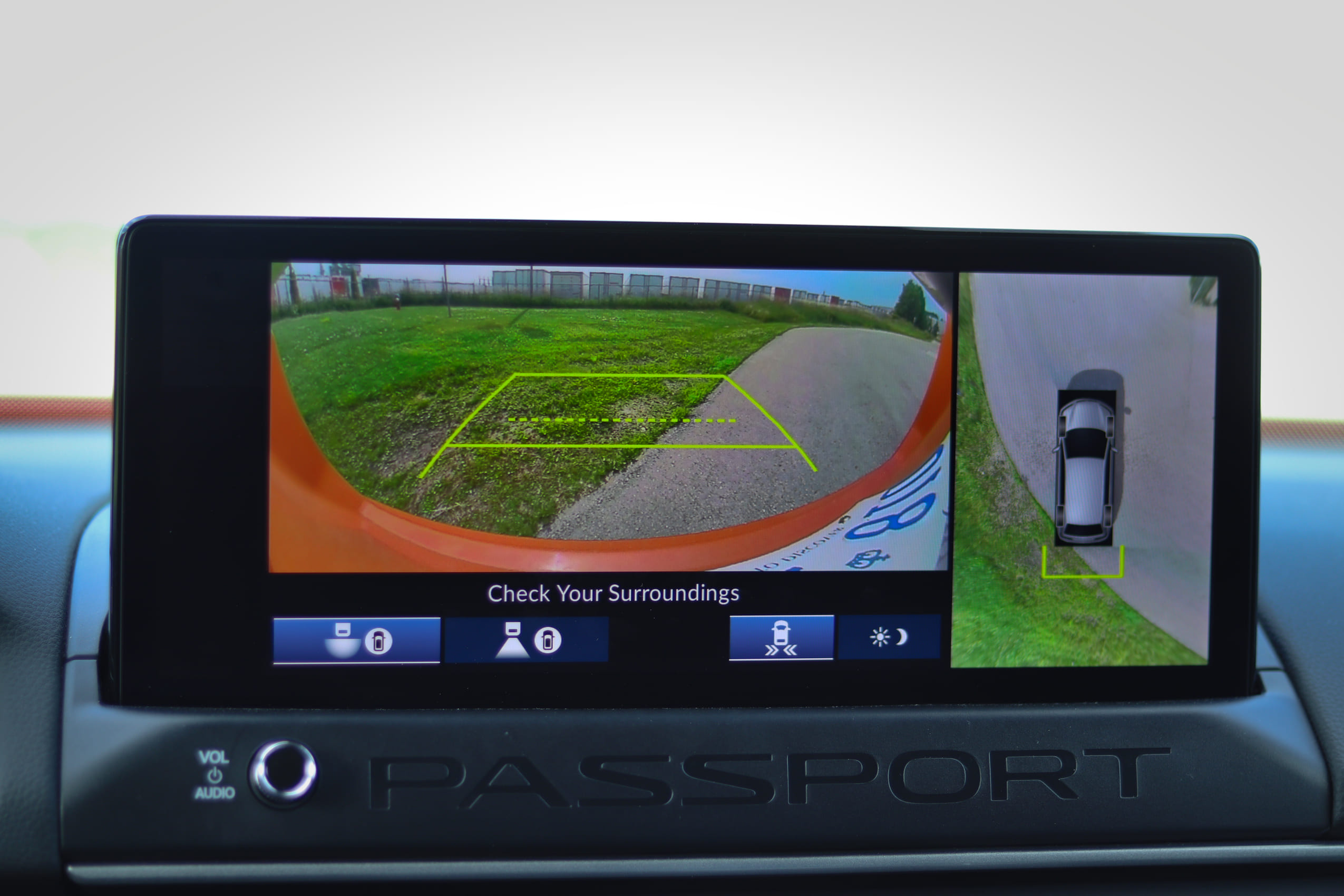
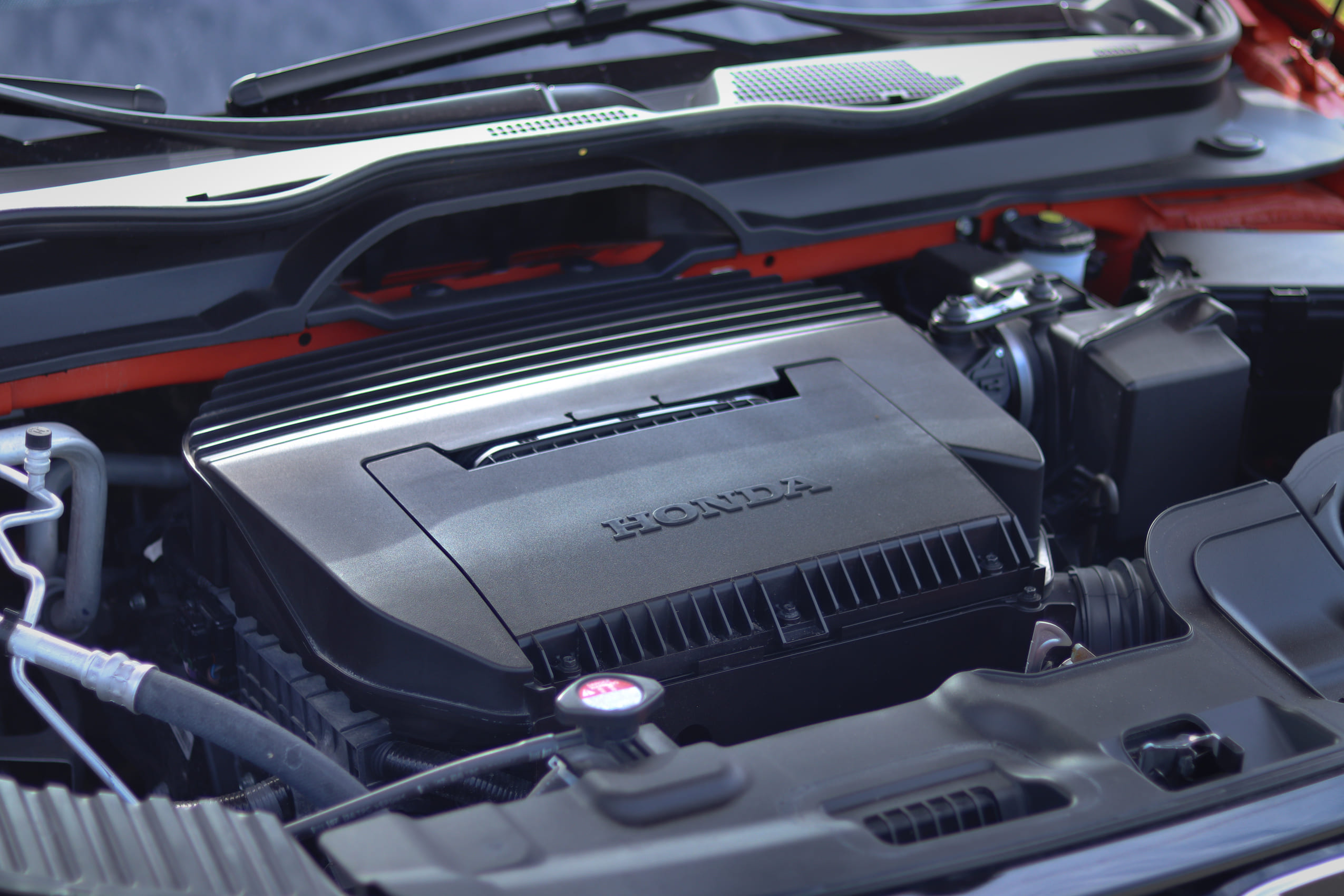
Now, pop the Passport’s aluminum hood, because this is where Honda’s engineering pedantry gets genuinely interesting—and where we have to give credit where it’s due. Underneath that blunt front nose sits Honda’s naturally aspirated 3.5-liter V6. In an era where every rival is downsizing to buzzy, laggy 2.0-liter turbocharged four-cylinders, Honda doubled down on a pure, free-breathing atmospheric six-cylinder. It spins out 285 horsepower at 6,100 RPM and 262 lb-ft of torque at 5,000 RPM. But this isn’t just the old SOHC J35 engine with a fresh coat of paint; it’s an updated DOHC design featuring dual variable timing control (VTC) and direct injection, paired with active cylinder management that shuts off three cylinders under light loads. Because there’s no turbo lag to wait for, throttle response off the line is crisp and linear—exactly what you want when modulating power over loose shale or crawling up a rutted fire road.
Gone is the old ZF-sourced nine-speed automatic that shifted with all the enthusiasm of a sleepy teenager. In its place is Honda’s own in-house 10-speed automatic, complete with steering-wheel-mounted paddle shifters. First gear is ultra-short, giving you punchy off-the-line torque multiplication, while tenth gear lets the V6 loaf along at low engine speeds on the highway.
Then we get to the real crown jewel: the Intelligent Variable Torque Management system, or i-VTM4. Most modern “off-road” crossovers rely on brake-based torque vectoring, which simply pinches the brakes on a spinning wheel to force power across an open differential—a cheap trick that cooks your brake pads and bogs down momentum. Not Honda. The i-VTM4 system uses a hydraulically operated, electro-mechanically controlled rear differential housing two individual clutch packs. It can send up to 70 percent of the engine’s torque to the rear axle, and then divert 100 percent of that rear torque to either individual rear wheel.
On the Passport TrailSport, Honda recalibrated this setup with custom “Trail Torque Logic.” If you lift a tire in the air while cross-axled over a ditch, the system instantly clamps the clutch pack on the wheel with traction before the airborne tire even has a chance to spin uselessly. It’s an extraordinarily clever mechanical setup masquerading behind a simple button on the dash.
The TrailSport technical upgrades don’t stop at the rear differential. While the chassis retains its stiff unibody construction, the suspension gets unique spring rates, recalibrated valve damping in the shock absorbers, and hollow anti-roll bars designed to offer just enough articulation on trails without turning the body into a floating boat on the highway. You get a respectable 8.3 inches of ground clearance, protected by actual steel skid plates underneath the engine and fuel tank—not flimsy plastic splash guards.
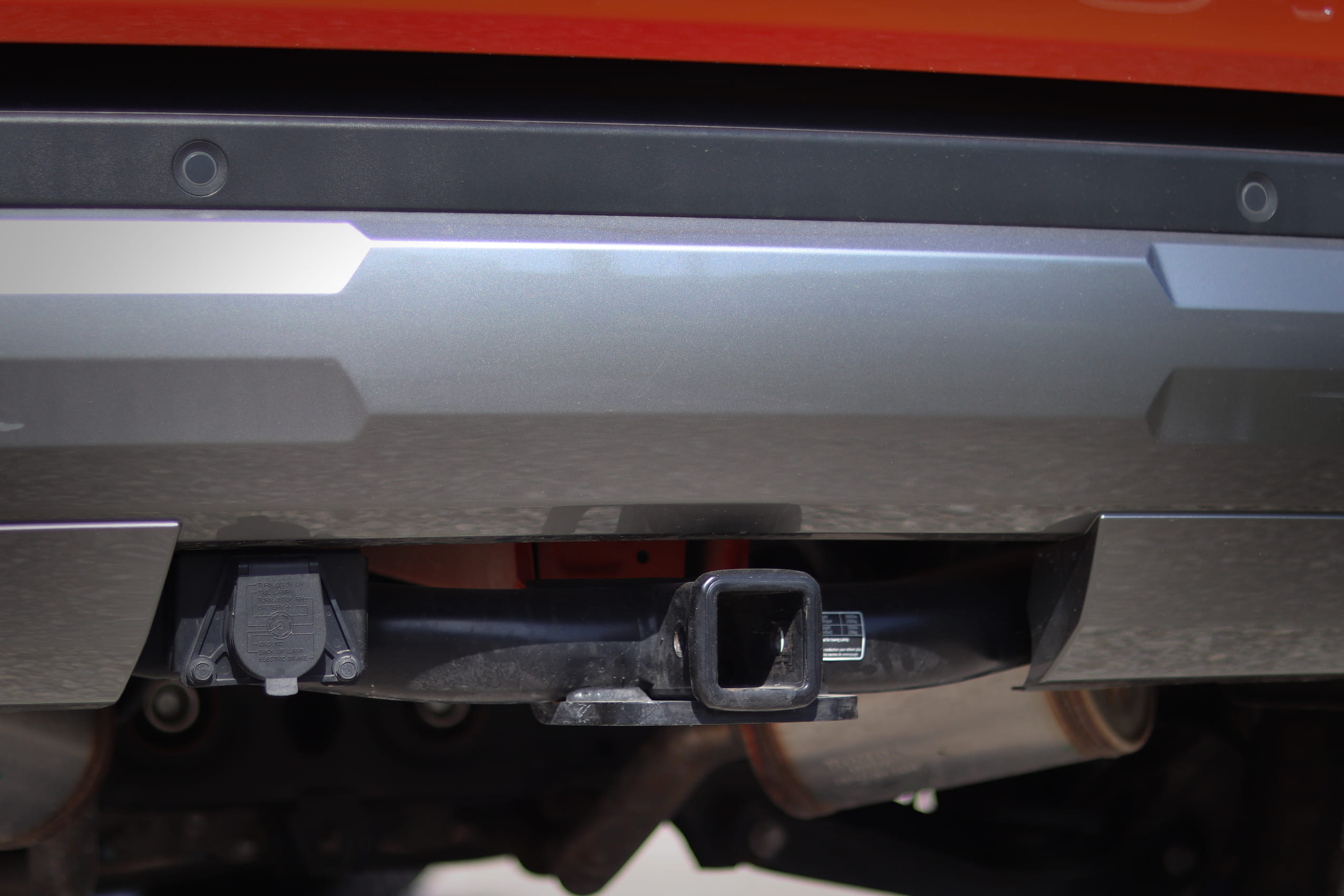
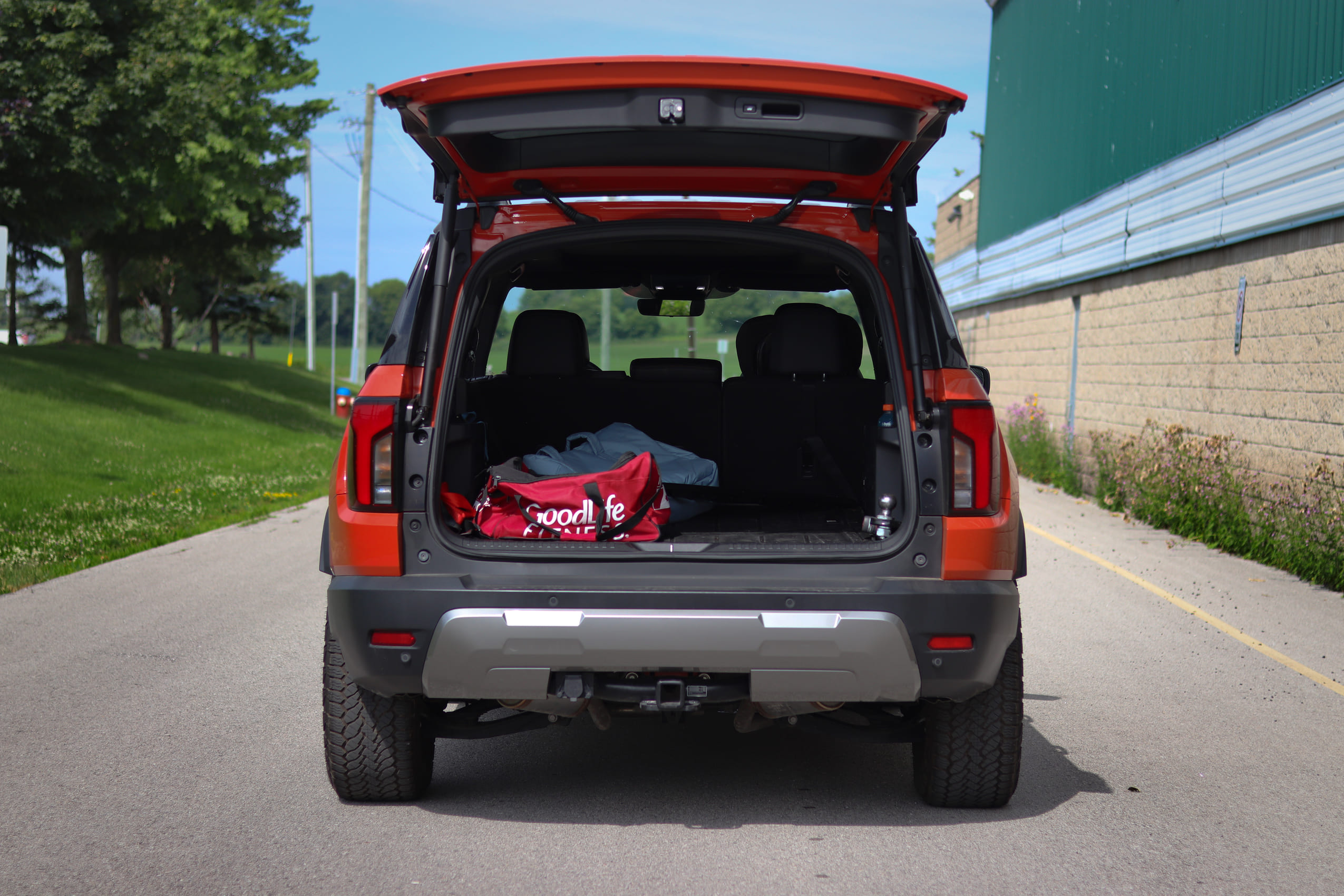
When you need to use the Passport as a workhorse, that unibody chassis and smooth V6 are rated to tow up to 5,000 pounds when properly equipped, backed by an integrated transmission cooler and a dedicated Towing mode.
Out on the road, the driving experience is defined by a deep, deliberate commitment to long-distance isolation. That naturally aspirated V6 has lost its old-school VTEC top-end “kick”—replaced instead by a powerband so linear and progressive that it trades high-rpm drama for effortless, silky-smooth refinement. Paired with the in-house 10-speed automatic, which slurs through its gears so seamlessly you’ll completely forget it’s shifting, the powertrain operates like a silent partner in the background.
The real magic, though, is in the chassis tuning: the suspension, the lightly weighted yet accurate steering, and the quiet cabin are all engineered with a single goal in mind—fatigue reduction. It doesn’t try to fake being a sports car or an unrefined tractor; instead, everything around you works in harmony to ensure that after two straight hours behind the wheel, you step out feeling remarkably fresh, relaxed, and entirely unbothered by the miles behind you.
Where that fatigue-free tuning really surprises you is when the asphalt disappears. Thanks to the TrailSport’s taller sidewalls and recalibrated damping, the suspension swallows washboard gravel roads, sharp frost heaves, and embedded rocks without sending violent shocks through the steering column or tossing passengers across the cabin. It doesn’t skitter or dance over loose surfaces; it simply absorbs the impacts and tracks straight, allowing you to carry a confident, relaxed pace down logging roads where stiffer, pseudo-sporty crossovers would be rattling your teeth out.
The brake pedal feel is equally deliberate—tuned with a progressive, predictable travel rather than an aggressive, grabby initial bite. That softer initial pedal response makes smooth modulation dead simple, whether you’re trying to gently bring the nose down on a steep, loose descent or just crawling through bumper-to-bumper Friday evening traffic without giving your passengers whip-lash. It’s not trying to inspire track-day heroics, but as a long-distance tourer that can turn off the highway and trudge down a dirt trail without breaking a sweat, the execution is spot on.
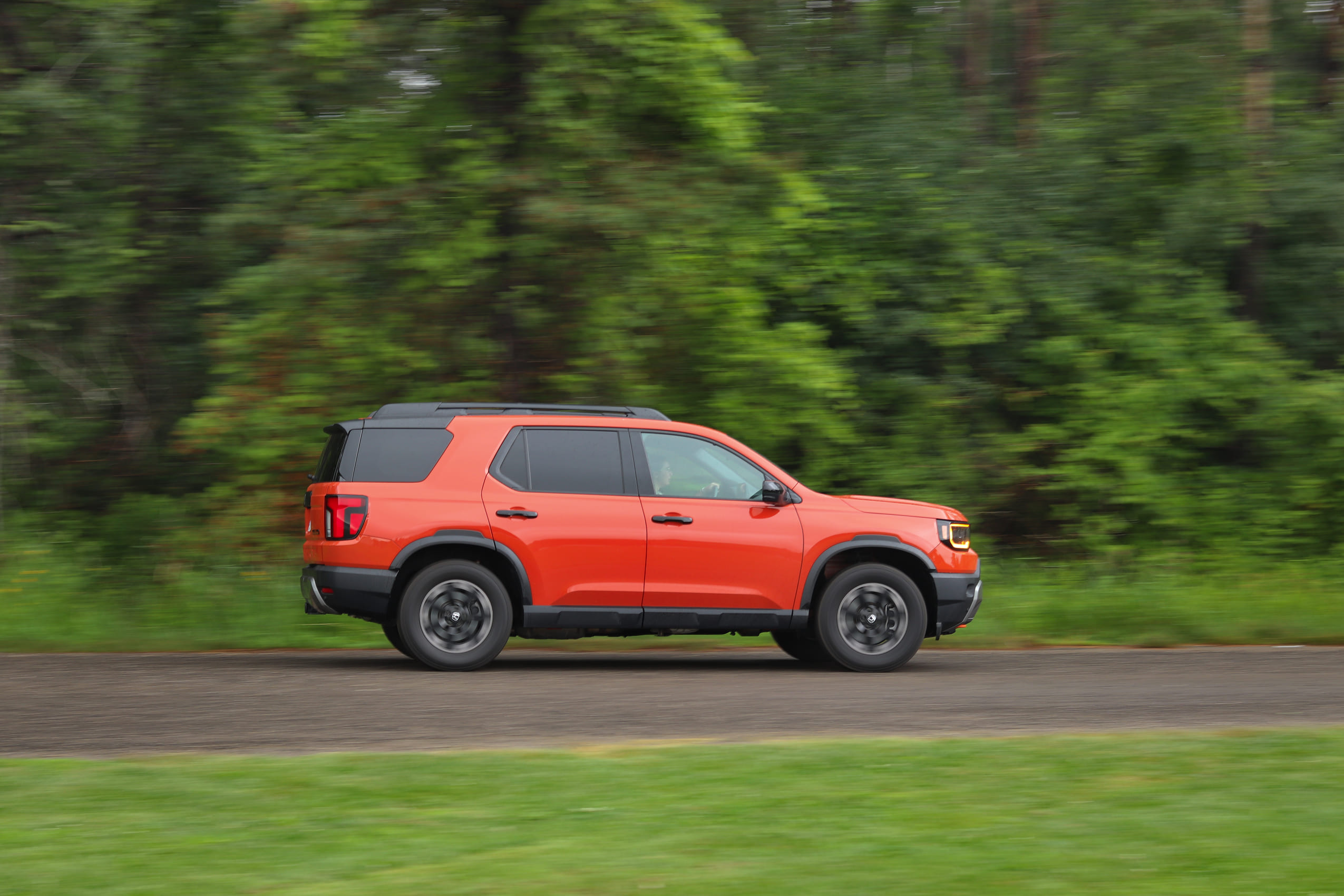
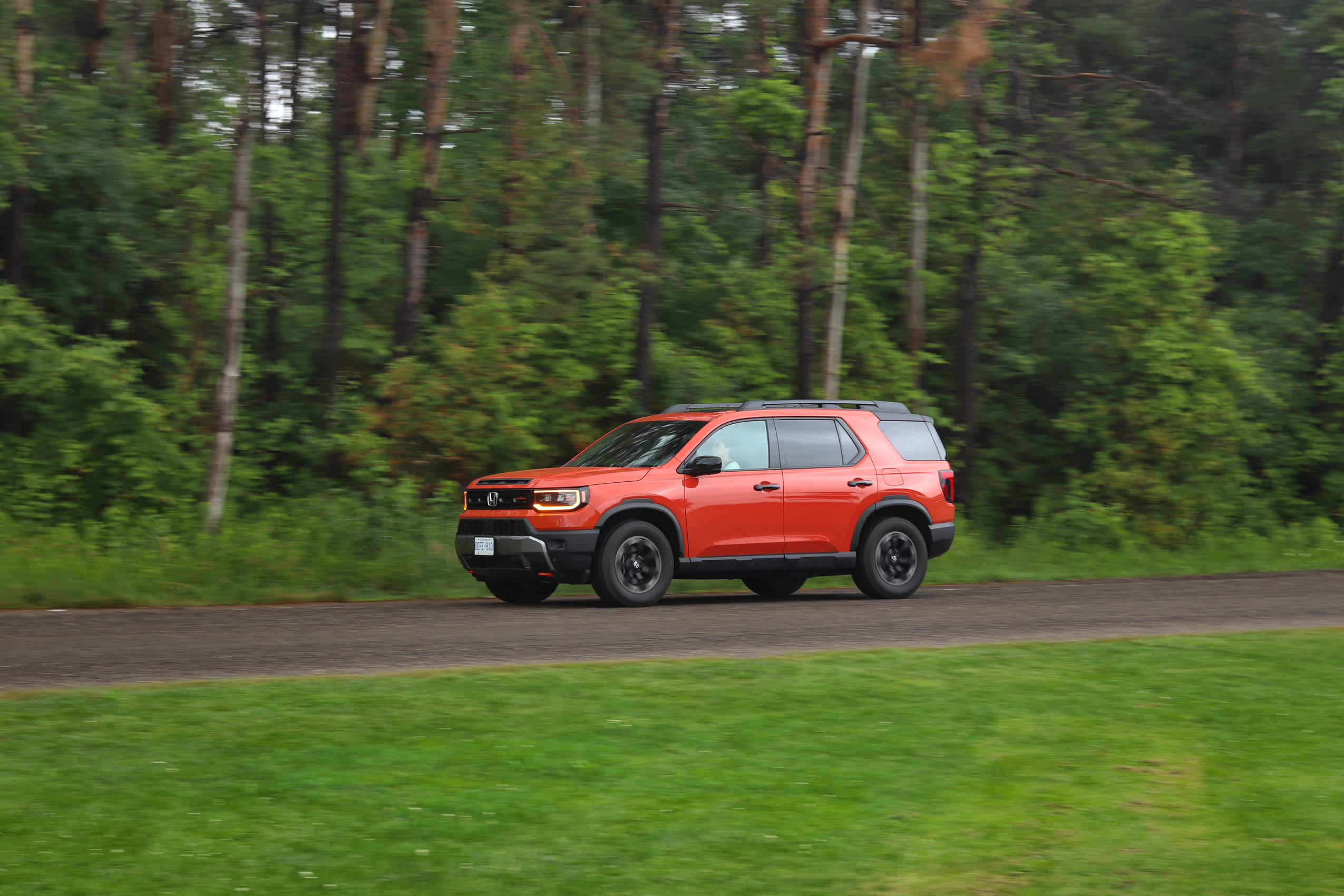
The 2026 Honda Passport TrailSport is the ultimate triumph of honest automotive theater. It doesn’t pretend to be an indestructible, frame-twisting rock crawler, nor does it suffer from the agonizing, bone-jarring compromises that make true off-roaders a chore to live with every single day. Instead, Honda took a sensible, ultra-spacious family commuter and wrapped it in a wide-shouldered, Tonka-truck suit that delivers the exact rugged, go-anywhere aesthetic buyers crave, backed by a genius vectoring all-wheel-drive system and real steel underbody armor that can genuinely tackle weekend trail adventures.
What you’re left with is perhaps the most thoughtfully executed middle ground in the entire crossover segment. Between its whisper-quiet, fatigue-killing road manners, its buttery smooth V6 powertrain, and an interior designed around pure, unpretentious utility, the TrailSport delivers maximum daily livability with zero poserrish guilt. It’s a masterclass in realistic engineering—giving you all the trail-ready optics and genuine capability you’ll ever actually use, without sacrificing an ounce of the brainless, long-distance comfort you actually need.
| Engine Type | 3.5L DOHC 24-Valve V6 (Direct Injection) |
|---|---|
| Transmission | 10-Speed Automatic |
| Horsepower | 285 hp @ 6,100 RPM |
| Torque | 262 lb-ft @ 5,000 RPM |
| Drivetrain | i-VTM4® Torque-Vectoring All-Wheel Drive (AWD) |
| Rear Differential | Electro-Hydraulic Clutch Packs with Trail Torque Logic |
| Max Towing Capacity | 5,000 lbs (Integrated Class III Hitch) |
| Max Payload | 948 lbs |
| Website | www.honda.ca |
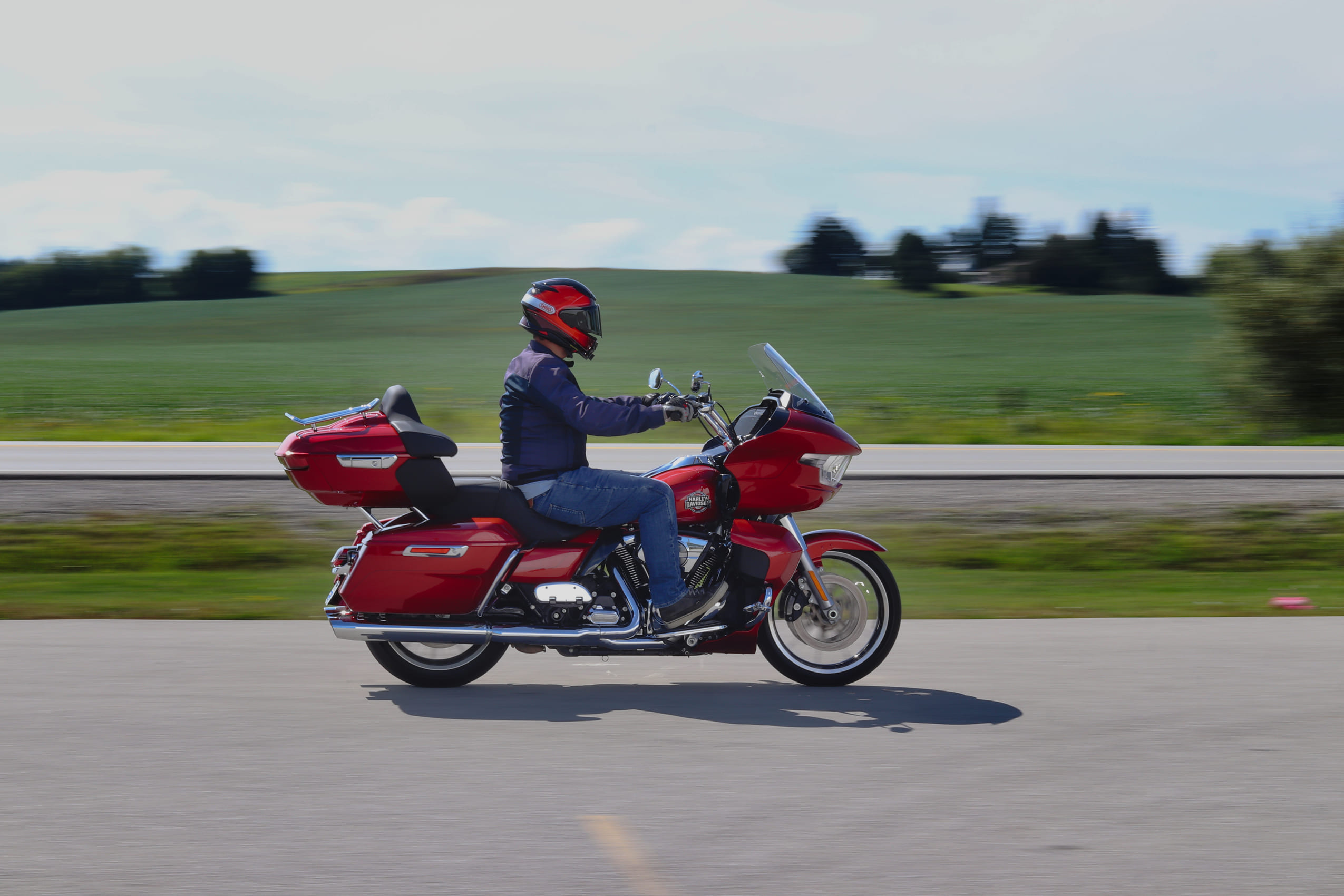
Sharknose Supremacy: Driving the 2026 Harley-Davidson Road Glide
Let’s get one thing straight: the 2026 Harley-Davidson Road Glide shouldn’t make sense. It’s a rolling, 800-pound contradiction—a massive, frame-mounted…

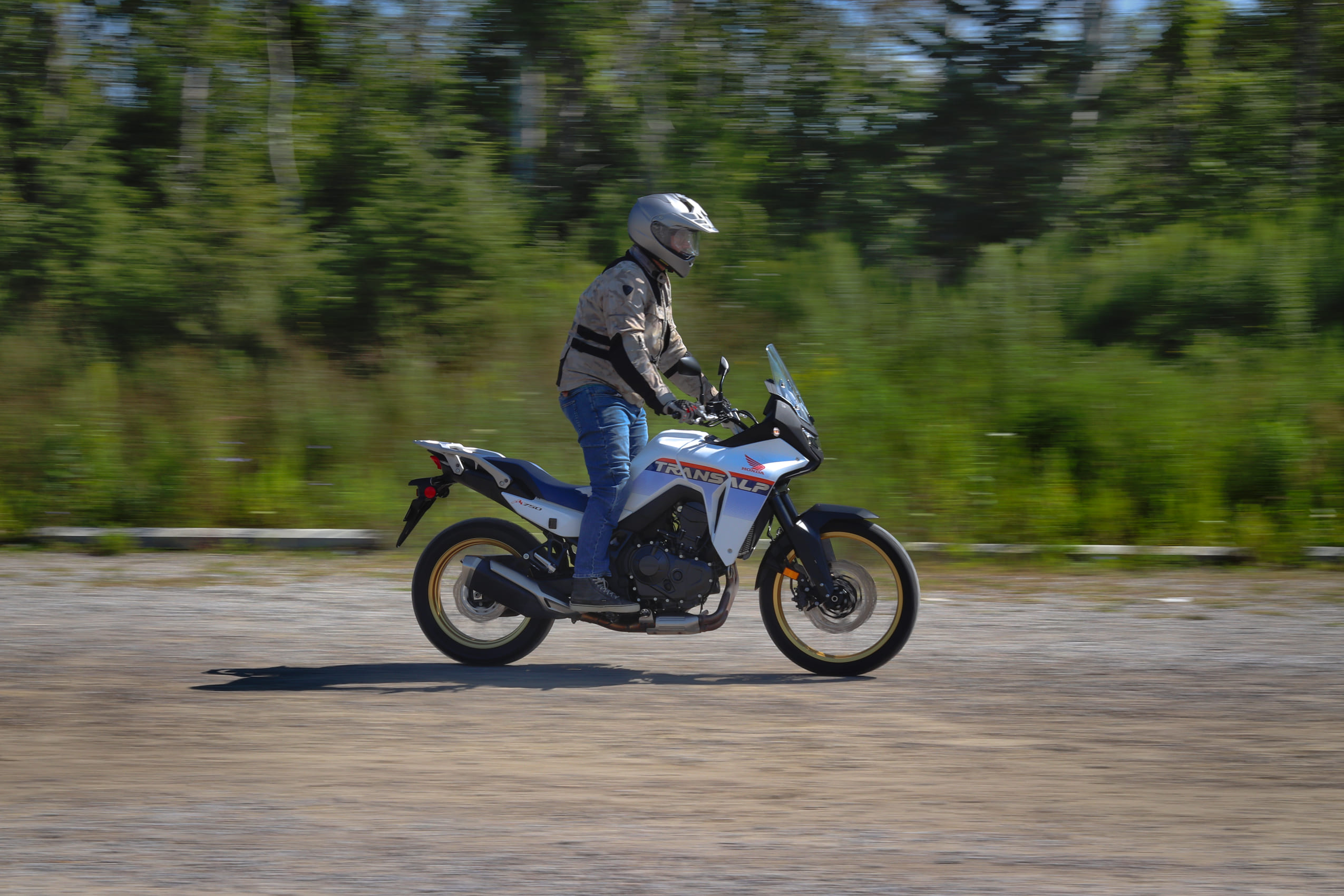
The Anti-ADV Hero: Why the 2026 Honda Transalp is the
Leave it to Honda to look at the entire, absurdly over-engineered, $25,000 middleweight adventure segment—a market flooded with hyper-focused rally…
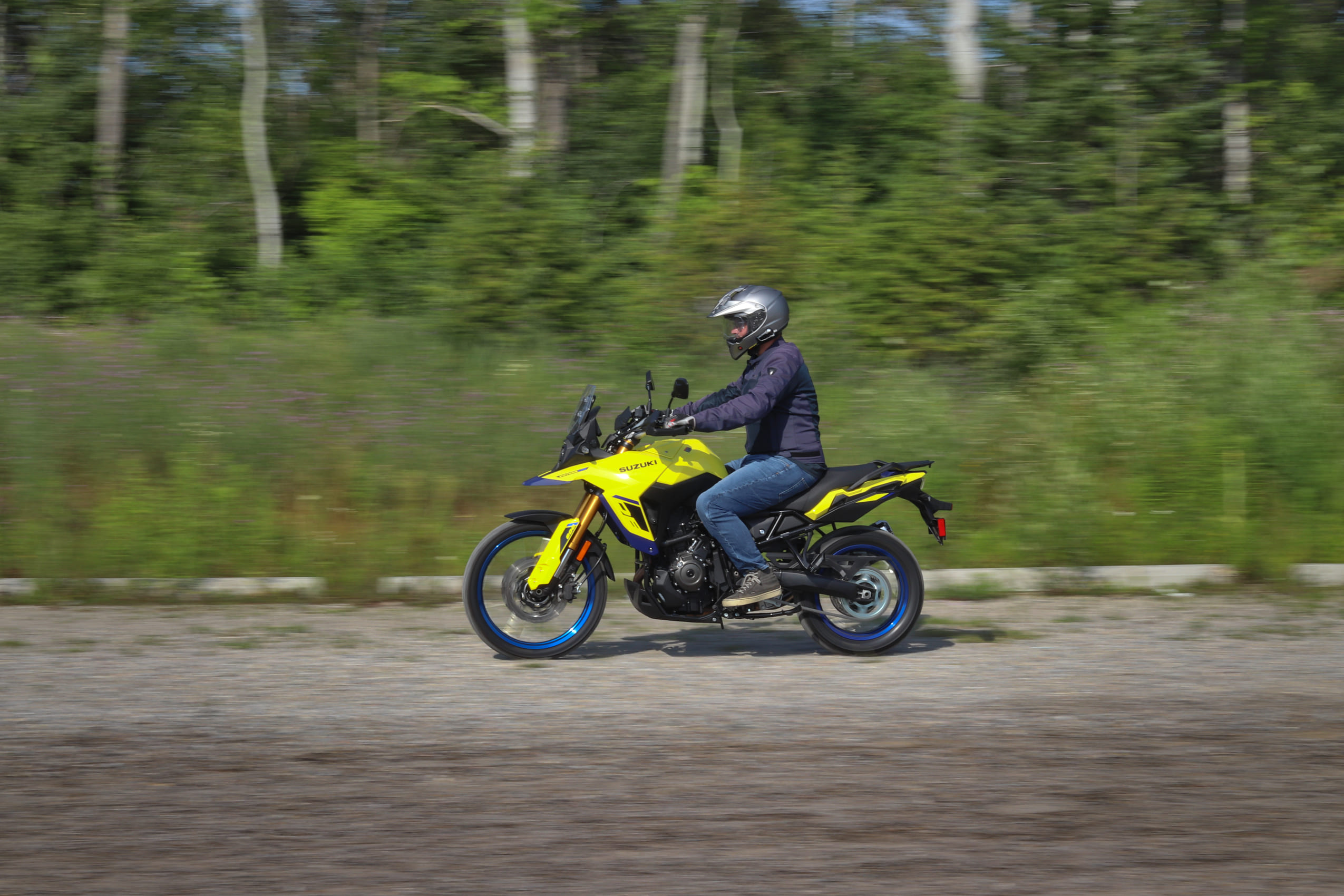
2026 Suzuki V-Strom 800DE: No V-Twin, No Problem
Words are supposed to mean things. The “V” in V-6 means a V-layout, and for two decades, the “V” in…
2026 Honda Passport TrailSport Review: The World’s Most Charming Anti-Wrangler
Let’s be honest about what’s actually happening here. Honda knows as well as you do that nobody is taking a…
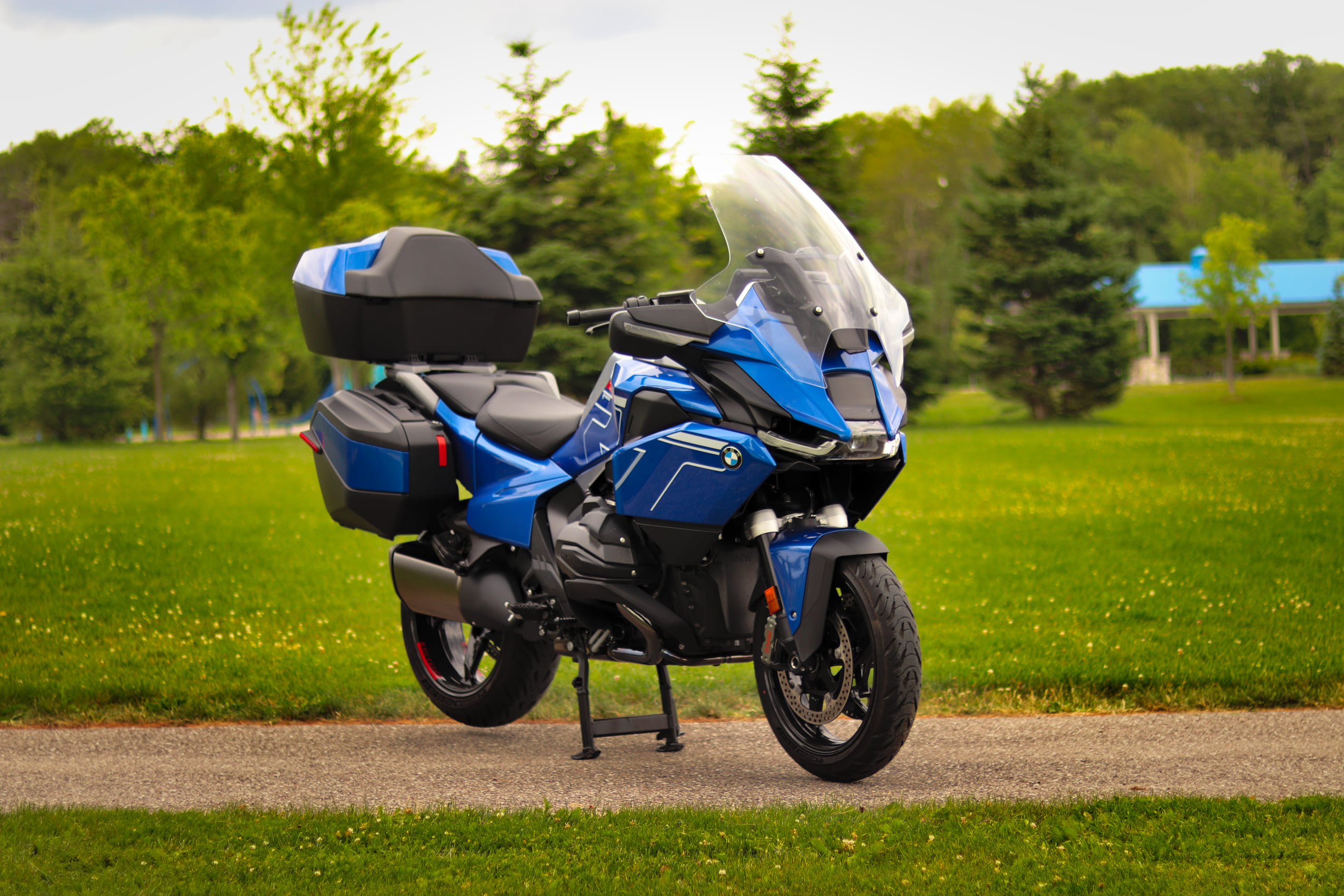
2026 BMW R1300RT: Radar-Guided, Clutchless, and Unreasonably Capable
It is a biological impossibility to look at a 620-pound, radar-guided Bavarian land-yacht and think, “Ah, yes—what this needs is…
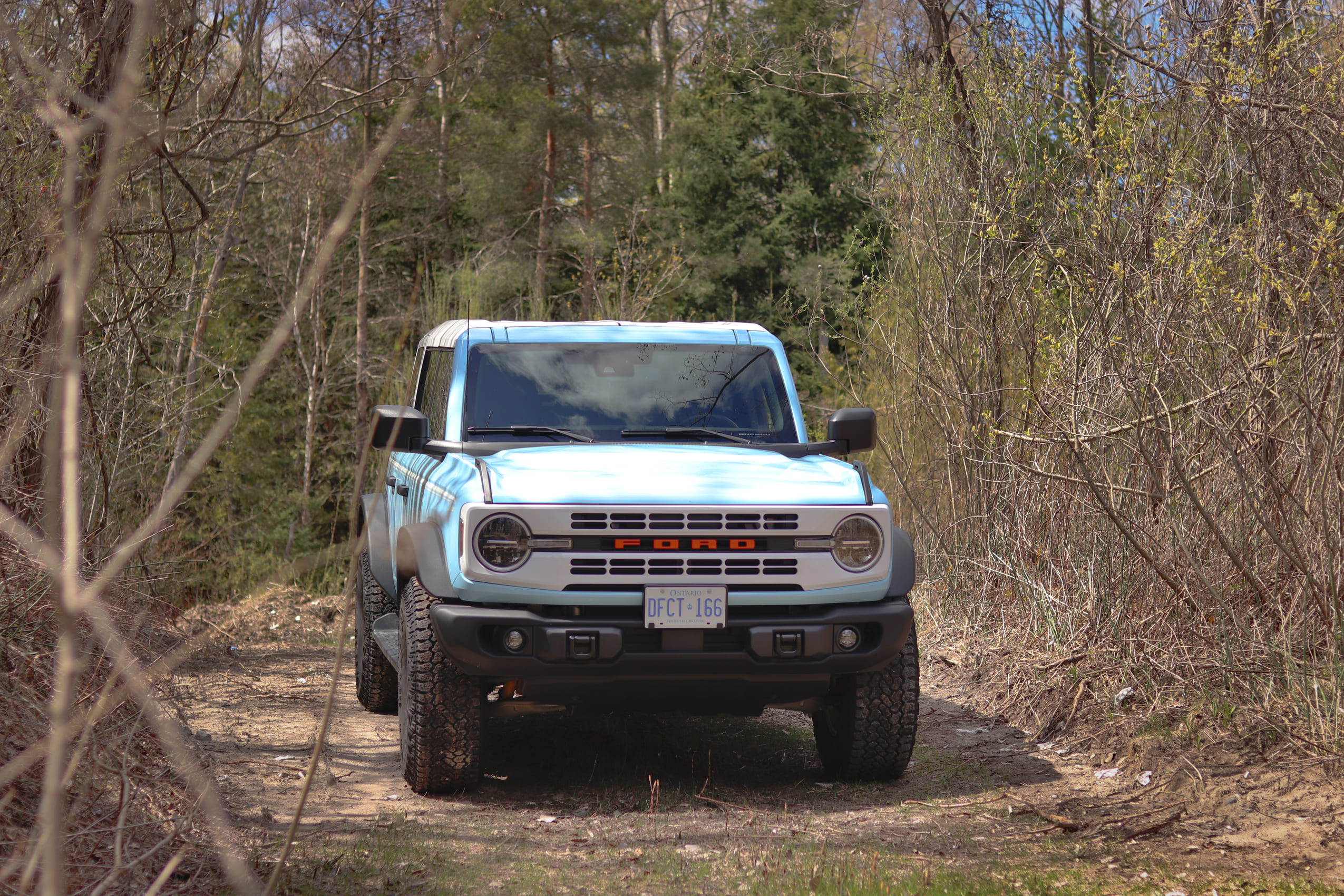
The 2026 Ford Bronco Heritage Edition Is a Great, Big,
If we are being completely honest with ourselves, modern retro design is usually a lazy, cynical grift—a plastic tribute act…