Subaru has spent the last decade perfecting the art of the “vibes-based” purchase, selling a lifted Impreza to anyone who owns a carabiner or a golden retriever. But while the standard Crosstrek has always been charmingly honest about its lack of urgency, the old plug-in hybrid was a confusing mess of compromised trunk space and a price tag that required a lifestyle of pure monastic virtue to justify.
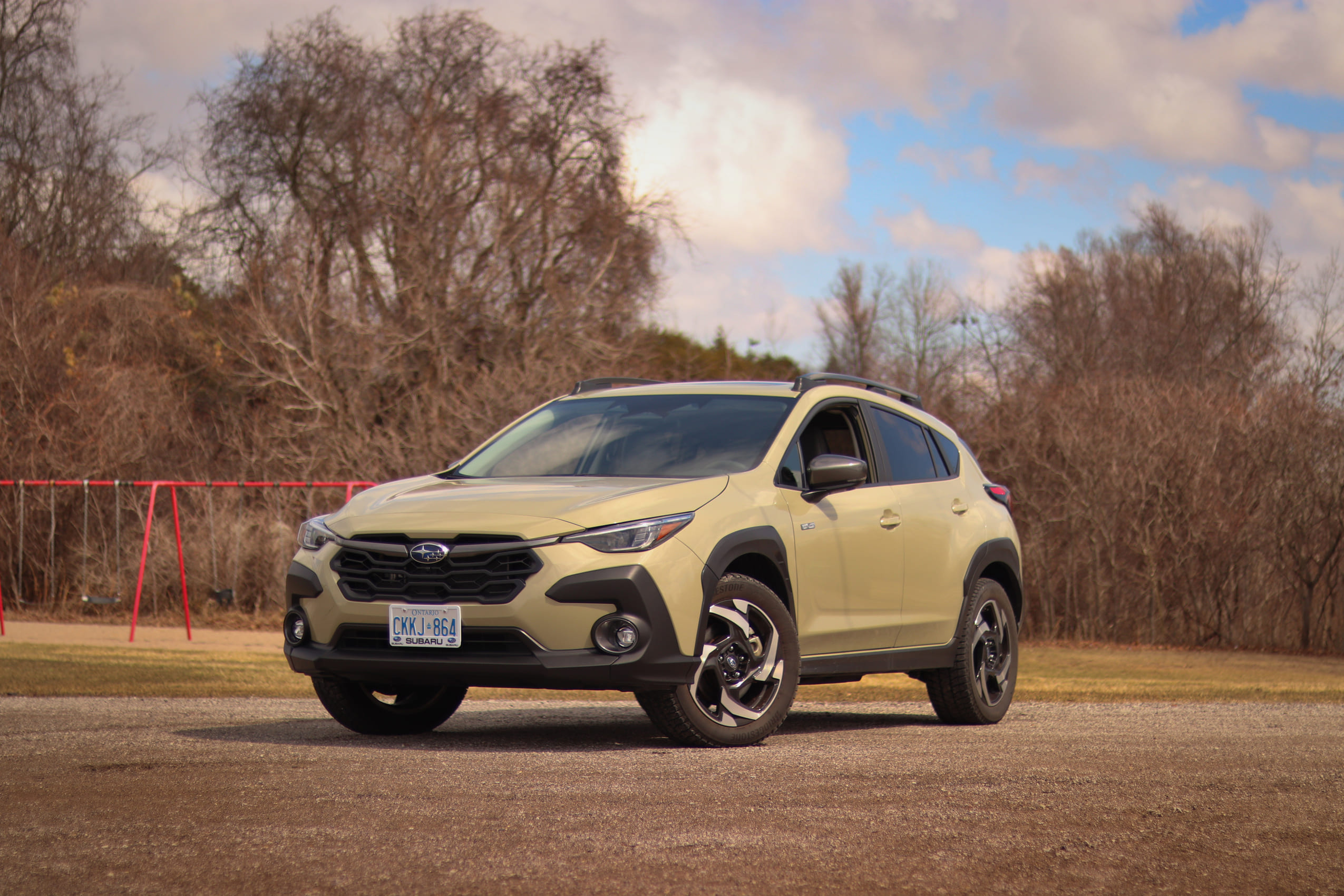
For 2026, however, Subaru has finally admitted that batteries belong under the floor, not in the way of your camping gear. By borrowing some high-voltage homework from Toyota and pairing it with their own 2.5-liter Boxer heart, the new Crosstrek Hybrid finally delivers the one thing Subaru owners have been praying for: a way to get to the trailhead without the fuel needle moving faster than the car itself. It’s still a rugged, plastic-clad hiking boot of a vehicle, but now it’s got a much more efficient spring in its step.
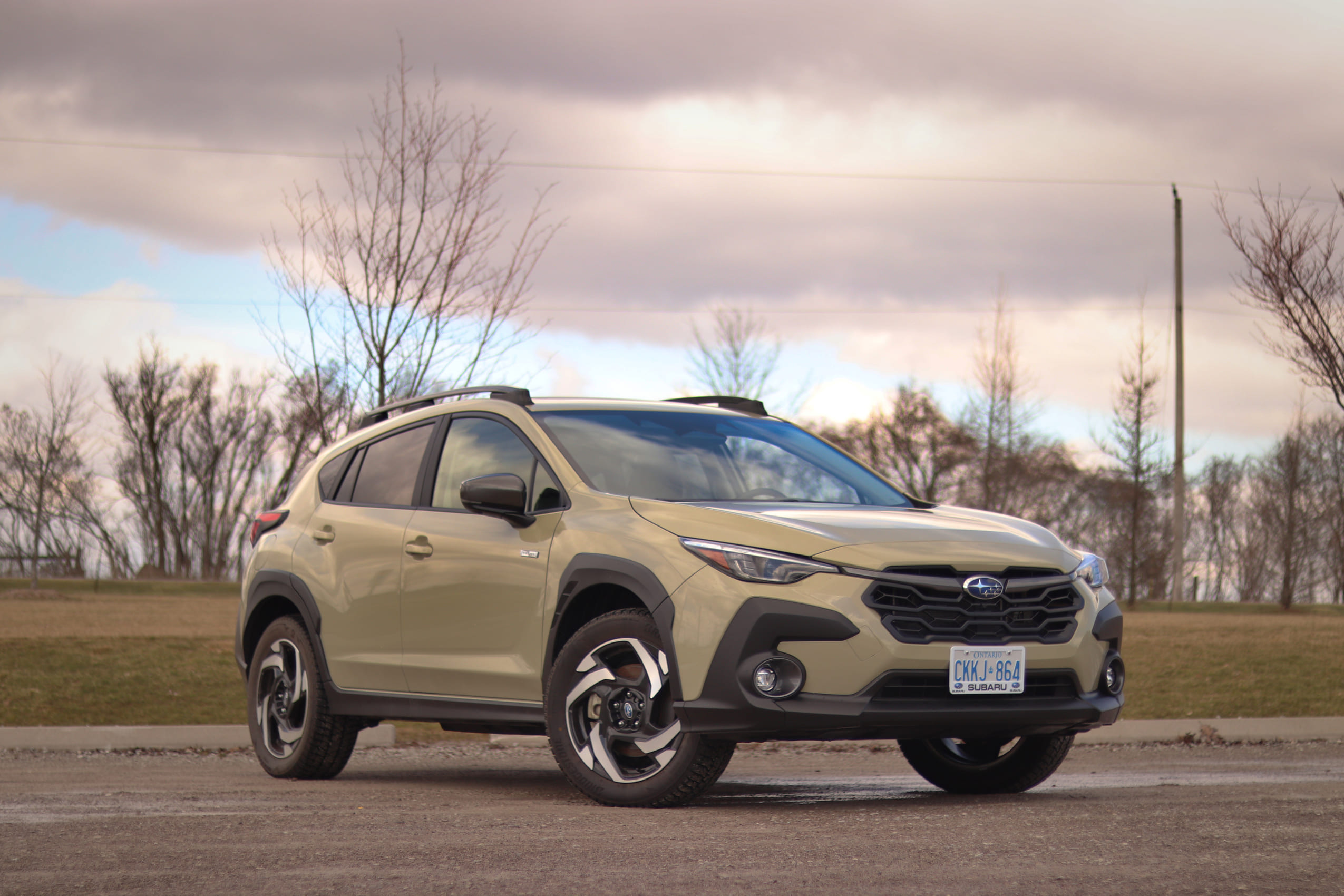
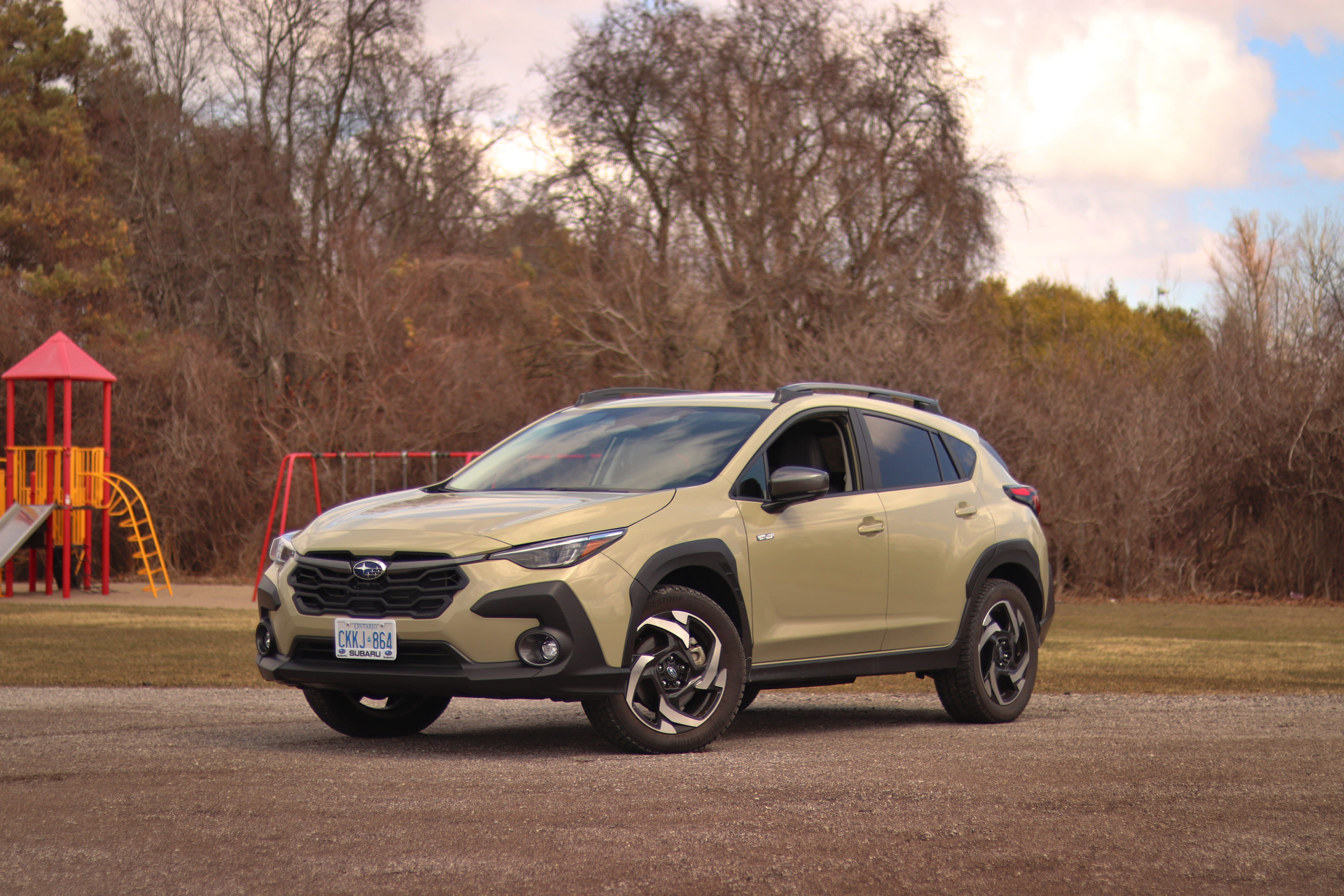
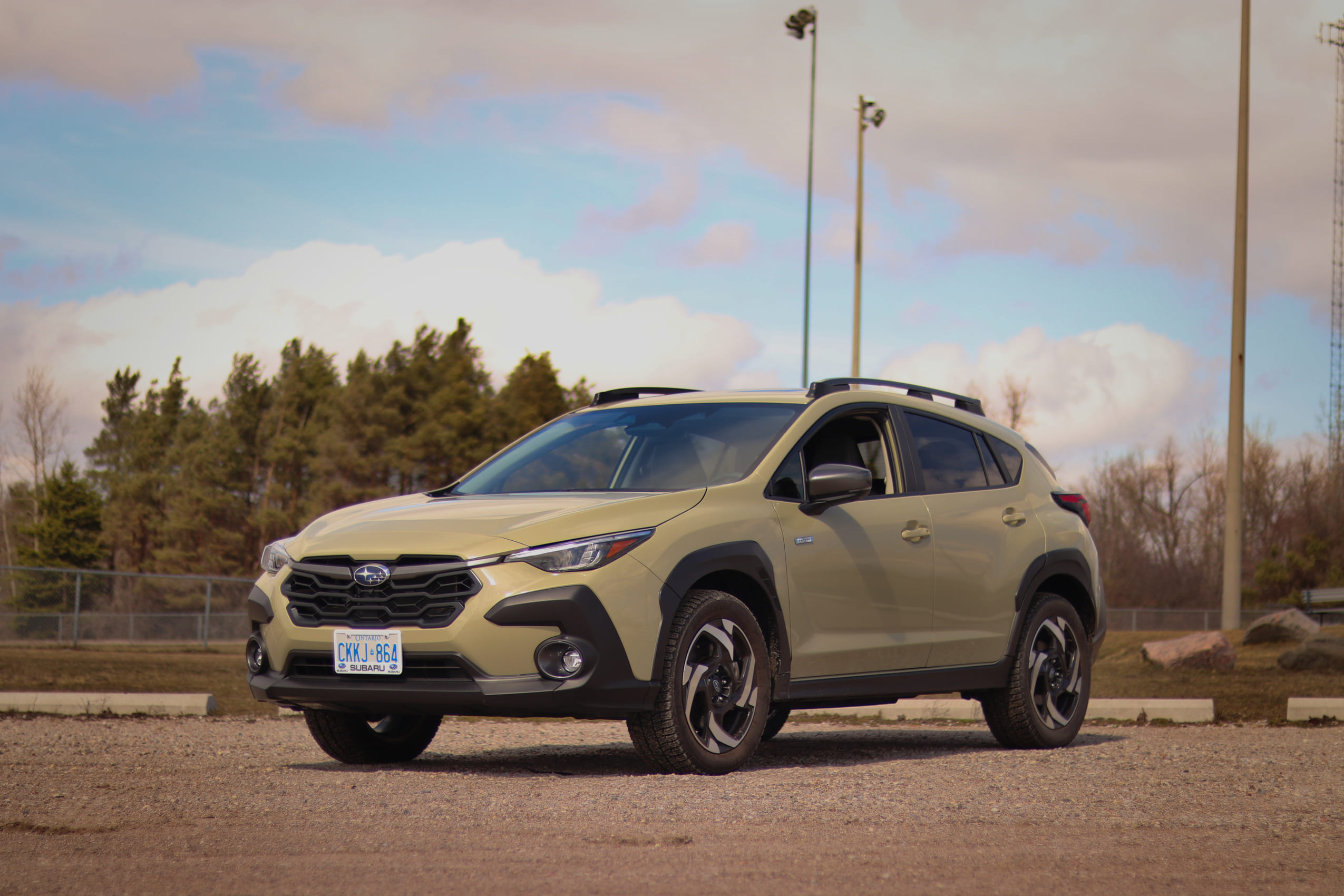
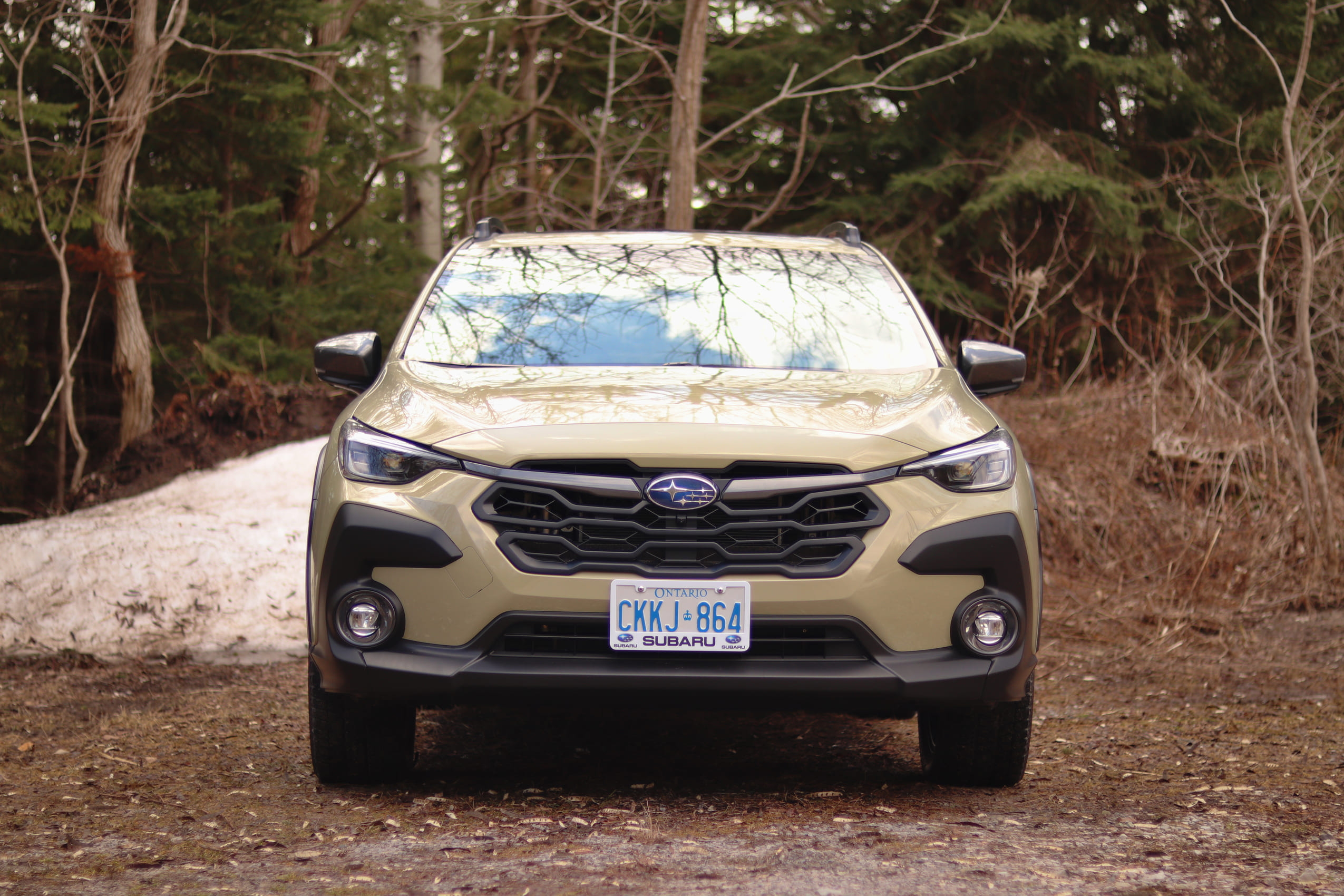
Visually, the new Crosstrek Hybrid is still very much a Subaru, which is to say it looks like a piece of outdoor equipment that’s been designed by people who actually use it. The face is dominated by that frameless hexagonal grille and squinting LED eyes, but you’ll notice the Hybrid opts for a bit more “tech-chic” and a bit less “unpainted plastic.” The heavy cladding that usually screams “I park on sidewalks” has been dialed back on the side sills for a cleaner profile, and it sits on these unique, 18-inch aerodynamic wheels that look like they were inspired by a Dyson fan. It’s a subtle flex—enough to tell the neighbors you’re saving the planet, but not so much that you look like you’ve joined a cult.
The real quirks are hidden in the packaging. Because Subaru insisted on keeping their heavy-duty mechanical Symmetrical AWD system—instead of the flimsy “e-AWD” setups the competition uses—they had to get creative with the battery. The result is a rear end that looks identical to the gas version but hides a slightly shallower trunk. You lose about a hundred liters of space and your spare tire is replaced by a “fix-a-flat” kit, which is a bold choice for a car marketed to people who drive over sharp rocks for fun. It’s still the rugged, plastic-clad hiking boot we know, just one that’s been fitted with a high-tech orthotic to make the long walks a lot more efficient.
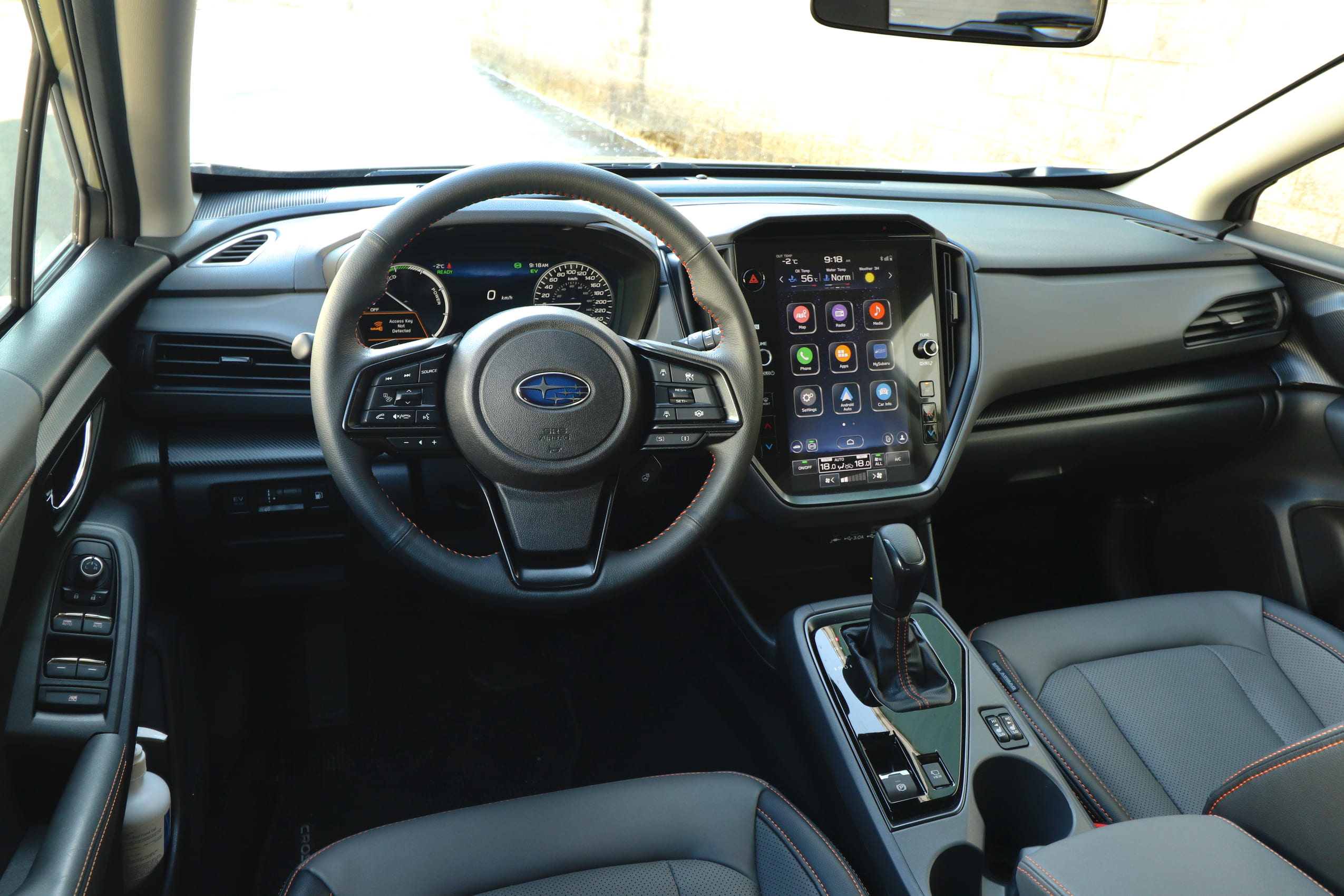
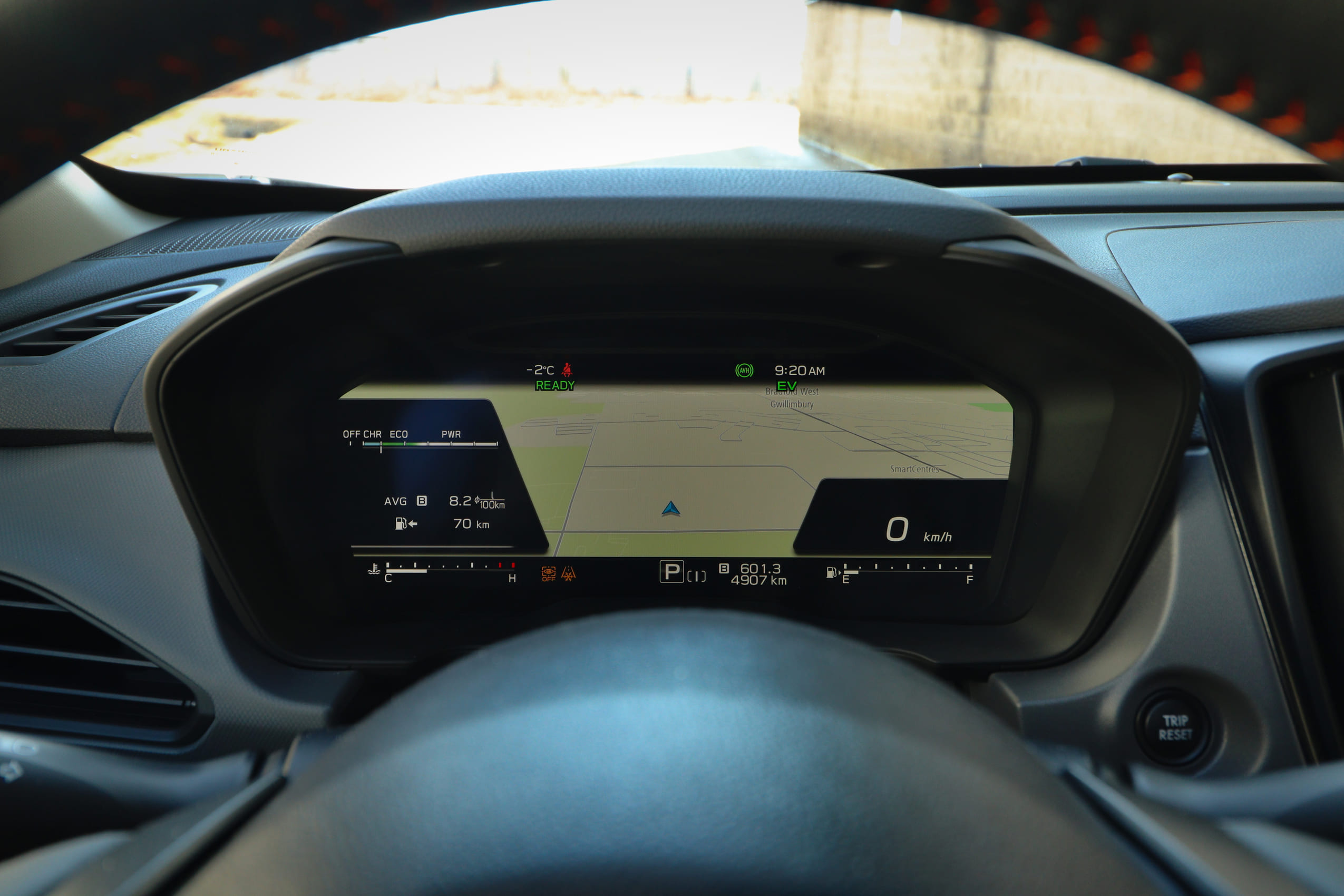
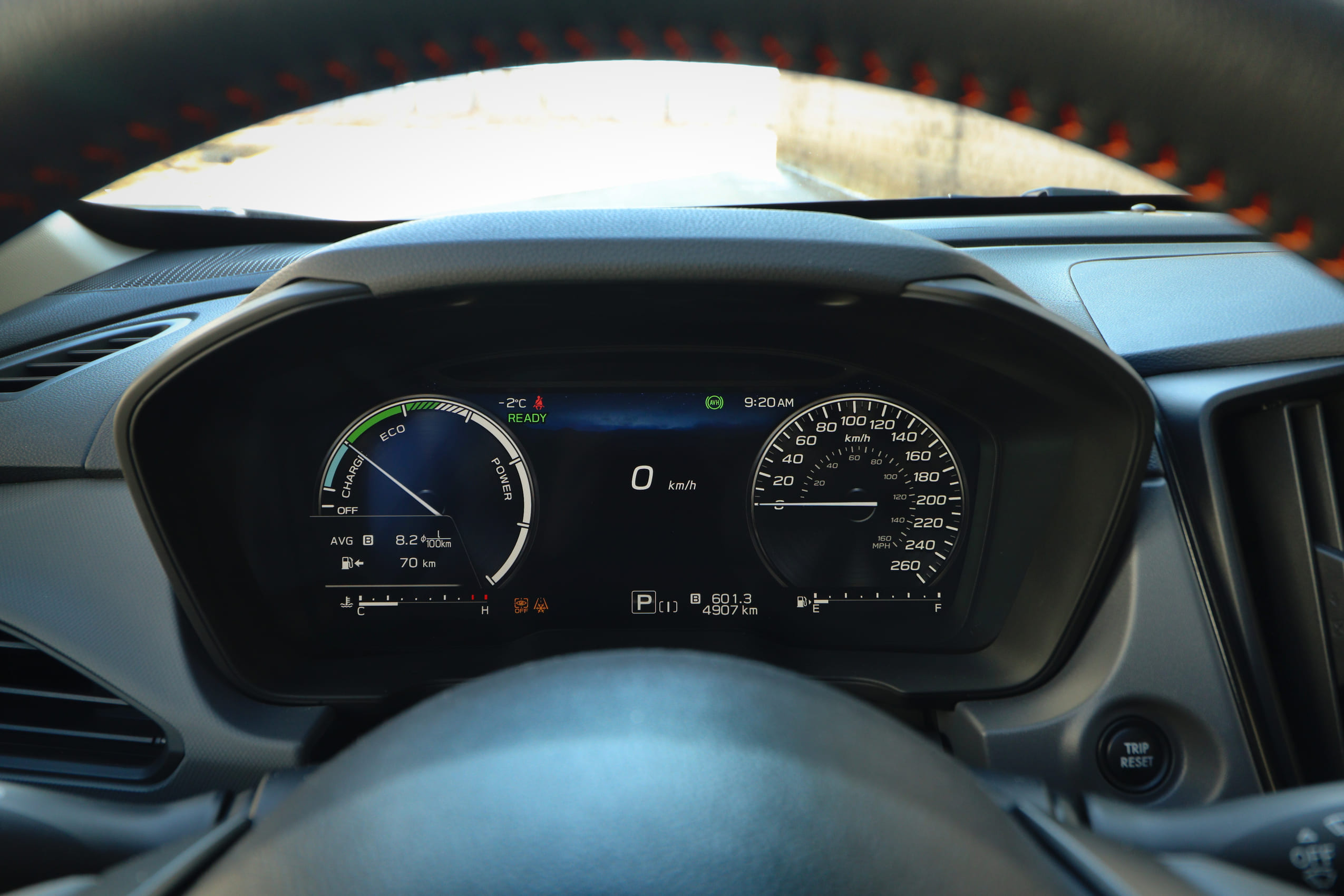
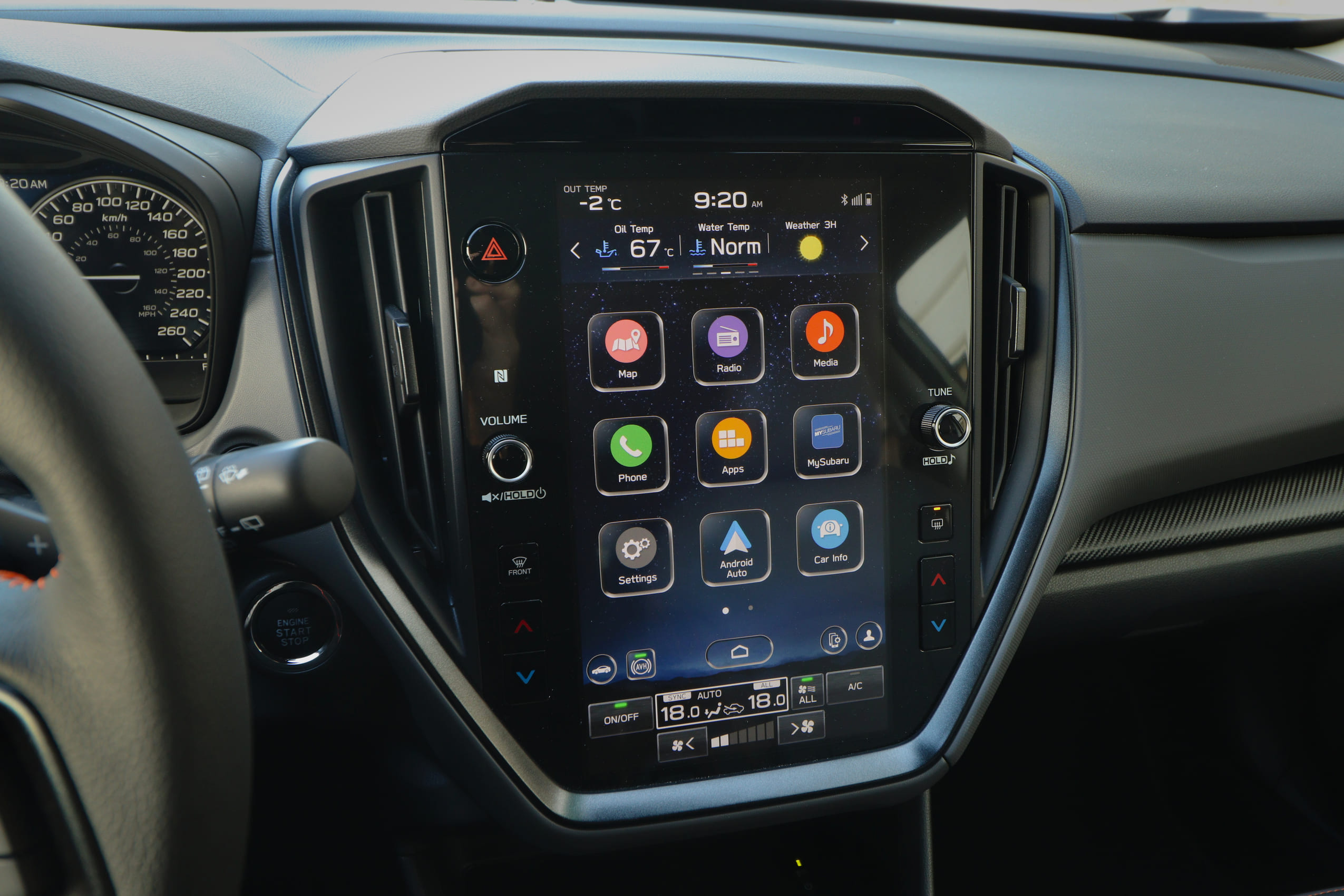
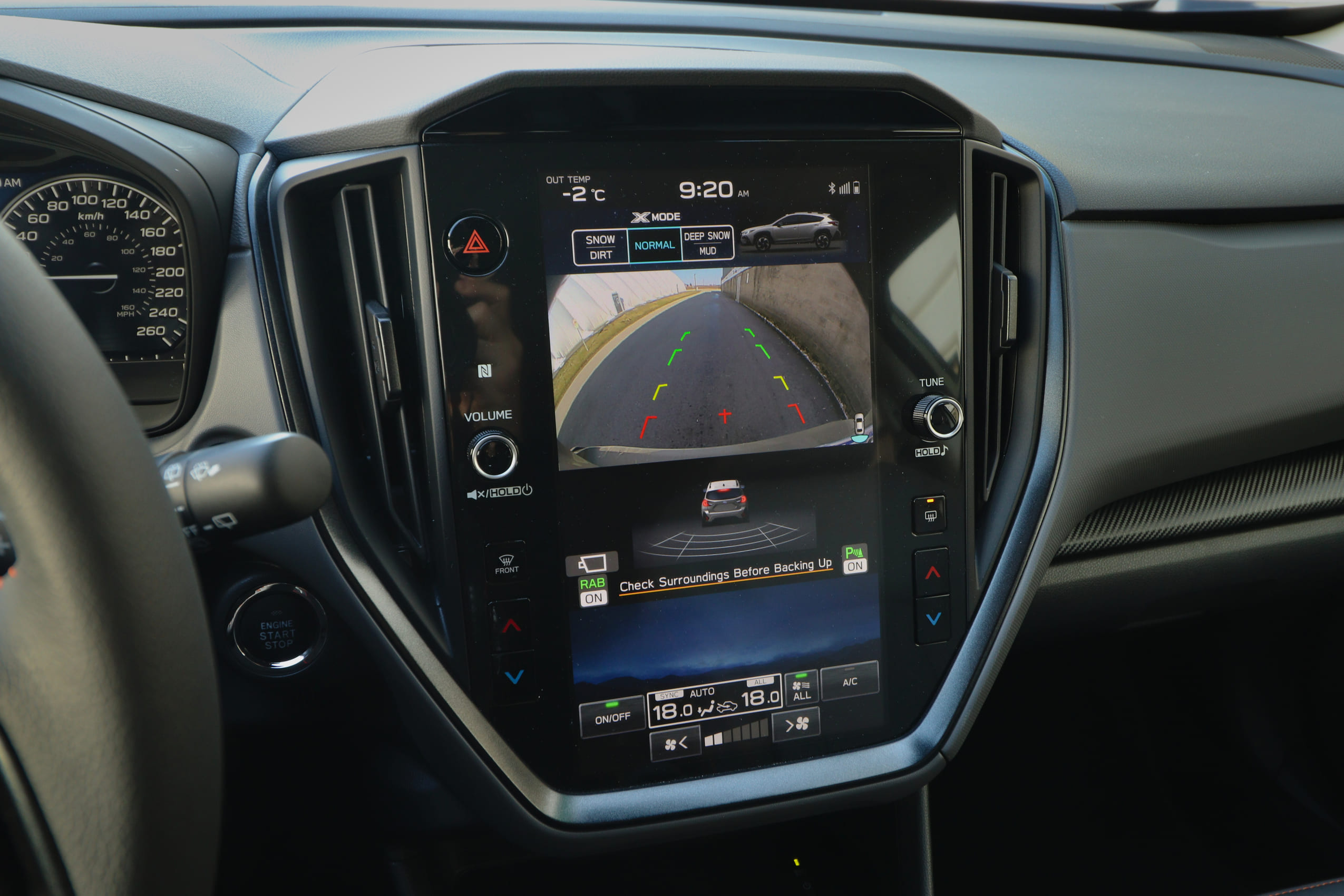
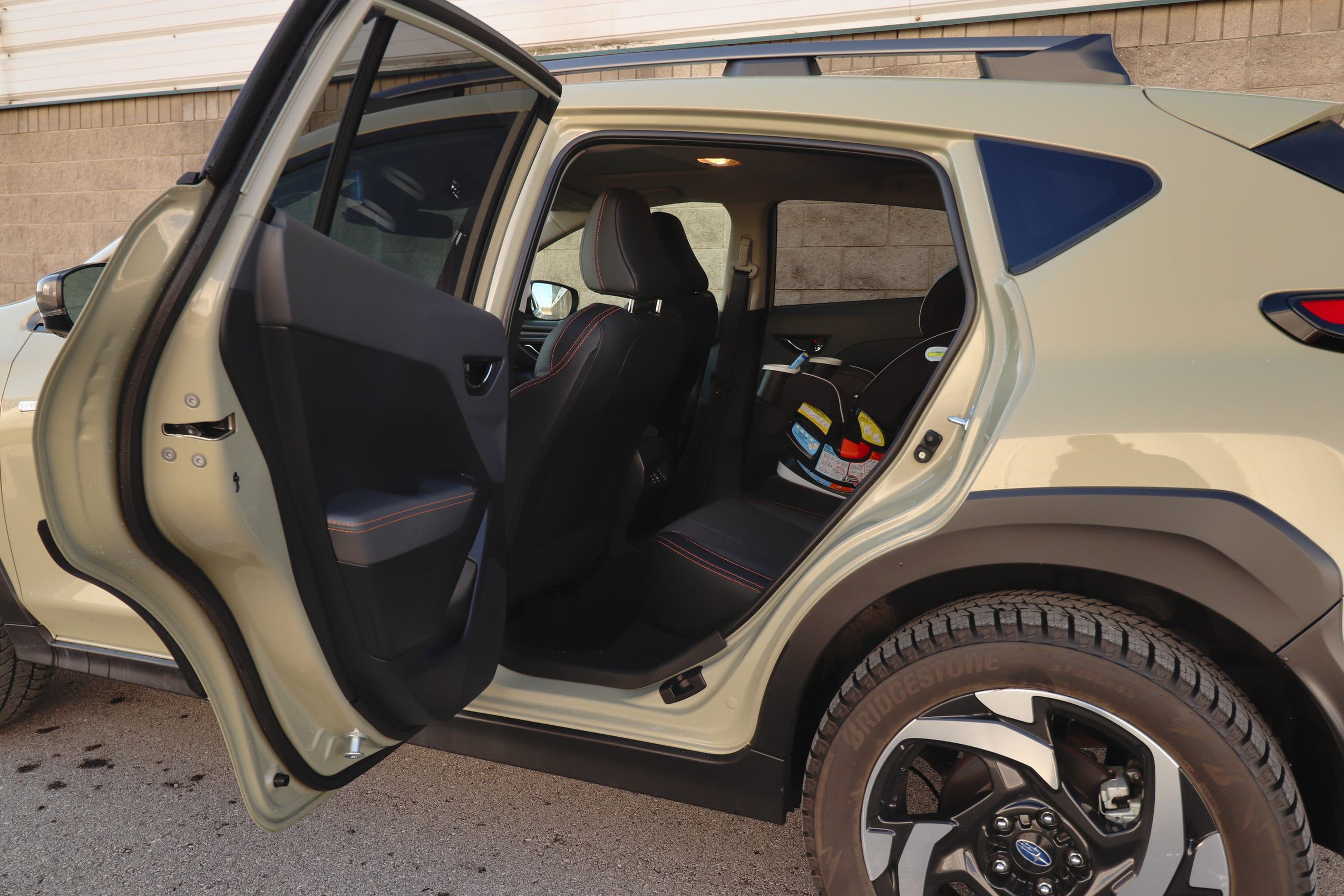
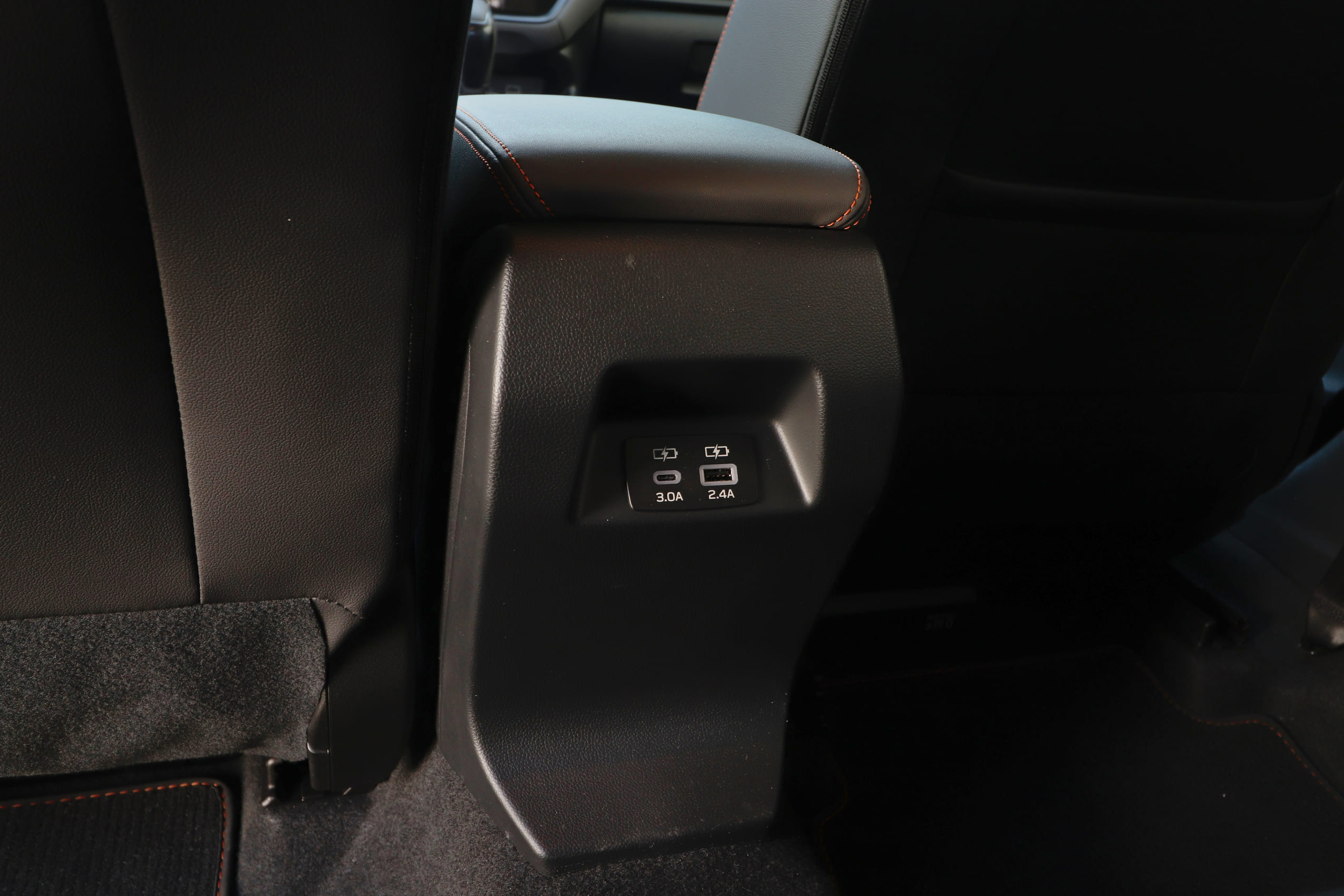
Step inside, and you’ll find that Subaru has finally dragged the Crosstrek’s cockpit into the current decade, albeit with one foot still firmly planted in 2014. The big news is the arrival of a fully digital instrument cluster that finally ditches the analog needles for something that looks like it belongs in a modern vehicle. It’s crisp, it’s configurable, and it gives you all the hybrid-flow data you need to gamify your commute. The rest of the cabin follows the classic Subaru playbook: it’s built to be hosed out after a muddy hike, with soft-touch materials in the places you actually touch and durable, “don’t-care-if-I-scuff-it” plastics everywhere else.
The elephant in the room—and the thing you’ll spend the most time touching—is the vertically oriented infotainment screen. While it looks impressive in a brochure, using it is a lesson in patience. It feels a generation behind the snappy tablets found in a Mazda or even a Toyota; the touch response is leisurely at best, and the graphics have a certain “early-smartphone” charm that wears thin when you’re just trying to change the climate settings. Thankfully, Subaru hasn’t gone full “touch-only” madness, keeping enough physical buttons to ensure you don’t drive off a cliff while looking for the seat heater menu.
Ignore the laggy screen, though, and the interior is genuinely impressive in its fundamental job: holding humans. There is a shocking amount of legroom both front and rear, defying the car’s compact footprint. You can fit four full-sized adults in here without the backseat passengers developing a deep-seated resentment toward the driver. It’s a refreshingly honest, usable space that prioritizes visibility and ergonomics over “innovative” design for the sake of it. It’s the automotive equivalent of a well-worn North Face jacket—it’s not the most high-tech thing in the world, but it’s exactly what you want to be wearing when you’re out in the elements.
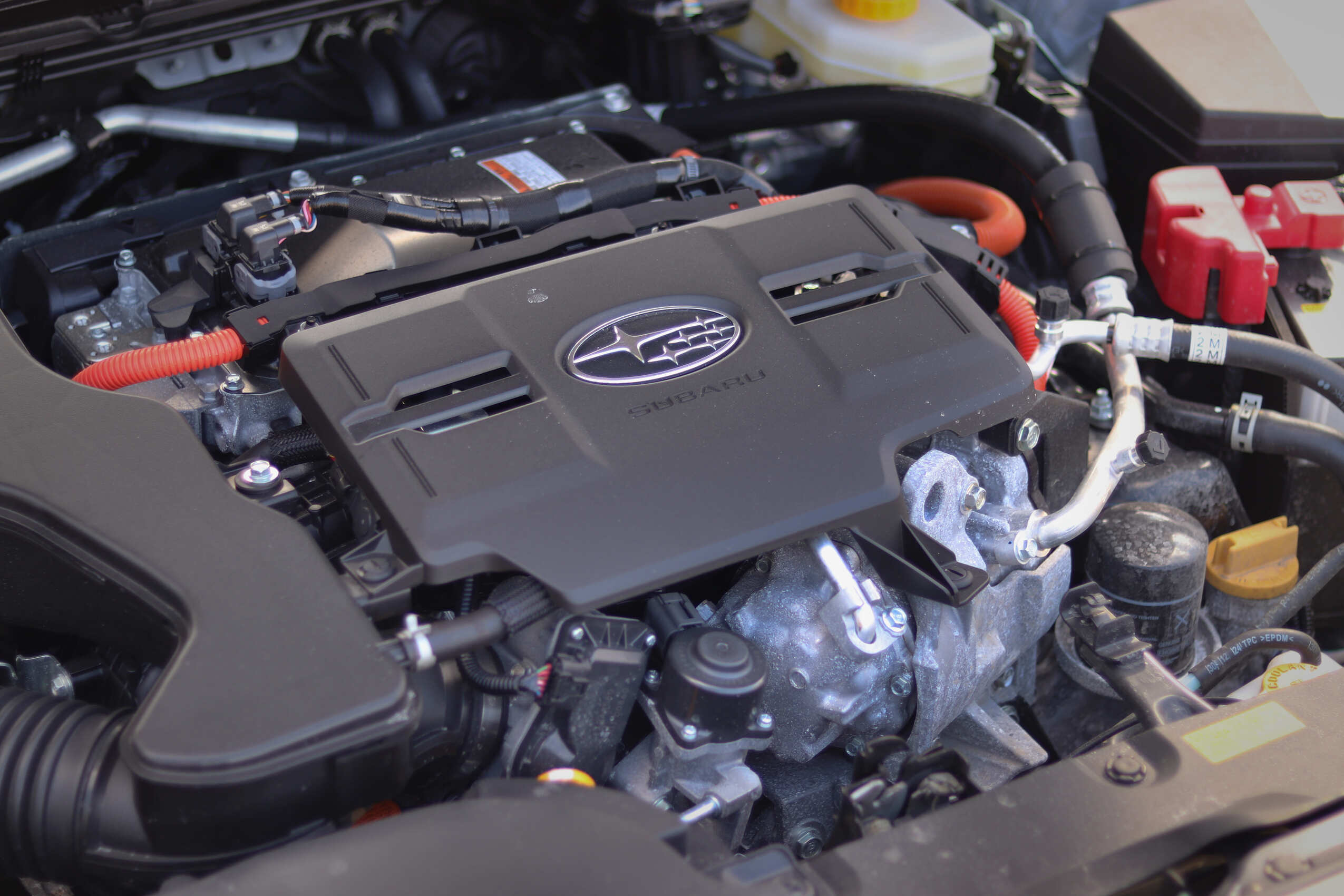
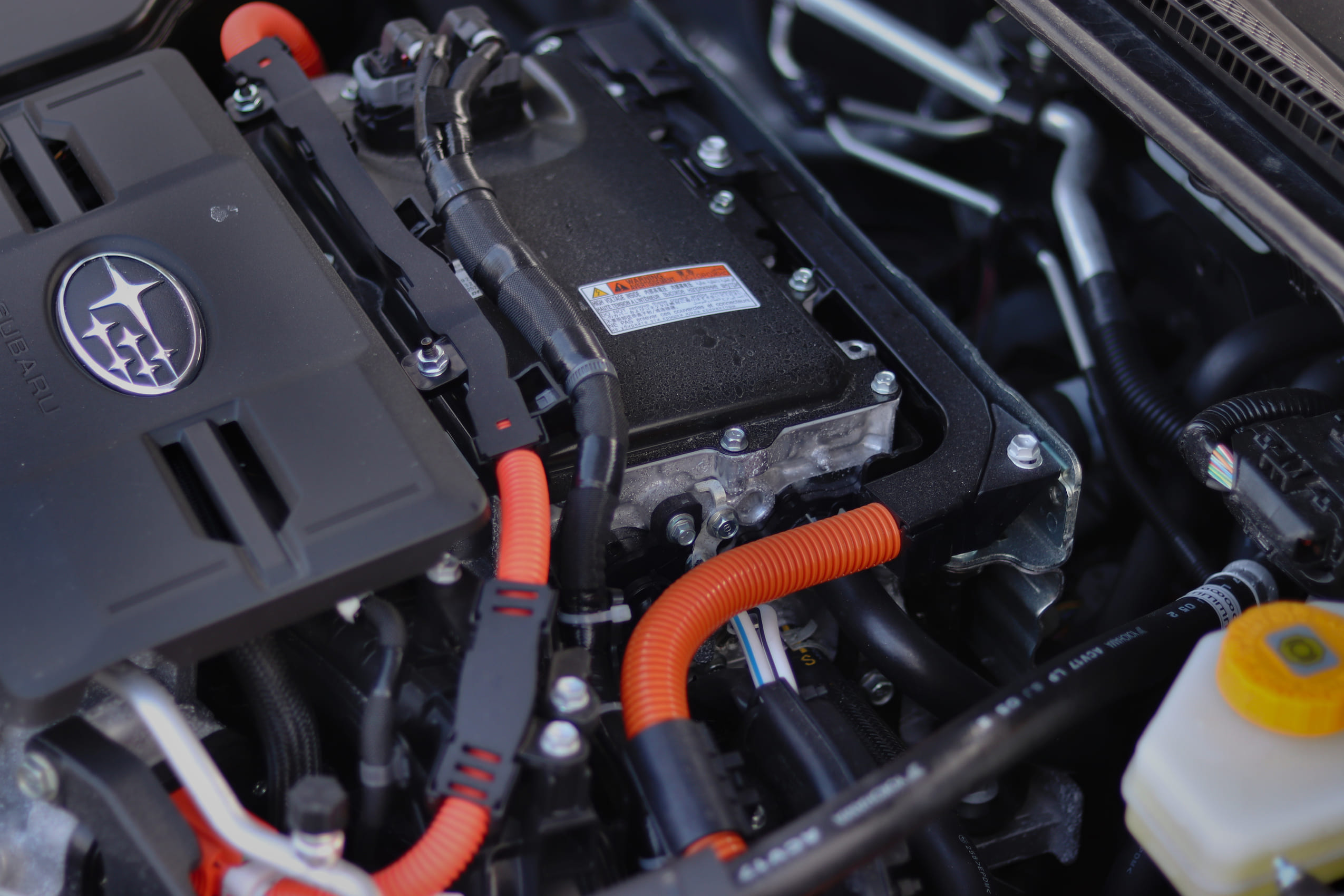
Under the hood, Subaru has finally stopped trying to reinvent the wheel and started borrowing from the people who actually know how to build a hybrid. The heart of the beast is still a 2.5-liter Boxer four-cylinder, but it’s now tethered to a two-motor transaxle that looks suspiciously like the one you’d find in a Toyota RAV4. Total system output lands at a respectable 194 horsepower, which finally moves the Crosstrek out of the “glacial” category and into the “perfectly adequate” tier. Because it’s a series-parallel hybrid, the electric motors handle the low-speed heavy lifting, filling in the torque gaps where the Boxer engine usually spends its time wheezing, making the whole experience feel significantly more effortless around town.
The real party trick, however, is that Subaru didn’t take the easy way out with the All-Wheel Drive. Most manufacturers today just slap a tiny electric motor on the rear axle and call it a day, but Subaru stayed true to its cult-like devotion to the mechanical Symmetrical AWD system. There is a physical driveshaft running to the back, meaning you get real, permanent torque distribution that doesn’t quit just because the battery is low or the rear motor got too hot. It’s the same rugged hardware you’d want in a blizzard, just paired with a powertrain that doesn’t drink like a sailor on shore leave.
As for the electrons, they live in a 1.1 kWh lithium-ion battery pack tucked neatly under the rear cargo floor. It’s a compact setup designed for efficiency rather than long-range EV cruising, but it’s enough to keep the engine off during those soul-crushing sessions in stop-and-go traffic. While the battery placement does mean you lose that spare tire and a bit of vertical trunk space, the trade-off is a car that finally achieves the kind of fuel economy that makes the “Hybrid” badge more than just a marketing exercise. It’s a Toyota-brained powertrain wrapped in a Subaru-built chassis—a combination that is, quite frankly, long overdue.
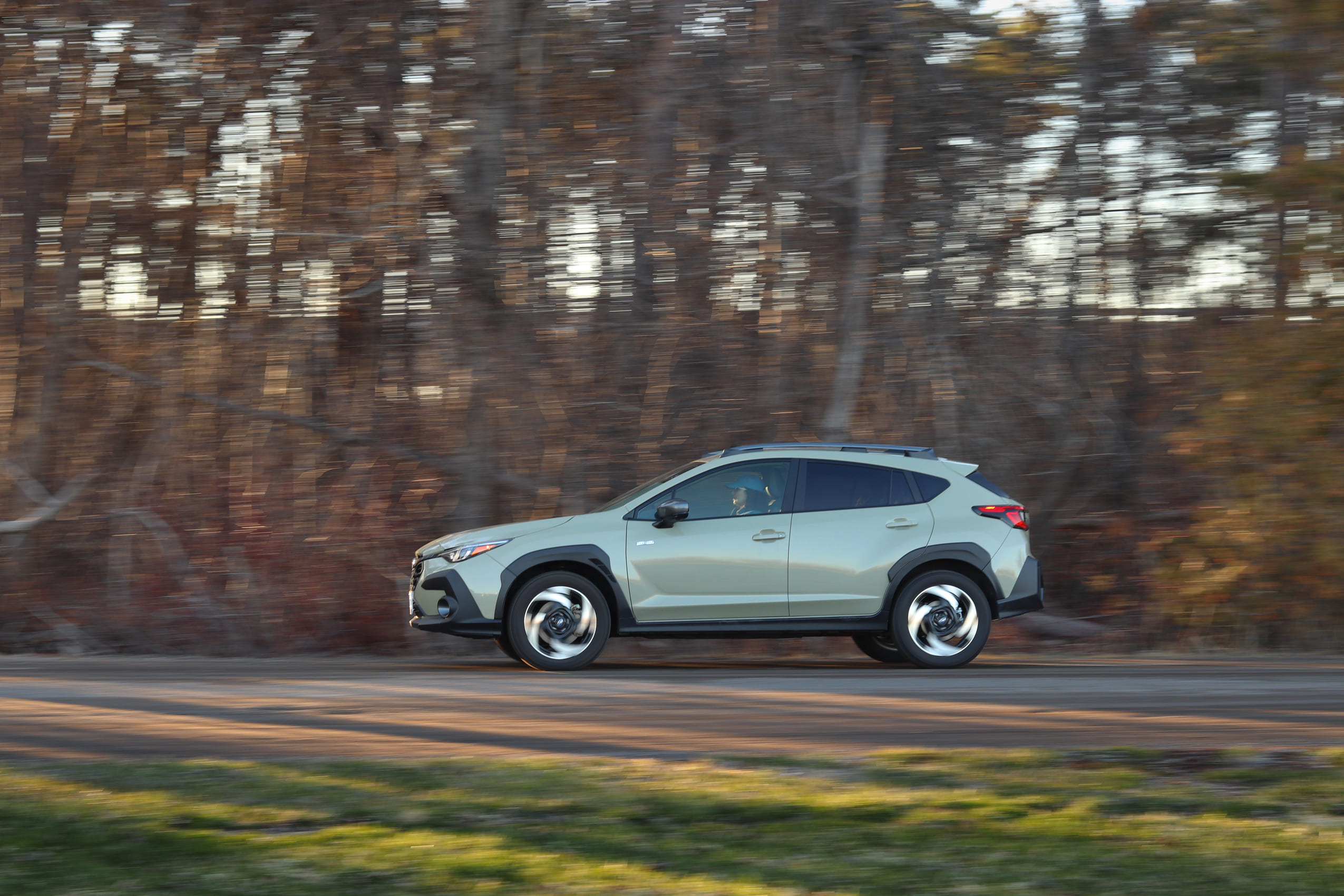
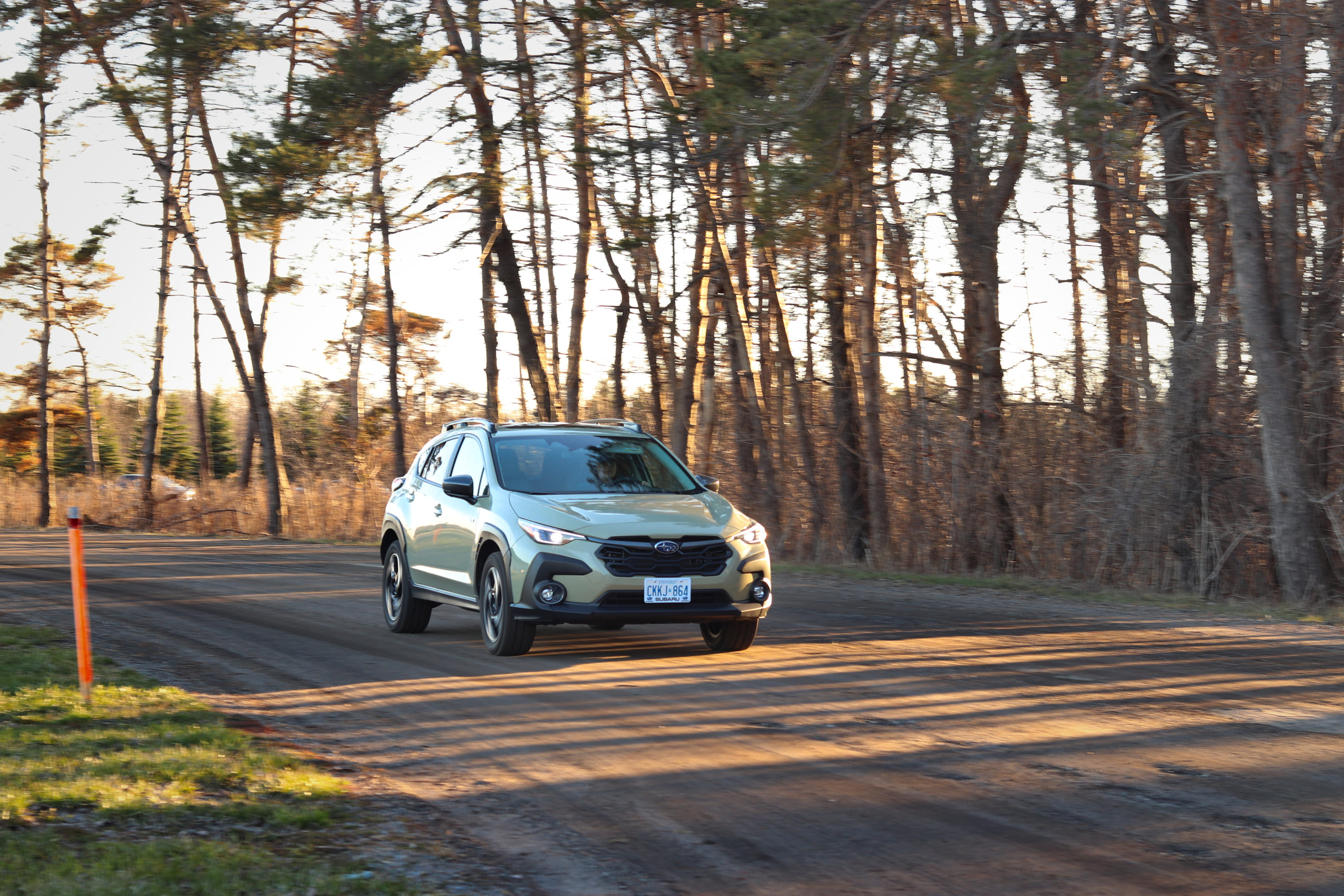
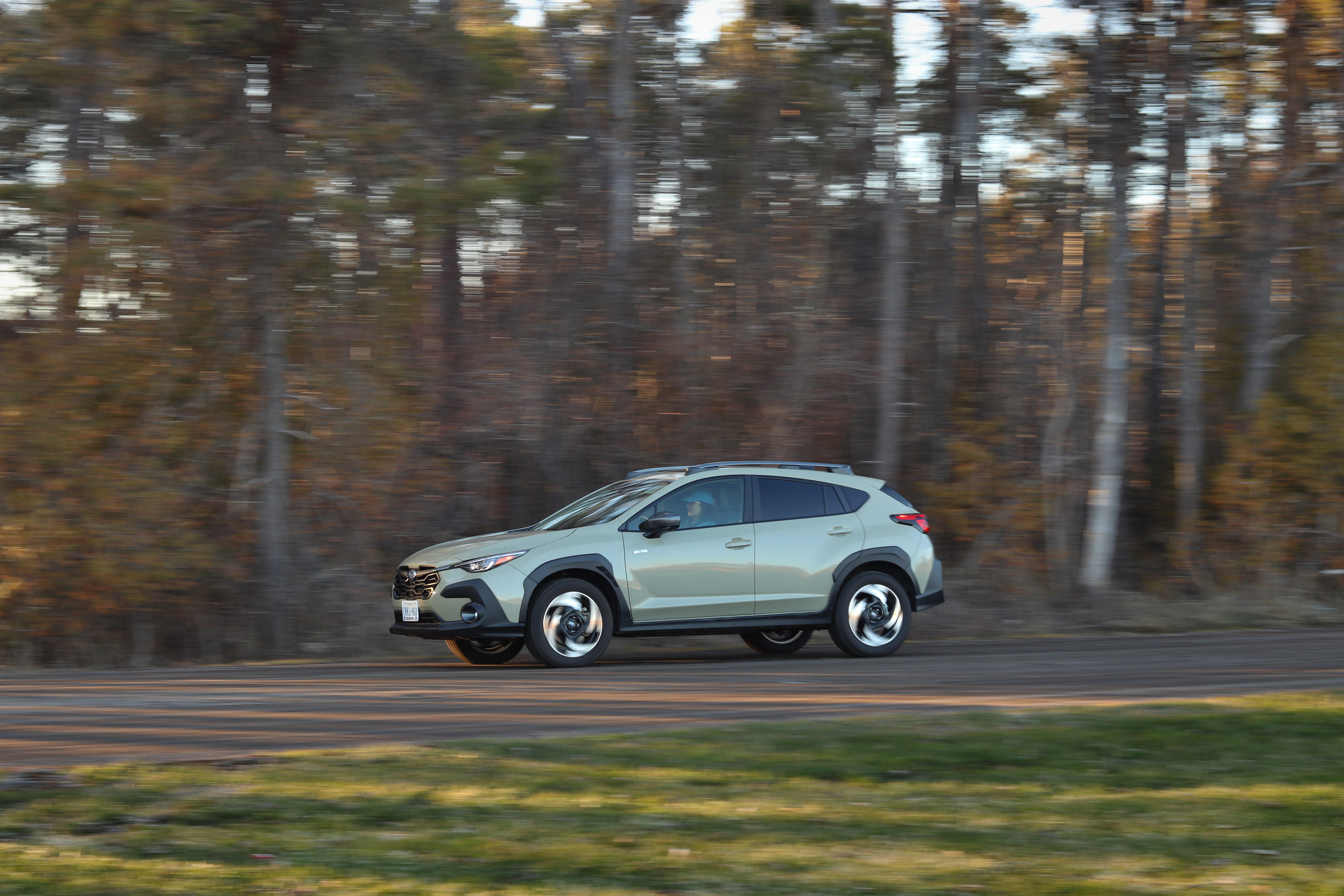
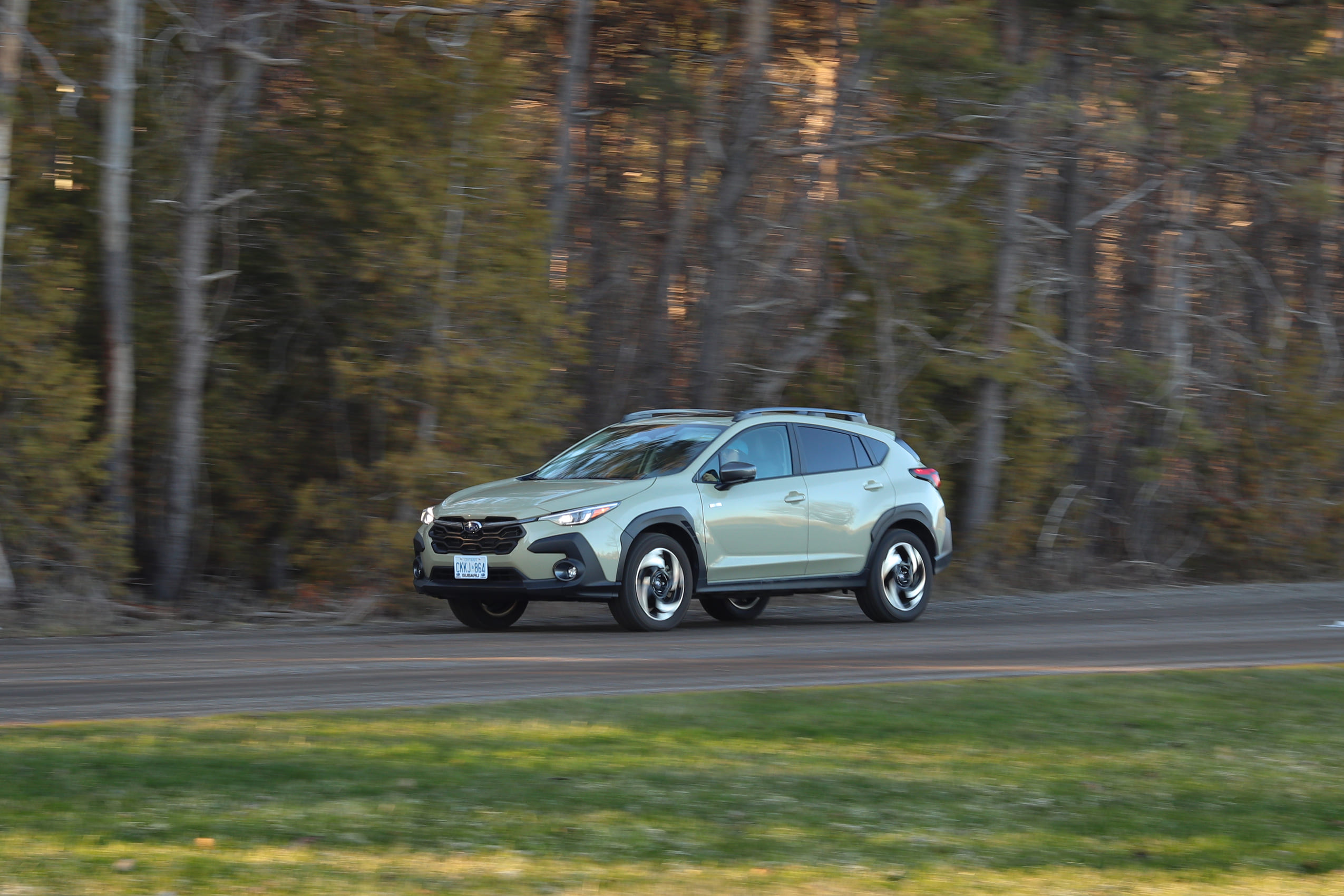
On the road, the Crosstrek Hybrid finally cures the one ailment that has plagued every modern Subaru: the dreaded, shuddering restart of the stop-start system. By letting the electric motors handle the initial shove, the transition from silence to Boxer-thrum is now a seamless handoff rather than a frantic waking of the dead. It is a significantly smoother operator in the city, providing a level of “peppy” instant torque that the purely gas-powered models can’t match, even with their larger engines. While it isn’t a canyon carver—it’s far too soft-riding and “relaxed” for that—it soaks up the absolute worst offenses of broken pavement with a muffled thud and zero drama.
The final verdict on the 2026 Crosstrek Hybrid is that it’s a brilliant piece of mechanical hardware wrapped in a slightly frustrating software package. It is, without question, the most refined version of the Crosstrek ever built, finally matching the ruggedness of Subaru’s legendary AWD system with a powertrain that doesn’t feel like it’s constantly struggling against the laws of physics. As a daily tool for surviving the suburban grind or exploring a trailhead, its utility and easy-going road manners make it nearly impossible to fault. It does the “car” part of being a car with a level of honest competency that’s becoming increasingly rare in an era of over-complicated crossovers.
However, the experience is let down by a digital interface that feels like it’s running on a ten-year-old processor. Even with the fancy new digital gauges staring you in the face, the primary way you interact with the vehicle—that sluggish, monolithic touchscreen—is a constant reminder that Subaru’s strengths lie in differentials and suspension bushings, not silicon and code. If you can forgive the tech for being a bit crotchety, you’re left with a supremely capable, efficient, and comfortable companion. It’s the smart choice for someone who wants a vehicle built to last a decade, even if the infotainment system already feels like it’s been there for one.
| Powertrain | 2.5L 4-cylinder Subaru Boxer with two AC synchronous motors |
| Power (Combined) | 194 hp and 199 lb-ft of torque |
| Drivetrain | Symmetrical Full-Time All-Wheel Drive (Mechanical) |
| Battery Type and Size | 1.1 kWh Lithium-ion |
| Transmission | Electronically Controlled CVT (eCVT) |
| Curb Weight | 1,661 kg |
| Website | subaru.ca |
| Price (Starting at – CAD) | $40,595 |
2026 BMW R1300RT: Radar-Guided, Clutchless, and Unreasonably Capable
It is a biological impossibility to look at a 620-pound, radar-guided Bavarian land-yacht and think, “Ah, yes—what this needs is…

The 2026 Ford Bronco Heritage Edition Is a Great, Big,
If we are being completely honest with ourselves, modern retro design is usually a lazy, cynical grift—a plastic tribute act…
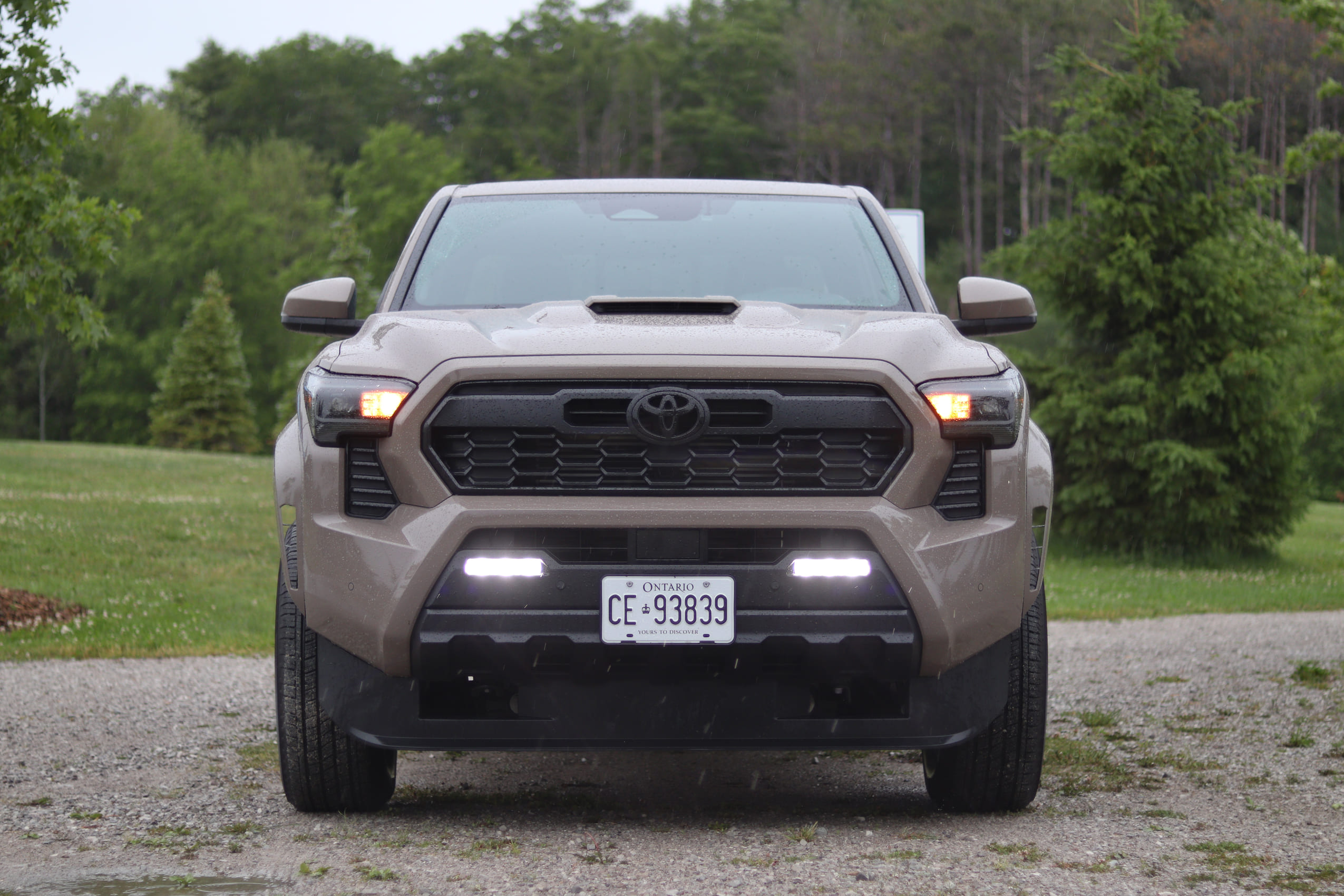
The 2026 Toyota Tacoma Manual is a Beautiful, Defiant Mistake
The modern mid-size truck has become an exercise in digitised isolation, a tool designed to conquer the wilderness while shielding…
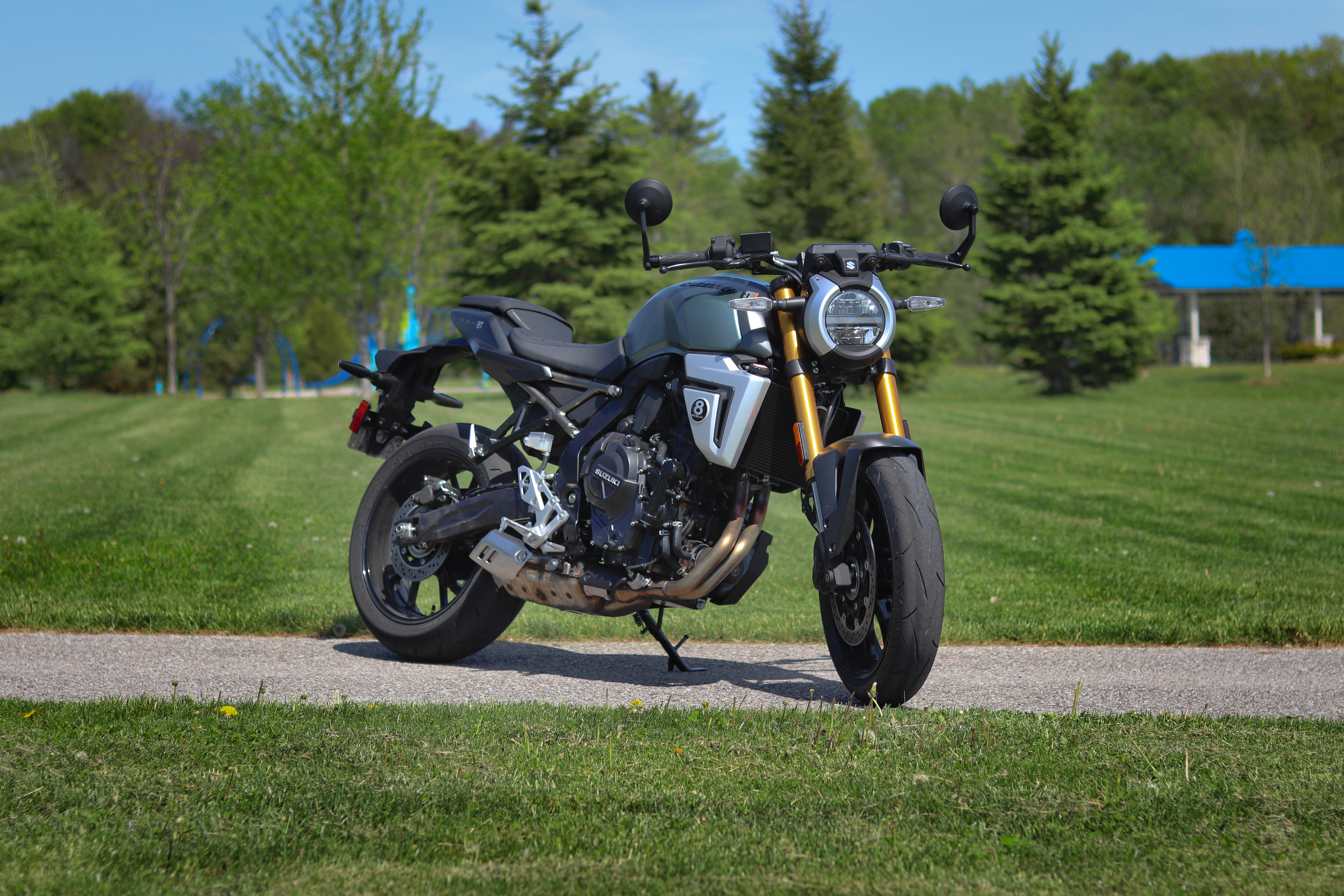
2026 Suzuki GSX-8T Review: Weaponizing Nostalgia
Let’s face it: we all knew Suzuki’s brilliantly characterful 776cc parallel-twin was going to get spread across the lineup like…
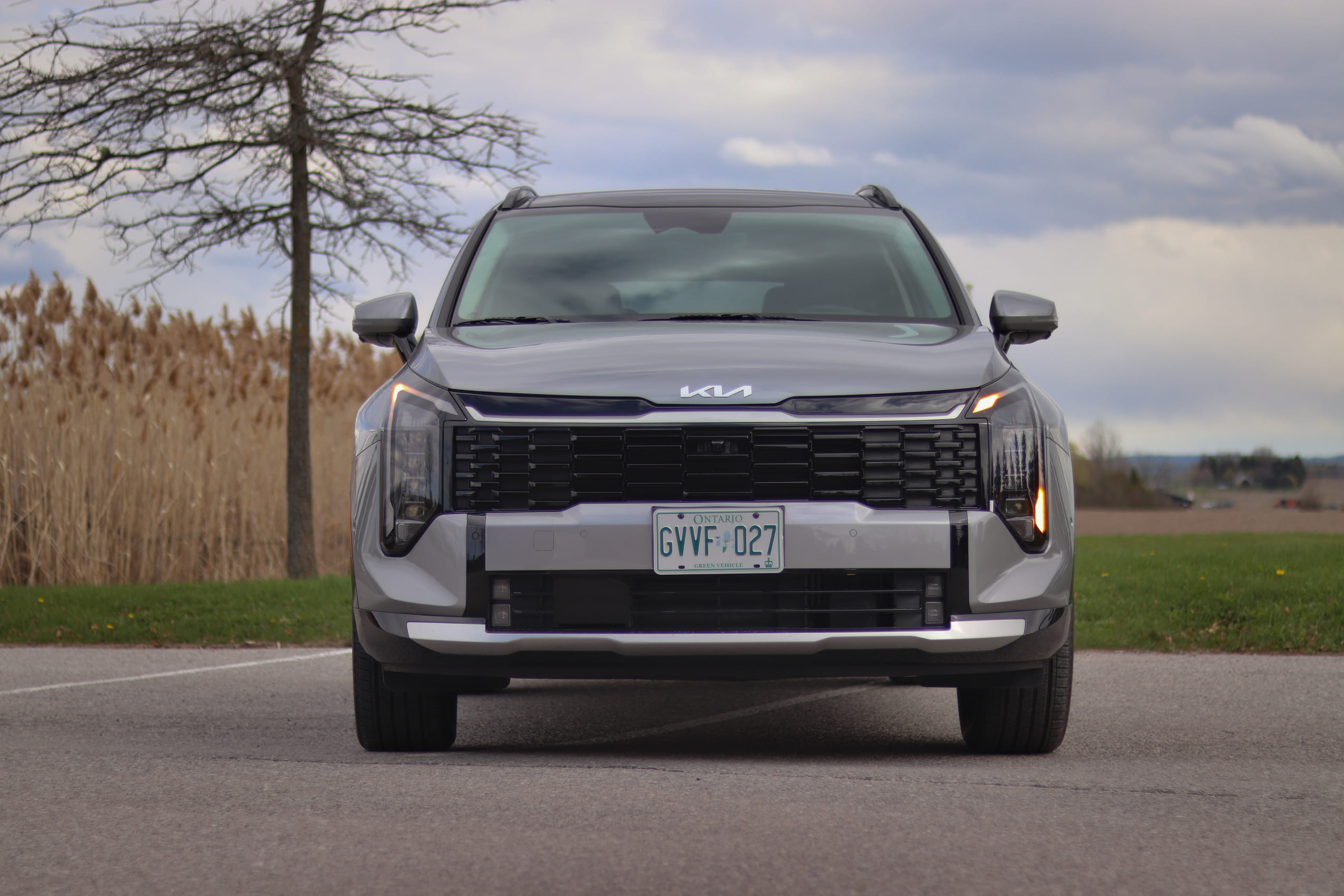
The Korean Audacity: Why the 2026 Sportage PHEV Should Make
Look at the 2026 Kia Sportage Plug-In Hybrid, and you are staring directly at the absolute pinnacle of contemporary Korean…
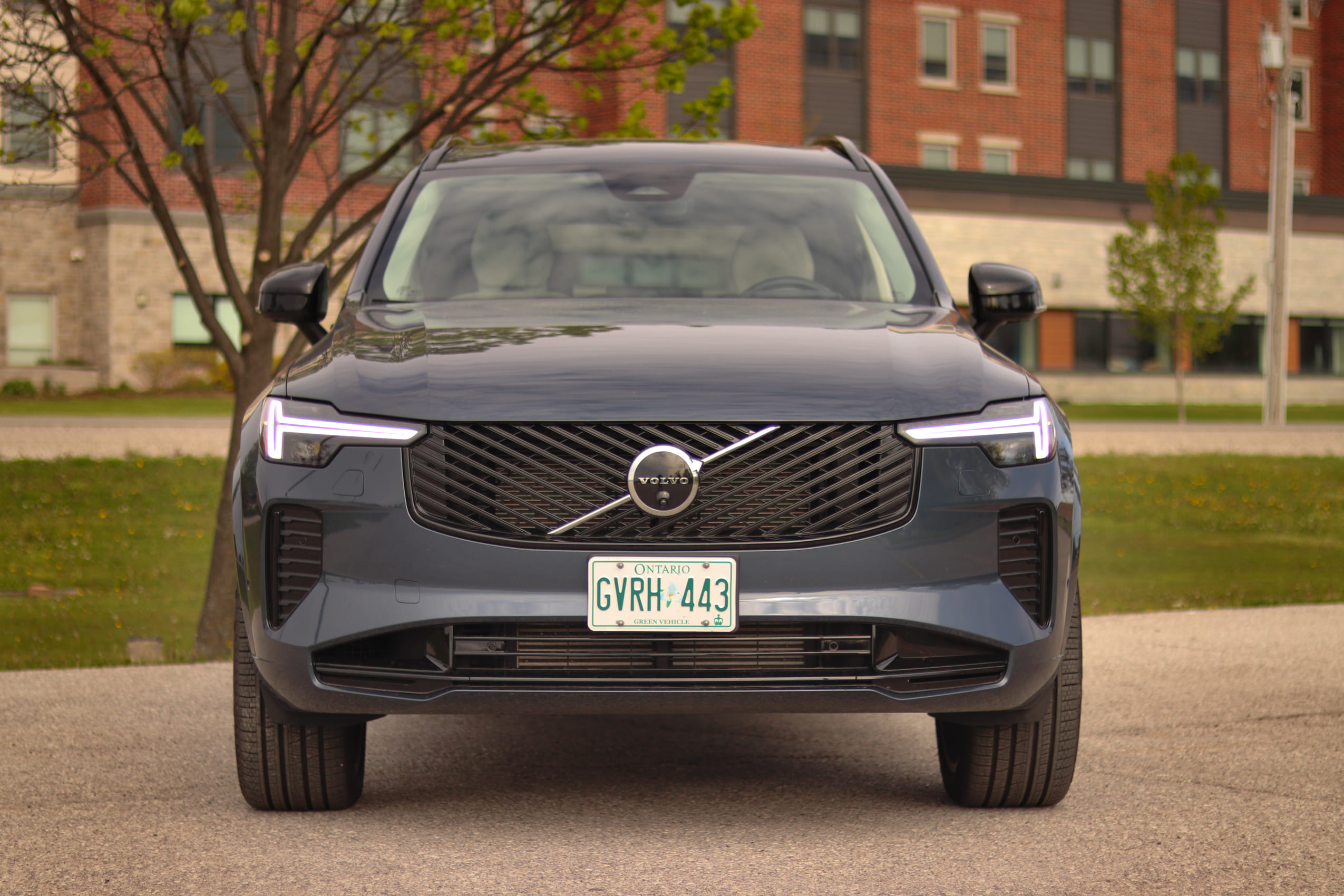
The 2026 Volvo XC90 T8 Review: Grandfathered into the Future
When the second-generation Volvo XC90 debuted over a decade ago, it was a revelation of Scandinavian minimalism that made the…