Toronto in February is a city that exists primarily to justify the existence of heated seats and seasonal affective disorder. But inside the Enercare Centre, the 2026 Toronto Motorcycle Show is in full swing, offering a glimpse into an industry that seems increasingly confused about whether it’s building soul-stirring machinery or just rolling iPads with kickstands.
If you can navigate past the sea of “adventure” gear that will never see a speck of dust, there are actually some fascinating things happening. We’re seeing a strange divergence: half the industry is obsessed with adding weight and “automated manual” complexity, while the other half is finally remembering that a motorcycle is supposed to be, well, light and fun.

Harley’s Forged Carbon Future
If you thought Harley-Davidson was content just selling nostalgia and leather vests, the 2026 lineup is here to prove they’ve finally discovered the periodic table. Specifically, carbon and titanium. The headliners at the show are the CVO Street Glide ST and CVO Road Glide ST. These are not your grandfather’s touring bikes; they are essentially 800-pound missiles designed to make you forget that physics is a real thing.
The Tech: Analog gauges are officially a relic of the past. The cockpit is dominated by a 12.3-inch TFT touchscreen running Skyline OS. It’s faster than your last iPad and features dedicated “Track” and “Track Plus” modes, which is hilarious to imagine on a bike with floorboards, but the hardware—specifically the radial-mounted Brembo brakes—is actually up to the task.
The Engine: They’re packing the Milwaukee-Eight 121 High Output (HO). Unlike the standard CVOs that use Variable Valve Timing (VVT) for smoothness, the “HO” ditches the VVT for a high-performance camshaft and a heavy-breather intake that screams until the 5,900 RPM redline. It puts down 127 hp and 145 lb-ft of torque—enough to restart a dead planet.
The Diet: Through the liberal use of forged carbon fiber—found on the front fenders, seat cowls, and tank consoles—and titanium-capped mufflers, Harley has managed to shave off about 25 lbs. It’s still a massive machine, but it’s an agile one, supported by fully adjustable Showa inverted forks and remote-reservoir rear shocks.

Yamaha’s Radical Sanity
The Yamaha Ténéré 700 World Raid is a refreshing middle finger to the “bigger is better” philosophy that has turned the adventure segment into a collection of two-wheeled SUVs. By sticking with the 689cc CP2 parallel-twin, Yamaha has prioritized mechanical character over spec-sheet bragging rights. It isn’t the fastest thing in Toronto, but its 72 horsepower is delivered with a linear, predictable grunt that makes you feel like a hero rather than a passenger. For 2026, the addition of ride-by-wire and a six-axis IMU finally brings the T7 into the modern era with lean-sensitive electronics, though Yamaha was smart enough to keep a dedicated “kill” switch for the ABS so you can actually slide the thing in the dirt.
The real genius of the World Raid, however, is how it handles its 23 liters of fuel. Instead of one massive, high-mounted tank that makes the bike feel top-heavy and nervous, Yamaha split the load into two side-mounted reservoirs. This lowers the center of gravity and narrows the bike between your knees, making a 485-pound machine feel significantly more agile than its dimensions suggest. Paired with nearly ten inches of premium, Kashima-coated KYB suspension and a factory-spec Ohlins steering damper, the World Raid is one of the few bikes at the show that arrives truly prepared for a BDR route without needing five thousand dollars in aftermarket upgrades just to survive its first rock garden.


The KTM Power Trip
The KTM 1390 Super Adventure S Evo is essentially an Austrian surface-to-surface missile disguised as a touring bike, replacing the 1290 Adventure series. It features a new 1,350cc V-twin that pumps out 173 horsepower and enough torque to pull a stump out of the ground, but the real talking point is the new Automated Manual Transmission. KTM has deleted the clutch lever entirely, leaving you with a bike that won’t stall at a stoplight but still lets you bang through gears using paddles on the bar. It’s a polarizing bit of tech that pairs with a massive, portrait-oriented 8-inch touchscreen that looks less like a dashboard and more like someone accidentally glued an iPad to the triple clamps. It’s fast, it’s complicated, and it’s unapologetically excessive.
If the 1390 is a blunt instrument, the 990 RC R is a scalpel. This is KTM’s long-awaited return to the full-sized supersport world, built around a 947cc parallel-twin that’s been tuned to deliver 128 horsepower in the street version and 135 in the track-only “Track” edition. It’s a bike that prioritizes chassis feedback over raw top-end speed, utilizing a modified steel trellis frame and a progressive shock linkage that actually allows for some compliance on the road. It looks like a MotoGP refugee with its functional aero-winglets and aggressive, angular fairings, providing a middleweight alternative for riders who find liter-bikes too heavy and 600s too gutless.


Triumph’s Micro-Dose of Heritage
Triumph is currently teaching a masterclass in how to expand a brand without diluting the product. Their sub-500cc experiment hasn’t just worked; it’s become the company’s financial engine room. For 2026, they’ve doubled down on this “small is great” philosophy by rolling out the Thruxton 400 and the Tracker 400. These aren’t just budget bikes for people who can’t afford a Speed Twin; they’re high-fidelity miniatures. The updated 398cc single now pushes 41 horsepower thanks to a revised cam profile and a higher rev limit, proving that Triumph understands that an entry-level bike should still be rewarding enough to make an experienced rider giggle.
While they’re winning the street with small singles, Triumph has also decided to gatecrash the dirt bike party with a level of aggression usually reserved for a Viking raid. Their off-road lineup has exploded into a full family of specialized tools, ranging from the TF 250-X and TF 450-X motocrossers to the brand-new TF 250-E and TF 450-E enduro models. They’ve even launched cross-country versions—the TF 250-C and TF 450-C—designed specifically for high-speed, varied terrain. With class-leading power-to-weight ratios and high-end componentry like KYB forks and Brembo brakes, Triumph isn’t just “participating” in the dirt; they’re building machines that make the established brands look suspiciously complacent.


The Elephant in the Room (CFMoto)
The CFMoto Ibex series is currently the motorcycle industry’s version of a disruptive tech startup that actually knows how to build hardware. At the Toronto show, the Ibex 450 is the bike everyone is looking at while quietly checking their bank accounts. It’s a middleweight adventure bike that refuses to act like a budget compromise, offering a level of off-road intent and rhythmic V-twin character that makes several “prestige” brands look like they’ve been overcharging for stickers and heritage. It’s a calculated assault on the class that proves if you give people legitimate capability without the “adventure tax,” they’ll stop making jokes about where the bike was built and start riding them instead.
But if you want to see where CFMoto is actually showing off, look at the 675SR-R. The 675SR-R is a triple-cylinder middleweight that sounds like a banshee and looks like it was designed in a wind tunnel, while the 500SR Voom is a glorious, neo-retro middle finger to boring design. With its twin circular air intakes that double as headlights, the Voom looks like a 1980s endurance racer that traveled through time to remind us that sportbikes used to have personality. These aren’t just “good for the money” machines; they are technically sophisticated, high-revving theater on two wheels.
Then there is the Papio. This is CFMoto’s way of proving that you don’t need triple-digit horsepower to have a mid-life crisis. These are essentially 126cc miniatures of full-sized motorcycles, complete with six-speed gearboxes and inverted forks. The Papio SS looks like a shrunken-down café racer, while the CL goes for the scrambler vibe. They are approachable, hilarious, and perfectly legal ways to treat your morning commute like a qualifying session. They’re proof that sometimes, the most sophisticated thing a motorcycle company can do is remember how to make a bike that is purely, unapologetically a toy.


Honda’s Automatic Indulgence
Honda’s 2026 strategy is a masterclass in solving problems no one actually complained about, and yet, they’ve nailed it. The CBR650R remains the only sane choice for someone who wants an inline-four that doesn’t require a chiropractor, and the new E-Clutch is brilliant. It’s not an automatic; it’s a manual gearbox for people who hate stalling in traffic but still want to feel like a hero on the weekend. It’s typically Honda: clever, over-engineered, and perfectly executed for the daily grind on the Gardiner Expressway.
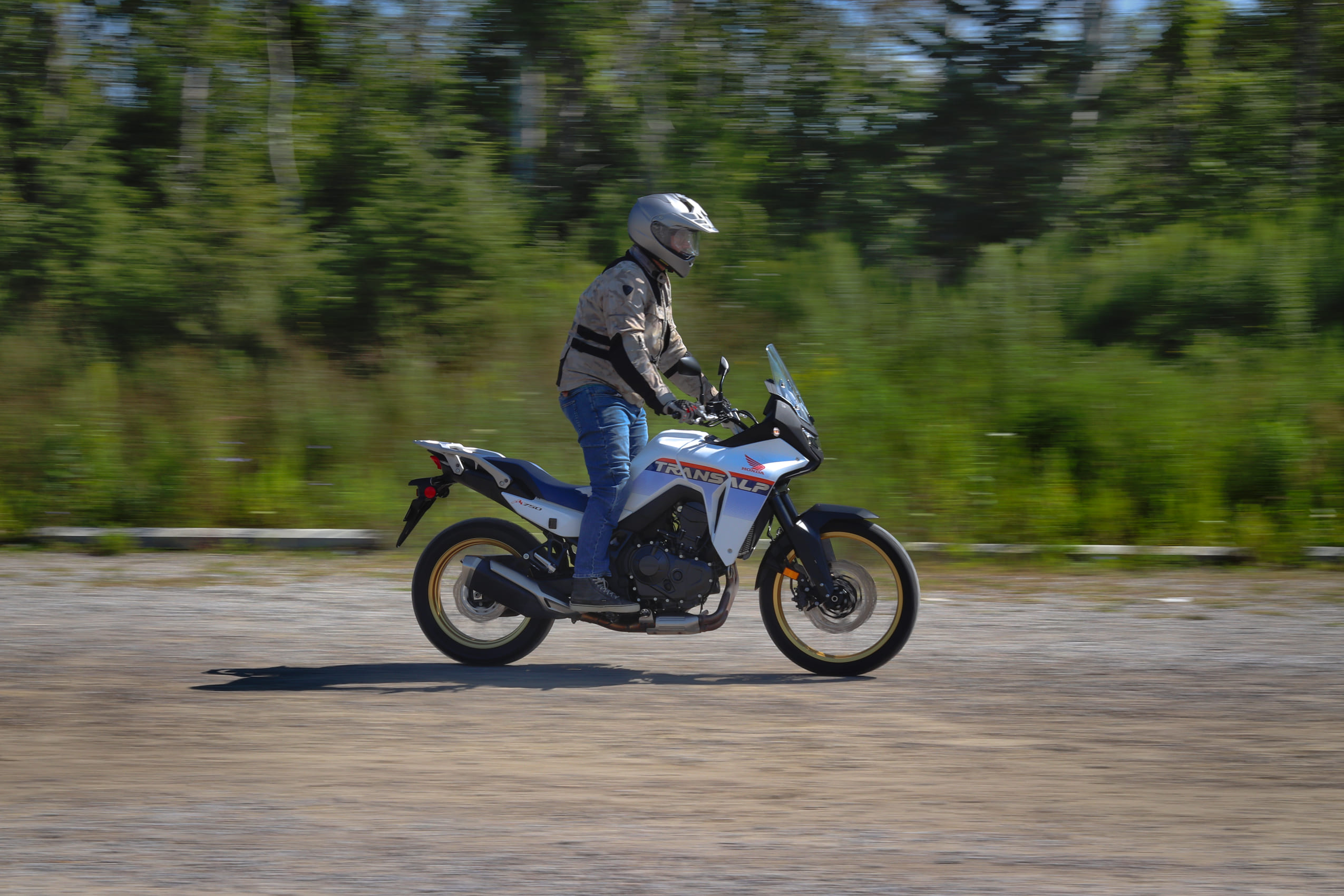
On the dirt side, the XL750 Transalp has finally grown up with fully adjustable Showa suspension and a standard skid plate, addressing the “it’s too soft” chorus from the ADV crowd. Meanwhile, the Africa Twin has entered its refined era—narrower at the seat and smarter in the brain—while the new CRF300F replaces the old 250 with a punchier engine and a six-speed box. It’s a lineup built on the realization that “more” is often just “heavier,” proving that Honda is still the smartest kid in the class, even if they’re the only ones who brought their homework.
The 2026 Toronto Motorcycle Show is a loud confirmation of an increasingly binary industry. On one side sits the “Digital Bloat” brigade—machines with more computing power than the Apollo 11 lunar module and the curb weight of a small moon. On the other, a movement toward “Mechanical Honesty” is emerging, led by the Yamaha Ténéré 700 World Raid and Triumph’s 400cc singles. These bikes prove that a motorcycle doesn’t need to be a rolling iPad to be desirable; they prioritize low-slung weight, adjustable suspension, and the kind of tactile, 41-horsepower character that makes an experienced rider giggle.
On the performance front, the heavyweights are finally hitting the gym. Harley-Davidson’s CVO ST models are legitimate power-trip machines, shedding 25 pounds through forged carbon fiber and titanium to let the 121 High Output engine actually breathe. Meanwhile, Honda remains the smartest kid in class, perfecting the “sensible” middleweight with the E-Clutch CBR650R and a Transalp that finally has the dirt-ready suspension it deserves. CFMoto rounds out the disruptors, proving with the Ibex and the high-revving 675SR-R triple that “value” no longer means “cheap.” Ultimately, the most exciting bikes in Toronto aren’t the ones with the most pixels; they’re the ones that make you want to grab a helmet and disappear for the weekend.
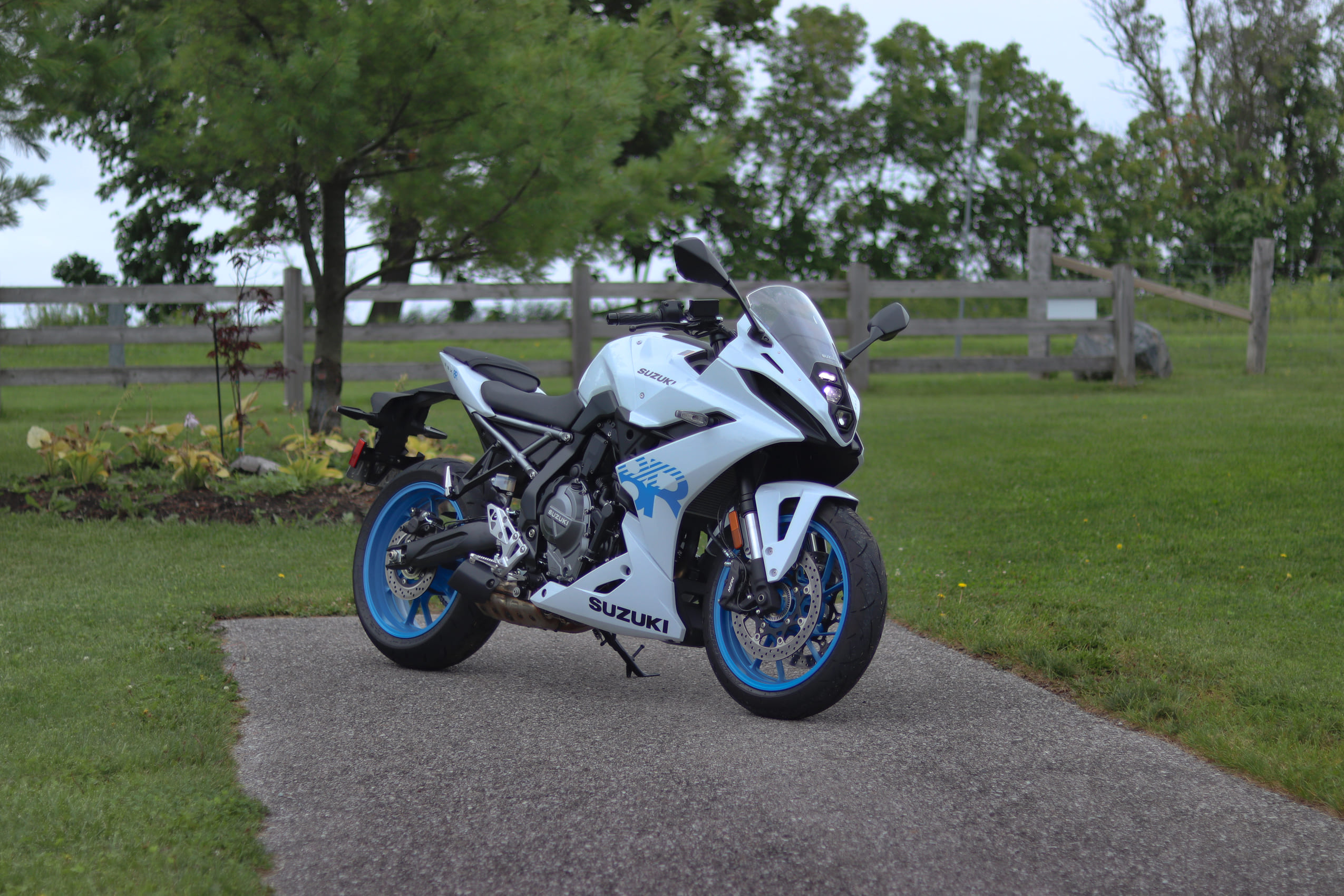
2026 Suzuki GSX-8R: The Middleweight Sport Bike Formula Done Right
The motorcycle world has spent the last decade trapped in a profoundly stupid dick-measuring contest, obsessed with building 200-horsepower, track-focused…

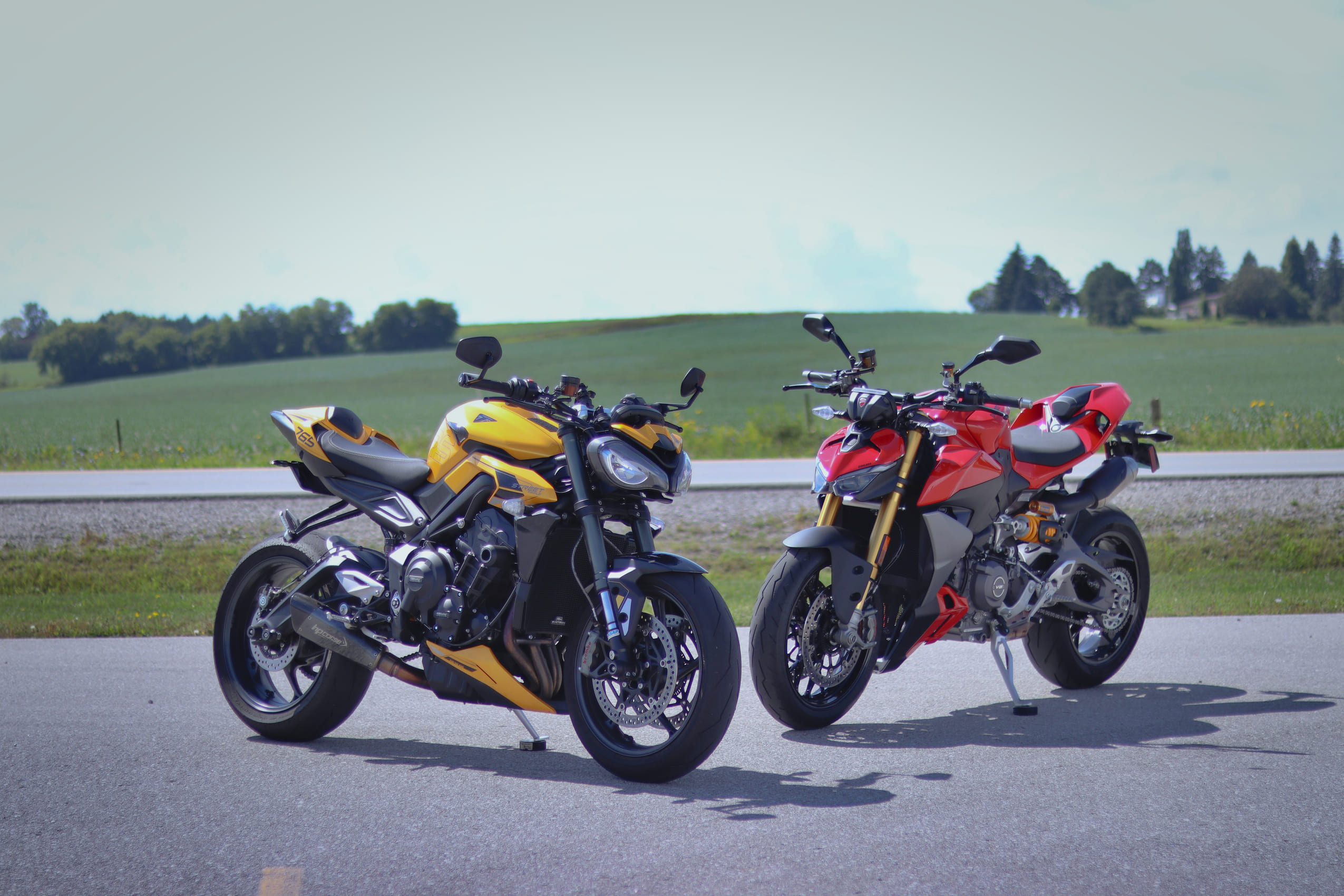
British Precision vs. Italian Violence: 2026 Ducati Streetfighter V2S vs.
Human beings are inherently absurd creatures, but nowhere is that absurdity more evident than in our willingness to strap our…
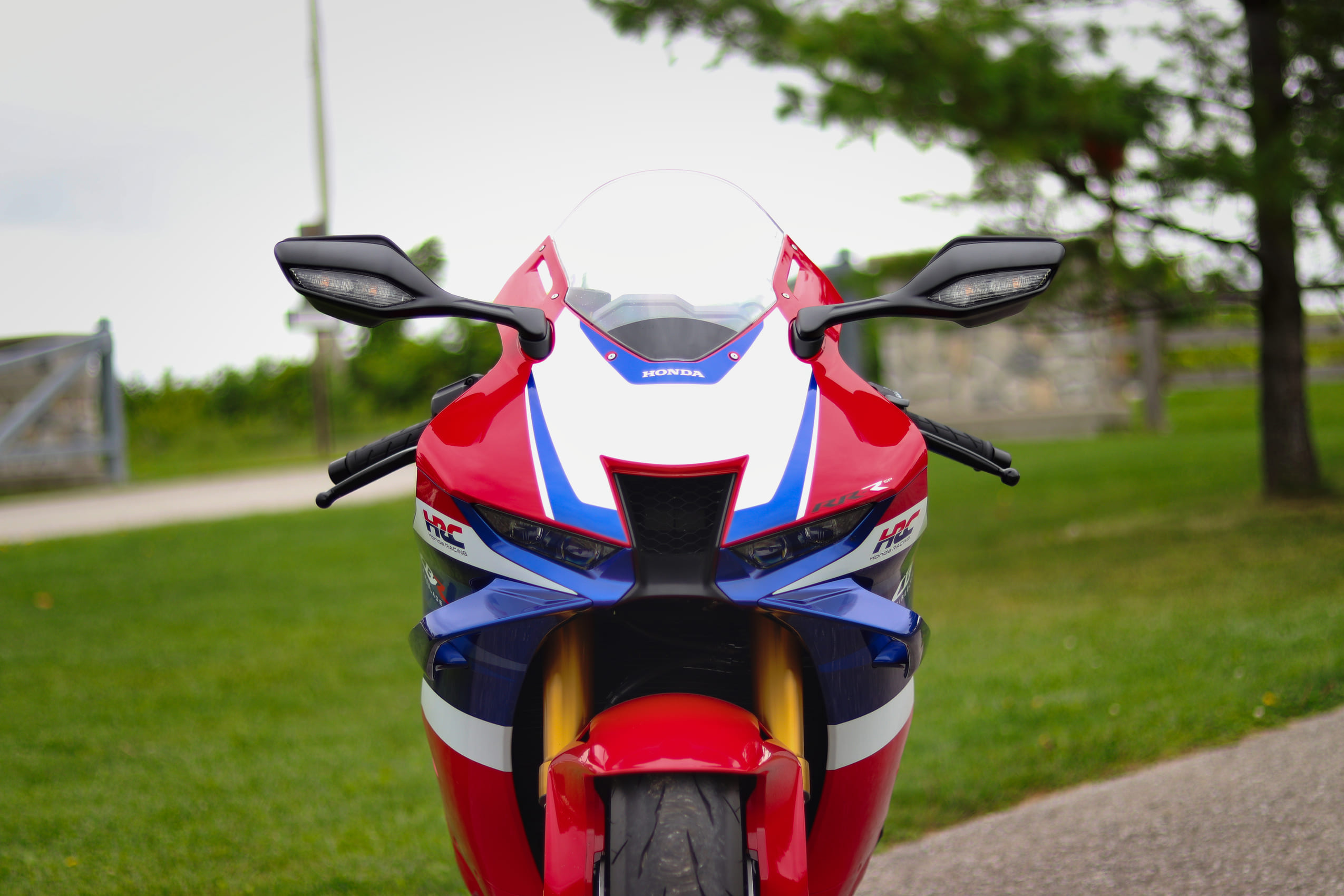
2026 Honda CBR1000RR-R Fireblade SP Review: Pure Mechanical Violence
The 2026 Honda CBR1000RR-R Fireblade SP is not a motorcycle; it is a clinical, unrelenting exercise in absolute mechanical insanity…
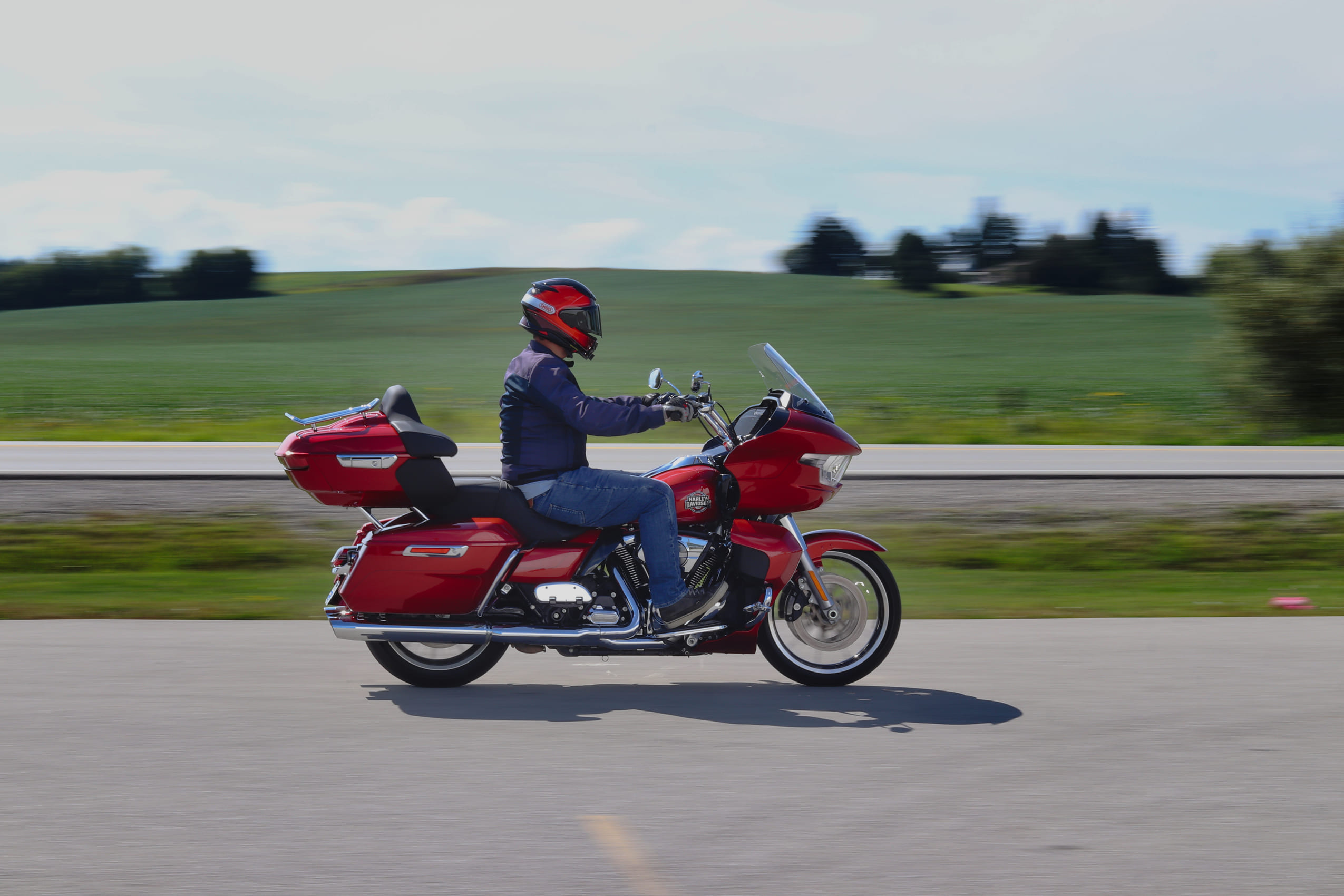
Sharknose Supremacy: Driving the 2026 Harley-Davidson Road Glide
Let’s get one thing straight: the 2026 Harley-Davidson Road Glide shouldn’t make sense. It’s a rolling, 800-pound contradiction—a massive, frame-mounted…
The Anti-ADV Hero: Why the 2026 Honda Transalp is the
Leave it to Honda to look at the entire, absurdly over-engineered, $25,000 middleweight adventure segment—a market flooded with hyper-focused rally…
2026 Suzuki V-Strom 800DE: No V-Twin, No Problem
Words are supposed to mean things. The “V” in V-6 means a V-layout, and for two decades, the “V” in…