The 2026 Mazda CX-70 PHEV wants to position itself as something new, but it’s hard to ignore how familiar it all feels. At its core, this is essentially a CX-90 Plug-in Hybrid with the third row removed, repackaged as a sportier, two-row alternative. Mazda hasn’t dramatically changed the design, the proportions, or even the mission—just the seating chart. That doesn’t make it a bad vehicle, because the CX-90 is fundamentally solid, but it does raise the question of why this needed to exist at all. In true modern-automaker fashion, the CX-70 feels less like a clean-sheet idea and more like a strategic gap-filler—competent, logical, and just a little uninspired.


From the outside, the CX-70 PHEV plays one of Mazda’s strongest cards: it looks genuinely expensive. This coppery-brown metallic suits the surfacing beautifully, catching light along the hood creases and fender lines in a way that makes the body look hewn rather than stamped. Up front, the large shield grille and slim headlights deliver the familiar Mazda face—confident without being aggressive, upscale without trying too hard. It’s clean, restrained, and very on-brand, the kind of design that quietly ages well instead of screaming for attention in a parking lot.
Move to the side profile and the CX-70’s proportions do most of the heavy lifting. The long hood, pushed-back cabin, and gently tapering roofline give it a wagon-like elegance that most two-row midsize SUVs simply don’t attempt anymore. The blacked-out window trim and subtle chrome accents keep things tasteful, while the wheel design—especially at this size—adds just enough visual tension to prevent the whole thing from looking too polite. If there’s one unavoidable observation, it’s that it looks identical to the CX-90, except for the CX-70 badge—but that’s less an insult to the CX-70 and more a compliment to the underlying design.
Around back, Mazda keeps things minimal and cohesive. The slim, horizontal taillights stretch across the rear, visually widening the vehicle and reinforcing that planted stance. There’s no fake exhaust drama, no overwrought lighting signatures—just clean shapes, good surfacing, and a rear end that looks premium without feeling ornamental. The subtle roof spoiler and dark lower valance add just enough contrast to keep it from feeling slabby, especially in darker or richer paint colors like this one.
Overall, the CX-70 PHEV proves that Mazda still knows how to draw a handsome SUV, even when it’s working from an existing template. The design doesn’t shout, it doesn’t posture—it simply looks right. And in this color, with this stance, that’s more than enough to stop you mid-walk in a parking lot and think, yeah… that’s a good-looking thing.


Step inside the CX-70 PHEV GT and it immediately feels like Mazda is still playing a different game than most mainstream brands. For some reason Mazda still doesn’t bring higher trims for the Plug-in Hybrid model. Regardless, the layout is clean, horizontal, and deliberately uncluttered, with a dashboard that prioritizes proportion and material choice over visual noise. Build quality is excellent across the board—tight panel gaps, reassuring switchgear, and a general sense that everything was screwed together by people who cared. The leather upholstery, contrast stitching, and brushed metallic accents elevate the cabin into near-luxury territory, and in this top Canadian-spec PHEV trim, it genuinely feels more premium than its price tag suggests.
Mazda’s interior design philosophy leans heavily into restraint, and it works here. The steering wheel feels substantial, the physical climate controls are refreshingly intuitive, and the center console is laid out with a driver-first mindset that’s increasingly rare. There’s no attempt to dazzle you with gimmicks—just a calm, well-considered space that makes sense the moment you sit down. That said, the longitudinal engine layout, while great for balance and drivetrain integrity, does come with a tradeoff: interior space isn’t class-leading. The cabin feels a bit tighter than some transverse-engine rivals, particularly in overall width and rear foot space.
Rear-seat room is perfectly adequate for adults, but not expansive, and the CX-70 makes it clear that packaging efficiency wasn’t the top priority here—driving dynamics and platform rigidity were. Cargo space tells a similar story. With the rear seats up, you get roughly 1,166 litres, which is usable but not standout in the two-row midsize segment. Fold them down and capacity expands to about 2,131 litres, enough for family duty, strollers, or weekend runs to the hardware store, but again, not the biggest numbers in the class. What Mazda gives up in raw volume, it claws back with a low load floor, wide opening, and a space that’s easy to actually use.
Tech is where the CX-70 feels slightly conflicted. The infotainment system is crisp, logically structured, and paired with excellent rotary controls—but the lack of a touchscreen still feels stubborn rather than principled, especially in a vehicle at this price point. It’s fine once you’re moving, but when parked, you’ll inevitably reach out and tap the screen out of habit, only to remember Mazda still doesn’t want you doing that. The digital gauge cluster looks sharp and clean, presenting information clearly, though customization options are limited compared to rivals that let you fully rearrange layouts and themes.


Still, taken as a whole, the CX-70 PHEV’s interior is a strong reminder of Mazda’s priorities. It’s not chasing flash or maximum screen acreage—it’s focused on quality, coherence, and a premium feel that punches above its weight. A few tech decisions may frustrate, and the packaging isn’t the most space-efficient in the segment, but as a place to spend time every day, it’s thoughtfully executed, comfortable, and undeniably classy.
The heart of the CX-70 PHEV is still Mazda’s longitudinally mounted 2.5-litre four-cylinder gasoline engine — a naturally aspirated unit tuned for smooth torque delivery and efficiency rather than peak numbers. In PHEV spec, that engine makes about 191 horsepower and 186 lb-ft of torque on its own. Paired with it is a sizeable electric motor generator mounted in the transmission housing, which assists both propulsion and regenerative functions. Combined system outputs for the Canadian GT PHEV land at roughly 323 horsepower and 369 lb-ft, giving it significantly more mid-range punch than the non-hybrid version of the CX-70.
Unlike some crossover PHEVs that swap out mechanical hardware for blade-type electric motors driving the rear wheels independently, Mazda keeps this architecture fundamentally rear-biased and mechanically AWD. Power is sent rearward through a standard driveshaft and center coupling, with an electronically controlled AWD system that can apportion torque between front and rear axles as conditions demand. The AWD system isn’t just an afterthought: because the engine sits longitudinally and the transmission is behind it, the weight distribution is inherently more balanced front-to-rear than typical FWD-based PHEVs, and the AWD system leans toward rear drive under steady throttle for a livelier feel and better traction dynamics.
The hybrid battery pack is mounted low behind the rear seats and under the cargo floor, which helps keep the centre of gravity down and minimizes intrusion into usable interior space. That placement also lets Mazda retain a traditional transmission tunnel and robust driveshaft — which means no quirky “on-demand electric rear axle” setup here. Charging is limited to AC Level 1 and Level 2, with no DC fast charging. On a 240 V Level 2 wall box you can generally top the battery in around 2–3 hours, which is par for the course for plug-in hybrids. The system’s calibration cleverly blends electric assist with engine torque, so you often feel immediate torque response off the line and smoother mid-range boost without ever feeling like you’re wrestling with dual systems.


In real-world use, the CX-70 PHEV’s electric range lands right about where you’d expect it to in Canadian conditions. On colder days, EV-only driving hovers around 25 km, sometimes a touch less when temperatures really dip. Once the weather warms up, that number climbs meaningfully, making it easy to cover short commutes, school runs, or grocery trips without waking the gas engine at all. It’s not class-leading on paper, but in practice it’s enough to handle most daily errands electrically—and that’s really the point of a plug-in hybrid like this.
Once the battery is depleted and the gas engine joins the party, the transition is… noticeable. Not harsh, not clunky—but not seamless either, especially for a vehicle flirting with premium territory. You’re always aware when the 2.5-litre four-cylinder wakes up, both through sound and feel, and it lacks the polish you’d expect given the rest of the vehicle’s demeanor. Still, efficiency is where the system redeems itself. Over mixed driving in southern Ontario—including a healthy dose of 400-series highway cruising in cold weather—the CX-70 PHEV returned an average of around 6.5 L/100 km, which is genuinely impressive for something this size and weight, and significantly better than Mazda’s conventional hybrid offering.
Performance-wise, there’s no shortage of torque. The electric assist gives it strong off-the-line response and confident mid-range pull, making the CX-70 feel quick enough for everyday driving. But aurally, the four-cylinder simply doesn’t match the ambition of the platform. It sounds fine, just not special—and that’s where you can’t help but think Mazda’s inline-six hybrid would be the more natural fit for this chassis. It would better align with the vehicle’s premium aspirations and rear-drive-biased architecture.
Behind the wheel, the CX-70 feels unmistakably Mazda. The steering is solid and well-weighted, but deliberately slower than what you’d find in their smaller crossovers—a conscious decision to make the vehicle feel more relaxed and upscale. The tradeoff is that the CX-70 feels heavier than it actually is, especially in tighter transitions, even though body control remains composed. It’s not trying to be sporty, and that’s fine—it’s aiming for calm, confident, and secure. The result is a driving experience that feels mature and planted, even if it sacrifices a bit of agility in the process.


In the end, the CX-70 is hard to escape one simple conclusion: it is a bit of a lazy attempt. Not in a careless way, but in a strategic, portfolio-filling sense—Mazda took something good, trimmed it down, and called it something new. And yet… it still works. The fundamentals are strong, the design is genuinely handsome, and the driving experience remains composed and confidence-inspiring. If you already like what Mazda is doing with its large-platform SUVs, the CX-70 delivers exactly what it promises, even if it doesn’t break any new ground doing so.
That said, the bigger takeaway here applies whether you’re looking at the CX-70 or the CX-90: choose the six-cylinder hybrid. It’s a far better match for the size, weight, and premium ambition of these vehicles. The smoothness, sound, and overall refinement of the inline-six elevate the entire experience in a way the four-cylinder PHEV never quite manages, no matter how efficient it is. The CX-70 may feel like a calculated move rather than an inspired one—but with the right drivetrain, it still feels like a Mazda that knows what it wants to be.
| Engine | 2.5L naturally aspirated inline-4 (PHEV) |
|---|---|
| Electric Motor | AC motor – 173 hp / 199 lb-ft |
| Combined Power Output | 323 hp / 369 lb-ft |
| Transmission | 8-speed torque-converted automatic |
| Battery Type / Capacity | Lithium-ion 17.8-kWh |
| Fuel Economy (as tested) | 6.5 L/100 km |
| Weight | 5184 lb / 2352 kg |
| Price (as tested) | $66,640 CAD |
| Website | www.mazda.ca |
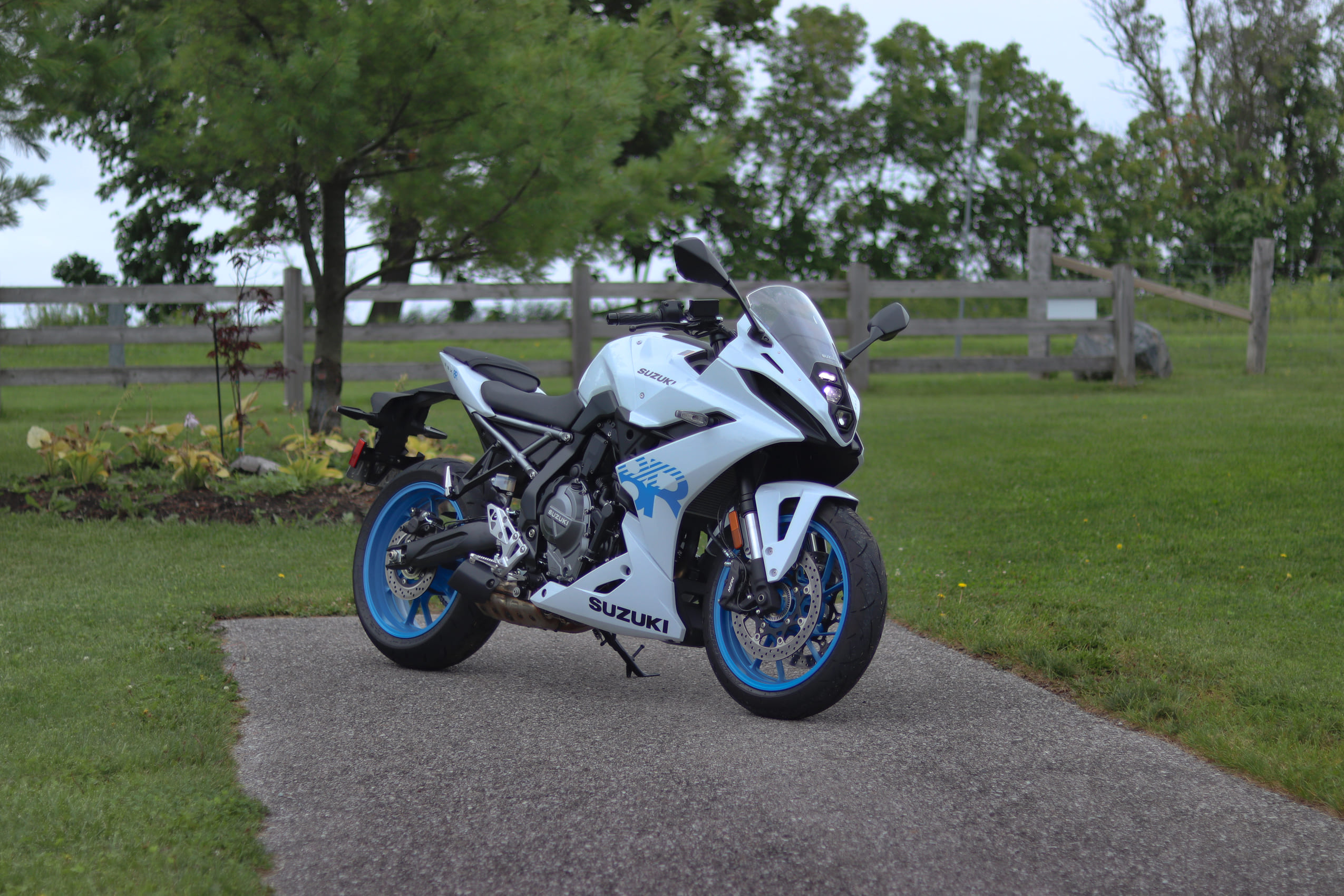
2026 Suzuki GSX-8R: The Middleweight Sport Bike Formula Done Right
The motorcycle world has spent the last decade trapped in a profoundly stupid dick-measuring contest, obsessed with building 200-horsepower, track-focused…


British Precision vs. Italian Violence: 2026 Ducati Streetfighter V2S vs.
Human beings are inherently absurd creatures, but nowhere is that absurdity more evident than in our willingness to strap our…

2026 Honda CBR1000RR-R Fireblade SP Review: Pure Mechanical Violence
The 2026 Honda CBR1000RR-R Fireblade SP is not a motorcycle; it is a clinical, unrelenting exercise in absolute mechanical insanity…

Sharknose Supremacy: Driving the 2026 Harley-Davidson Road Glide
Let’s get one thing straight: the 2026 Harley-Davidson Road Glide shouldn’t make sense. It’s a rolling, 800-pound contradiction—a massive, frame-mounted…

The Anti-ADV Hero: Why the 2026 Honda Transalp is the
Leave it to Honda to look at the entire, absurdly over-engineered, $25,000 middleweight adventure segment—a market flooded with hyper-focused rally…

2026 Suzuki V-Strom 800DE: No V-Twin, No Problem
Words are supposed to mean things. The “V” in V-6 means a V-layout, and for two decades, the “V” in…