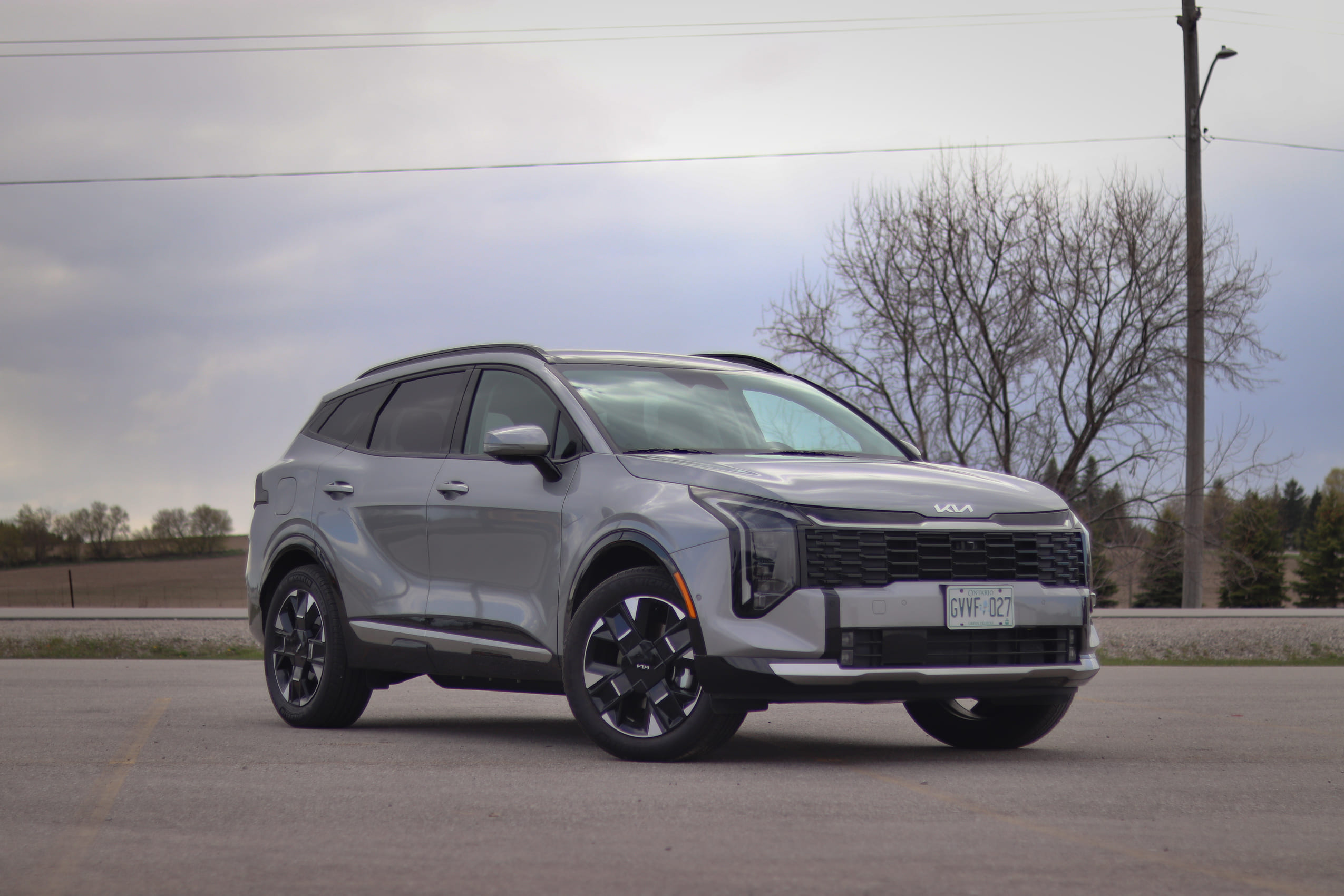
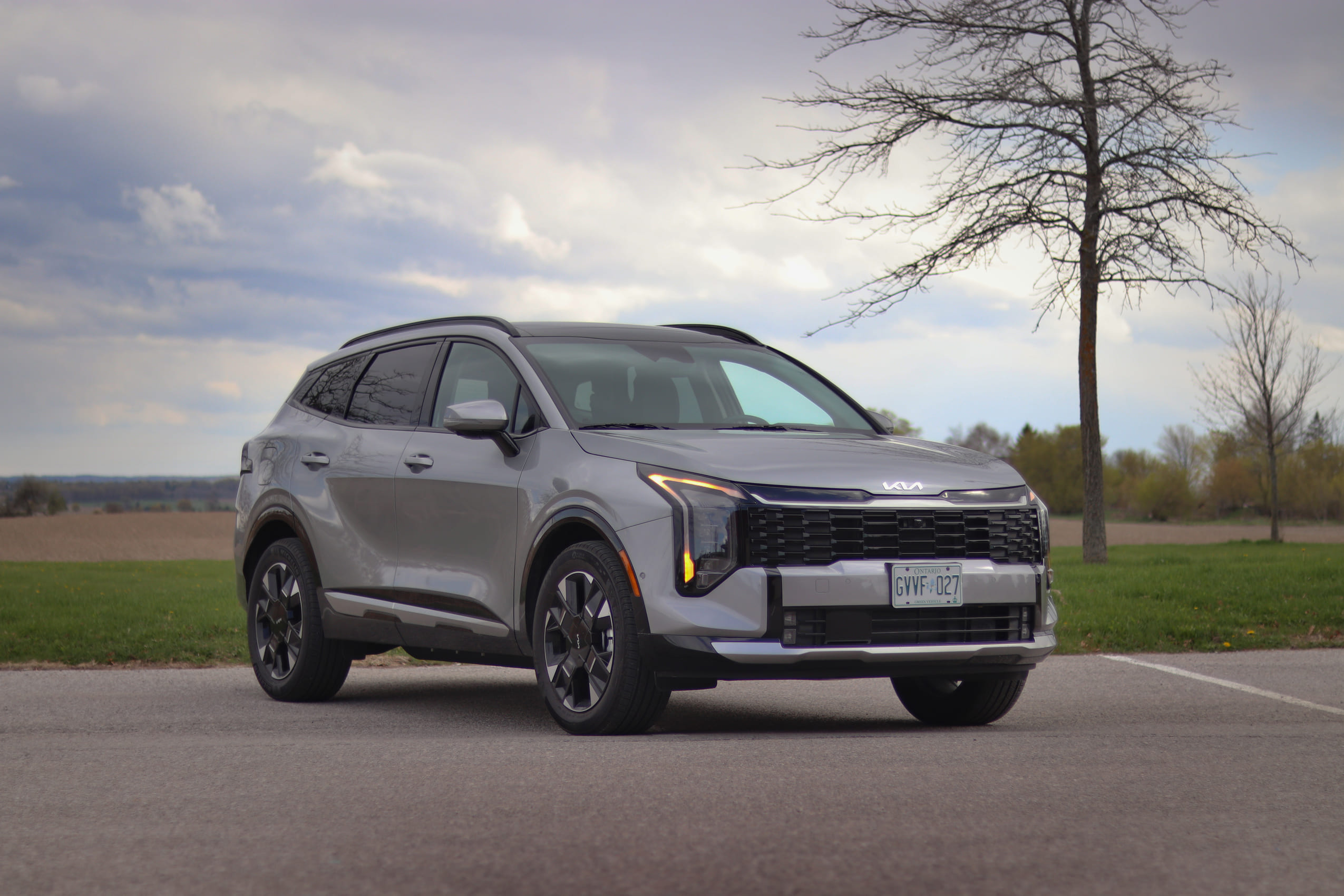
Look at the 2026 Kia Sportage Plug-In Hybrid, and you are staring directly at the absolute pinnacle of contemporary Korean audacity. Ten years ago, if you told someone you were buying a Kia crossover to look sophisticated, they’d have assumed you suffered a massive, debilitating head injury; today, this thing rolls up with a chunky, blocky stance and razor-sharp, futuristic lighting that looks less like a budget commuter and more like an armored transport pod designed for a dystopian sci-fi flick.
The real magic trick isn’t just the theatrical styling or the gorgeous panoramic glass cockpit inside. It’s the fact that beneath the skin, Kia has figured out how to make the inherently compromised, dual-hearted complexity of a plug-in powertrain feel entirely seamless. It gracefully juggles electrons and gasoline to mask the lazy habits of a traditional turbo engine, resulting in a family box that feels punchy, immediate, and dynamically resolved—proving that Kia is no longer just competing on a spreadsheet, but actively trying to beat the old-guard establishment at their own game.
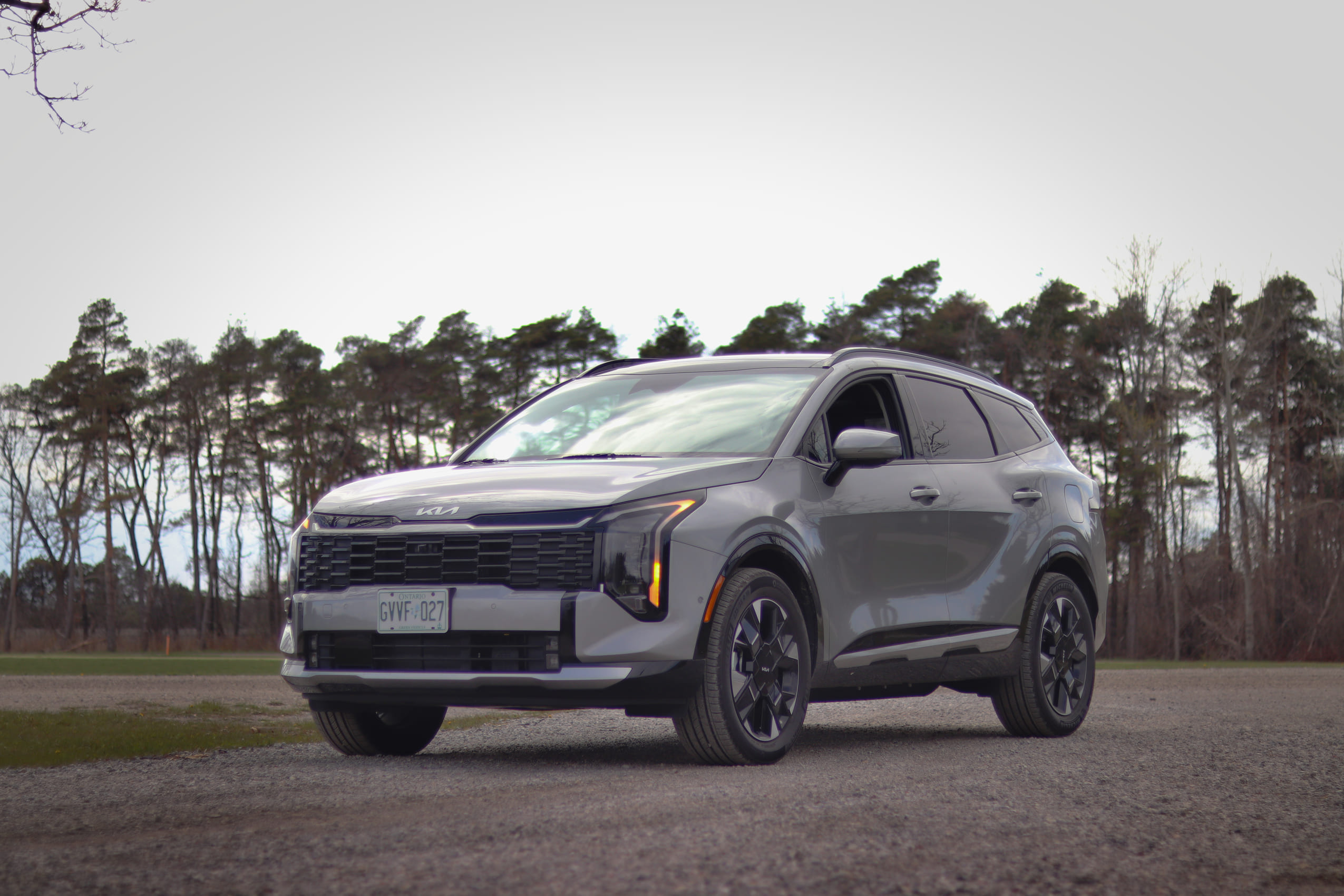
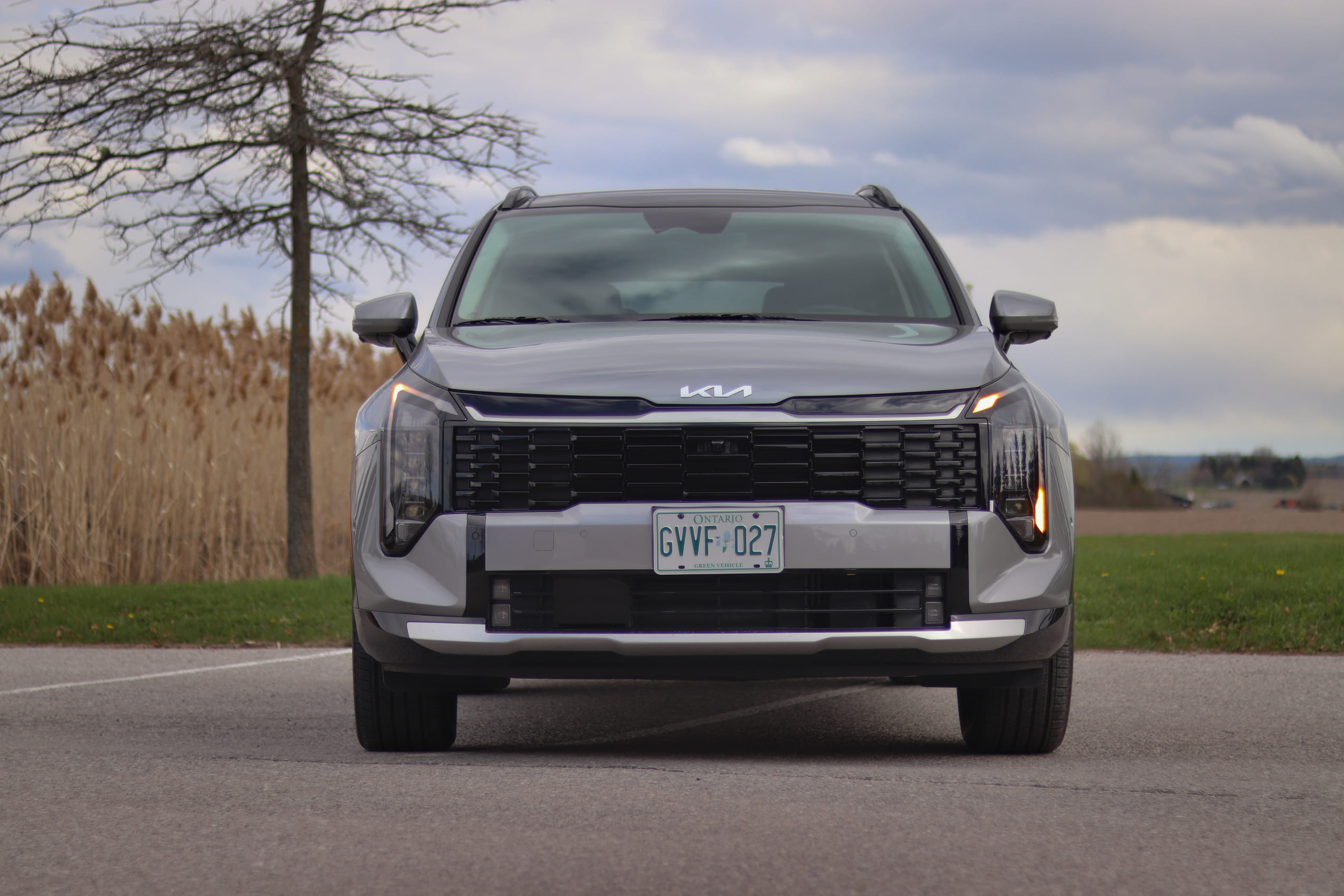
Look closely at the Sportage, and you’ll realize that the exterior of this refreshed Sportage is an exercise in pure, unapologetic visual drama. Up front, Kia finally decided to clean up its act, replacing the polarizing, chaotic boomerang daytime running lights of the pre-refresh model with what they call “Star Map” LED lighting. These vertical, razor-sharp lighting signatures bookend a massive, blacked-out rectangular grille that sits much more upright than before. It’s got a blocky, truck-ish authority to it now, almost like an EV9 that shrunk in the wash, creating a front fascia that genuinely looks premium and expensive.
Walk around to the side, and the Sportage’s design quirks don’t stop. The profile reveals a deeply sculpted body with a soaring, upward-sweeping beltline that terminates into a chunky D-pillar. The clever bit here is the satin-chrome trim piece that runs along the window line and aggressively cuts upward toward the roof spoiler—a smart optical illusion meant to hide the fact that this is a highly practical, square family box. Filling out those gloss-black framed wheel arches is a set of highly geometric, turbine-style alloy wheels that look like they were machined out of a single block of aluminum.
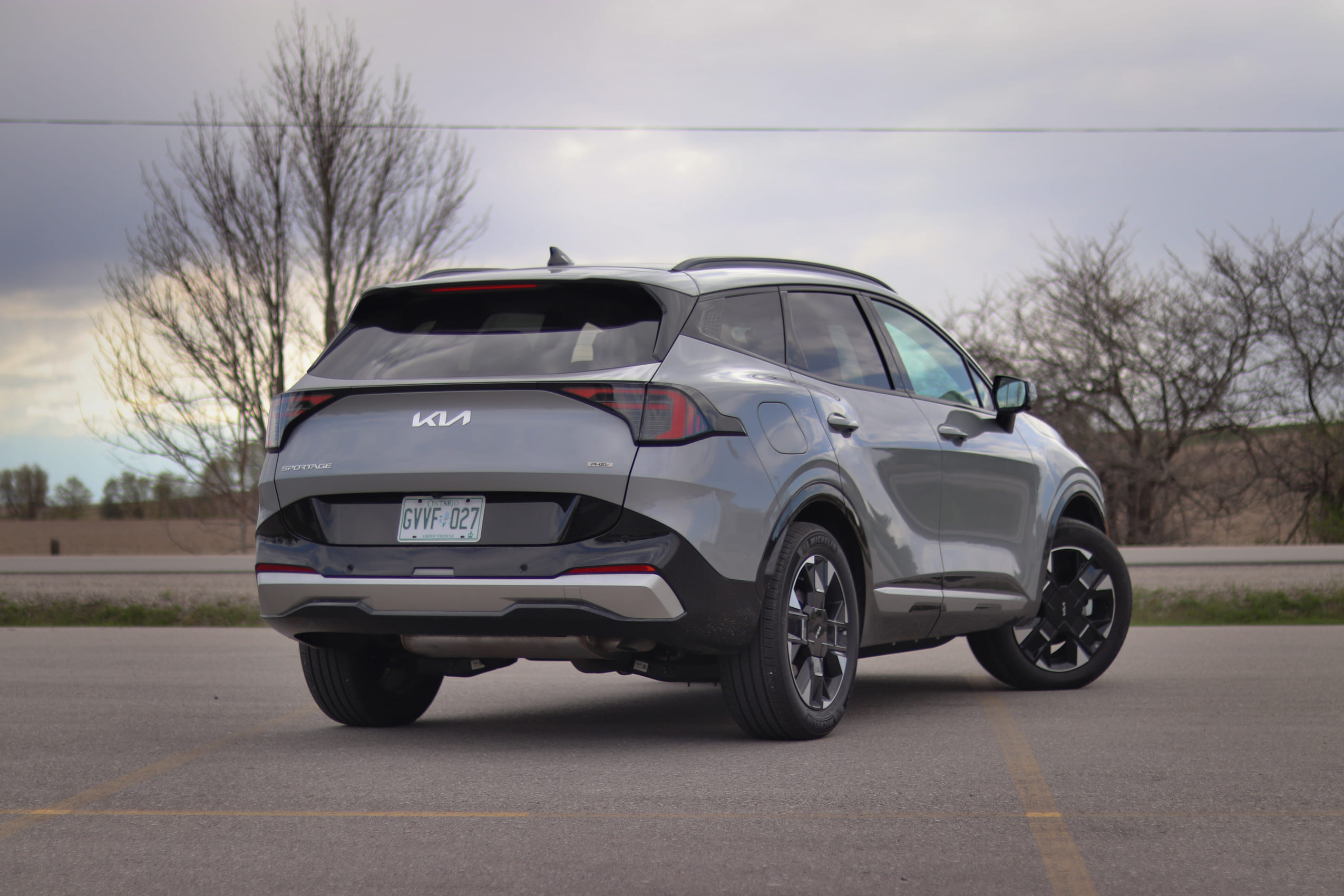
At the back, Kia continues the “Star Map” theme with a set of sharply hooked LED taillights connected across the tailgate by a slim, horizontal gloss-black trim strip to keep the rear looking wide and planted. But the real triumph here is pure, satisfying utility: Kia hid the rear windshield wiper up under the roof spoiler, a clean, elegant touch that eliminates visual clutter from the rear glass entirely—a detail usually reserved for high-end German luxury sleds.
So, how do you know this is the Plug-In Hybrid and not the standard gas model? Well, Kia didn’t slap massive, obnoxious eco-badges all over it. Instead, the visual differences are beautifully subtle. Look closely at the passenger-side rear flank, and you’ll spot a second fuel door mirroring the actual gas cap on the driver’s side—this one concealing the charge port. Beyond that extra flap and a microscopic, blink-and-you’ll-miss-it badge on the tailgate, the Sportage PHEV refuses to announce its eco-credentials to the world, letting its wild, avant-garde styling do all the talking.
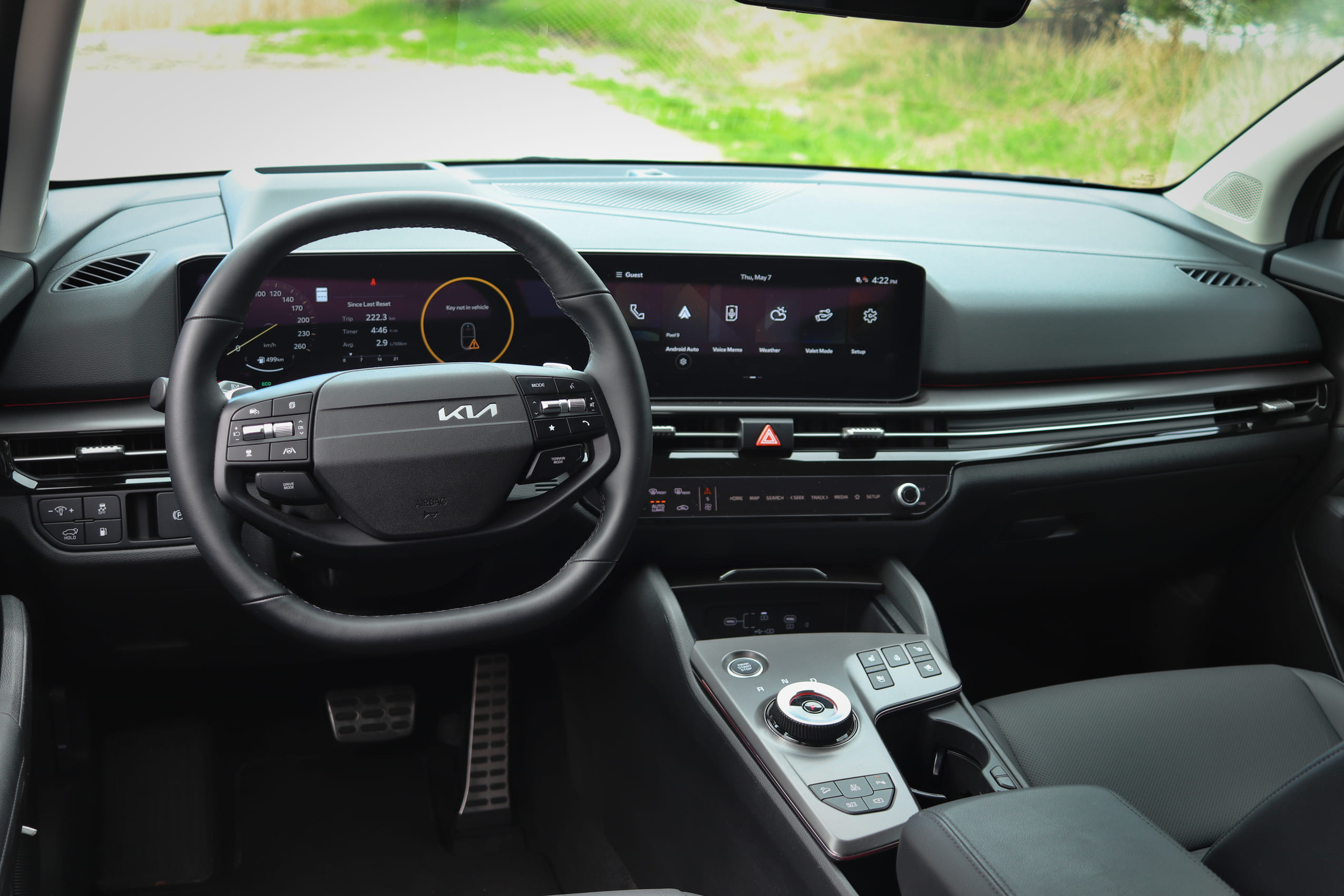
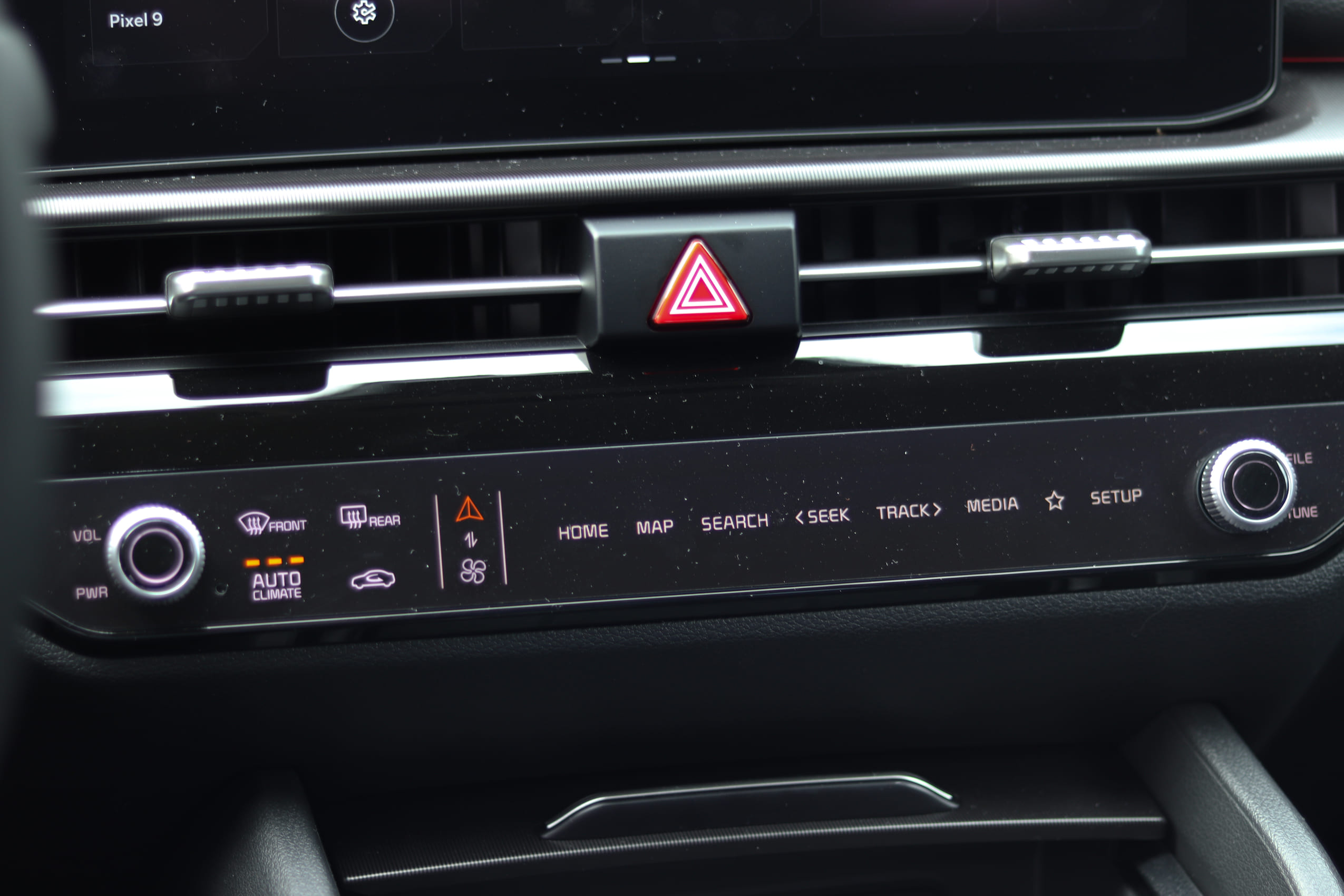
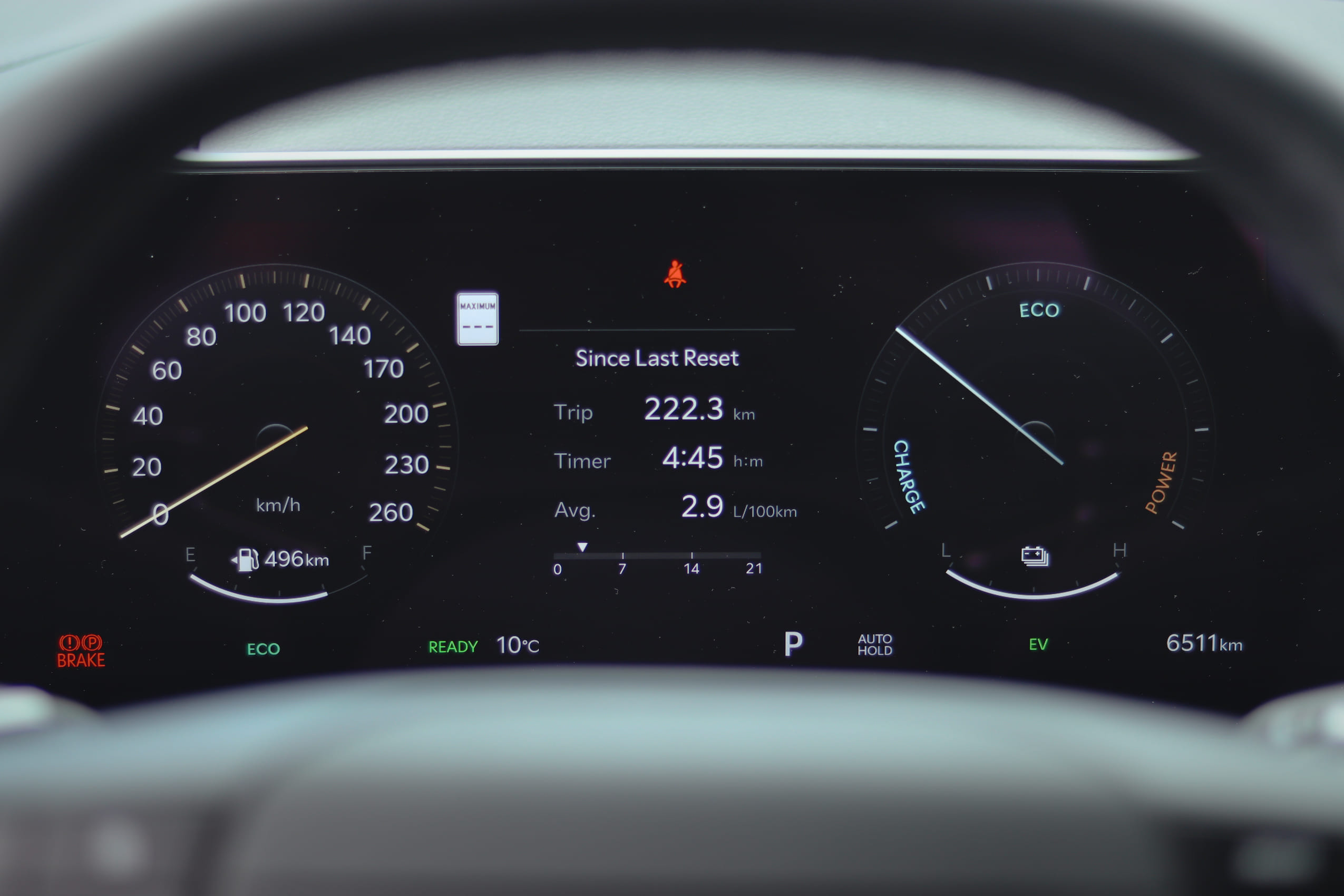
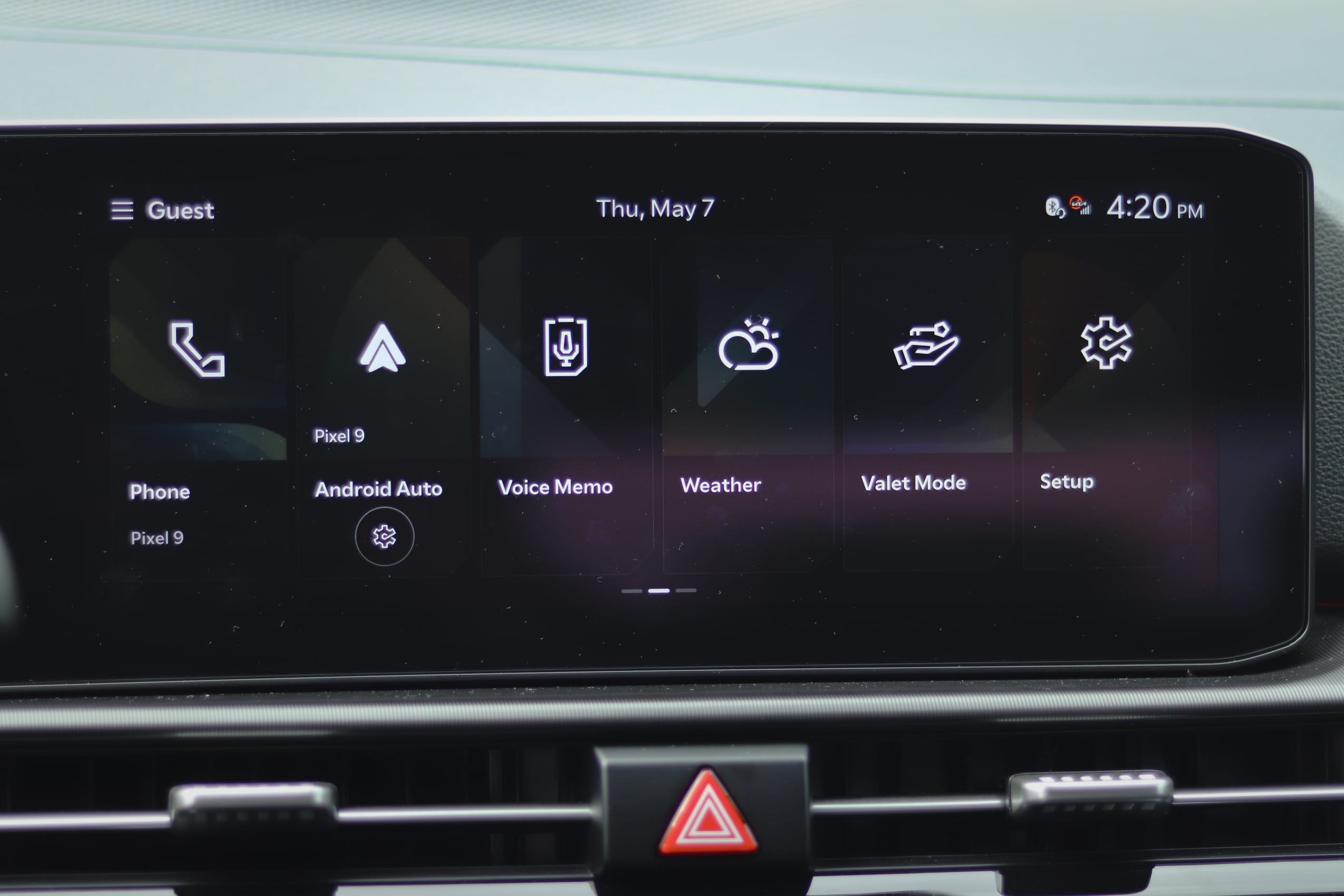
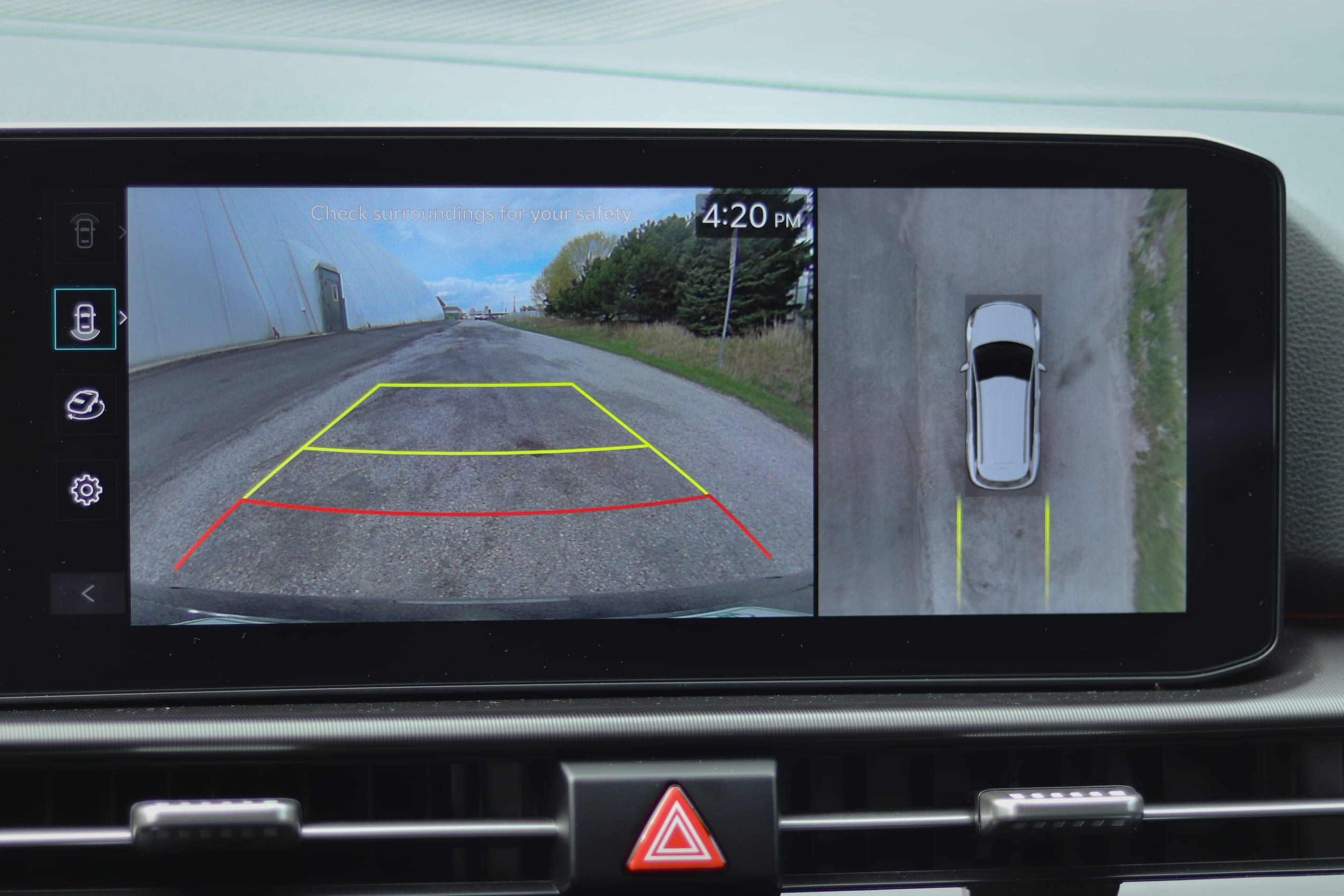
Step inside, and you’re immediately greeted by the centerpiece of Kia’s modern design offensive: a massive, curved glass housing that seamlessly welds together twin 12.3-inch panoramic screens. It is visually stunning, remarkably intuitive, and features crisp, liquid-smooth graphics that make the infotainment units in far more expensive Japanese competitors look like a vintage Commodore 64.
But once the initial screen-induced dopamine hit wears off, you start to notice the real-world packaging realities. Look toward the lower dash, and you’ll encounter Kia’s favorite modern quirk: a dual-function haptic touch panel that switches between climate settings and media controls at the press of a button. It’s a clever packaging trick to save physical space, but in practice, you will inevitably blast the cabin with maximum heat when all you wanted to do was turn up the volume.
The material choices are a textbook exercise in modern corporate cost-balancing. Wherever your hands land most frequently—the steering wheel, the armrests, the upper door panels—you are treated to nice, soft-touch materials and genuinely pleasant textures. But glance down toward the lower center console or the base of the doors, and the facade cracks slightly to reveal some decidedly hard, scratchy plastic. Thankfully, the overall build quality feels rock-solid, devoid of the hollow rattles that used to plague Korean cabins of yesteryear.
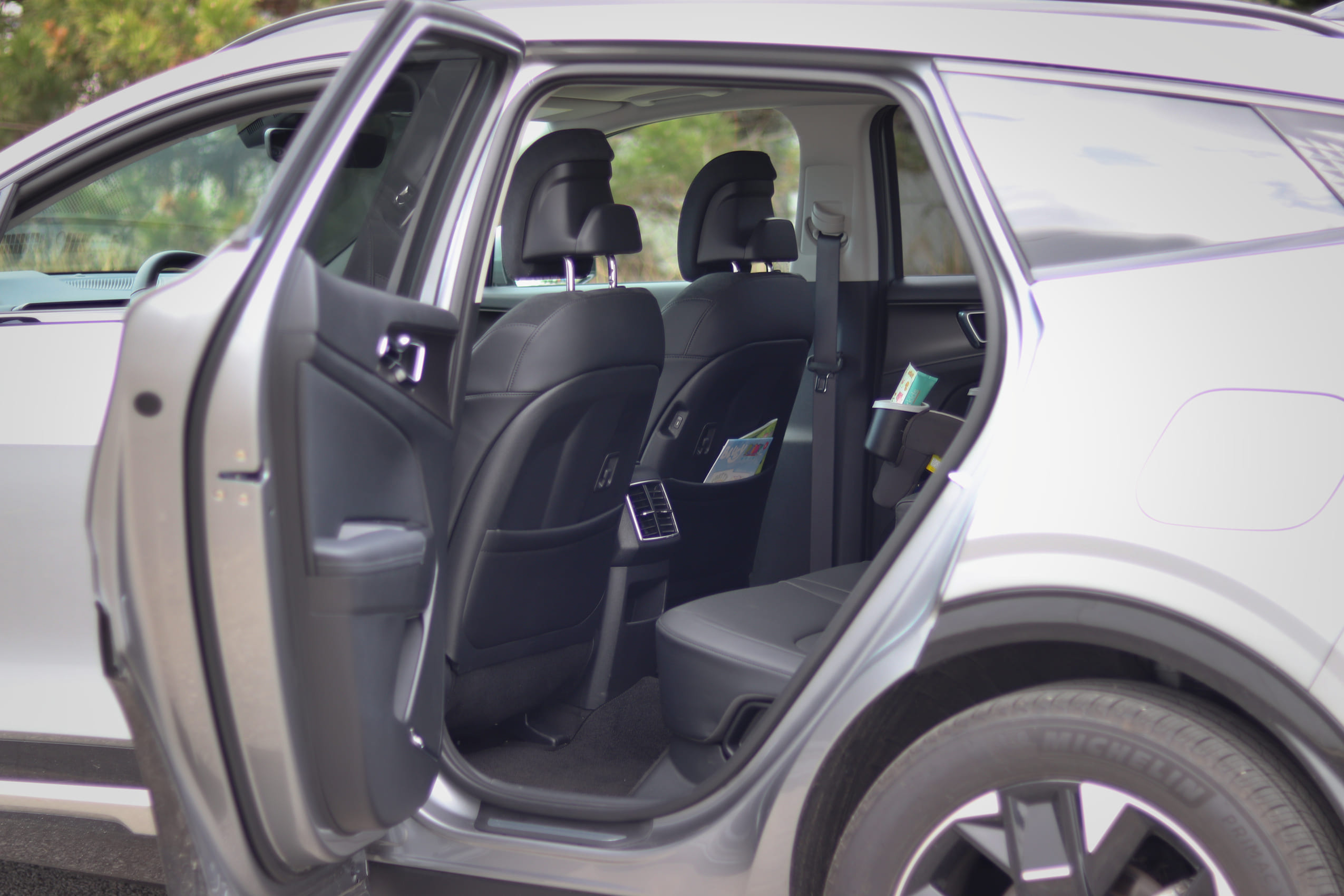
Then there is the matter of passenger space. In the back, legroom is downright limousine-like. Up front, however, the packaging engineers hit a snag. Thanks to the sweeping roofline and the mandatory intrusion of the panoramic sunroof mechanism, front headroom is surprisingly tight. If you’re anywhere north of six feet tall, you might find your hair intimately brushing the headliner, forcing you to drop the seat bottom lower than you might normally prefer.
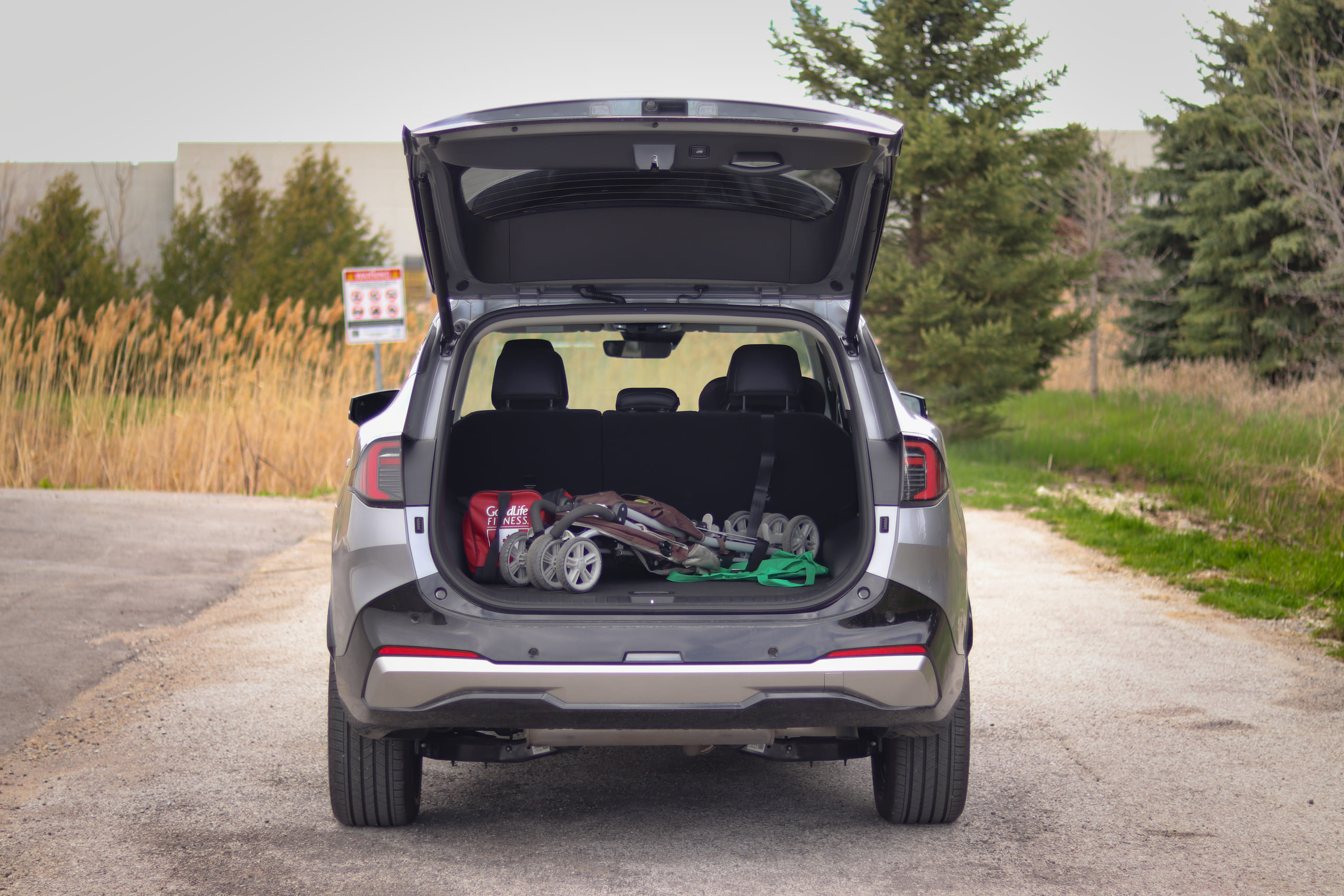
Pop the rear tailgate, and you’re confronted with the ultimate compromise of the plug-in hybrid lifestyle. In a standard gas or traditional hybrid Sportage, you get a cavernous, class-leading cargo hold. But because the PHEV has to haul around a vastly larger lithium-ion battery pack, that battery eats directly into the floor. As a result, cargo room drops from the standard hybrid’s 1,118 liters down to 977 liters with the rear seats up. Fold those seats flat, and the penalty continues, yielding 1,855 liters compared to the non-plug-in’s grand total of over 2,080 liters. It is still a highly usable, square space that will easily swallow a week’s worth of family gear, but it stands as a stark physical reminder that those miles of pure electric commuting aren’t entirely free.
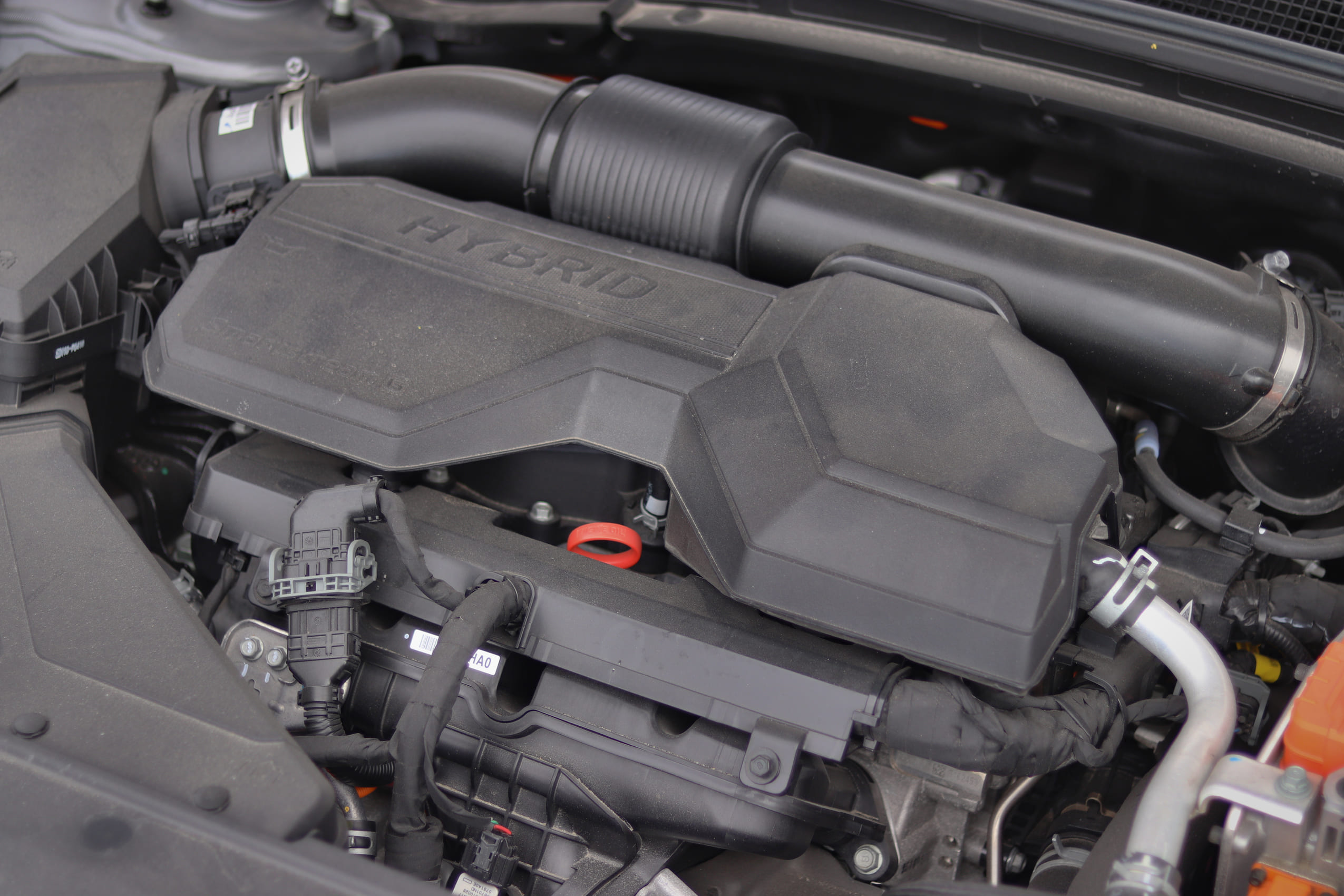
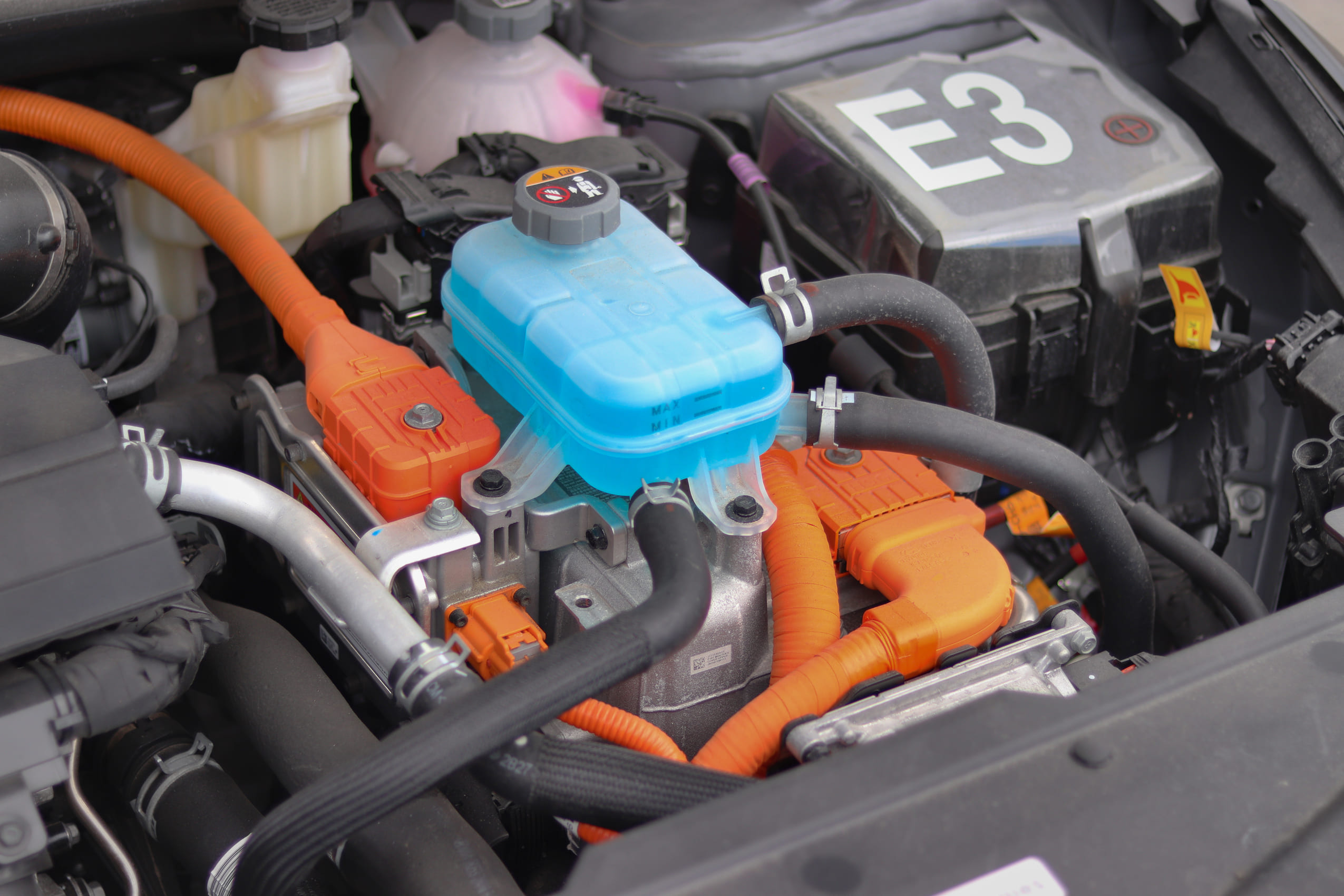
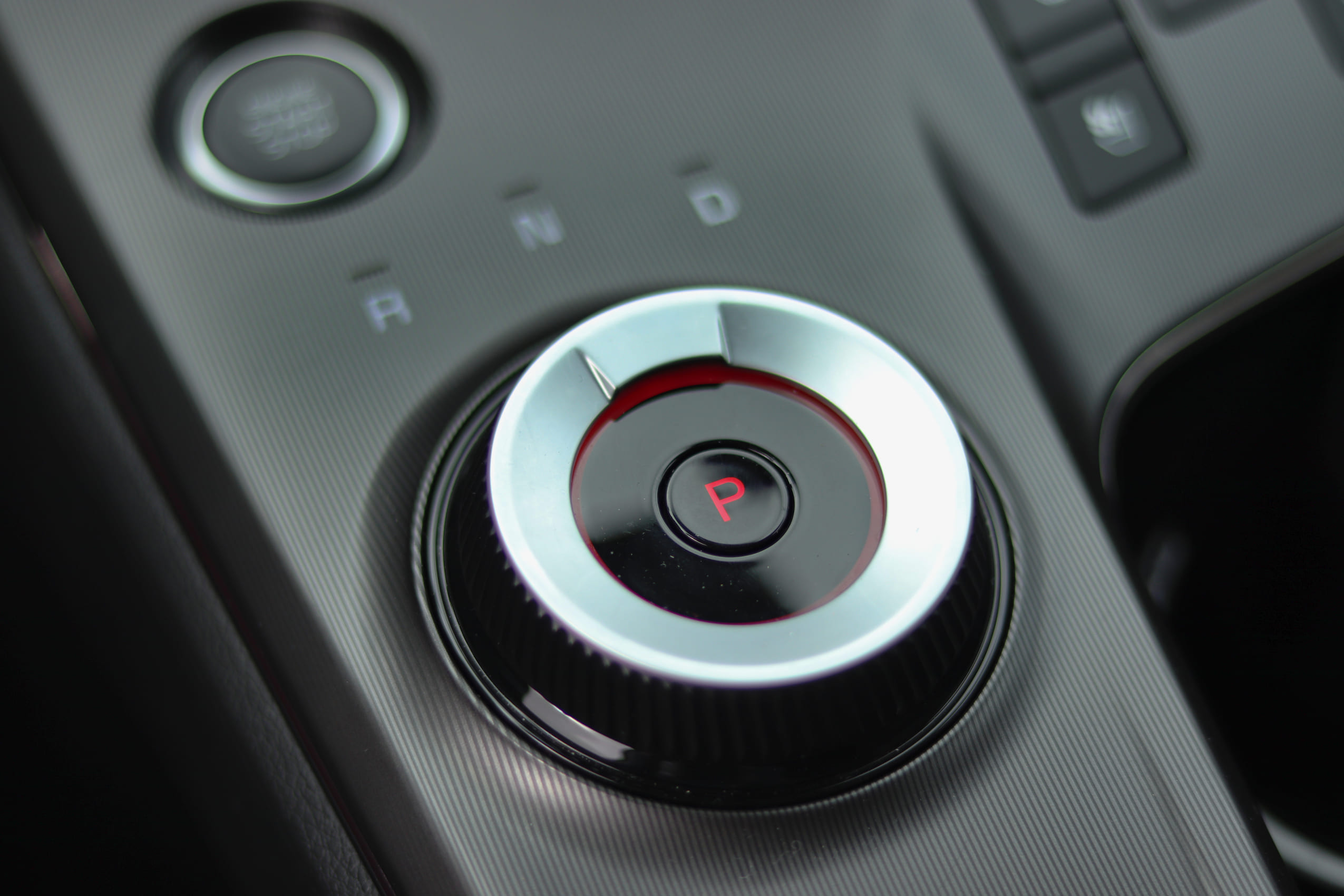
Now, let’s peel back the skin and nerd out on the greasy bits, because this is where Kia pulls off its most impressive engineering sleight of hand. Under the hood sits a tiny, 1.6-liter turbocharged inline-four gasoline engine. On its own, it’s a modest little thing, but Kia has sandwiched a permanent magnet synchronous electric motor right between the engine and the transmission. That electric motor chucks out a stout 97 horsepower all by itself, and when you combine the two forces, the system belts out a grand total of 268 horsepower and 271 lb-ft of torque.
Feeding that electric motor is a 13.8 kWh lithium-ion polymer battery pack. To avoid turning the passenger cabin into a cramped penalty box, the engineers shoved the battery low down beneath the rear floor. In the real world, that chemical briefcase gives you an official electric-only range of up to 55 kilometers—perfectly calculated to swallow the average daily commute without ever waking up the internal combustion engine.
When you do run out of electrons, you plug it into a standard Level 2 home charger via the J1772 port. Because it’s a plug-in hybrid and not a full-bore EV, you don’t get DC fast-charging capability. Instead, the onboard charger tops out at a speed that can replenish the battery from dead to 100% in just under two and a half hours—meaning you plug it in when you get home from work, and it’s fully juiced long before you even think about dinner.
But here is the absolute best part for anyone who loves mechanical honesty: the transmission. While almost every other manufacturer in this segment punishes your eardrums with an e-CVT that makes the engine drone like a dying vacuum cleaner when you step on the gas, Kia bolted up a proper, honest-to-God 6-speed torque-converter automatic. It’s not as smooth as an e-CVT without a doubt, but it feels much more mechanical and engaging.
And that brings us to how it actually drives all four wheels. Most modern plug-in crossovers use a cheap, disconnected “e-AWD” setup, where the gas engine drives the front wheels and a completely separate, weak little electric motor spins the rears. Not here. Kia used a traditional, purely mechanical all-wheel-drive system. The gas engine, the electric motor, or both combined send their power straight through that 6-speed gearbox and down a physical driveshaft to a center-locking differential. This means that whether you are running in pure EV mode or burning gasoline, you have real, permanent mechanical all-wheel traction pushing you through the snow—making it a genuinely cohesive, dynamically resolved drivetrain that refuses to compromise on actual capability.
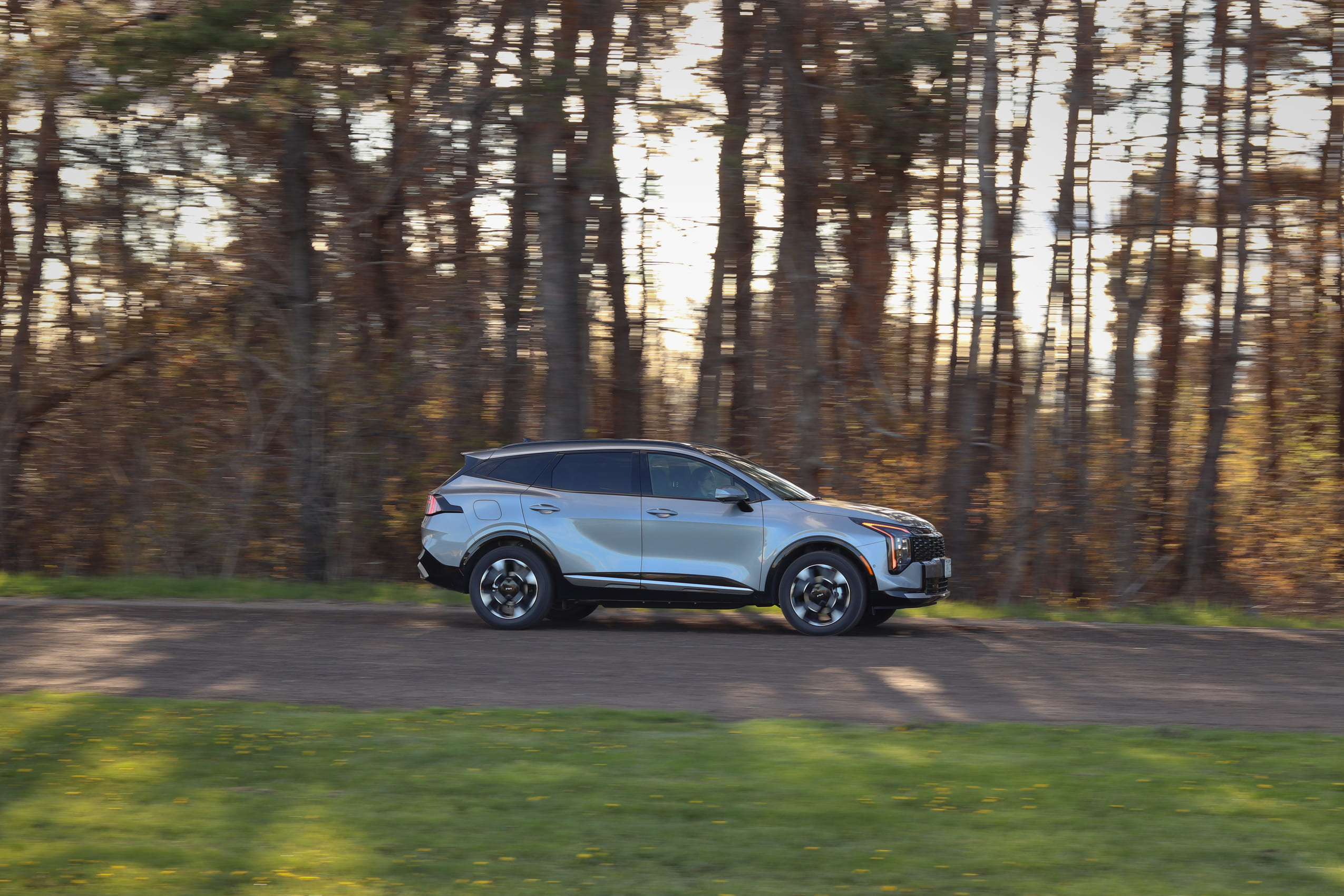
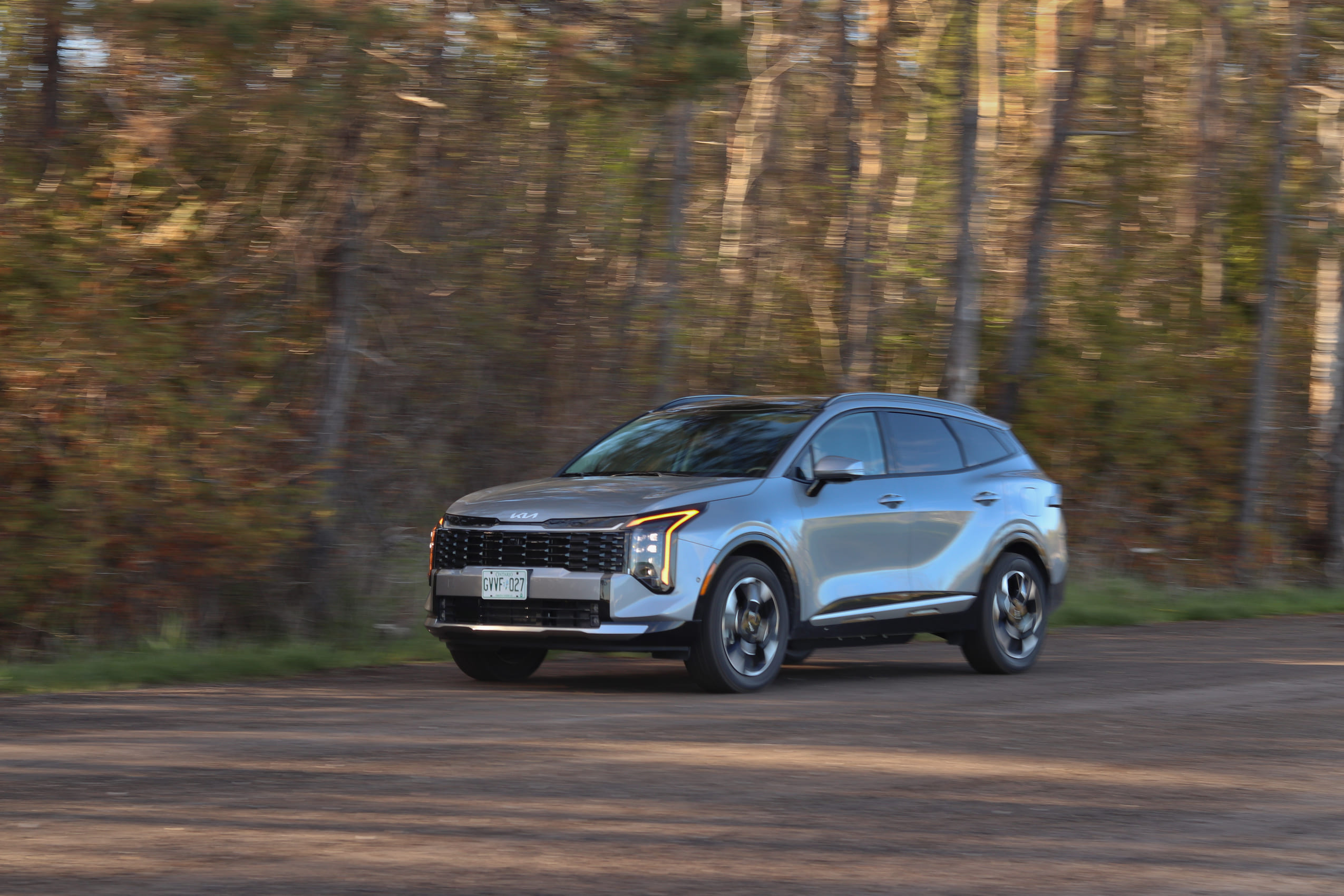
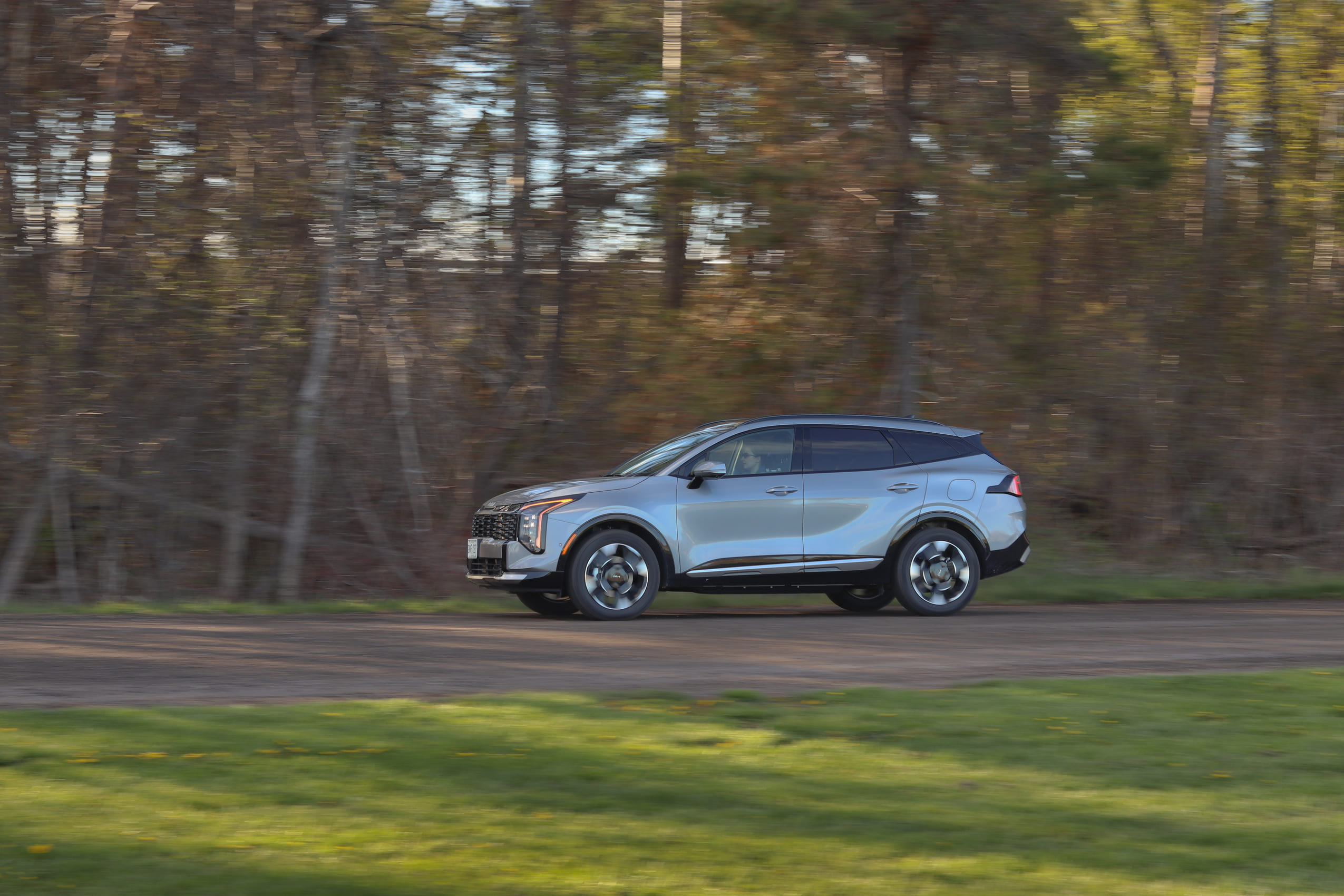
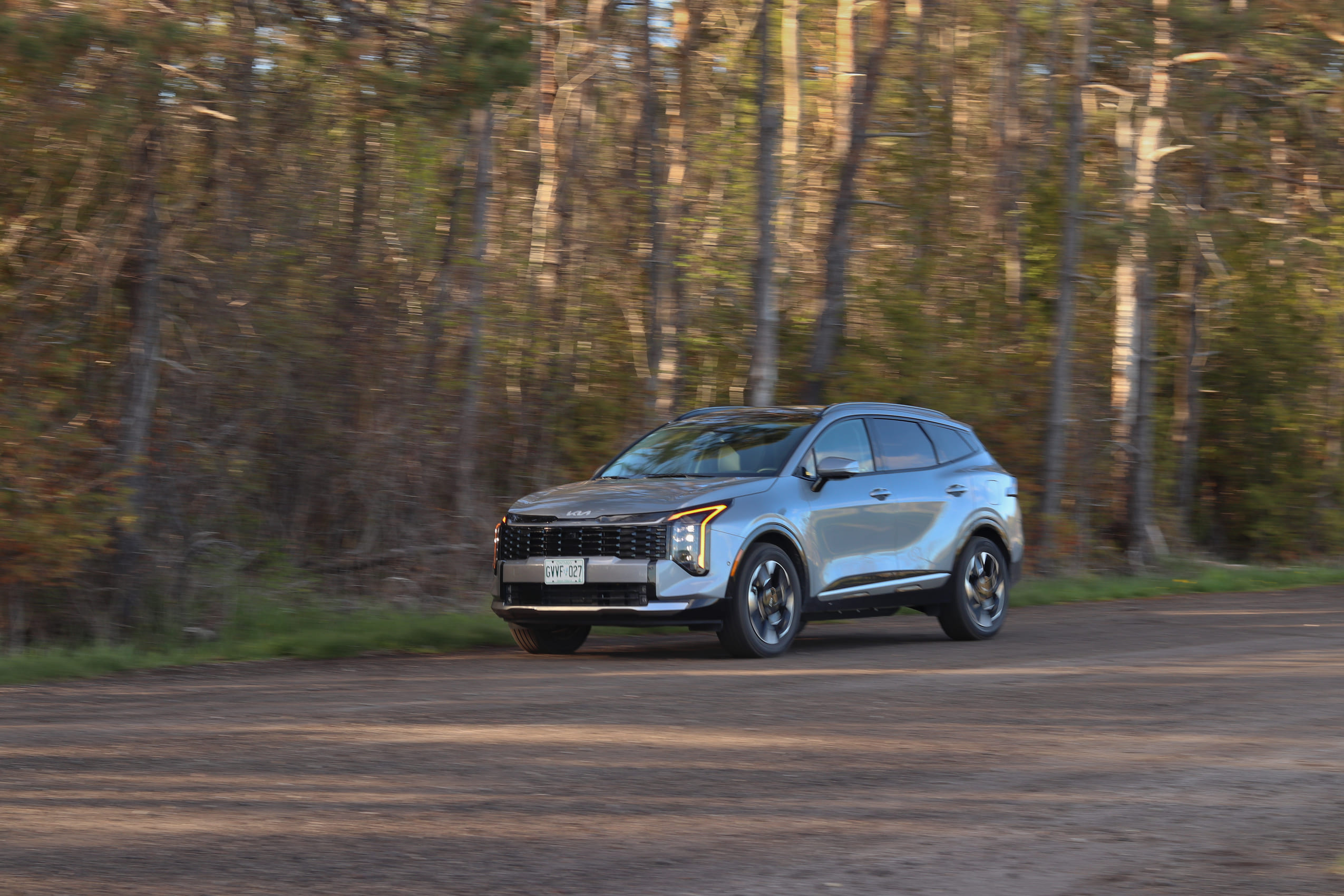
On the road, the Sportage PHEV behaves exactly like a car engineered by people who know that enthusiast driving dynamics are dead for the masses, but refinement doesn’t have to be. Because the electric motor lives right inside the transmission housing, the torque fill is immediate. Step on the gas, and you don’t get that classic, delayed turbo-lag yawn; instead, the electric motor punches you forward instantly while the engine spools up in the background. It is a seamless, fluid dance that makes city driving effortlessly punchy. And thanks to those newly re-valved dampers Kia threw at the refresh, the chassis settles down over potholes and mid-corner bumps with a solid, buttoned-down composure that feels shockingly premium.
But don’t mistake that composure for a sports sedan. Push it hard into a tight bend, and the laws of physics will politely remind you that you are piloting a heavy, battery-laden crossover. The Sportage’s steering is accurate and weighs up decently in Sport mode, but it communicates absolutely nothing about what the front tires are doing. There is a noticeable amount of body lean, and the extra weight of that floor-mounted battery pack means the suspension can occasionally crash over sharp, deep imperfections. It’s a car designed to glide effortlessly through the daily grind, not to carver canyons—and honestly, for a family commuter, that is exactly what it should be doing.
When you add it all up, the verdict is glaringly clear: Kia has built a supremely competent, deeply rational vehicle for a deeply irrational world with the new Sportage. It might lose a few liters of cargo space to its massive battery, and the front headroom is a bit tight for the vertically gifted, but those are minor tax levies on a vehicle that grants you 55 kilometers of pure electric commuting without a single drop of gasoline. By pairing a real mechanical all-wheel-drive system with a proper 6-speed automatic transmission, Kia has bypassed the droning, compromised pitfalls of its competitors. It proves that you don’t need to drive a boring, soulless appliance just to be sensible—and that makes it an absolute triumph in its class.
2026 Kia Sportage PHEV — Specifications
| Engine | 1.6L Turbocharged Inline-4 + Permanent Magnet Synchronous Motor (13.8 kWh Battery) |
| Transmission & Drivetrain | 6-speed Torque-Converter Automatic / Mechanical AWD with Center-Locking Diff |
| Max power (combined) | 268 hp |
| Max torque (combined) | 271 lb-ft |
| 0-100 km/h | 7.9 seconds |
| Curb Weight | 1,950 kg (4,300 lbs) |
| Fuel Economy (observed) | 6.4 L / 100 km (Hybrid mode) / 55 km pure EV range |
| Price (starting) | $42,995 (MSRP) |
| Website: | kia.ca |
2026 Suzuki GSX-8R: The Middleweight Sport Bike Formula Done Right
The motorcycle world has spent the last decade trapped in a profoundly stupid dick-measuring contest, obsessed with building 200-horsepower, track-focused…


British Precision vs. Italian Violence: 2026 Ducati Streetfighter V2S vs.
Human beings are inherently absurd creatures, but nowhere is that absurdity more evident than in our willingness to strap our…
2026 Honda CBR1000RR-R Fireblade SP Review: Pure Mechanical Violence
The 2026 Honda CBR1000RR-R Fireblade SP is not a motorcycle; it is a clinical, unrelenting exercise in absolute mechanical insanity…

Sharknose Supremacy: Driving the 2026 Harley-Davidson Road Glide
Let’s get one thing straight: the 2026 Harley-Davidson Road Glide shouldn’t make sense. It’s a rolling, 800-pound contradiction—a massive, frame-mounted…

The Anti-ADV Hero: Why the 2026 Honda Transalp is the
Leave it to Honda to look at the entire, absurdly over-engineered, $25,000 middleweight adventure segment—a market flooded with hyper-focused rally…

2026 Suzuki V-Strom 800DE: No V-Twin, No Problem
Words are supposed to mean things. The “V” in V-6 means a V-layout, and for two decades, the “V” in…