While the rest of the world has collectively decided that “luxury” is just a screen the size of a billboard and enough gloss-black plastic to blind a telescope, Mazda is over in the corner, quietly obsessed with the way a seat-back supports your spine. The 2026 Mazda 3 remains the industry’s most beautiful outlier—a car designed by people who clearly enjoy driving for people who still bother to do it. Whether you opt for the Turbo AWD, which uses its torque to impersonate a budget Golf R, or the naturally aspirated manual FWD, which is a masterclass in mechanical honesty, the result is the same. It’s a reminder that a torsion beam rear end isn’t a death sentence if the engineers actually care, and that true premium feel comes from how a steering wheel weights up, not how many ambient lighting colors you can choose from a sub-menu.
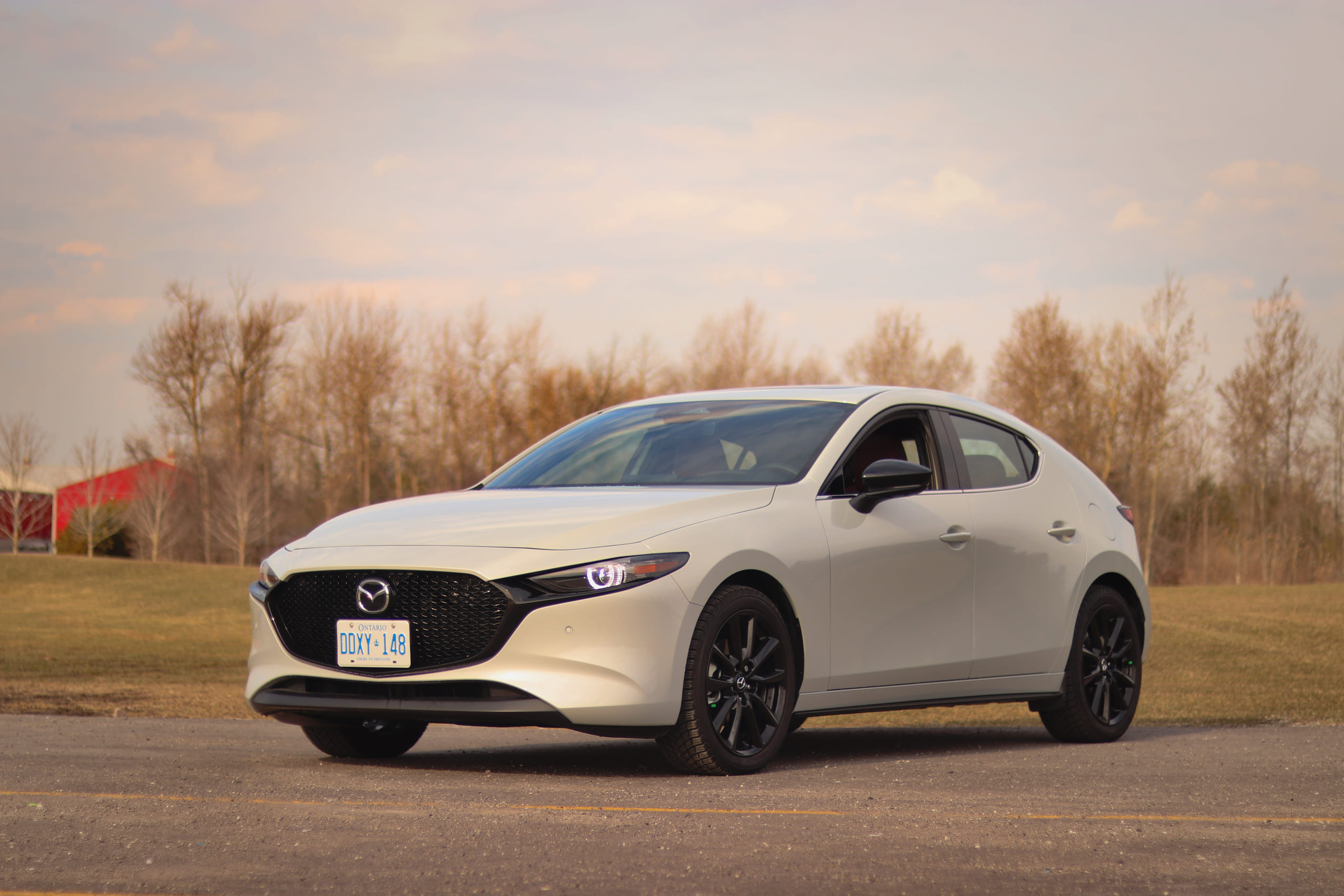
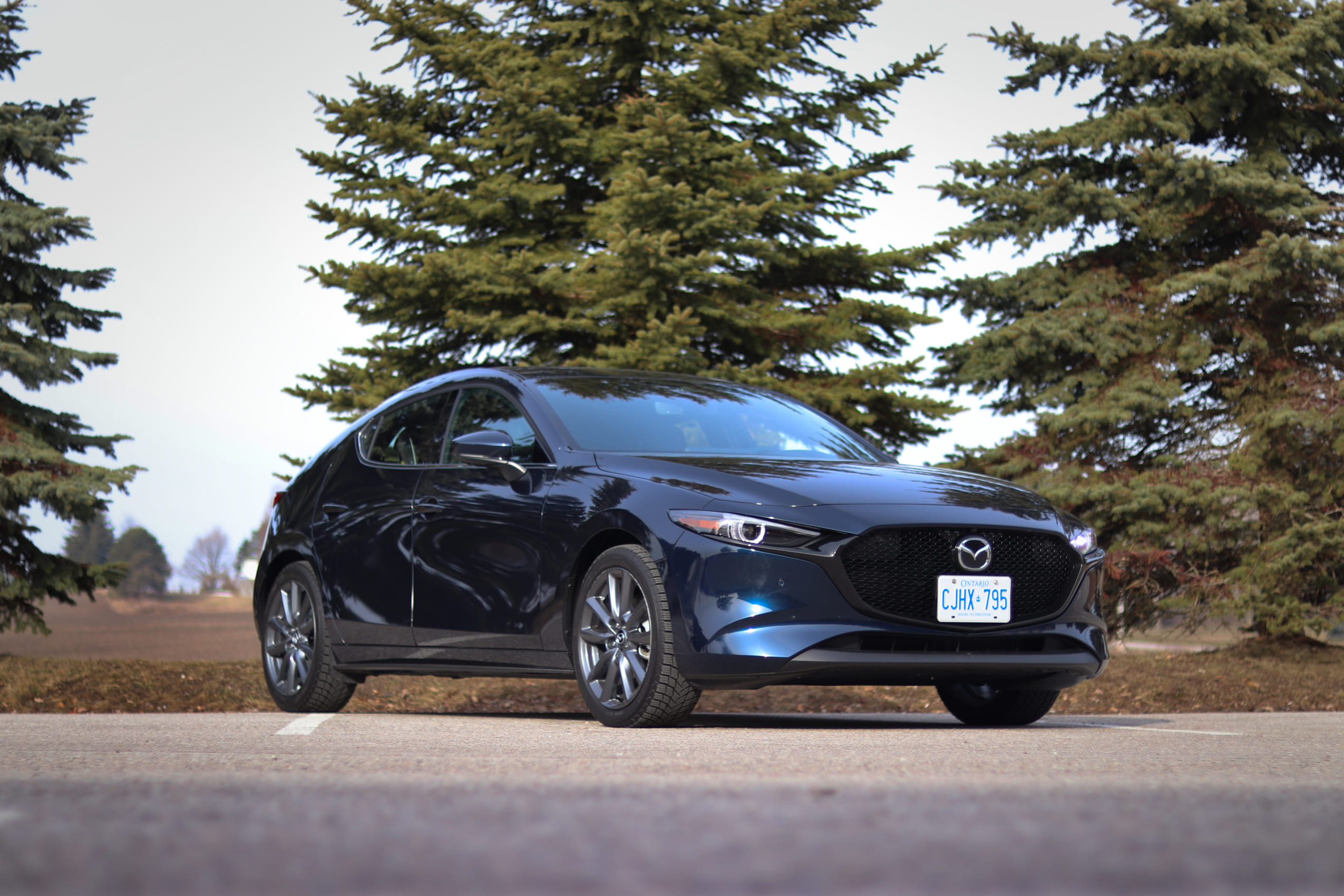
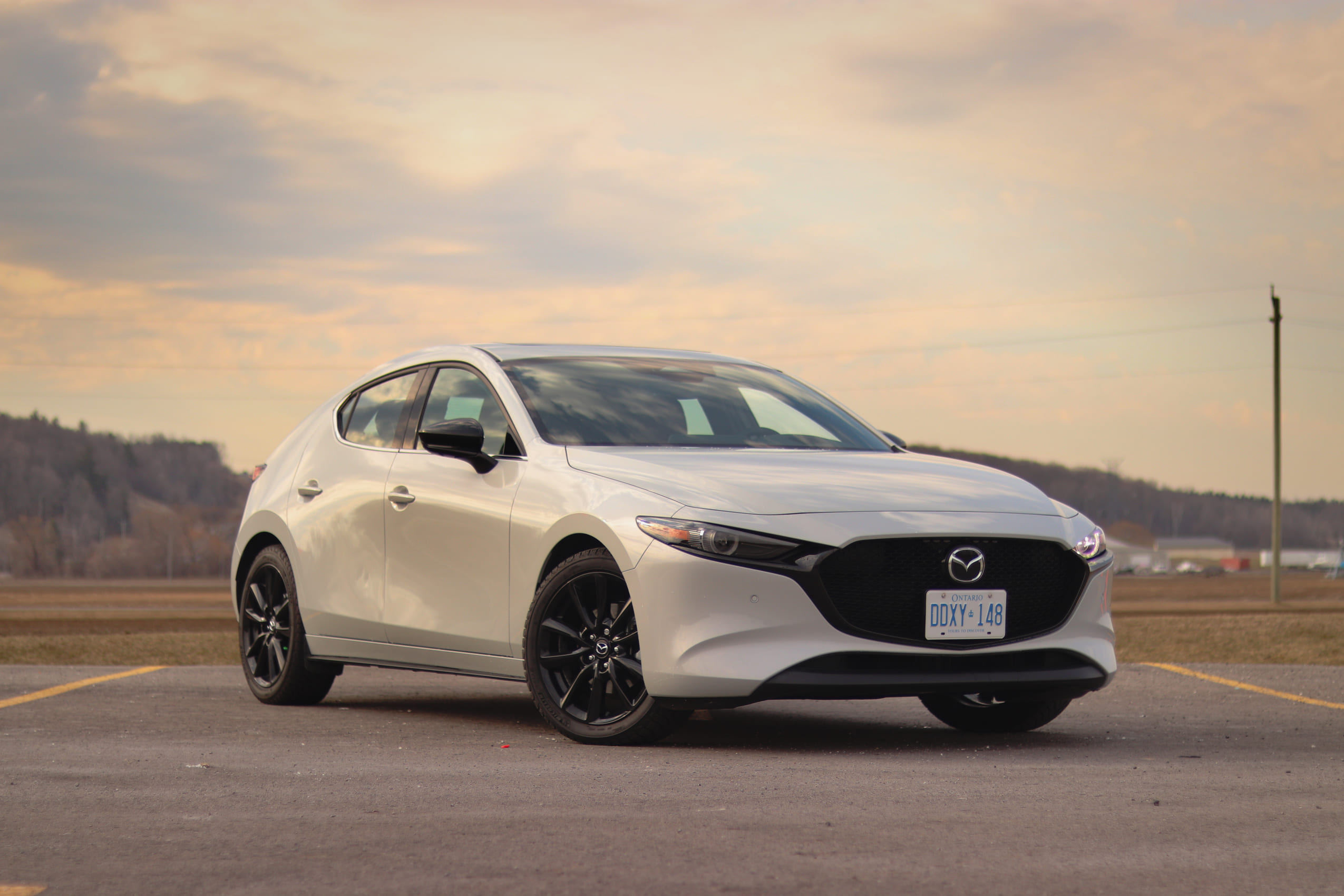
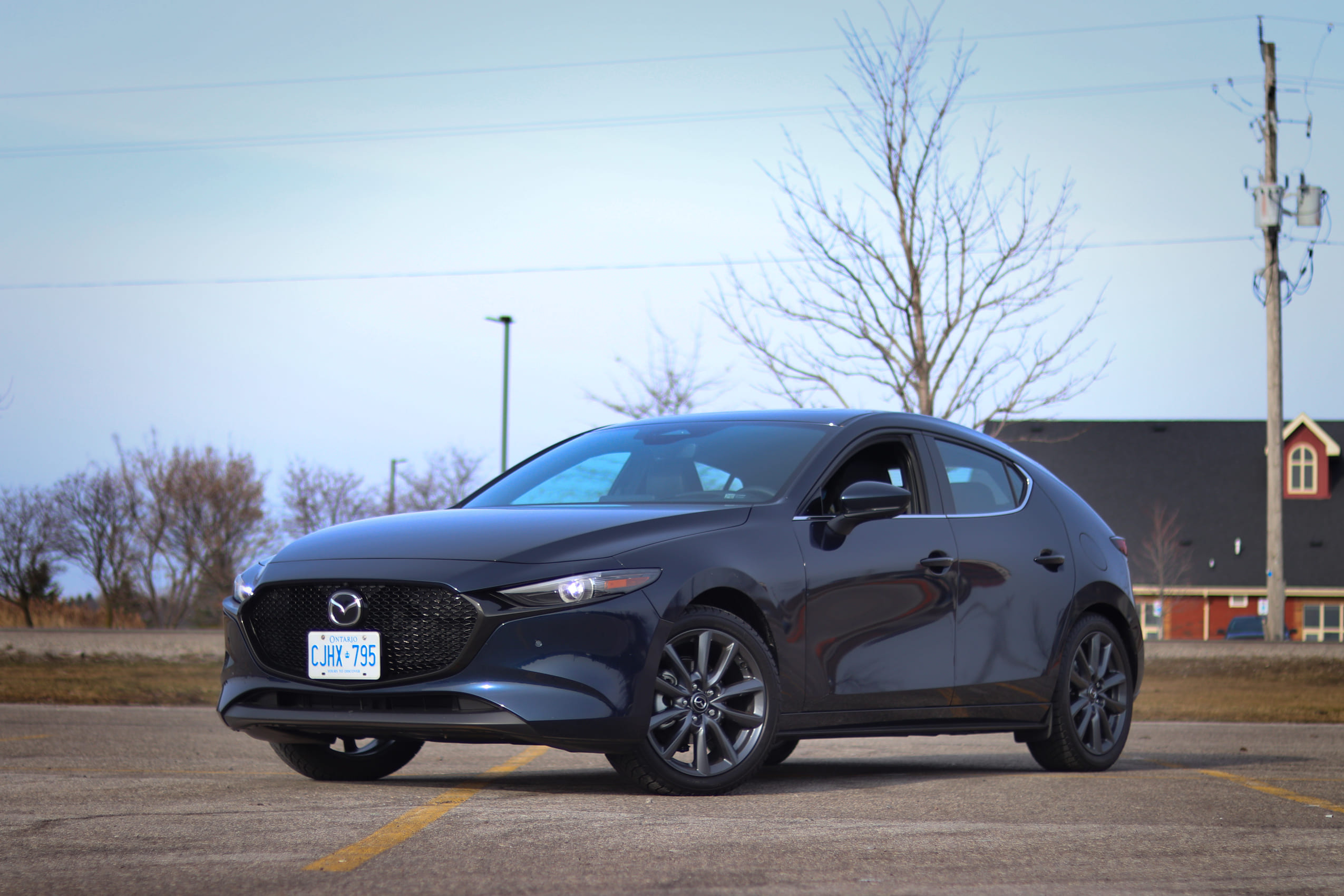
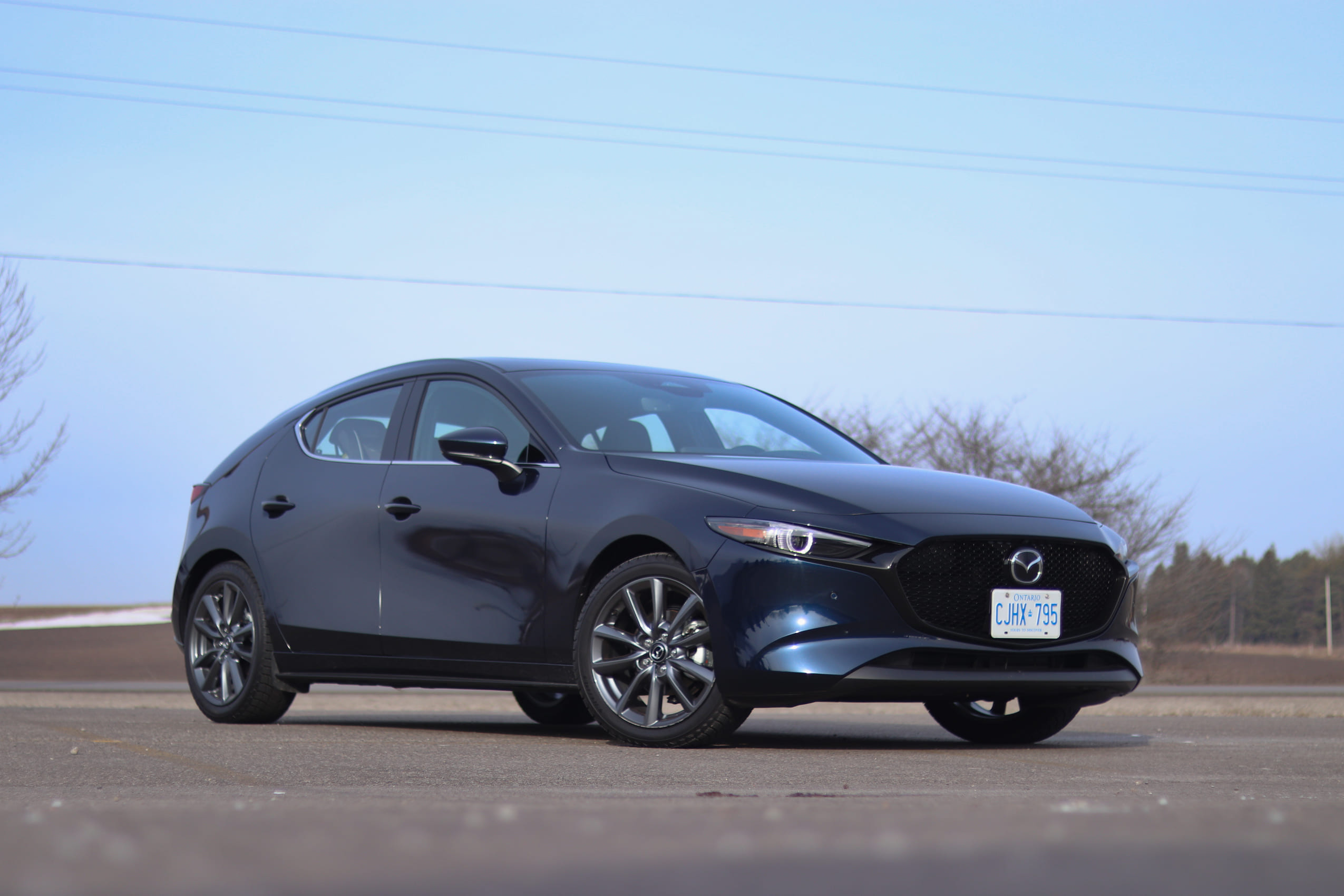
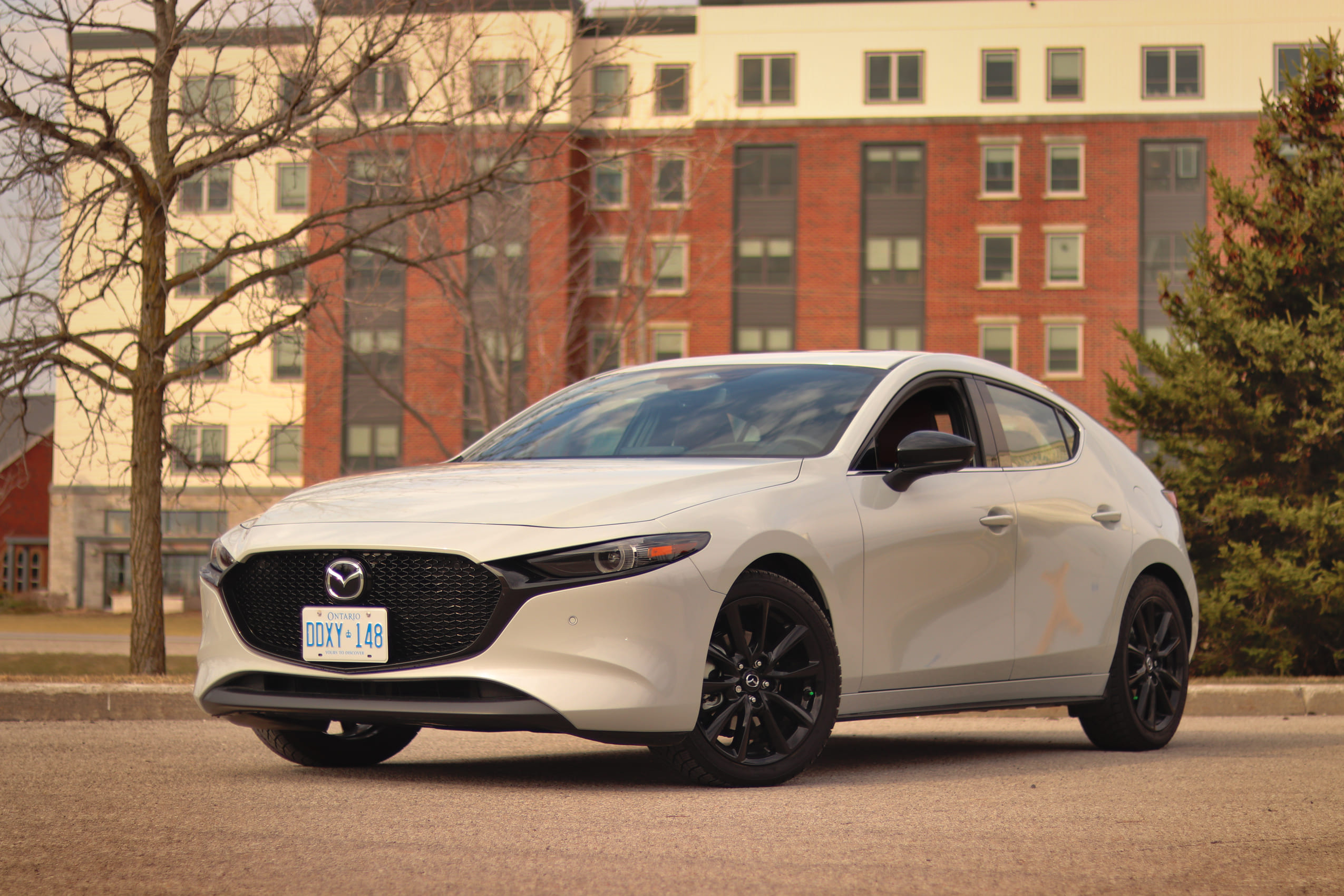
Up front, the Mazda 3 continues to pull off the “expensive Italian concept car” look for roughly the price of a mid-grade riding lawnmower. It’s all about that massive, gaping grille that somehow avoids looking like a desperate cry for attention, flanked by headlights so slim and focused they look like they’re judging your apex choice. There isn’t a single fake vent or jagged “sporty” plastic bit in sight; instead, Mazda’s designers used light itself as a styling tool, curving the metal so the reflections do all the heavy lifting. It’s clean, sophisticated, and makes every other car in the supermarket parking lot look like it was designed by someone with a ruler and a grudge.
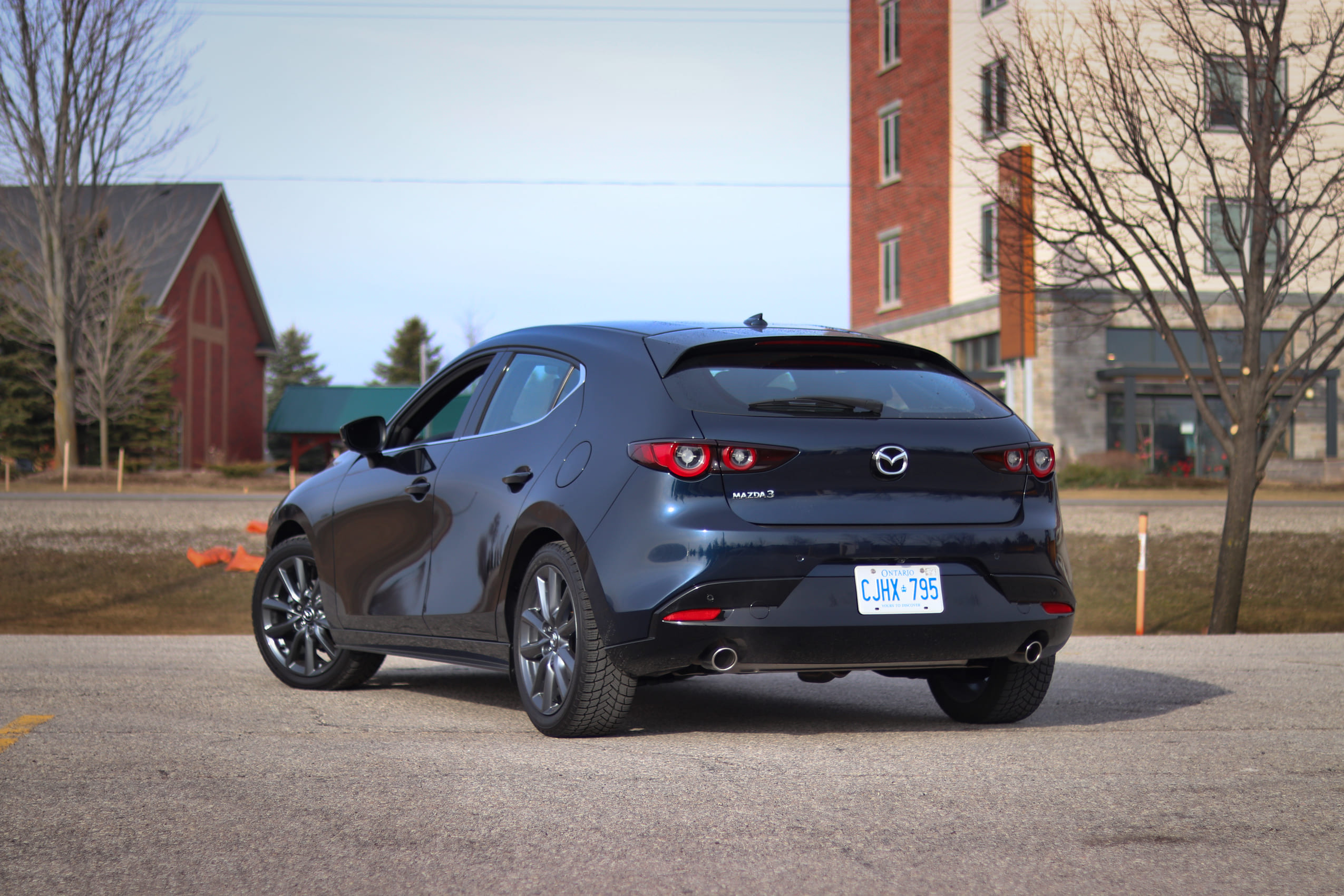
The side profile is where things get… brave. In an era where every hatchback is trying to look like a shrunken SUV, the Mazda 3 stays low, sleek, and exceptionally long-hooded. But then you hit that C-pillar. It is a massive, uninterrupted slab of sheet metal that completely defies the modern trend of “floating roofs” and extra little windows. It’s the automotive equivalent of a thick neck; some people see a sleek, powerful silhouette that belongs in a museum, while others see a blind spot the size of a tectonic plate. It shouldn’t work, and yet, as the light washes over those surfacing curves without a single character line to break the flow, you realize Mazda is playing a much higher-level game than the rest of the industry.
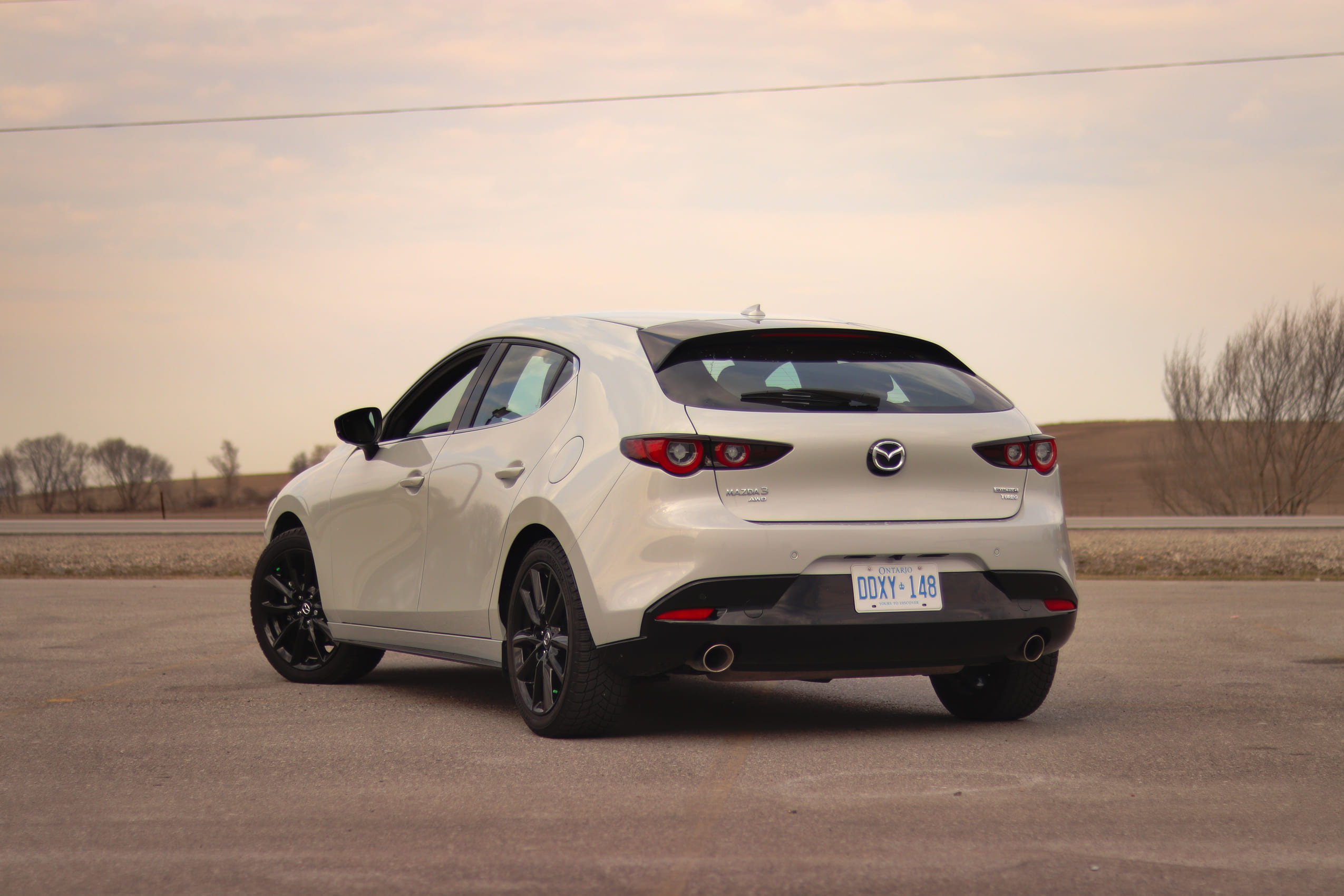
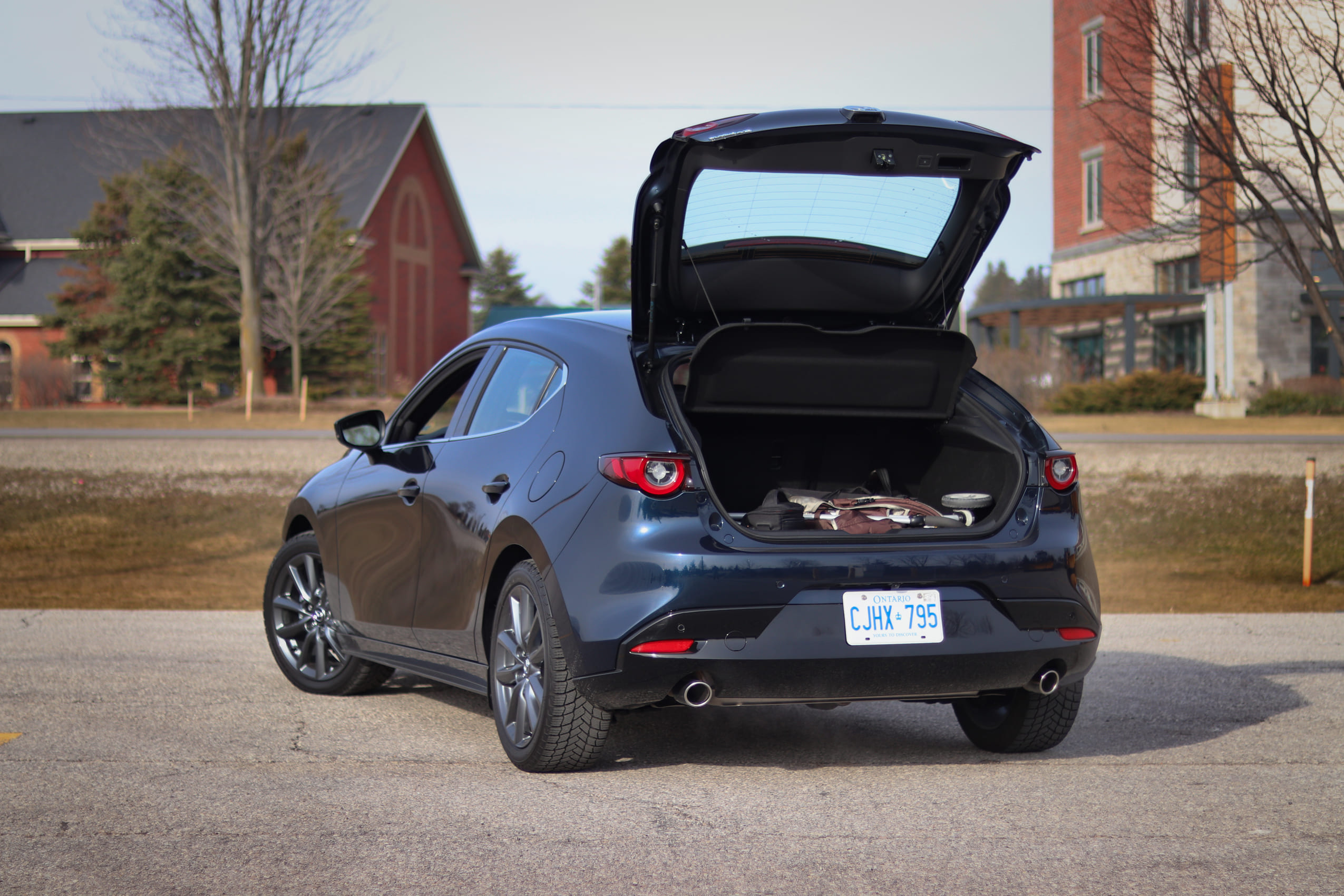
At the back, the Mazda 3 finishes with a rounded, muscular squat that makes it look like it’s actually made of muscle rather than stamped steel. The circular LED taillight signatures are a clear nod to the Ferraris of old, giving it a premium, high-performance visual punch that the car’s actual horsepower figures might struggle to back up. The dual exhaust tips are real—praise be—and the hatch sits nestled between those bulging rear haunches like a tightly coiled spring. It’s a design that has aged like a fine wine in a cellar full of open milk cartons; even years into its life cycle, it still looks more like a handcrafted sculpture than a mass-produced commuter.
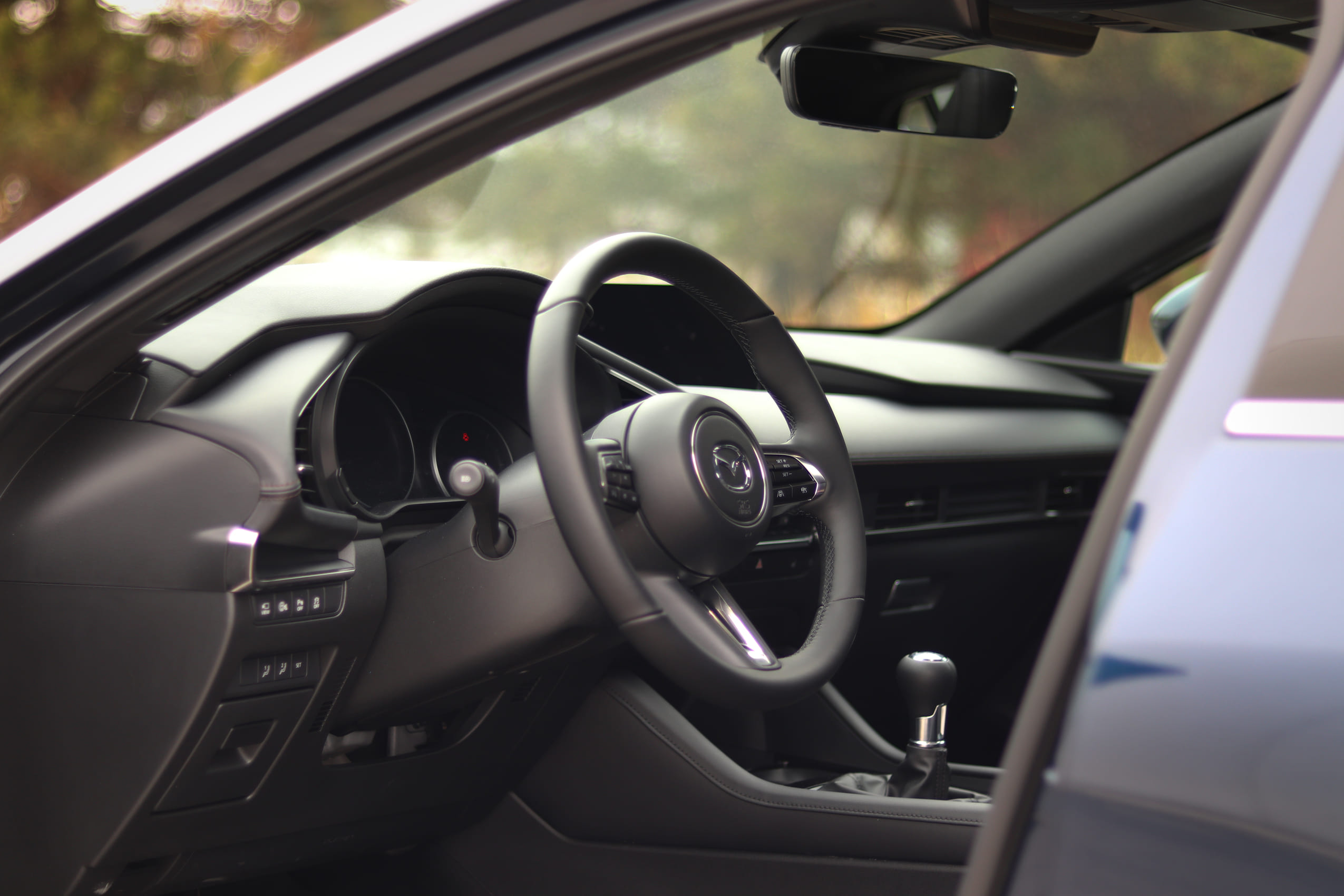
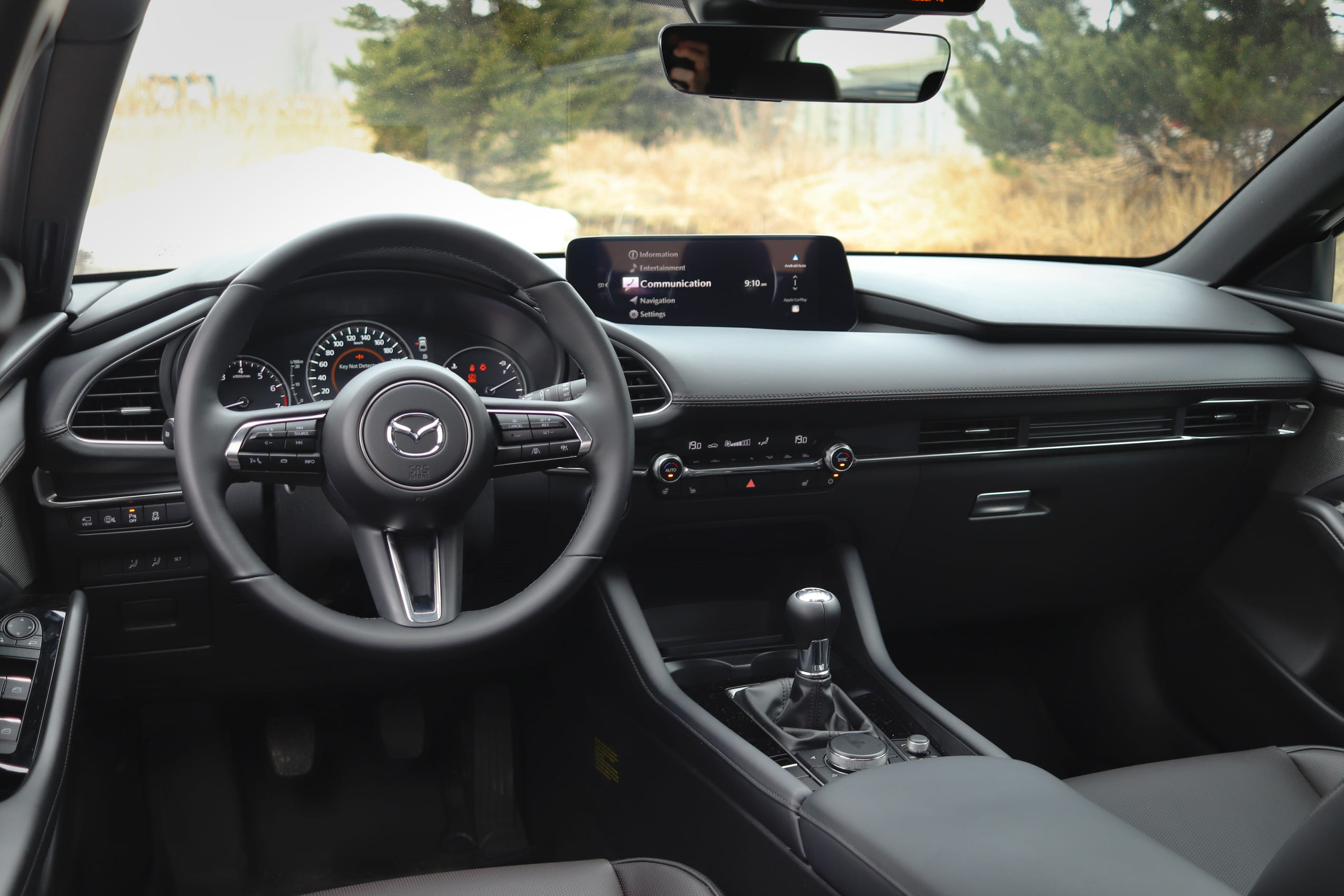
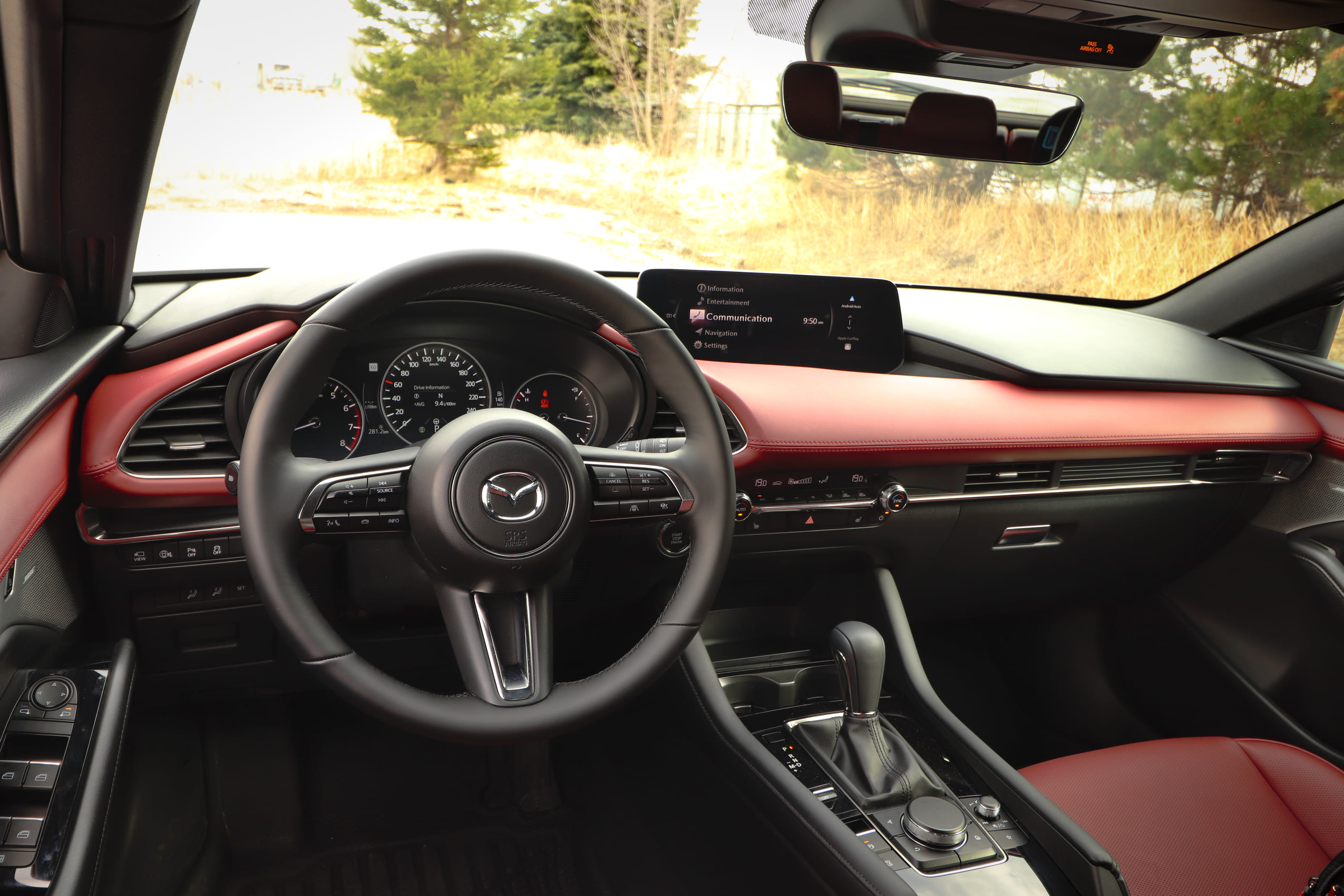
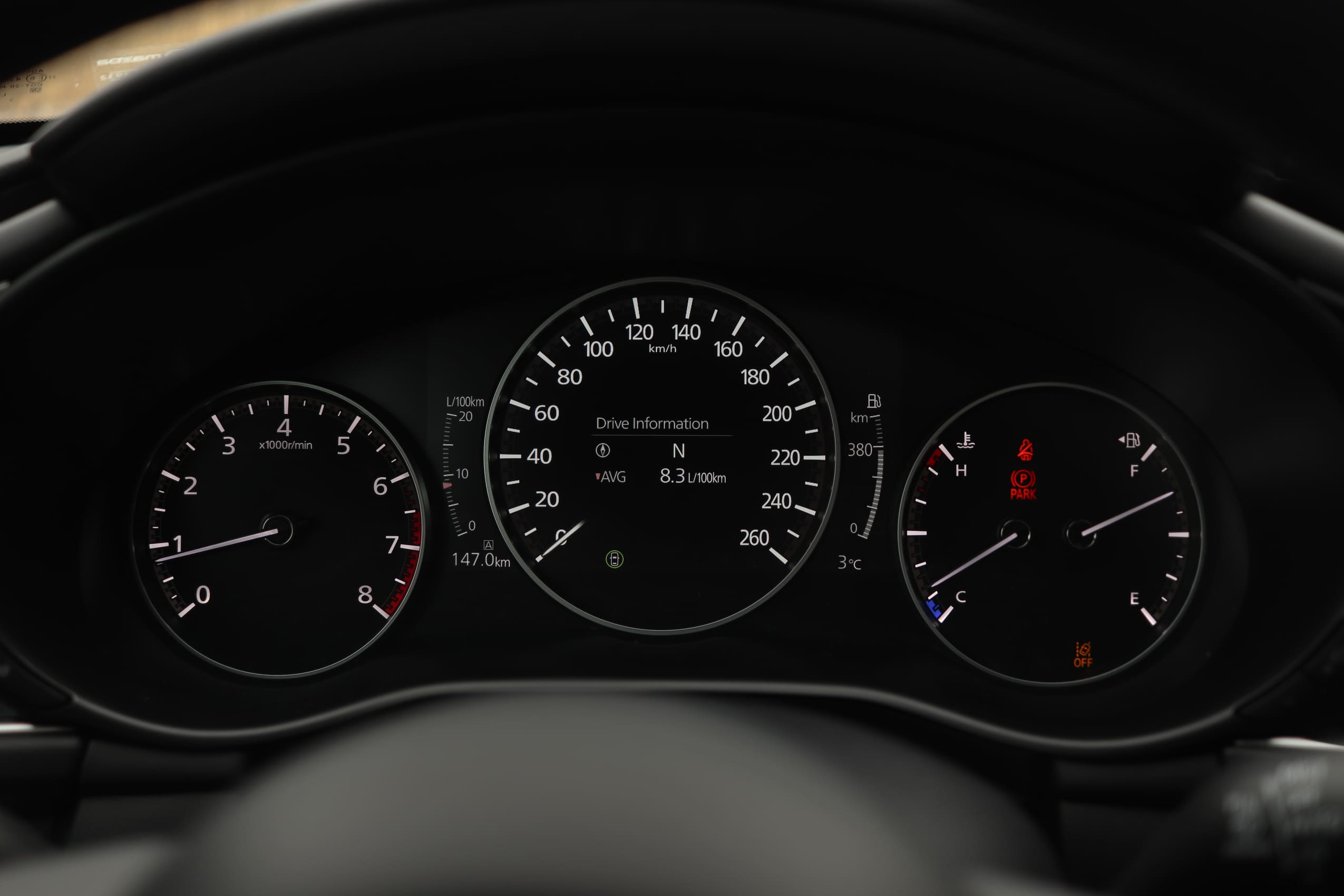
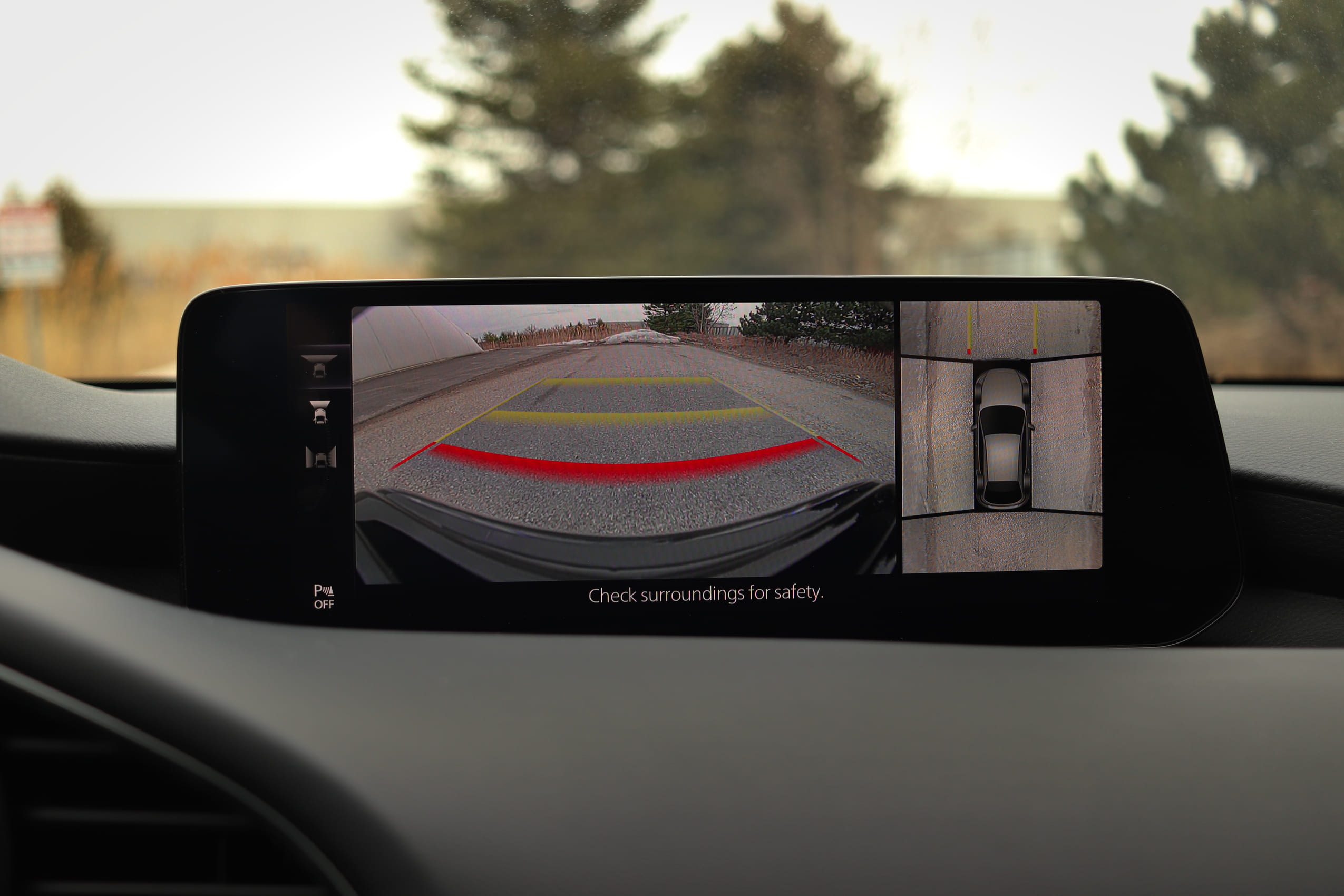
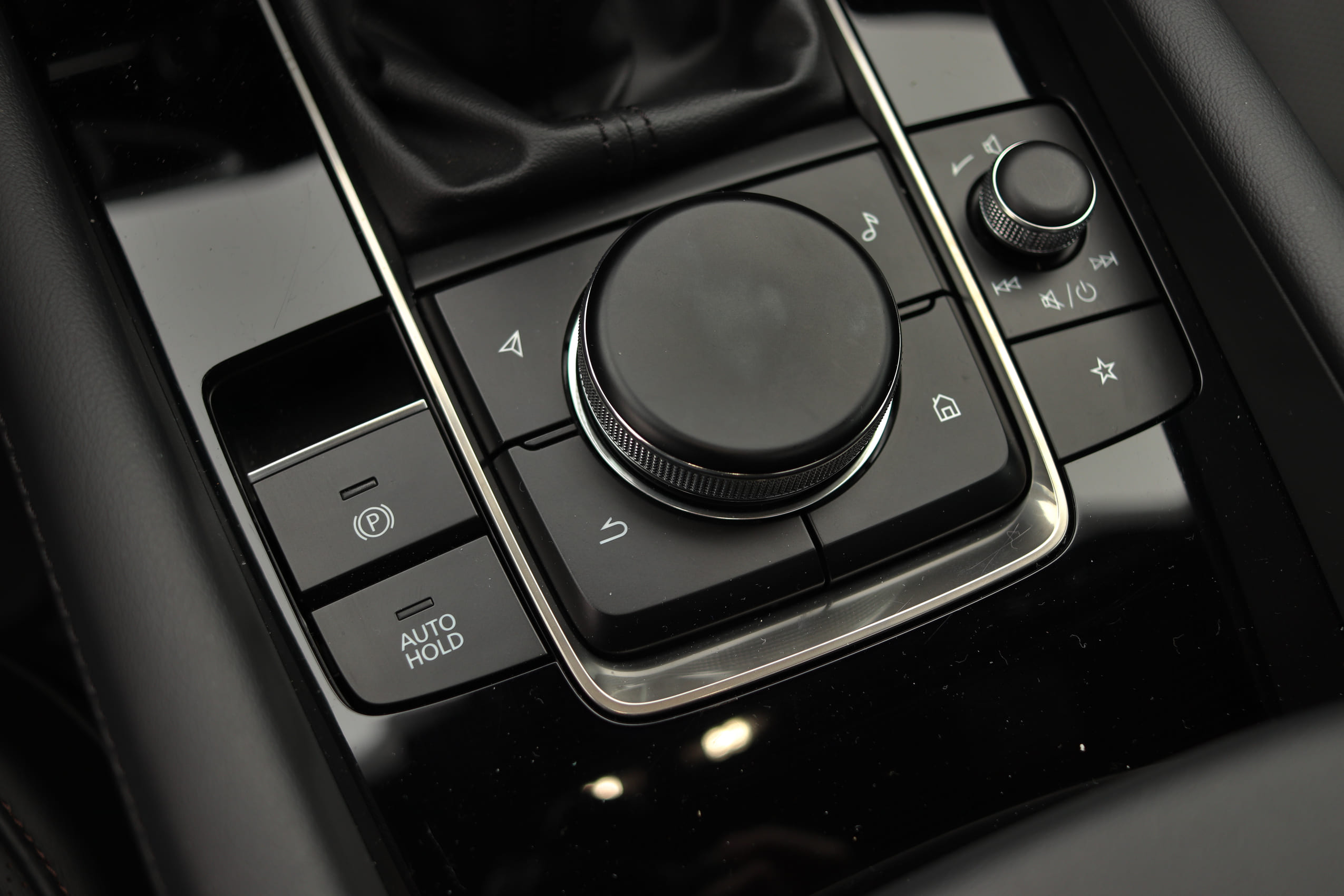
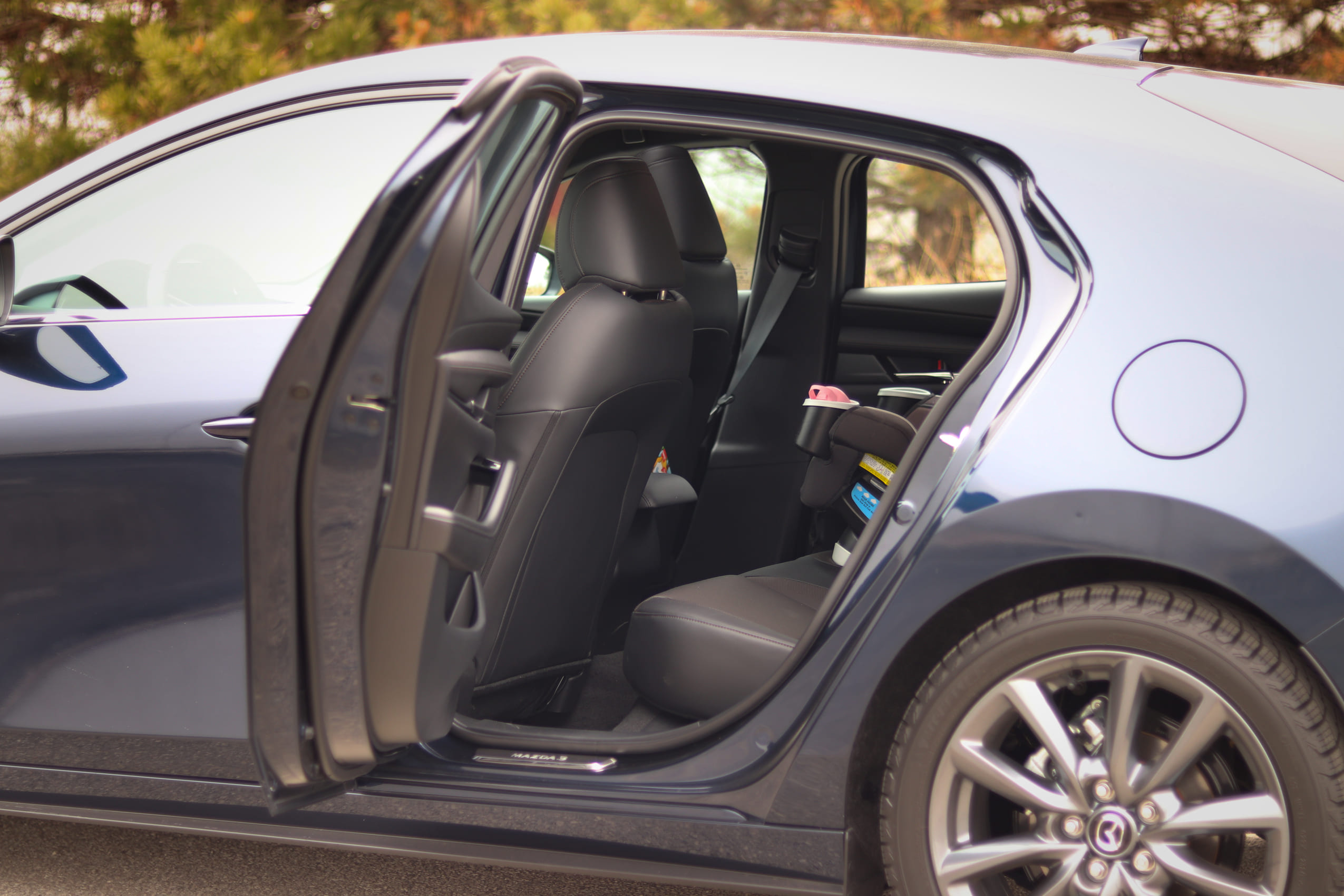
Inside, the Mazda 3’s dashboard is a glorious, minimalist middle finger to the “iPad-glued-to-a-vent” school of design. It’s a driver-centric sweep of soft-touch materials and actual, honest-to-God physical buttons that click with the mechanical precision of a high-end Leica. If you opt for the red leather, the cabin transforms from a somber German vault into something that feels suspiciously like a budget 812 Superfast. The build quality doesn’t just “punch above its weight”—it enters a different ring entirely, making the interiors of some entry-level BMWs look like they were outsourced to a Tupperware factory.
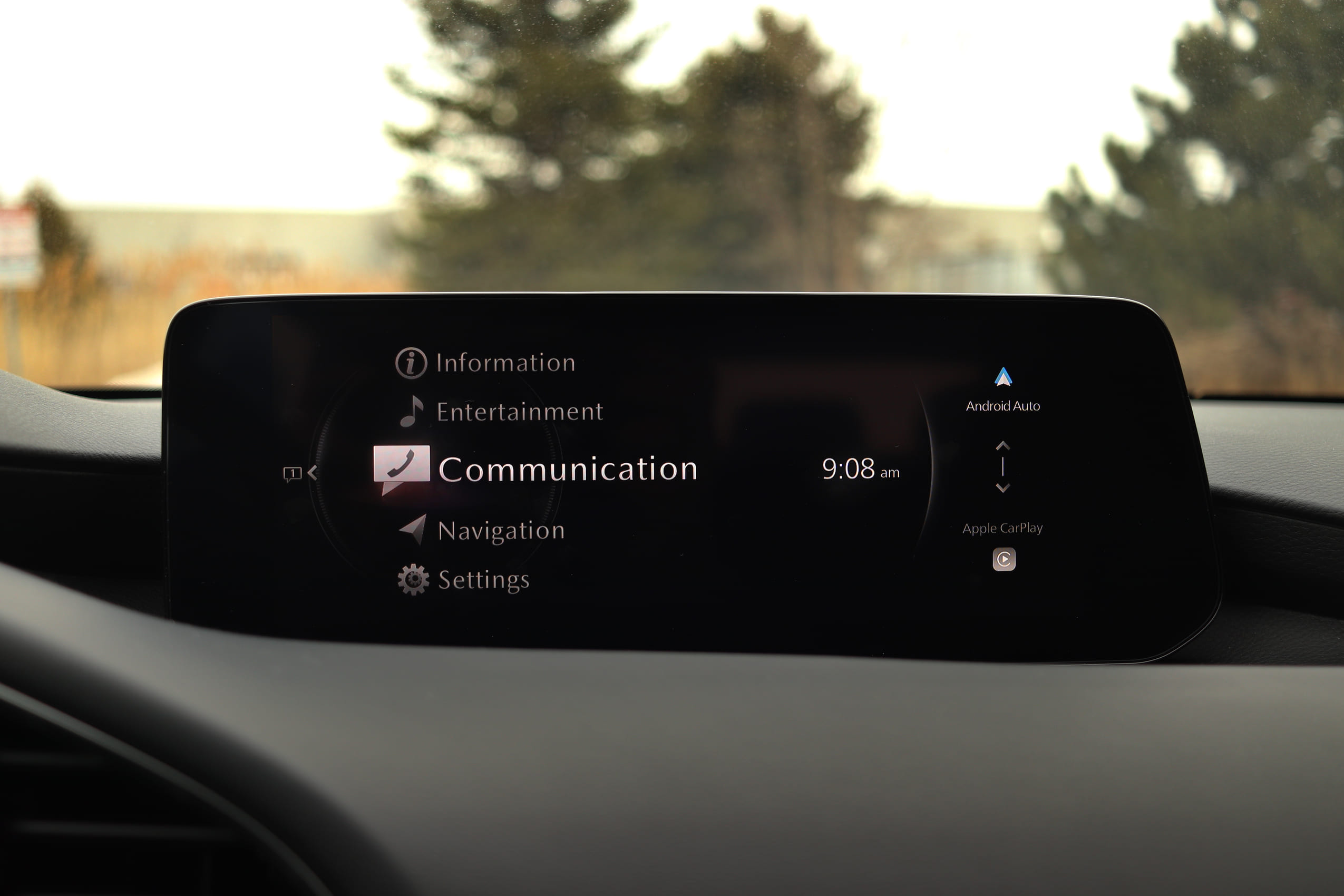
The infotainment screen is nestled deep into the dash, tucked away from the driver’s direct line of sight because Mazda thinks you should be looking at the road, not your Spotify playlist. There’s no touchscreen here; you use a knurled rotary controller that feels expensive enough to belong on a safe. It’s a sophisticated, tactile experience that prioritizes muscle memory over hunting through sub-menus. It’s refreshing, elegant, and entirely focused on the act of operating a motor vehicle rather than managing a mobile device.
However, the “Jinba Ittai” philosophy—the horse and rider as one—means the car fits you like a tailored Italian suit, which is a polite way of saying it’s tight. The high beltline and that massive C-pillar conspire to create a cabin that feels more like a cockpit and less like a greenhouse. If you’re sitting in the back, the small windows and dark headliner might make you feel like you’re being transported in a very stylish witness protection program. It’s not that the dimensions are microscopic, it’s just that the design prioritizes the driver’s silhouette over the passengers’ claustrophobia. But when you’re gripped in those seats, staring at that perfect three-spoke wheel, you really won’t care.
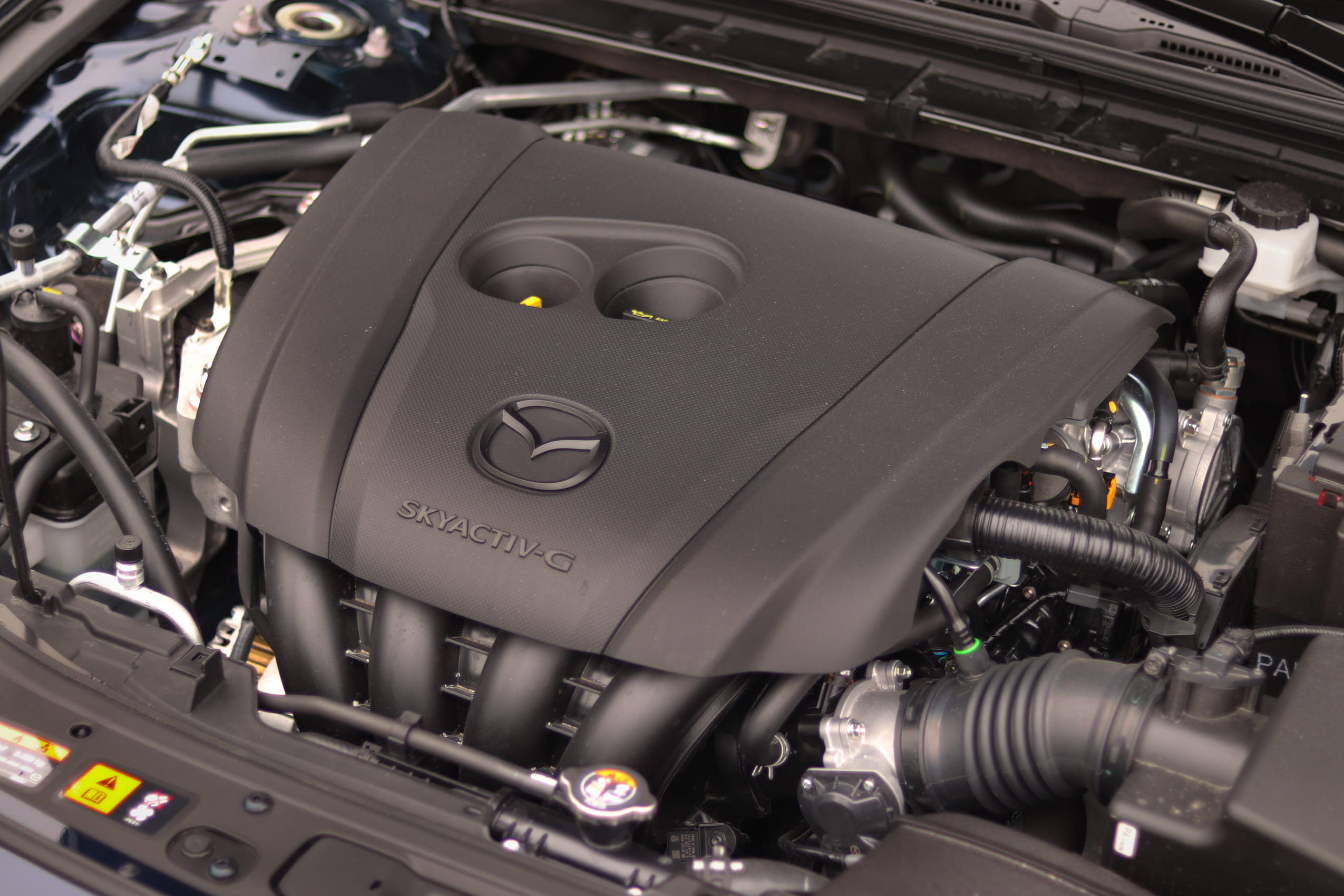
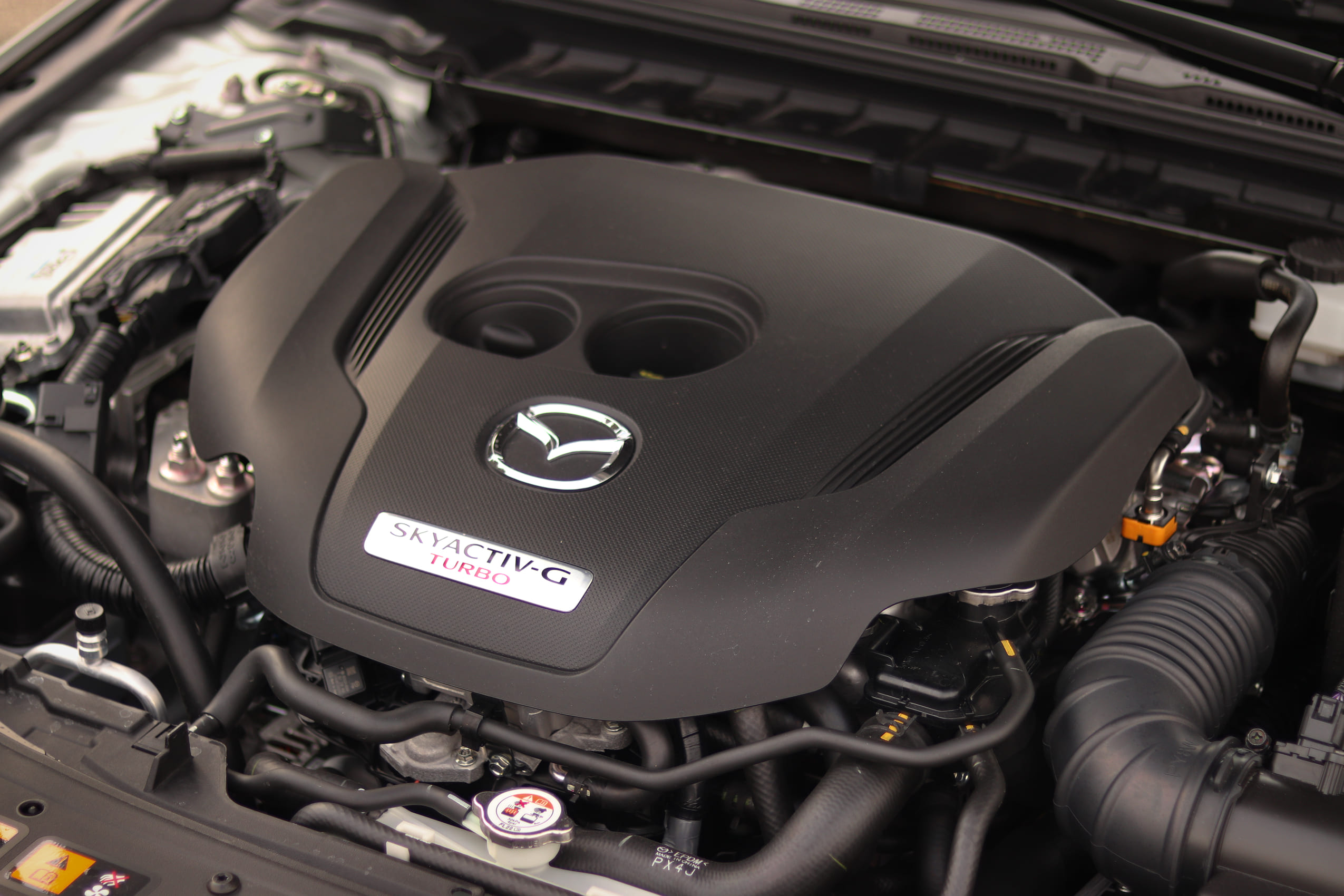
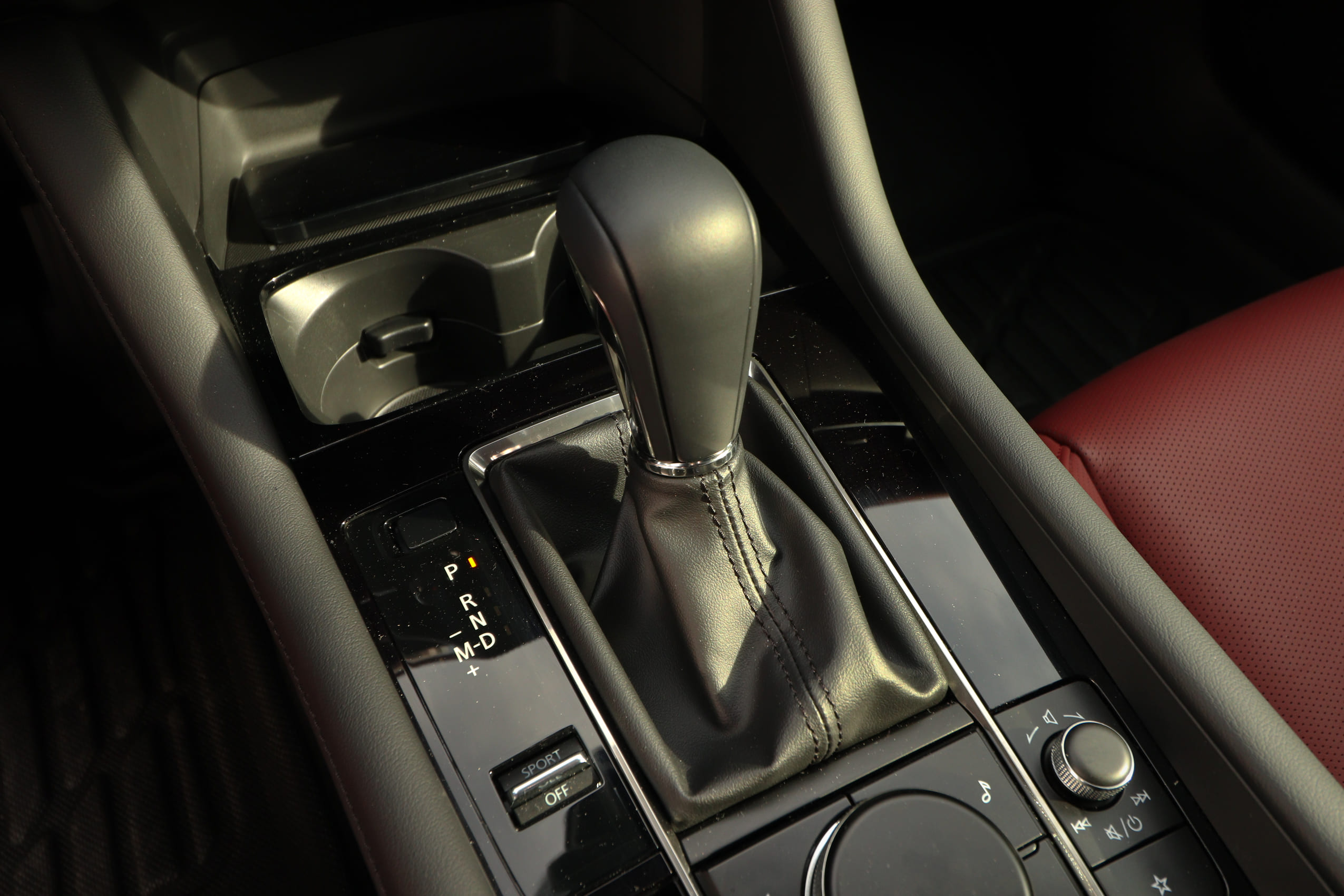
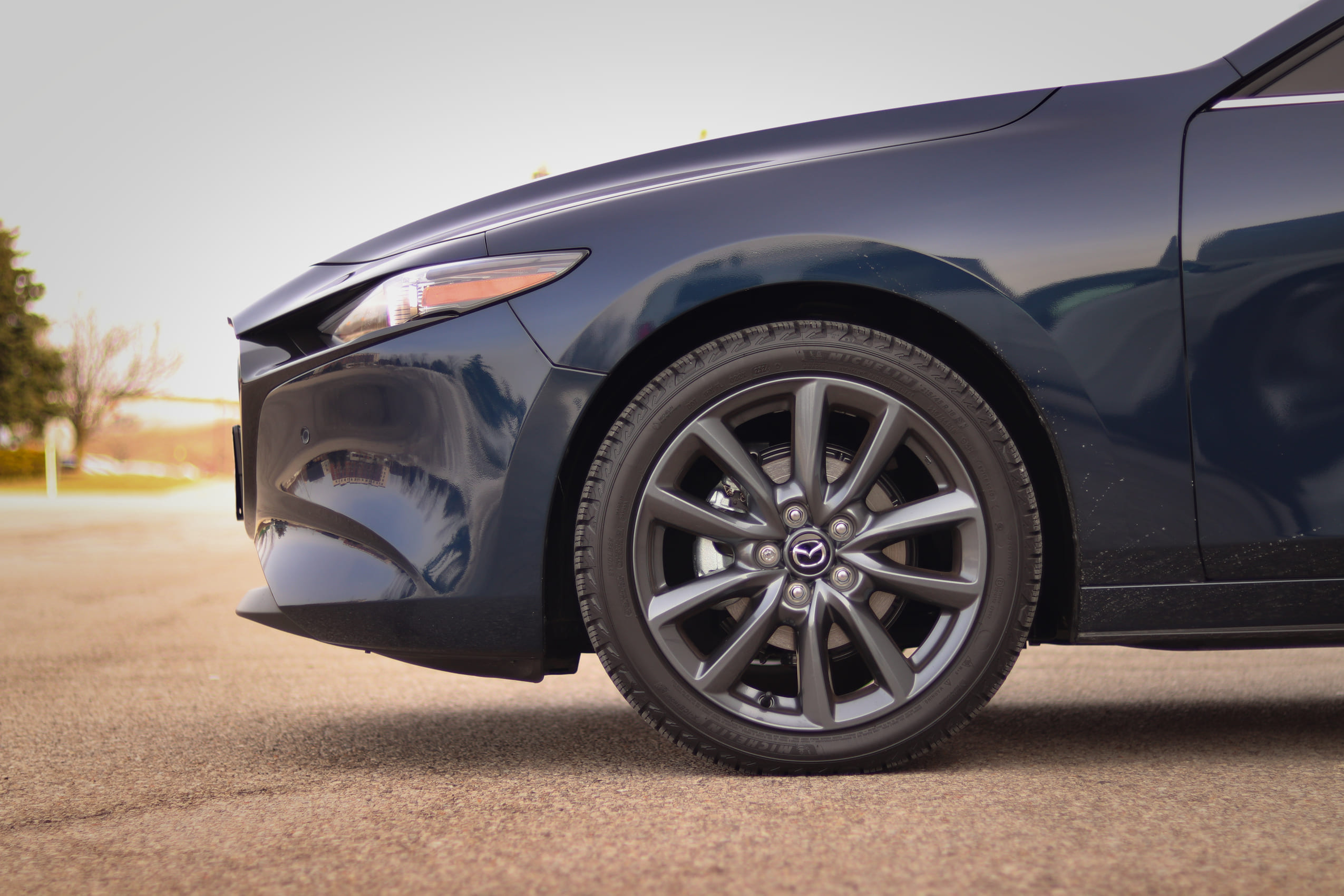
When you actually get these two out on a backroad, you realize that Mazda hasn’t just built one car; they’ve built two entirely different philosophies that happen to share a body shell. The Turbo AWD is the “grown-up” choice, a miniature grand tourer. With that 320 lb-ft of torque hitting like a freight train at just 2,500 RPM, it doesn’t so much accelerate as it does shove the horizon toward your face. The AWD system is invisible, quietly shuffling power to the rear to ensure that when you pin the throttle mid-corner, the car simply tracks true without a hint of drama or wheelspin. It’s heavy, composed, and devastatingly effective at erasing miles.
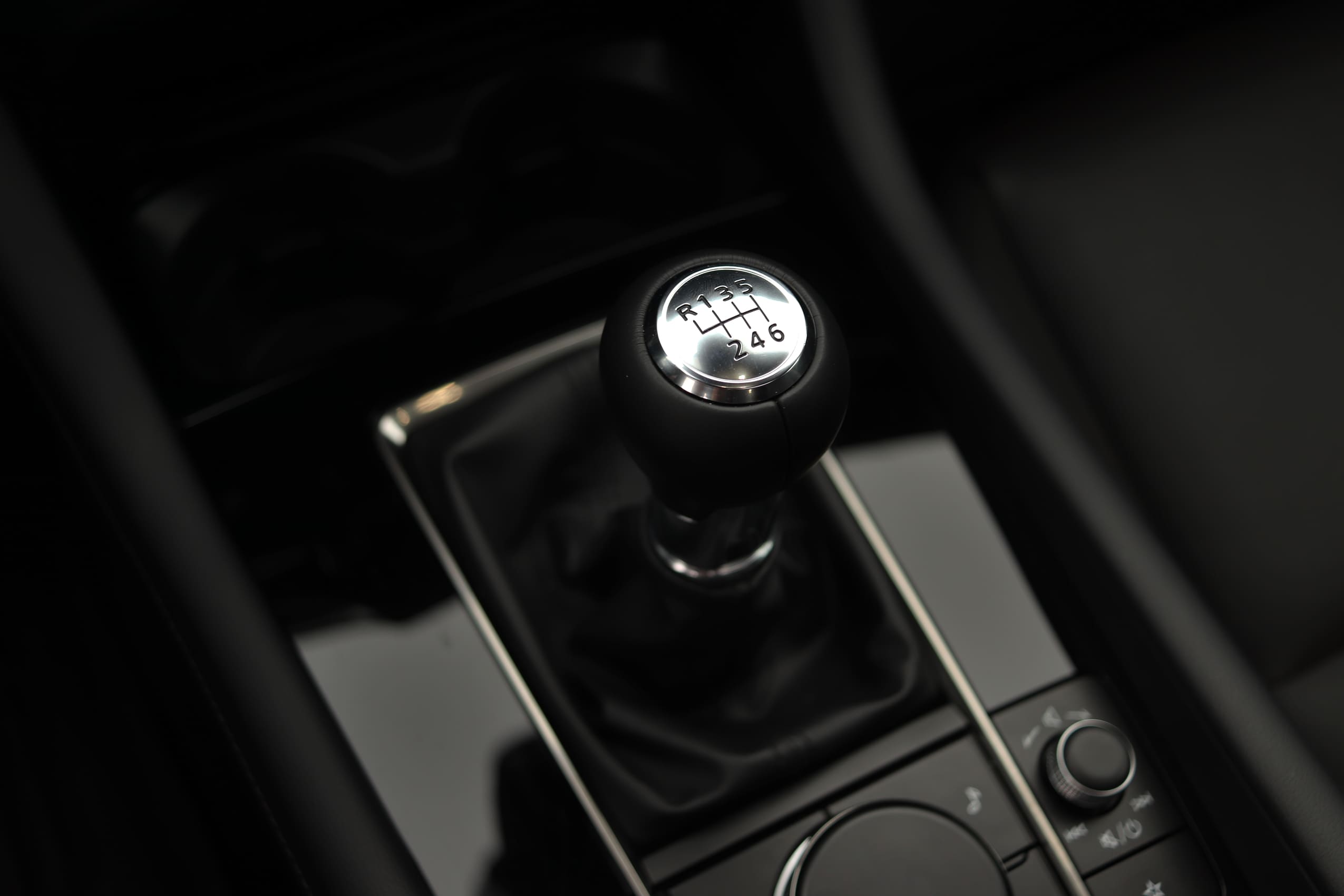
Then you hop into the naturally aspirated FWD manual, and it’s like someone turned the lights on. Without the extra weight of the turbo plumbing and the rear differential, the car feels lighter on its feet, more eager to change direction. You have to work for the power—peaking at 191 horsepower—but that’s the point. The six-speed manual is a mechanical palate cleanser, with a clutch that’s light but communicative and a shifter that “snicks” into place with a precision that would make a bolt-action rifle jealous. It turns a boring commute into an interactive event, reminding you that “slow car fast” is almost always more fun than “fast car easy.”
Regardless of which drivetrain you pick, both cars benefit from Mazda’s secret sauce: G-Vectoring Control Plus (GVC Plus). Most manufacturers try to make a car handle by fitting tires the size of steamrollers and suspension as stiff as a church pew. Mazda, being the obsessive engineers they are, decided to use software to manipulate physics. The system subtly reduces engine torque the moment you turn the wheel, shifting the car’s weight onto the front tires to sharpen the turn-in. As you exit the corner, it applies a microscopic amount of braking to the outside wheels to pull the car back into line.
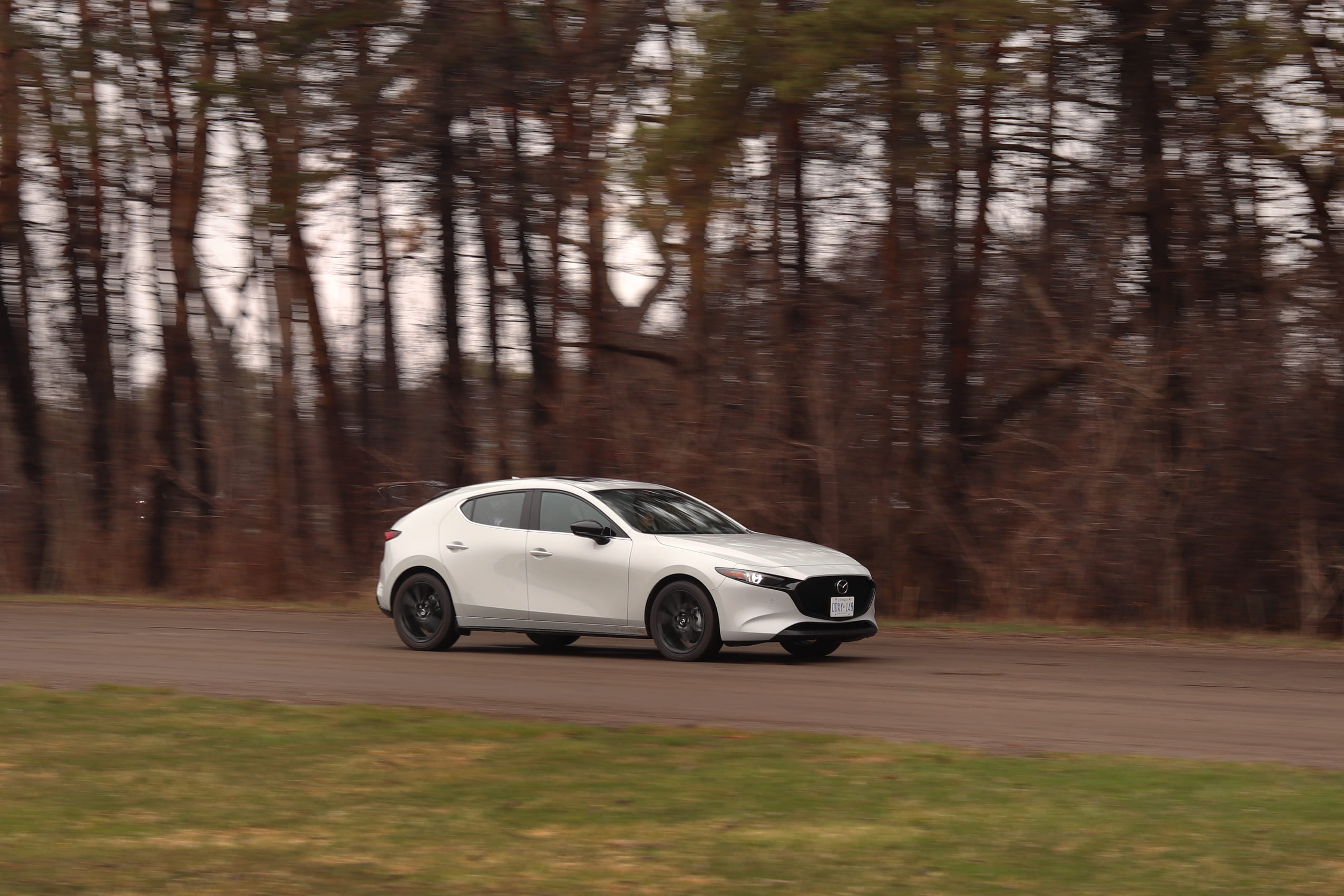
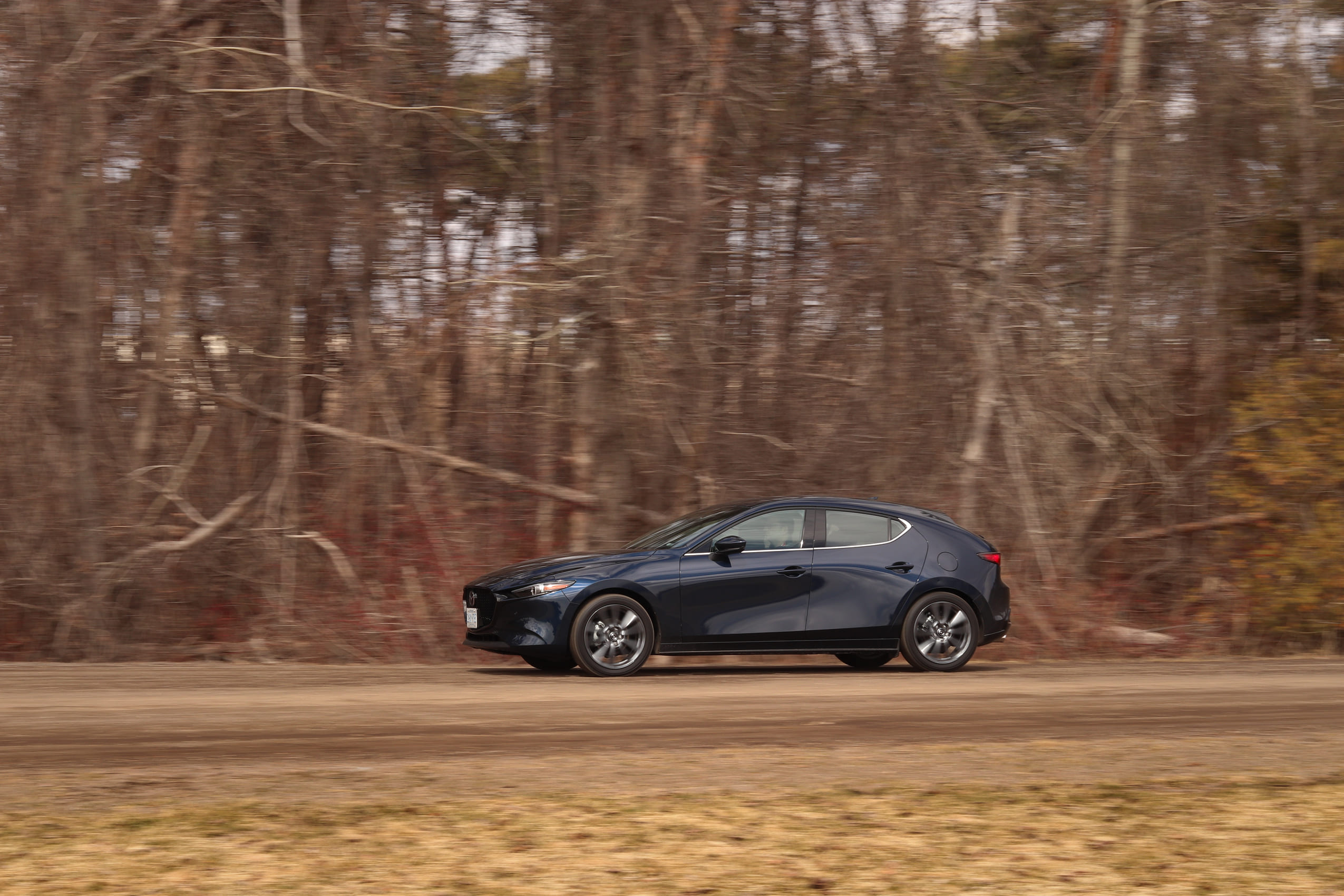
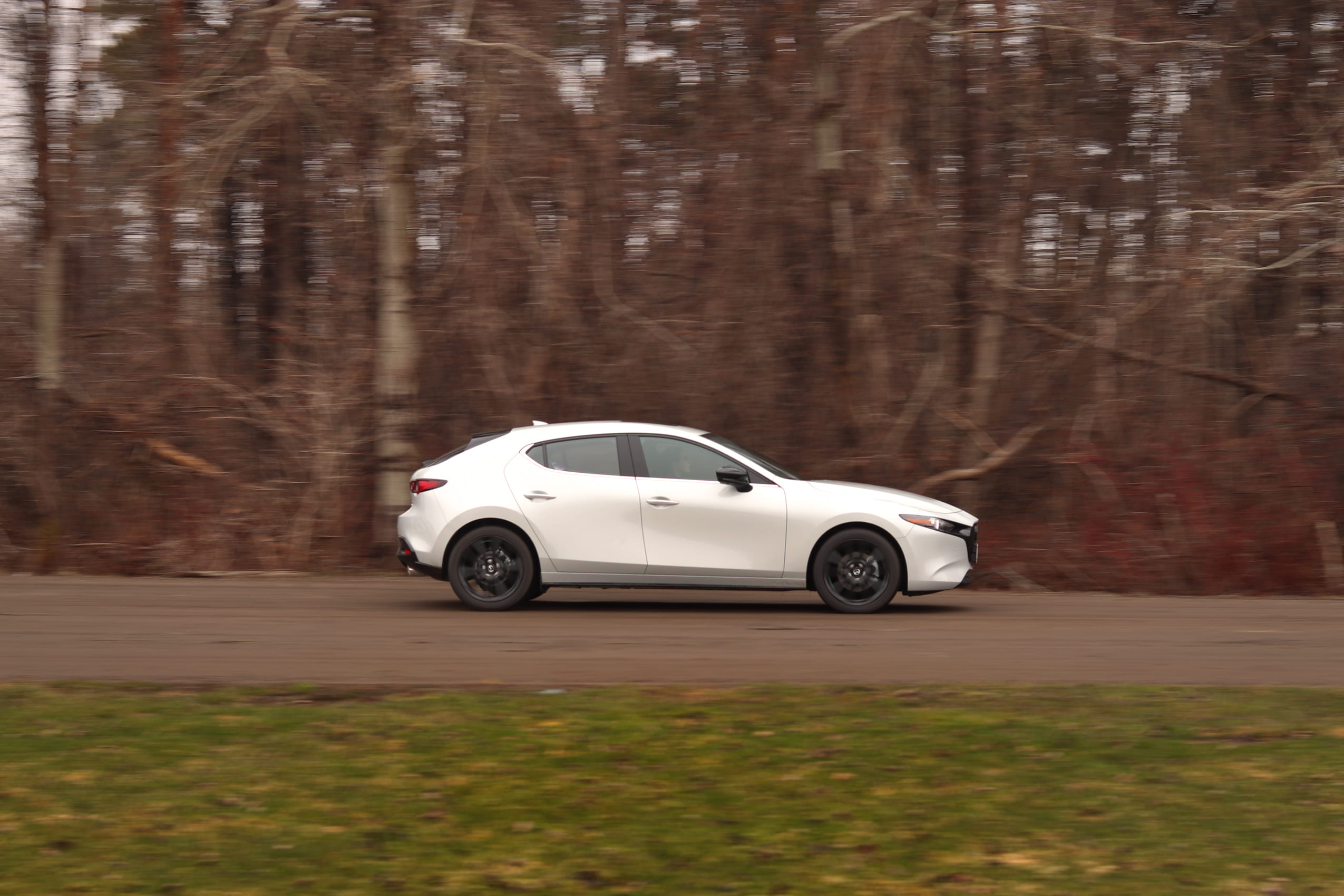
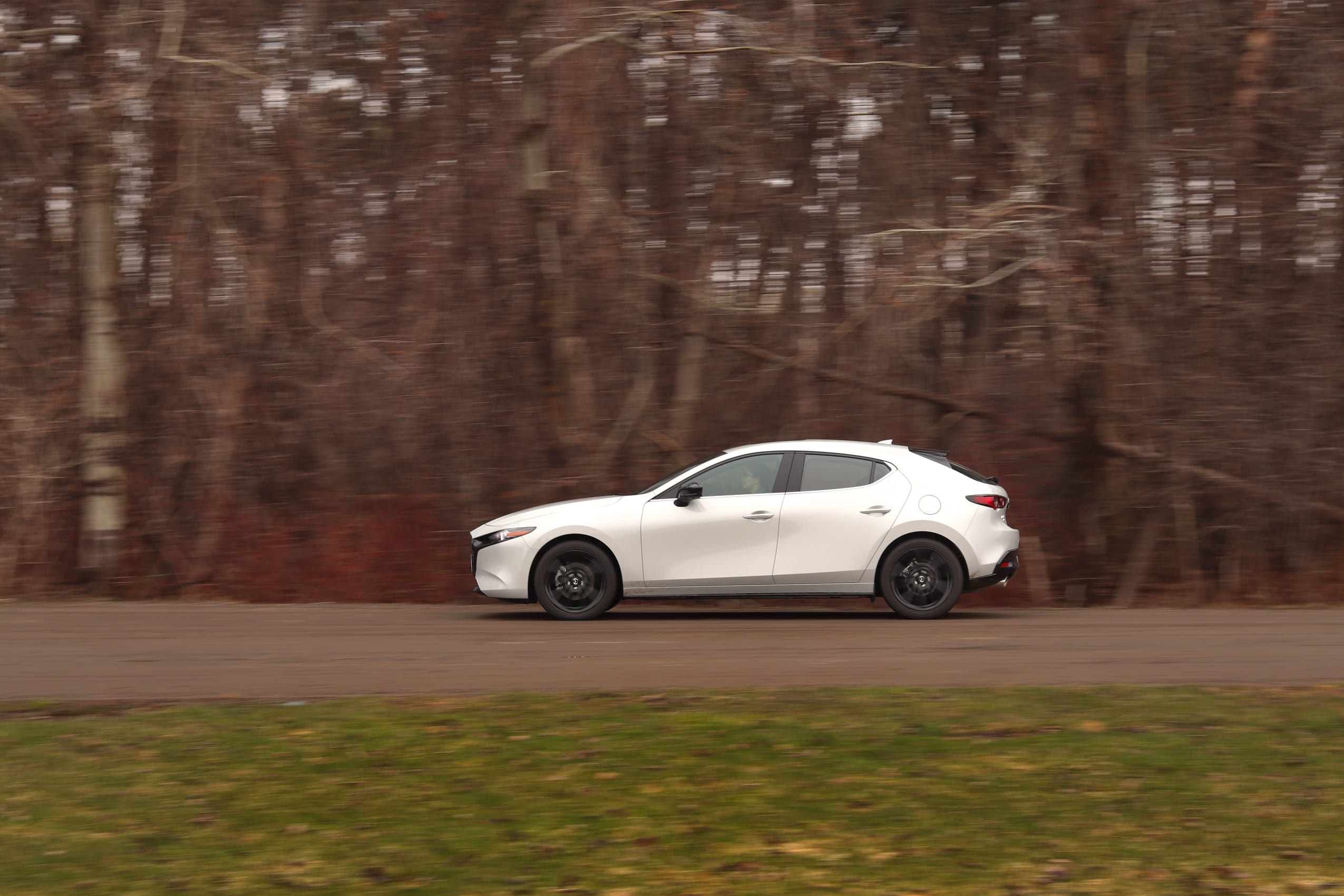
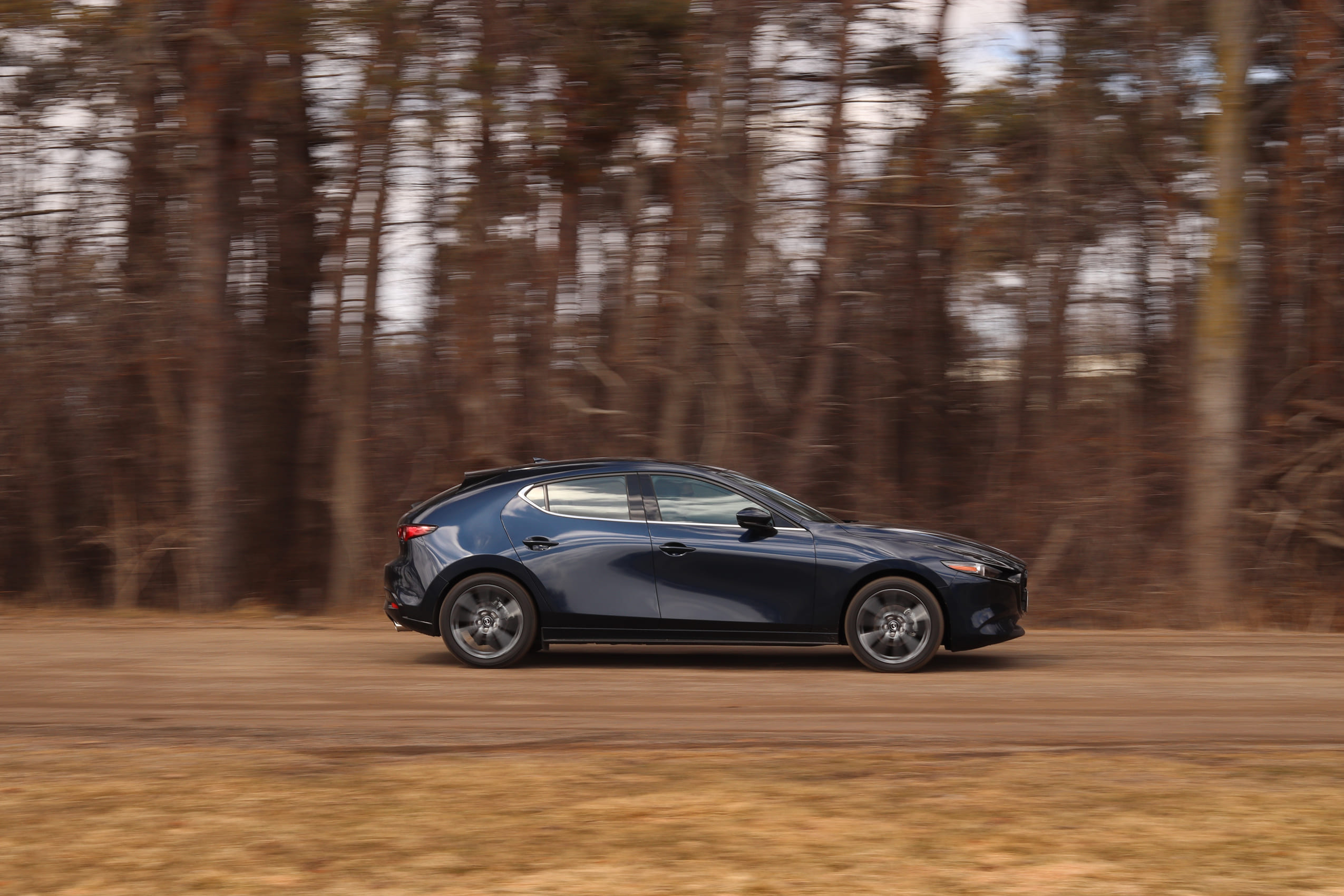
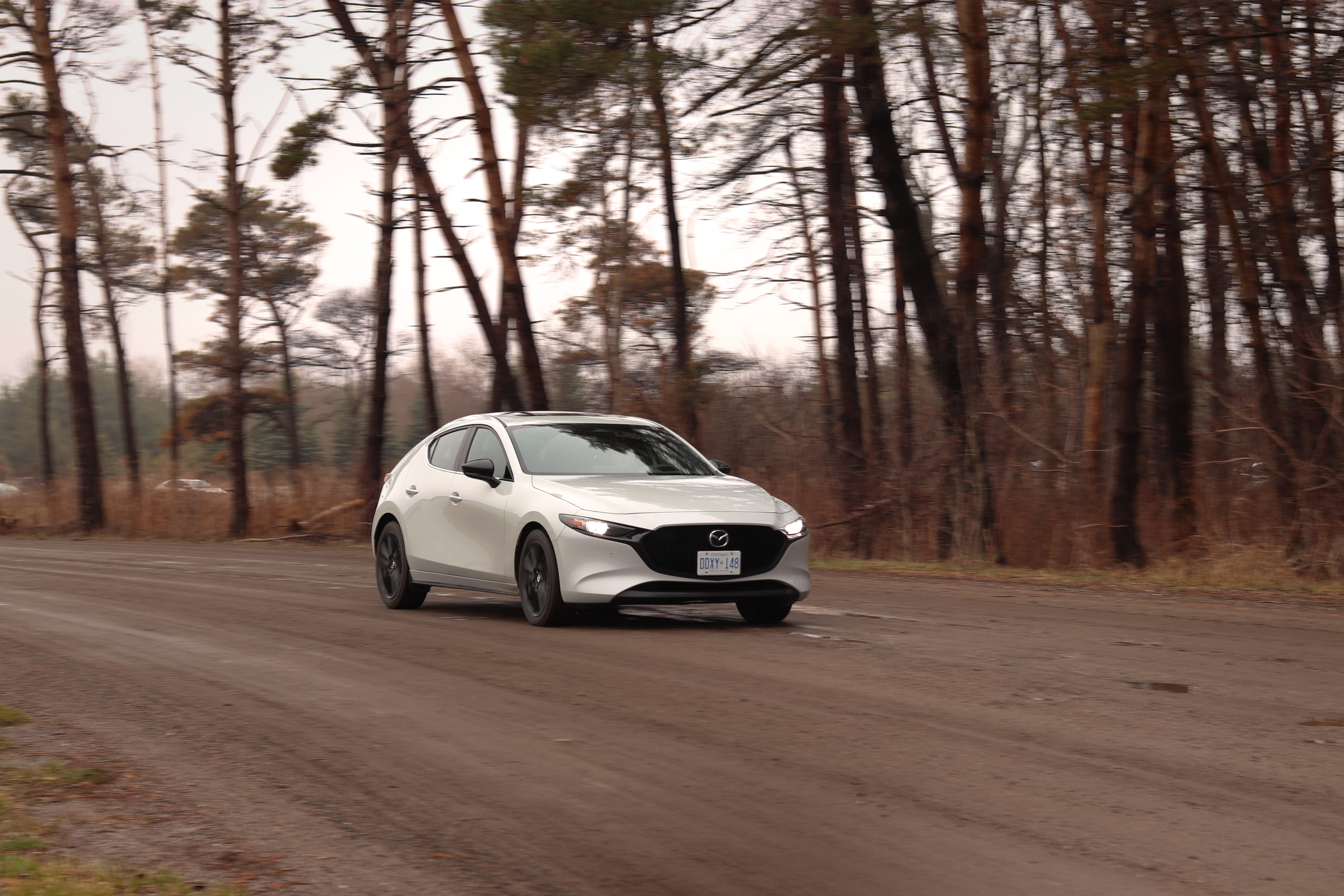
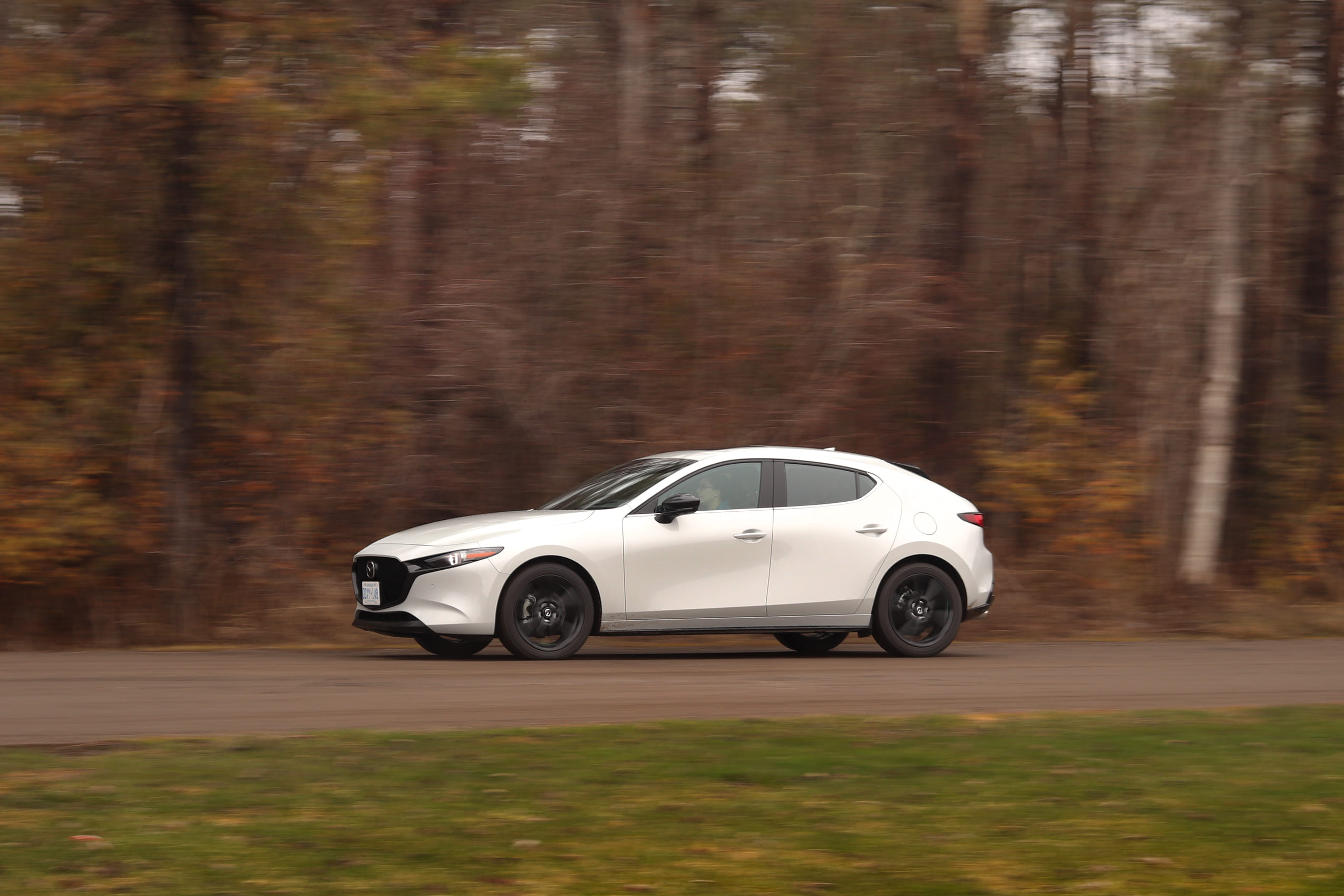
You don’t feel it working—you just feel like a better driver. It’s the reason the Mazda 3 tracks so straight on the highway and feels so unbothered by mid-corner bumps. It’s an invisible hand that smoothens out your inputs, making the chassis feel like an extension of your own nervous system. It’s brilliant, it’s nerdy, and it’s exactly why this car remains the benchmark for how a compact car should actually move, regardless of whether you’re chasing a lap time or just chasing the sunset on a Tuesday evening.
The genius of the Mazda 3’s dynamics isn’t found in a spec sheet; it’s found in the calibration of the primary controls. The steering isn’t hyperactive or twitchy like a hot hatch trying too hard to be “sporty”; instead, it has a natural, oily weight that tells you exactly how much grip is left in those front tires. Even with the much-maligned torsion beam rear suspension, the car maintains a level of composure that shames more complex setups, using clever bushing compliance to soak up mid-corner craters without upsetting the chassis. It drives with a cohesive, singular voice that makes every input feel deliberate, turning the act of driving—even a mundane run to the grocery store—into something that feels intentional and high-quality.
In the end, the 2026 Mazda 3 remains the thinking person’s compact car. It doesn’t scream about its performance or rely on gimmicky tech to justify its existence; it simply relies on the fact that it is better built and more thoughtfully engineered than anything else in its price bracket. If you want a spec-sheet hero, buy something else. But if you want a car that rewards your touch, flatters your eyes, and makes you feel like you’ve actually spent your money on something substantial, this is it. Whether you choose the surgical precision of the manual FWD or the effortless, heavy-hitting surge of the Turbo AWD, you’re buying a machine that treats driving as a craft rather than a chore.
| www.mazda.ca | 2.5 Naturally Aspirated (Manual) | 2.5 Turbo AWD |
|---|---|---|
| Vehicle Type | Front-engine, FWD, 5-passenger, 4-door Hatch | Front-engine, AWD, 5-passenger, 4-door Hatch/Sedan |
| Engine Type | DOHC 16-valve 2.5L Inline-4 | Turbocharged DOHC 16-valve 2.5L Inline-4 |
| Power (93 Octane) | 191 hp @ 6000 rpm | 250 hp @ 5000 rpm |
| Torque (93 Octane) | 186 lb-ft @ 4000 rpm | 320 lb-ft @ 2500 rpm |
| Transmission | 6-speed Manual | 6-speed Automatic |
| Curb Weight | ~3,080 lbs | ~3,390 lbs |
| 0–60 mph | 7.0 sec | 5.6 sec |
| EPA Combined | 28 mpg | 26 mpg |
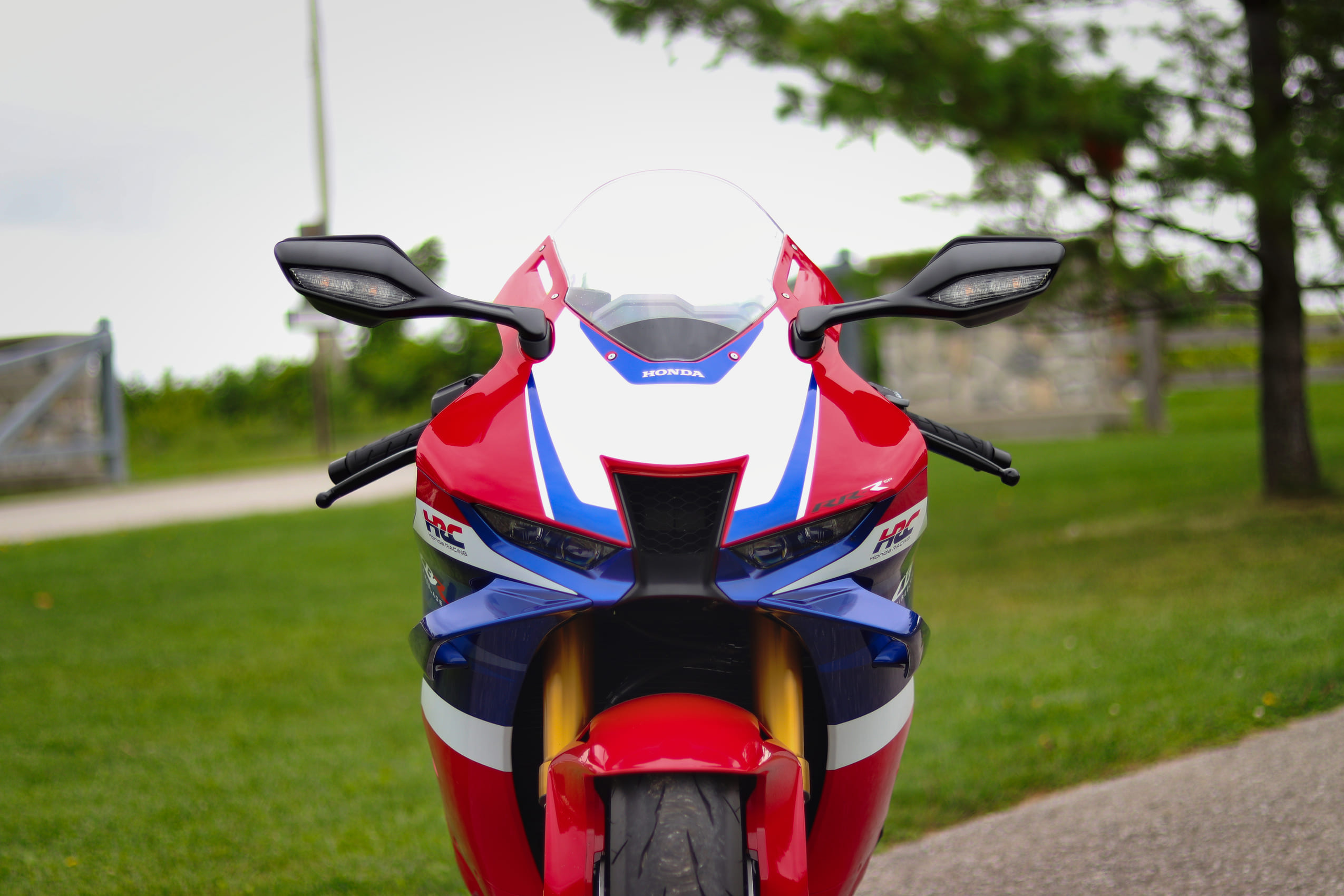
2026 Honda CBR1000RR-R Fireblade SP Review: Pure Mechanical Violence
The 2026 Honda CBR1000RR-R Fireblade SP is not a motorcycle; it is a clinical, unrelenting exercise in absolute mechanical insanity…

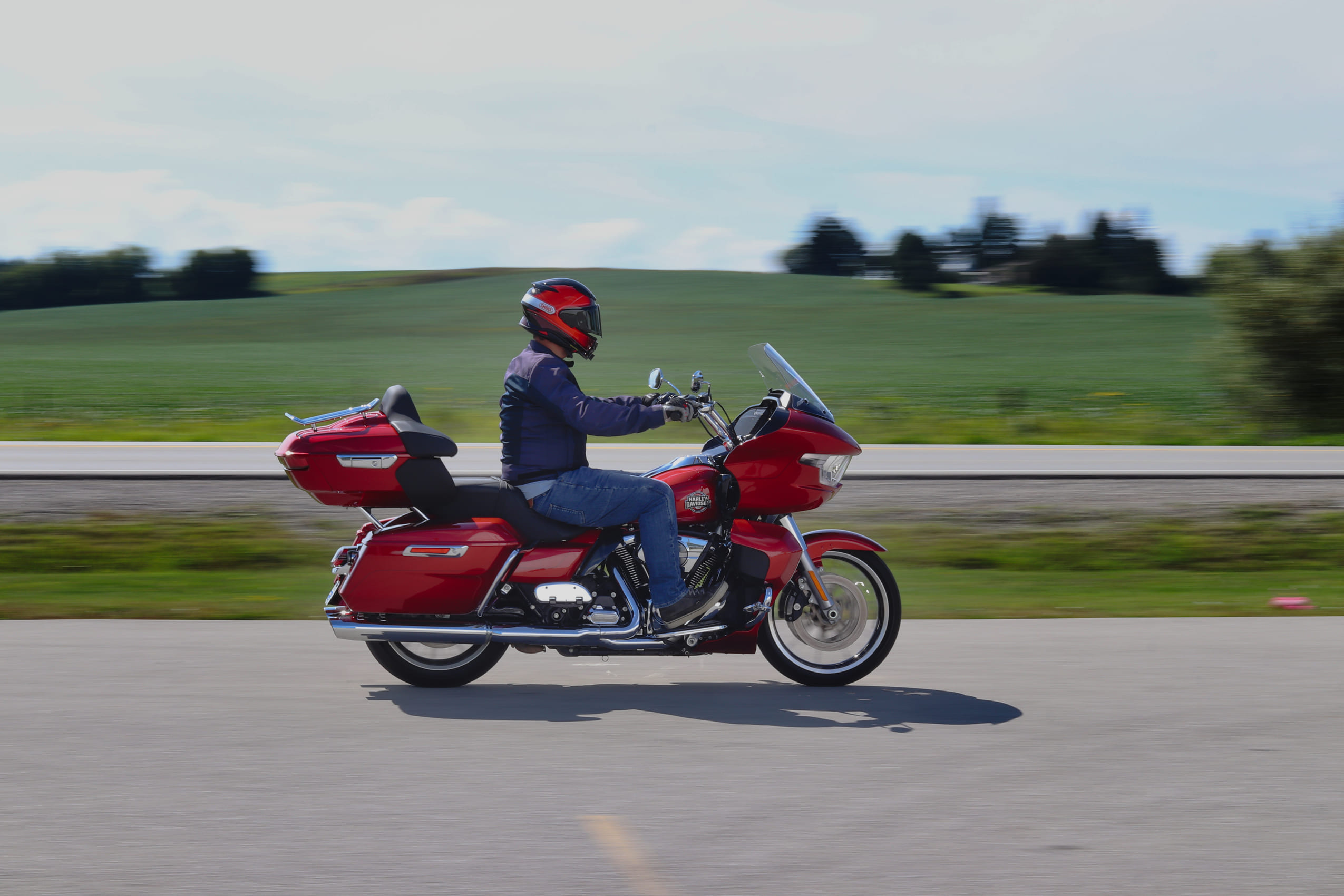
Sharknose Supremacy: Driving the 2026 Harley-Davidson Road Glide
Let’s get one thing straight: the 2026 Harley-Davidson Road Glide shouldn’t make sense. It’s a rolling, 800-pound contradiction—a massive, frame-mounted…
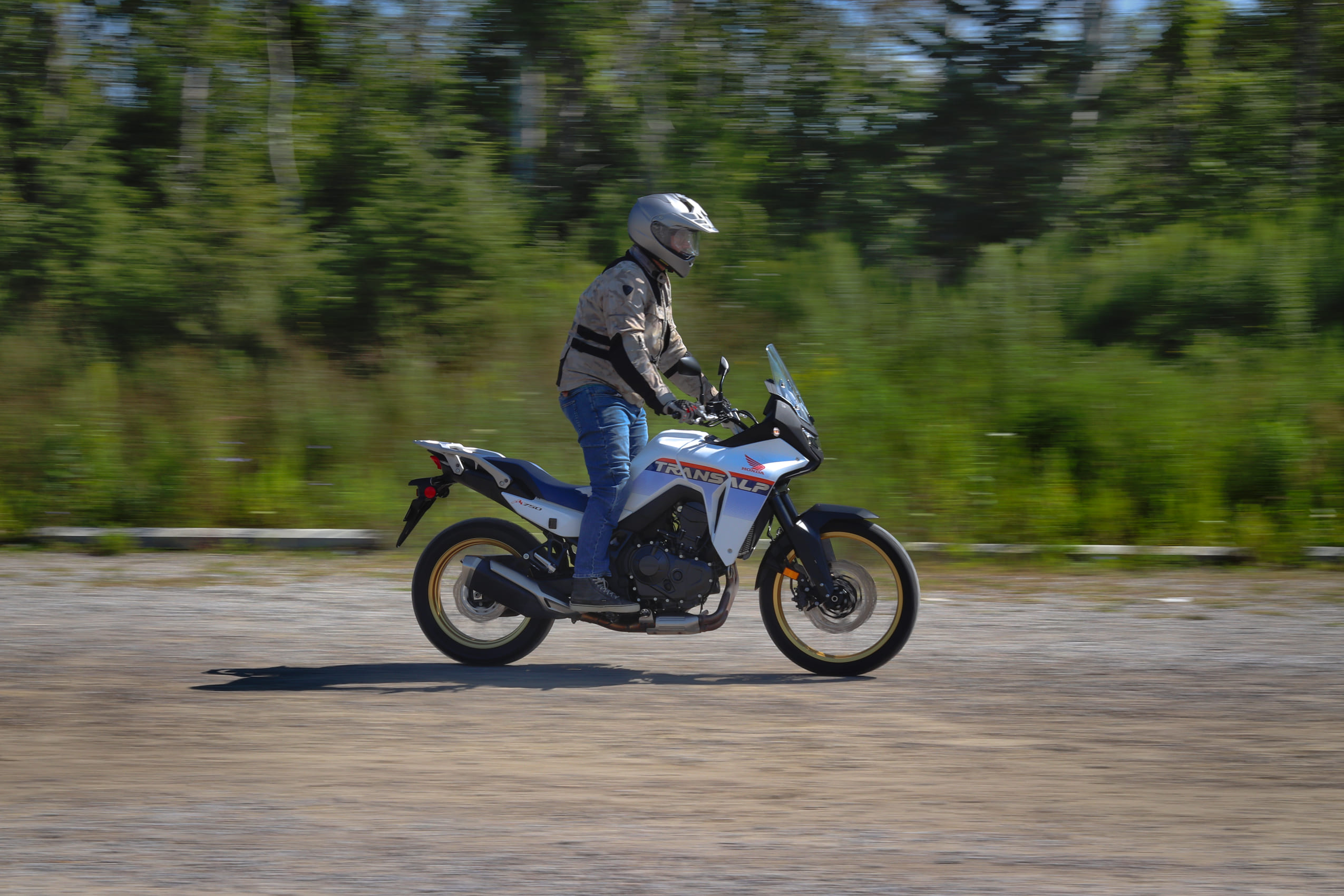
The Anti-ADV Hero: Why the 2026 Honda Transalp is the
Leave it to Honda to look at the entire, absurdly over-engineered, $25,000 middleweight adventure segment—a market flooded with hyper-focused rally…
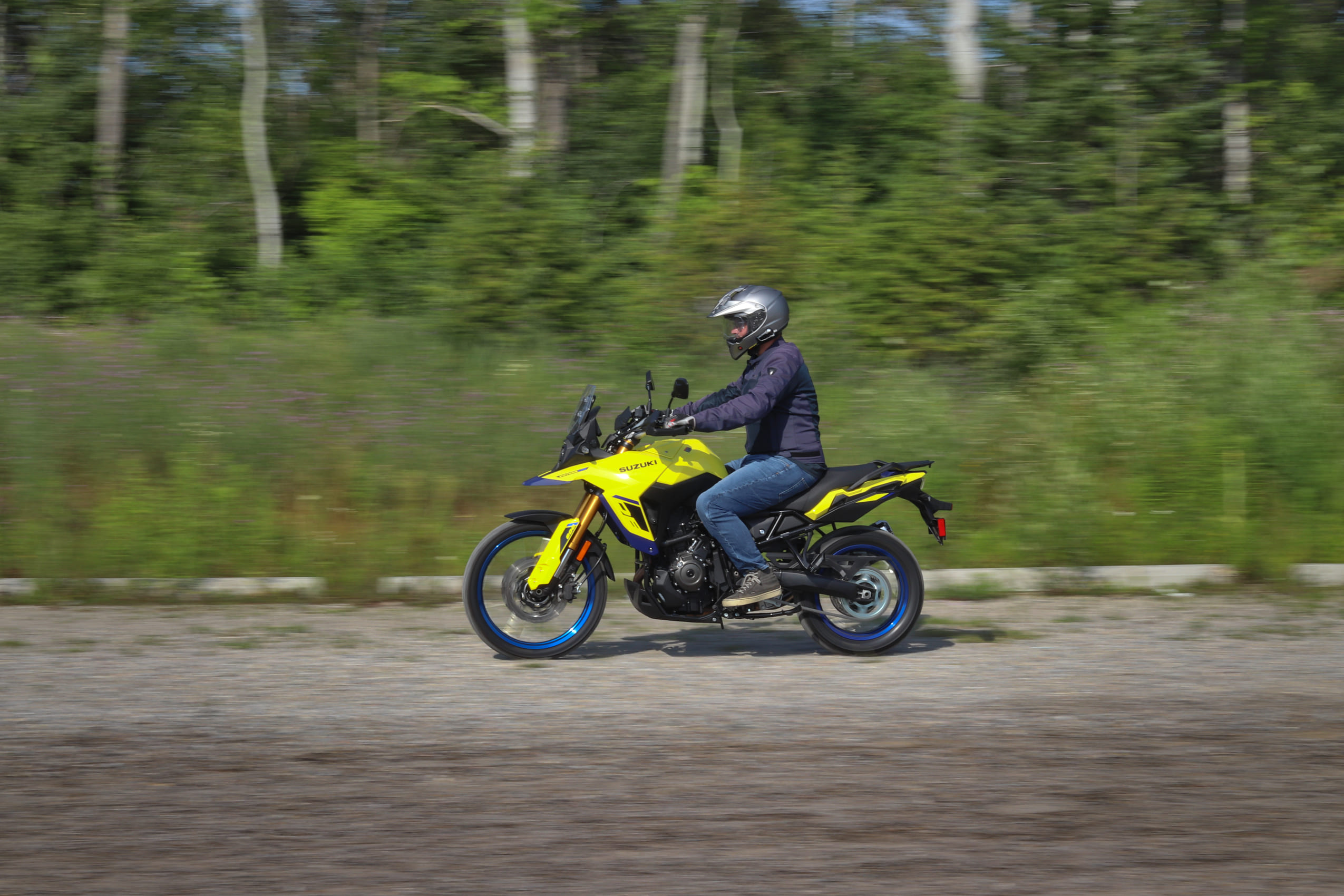
2026 Suzuki V-Strom 800DE: No V-Twin, No Problem
Words are supposed to mean things. The “V” in V-6 means a V-layout, and for two decades, the “V” in…
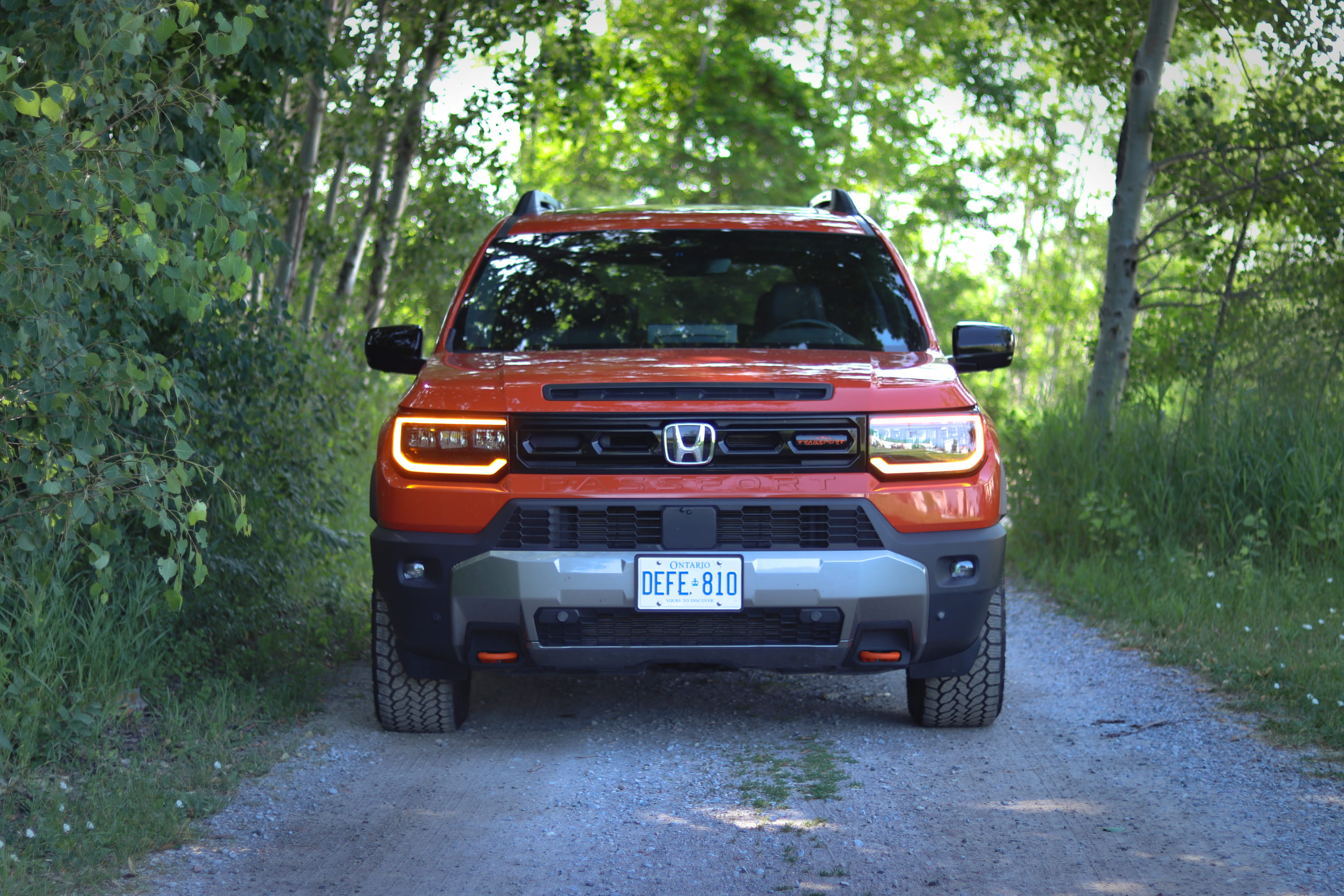
2026 Honda Passport TrailSport Review: The World’s Most Charming Anti-Wrangler
Let’s be honest about what’s actually happening here. Honda knows as well as you do that nobody is taking a…
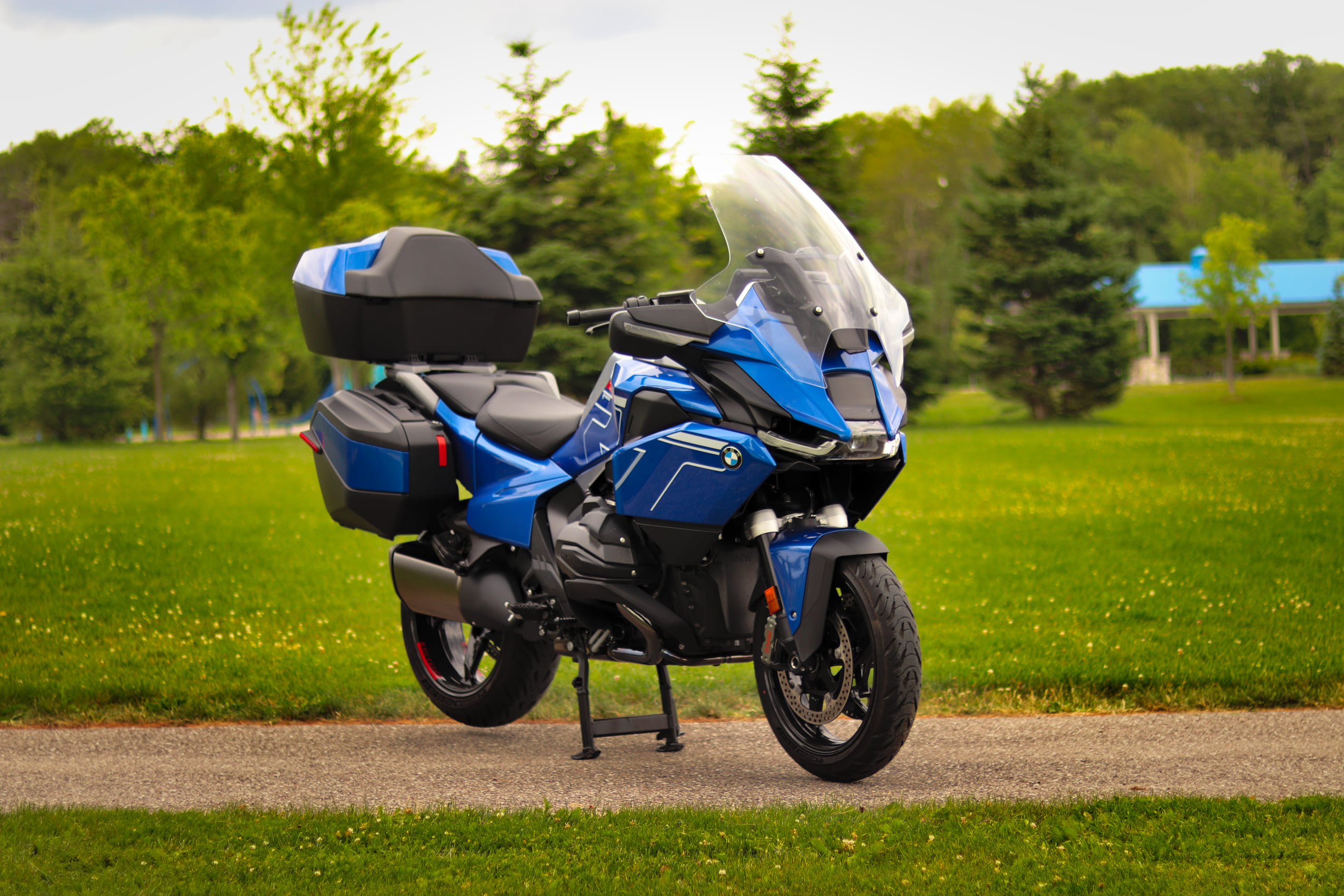
2026 BMW R1300RT: Radar-Guided, Clutchless, and Unreasonably Capable
It is a biological impossibility to look at a 620-pound, radar-guided Bavarian land-yacht and think, “Ah, yes—what this needs is…