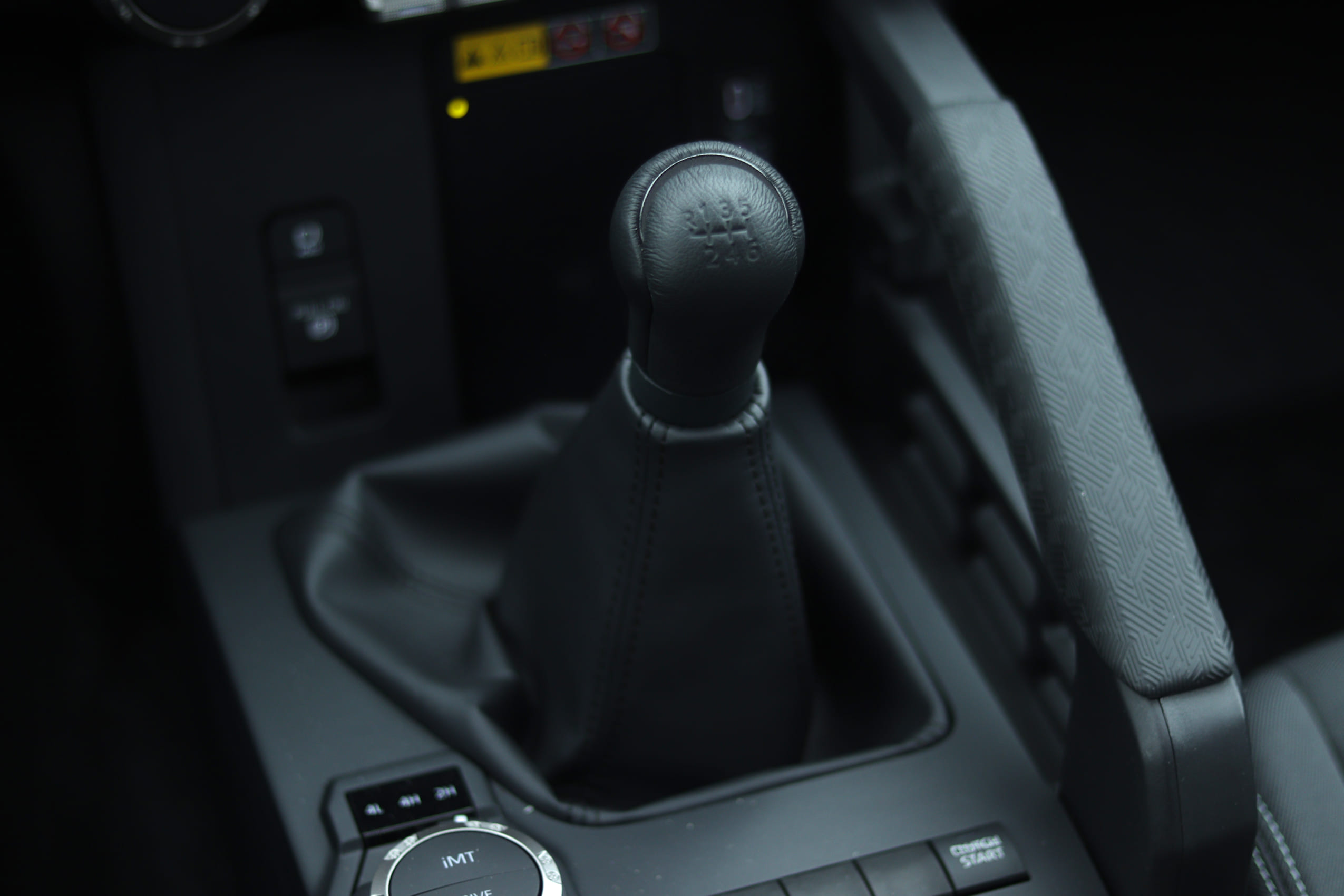
The modern mid-size truck has become an exercise in digitised isolation, a tool designed to conquer the wilderness while shielding the driver from having to actually participate in the process. Nowhere is this more obvious than at the top of the food chain, where the flagship TRD Pro has traded driver involvement for automatic hybrid complexity. But look exactly one rung down the ladder to the TRD Sport, and you’ll find a beautiful, defiant anomaly: a six-speed manual transmission.
In an era governed by emissions compliance and automated take-rates, this three-pedal survivor feels less like a product planning decision and more like a glorious mechanical middle finger. It transforms the truck from a passive appliance into an engaging instrument, proving that the best way to experience a machine isn’t to let it think for you, but to grab it by the gears and drive it yourself.
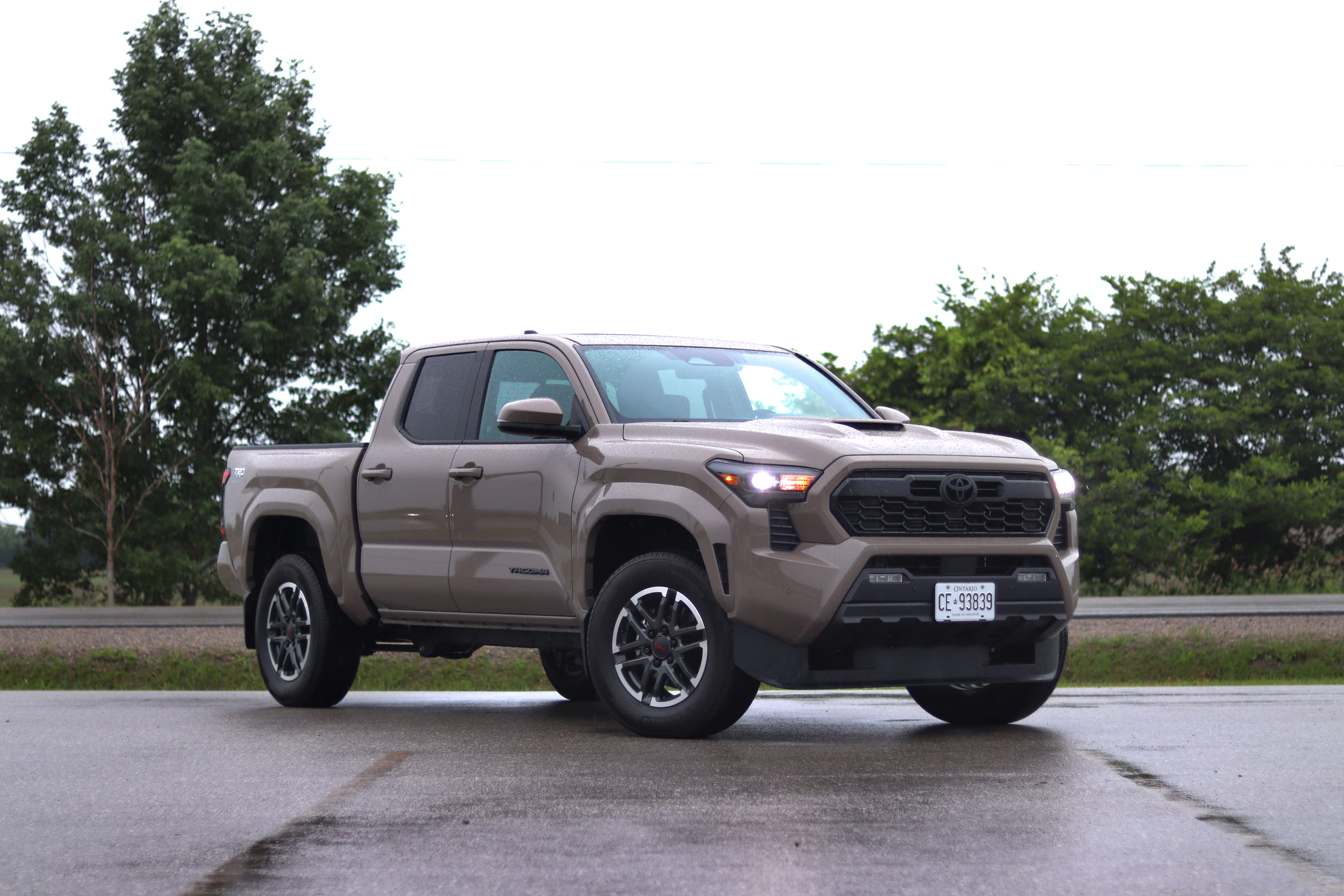
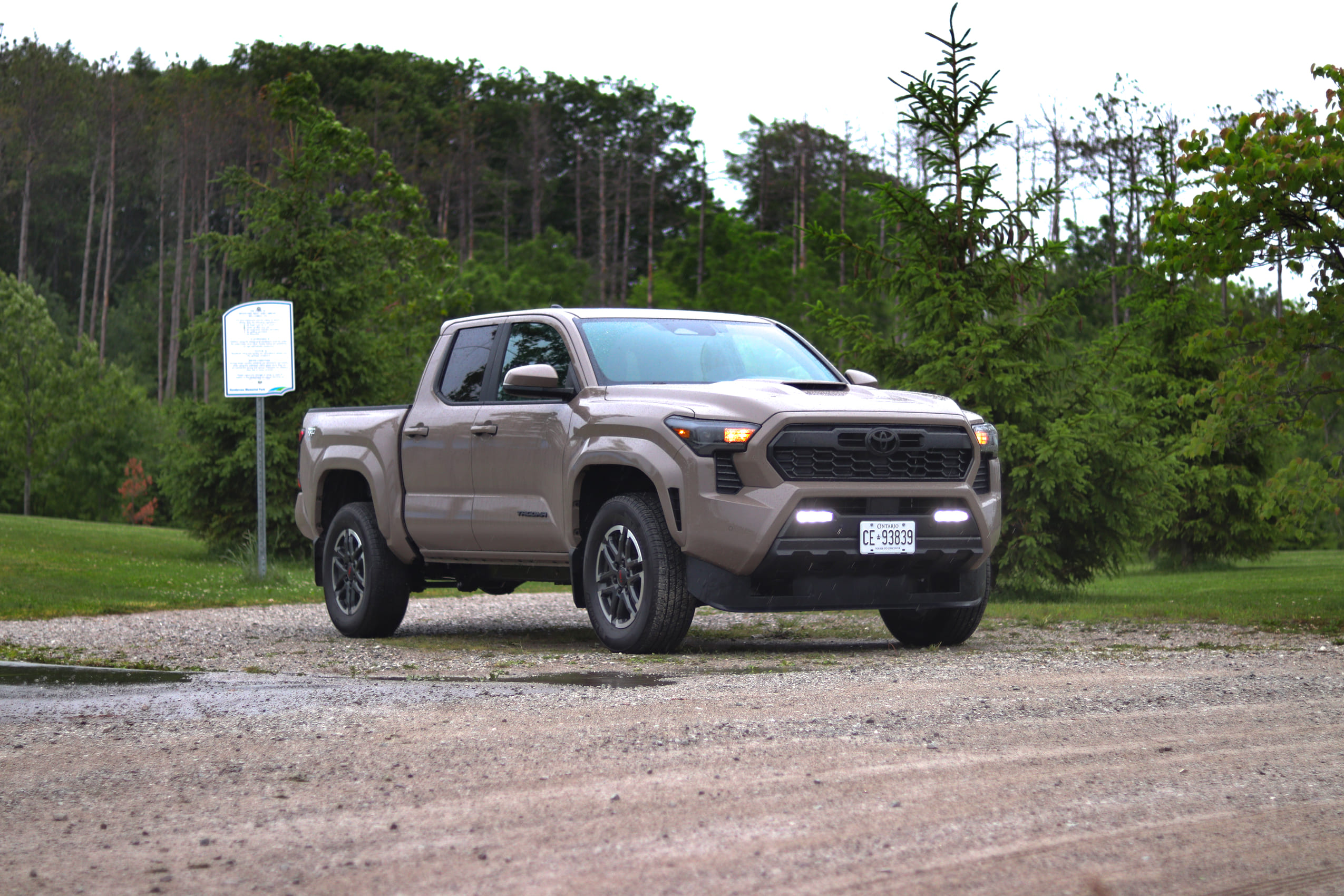
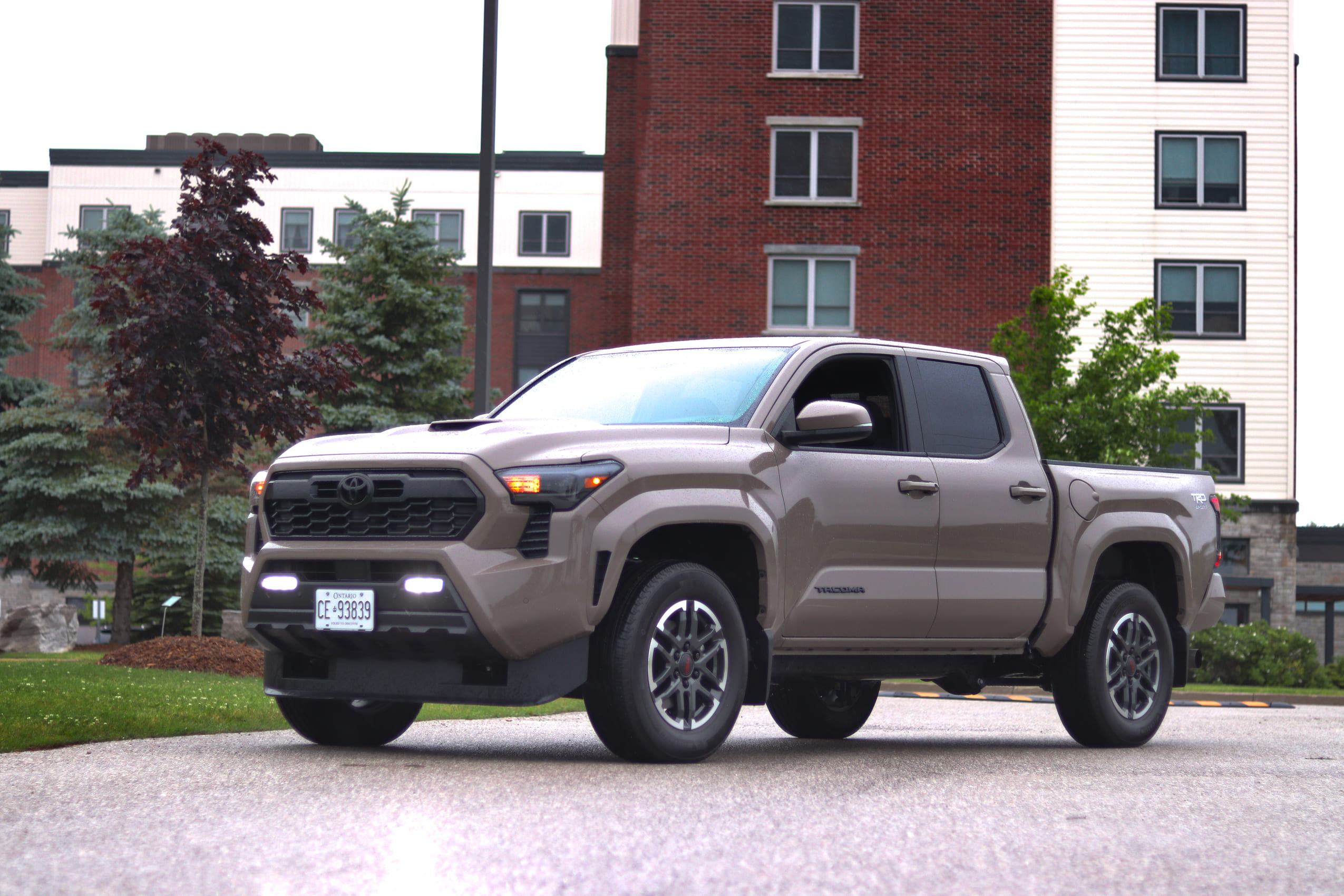
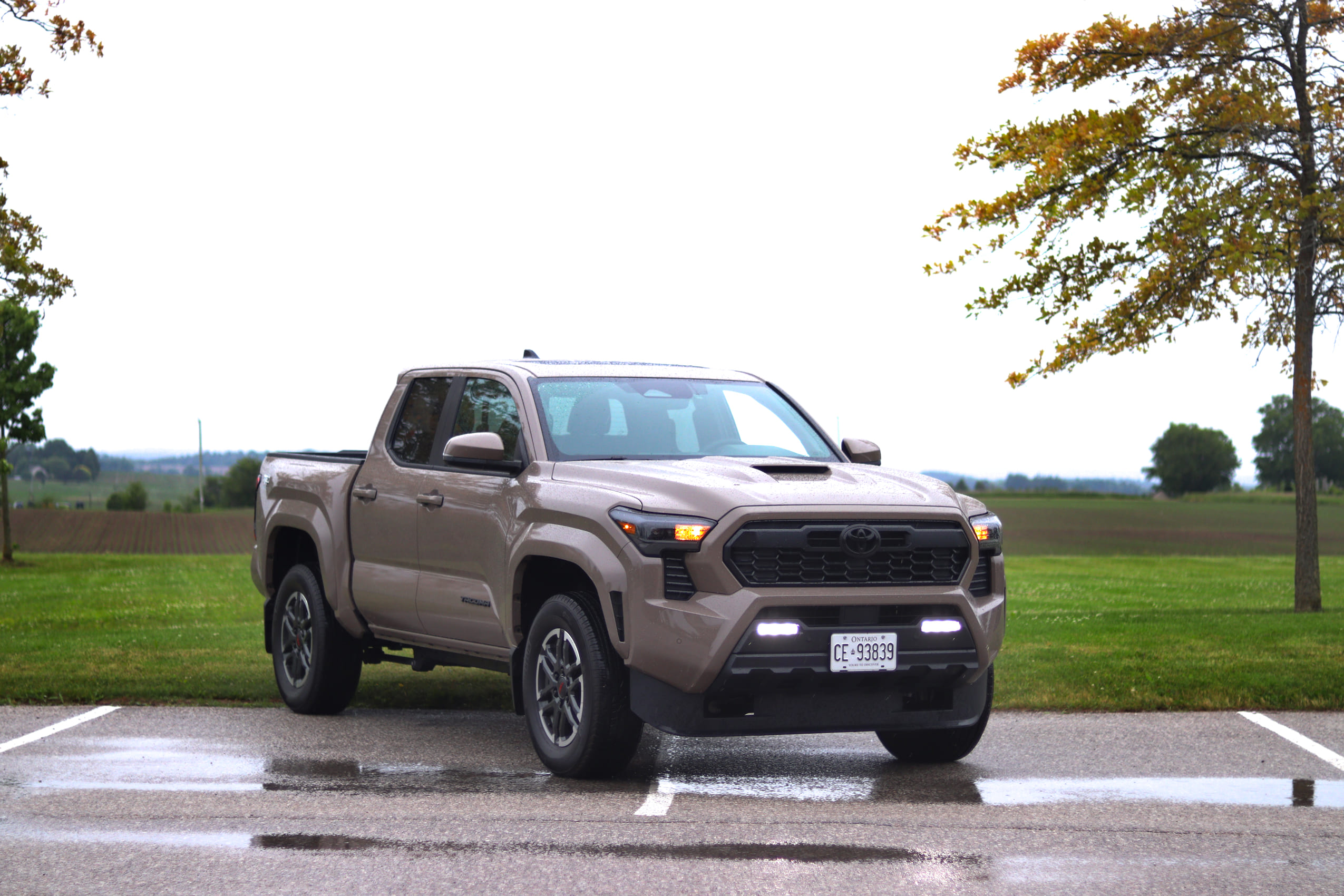
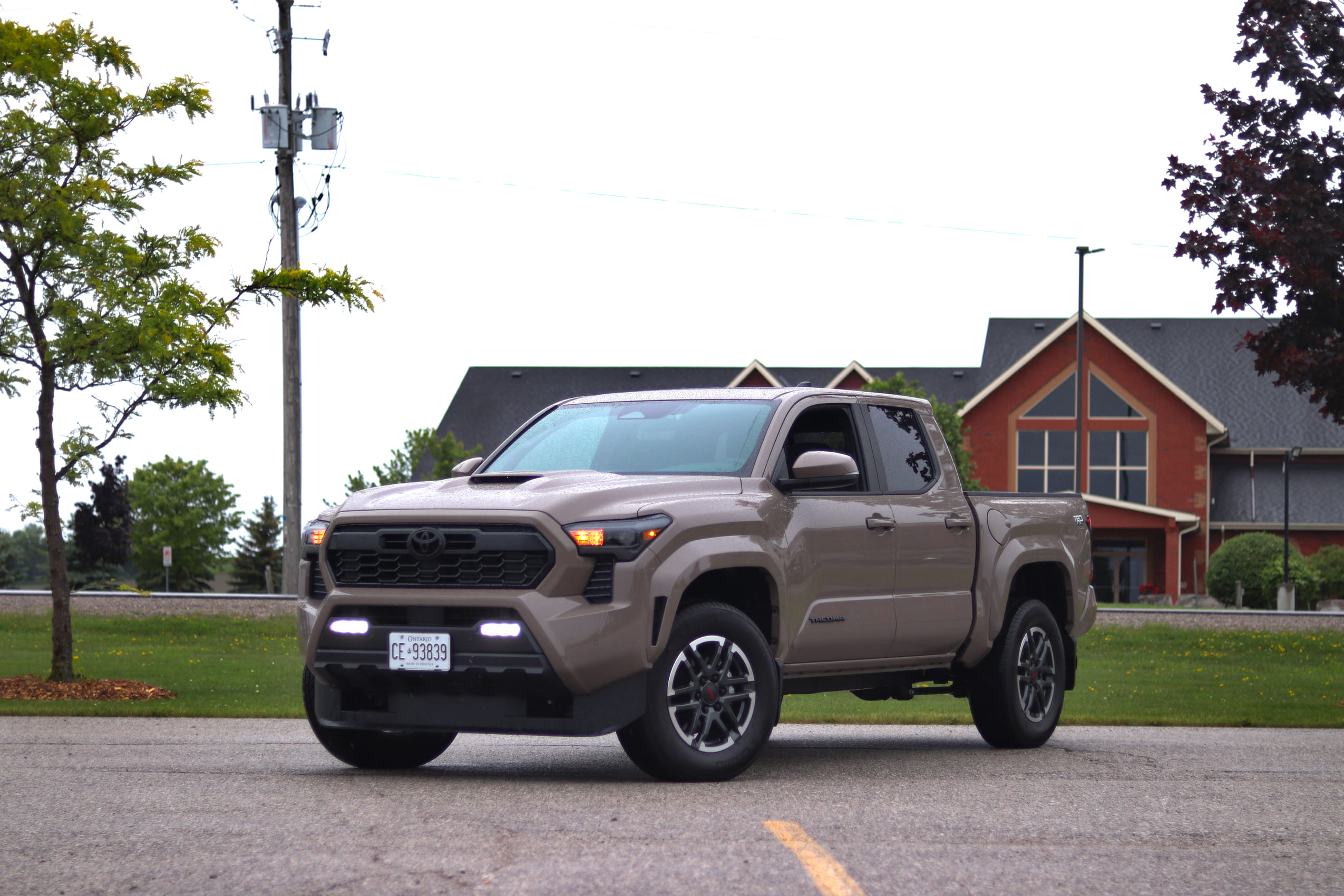
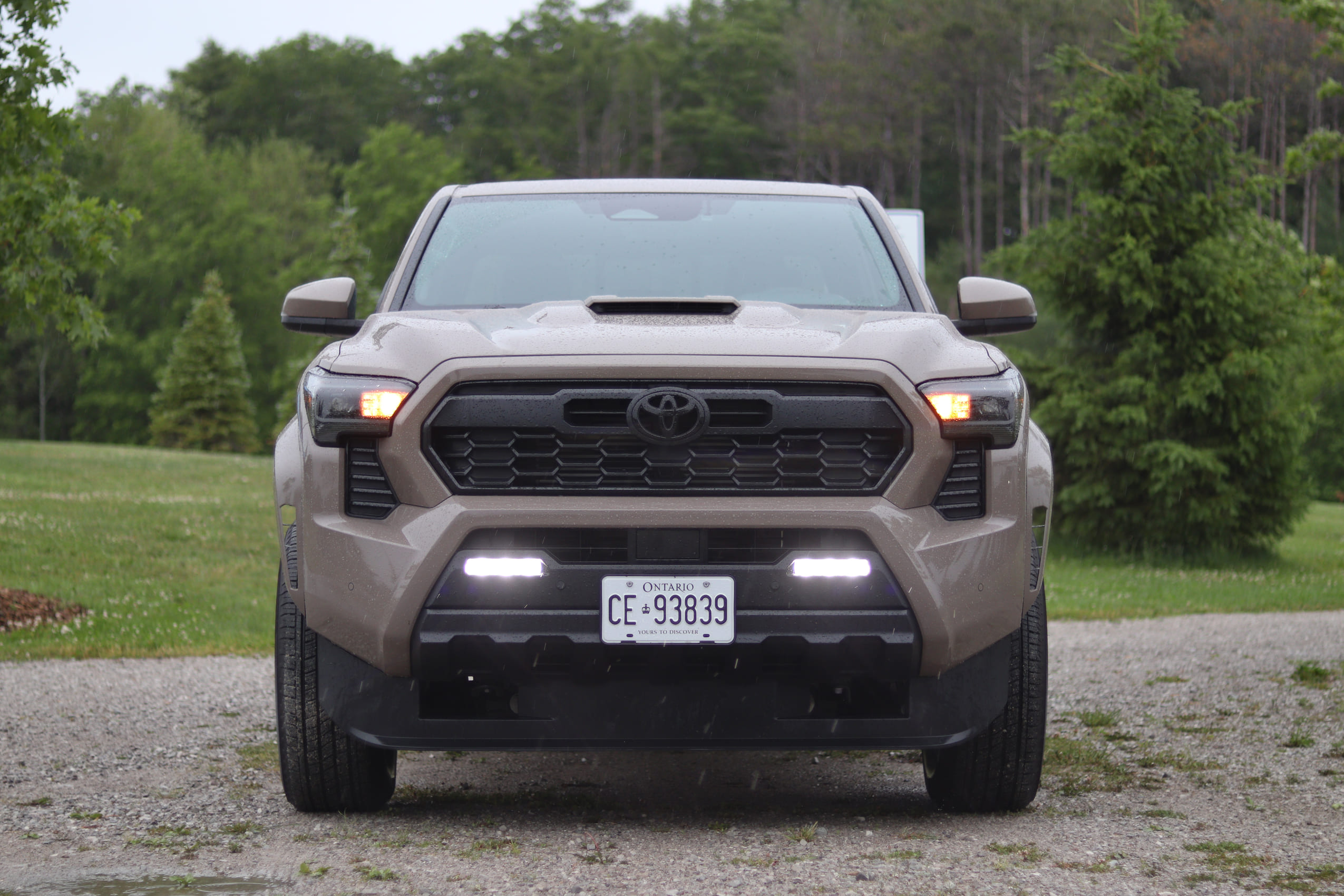
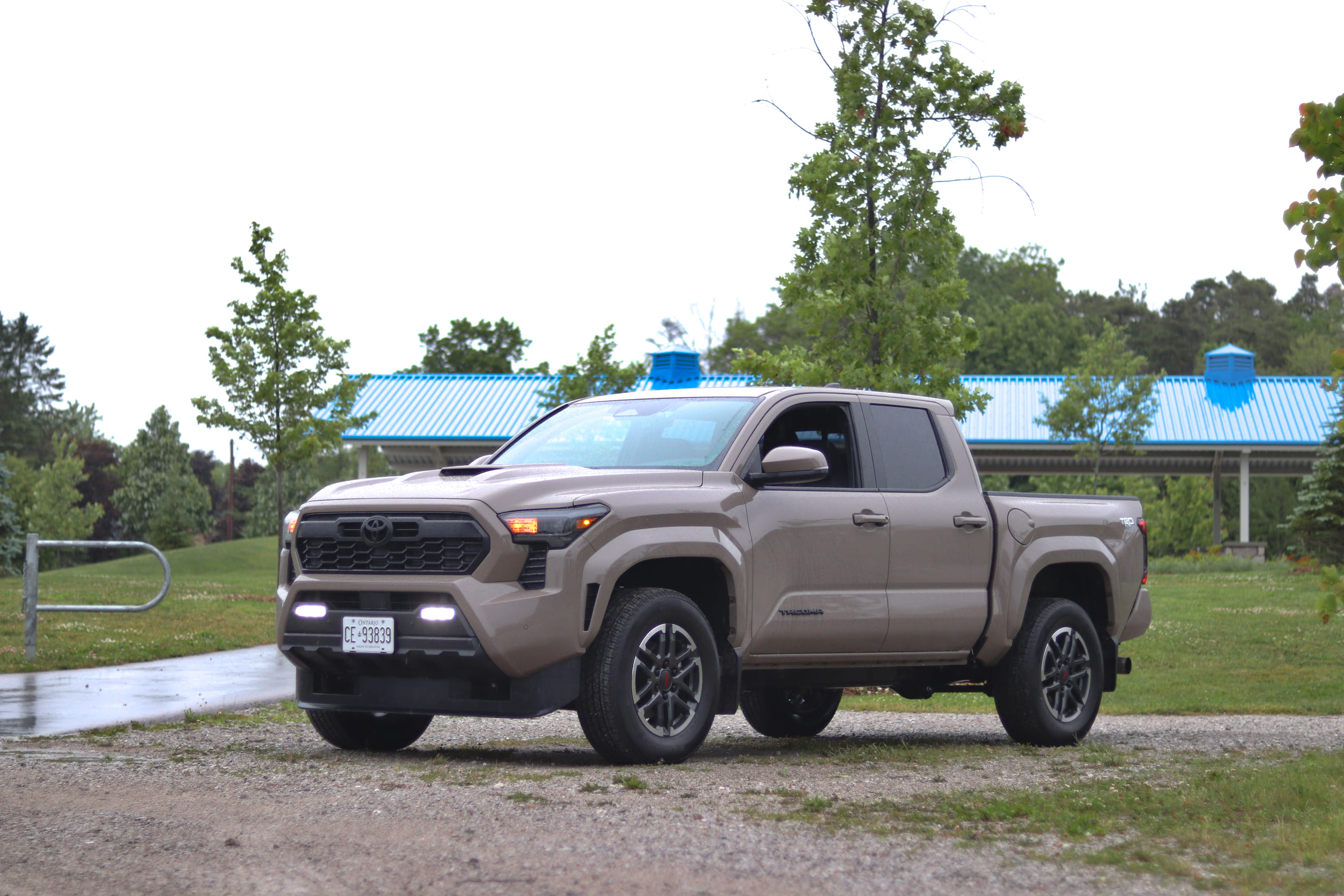
The Tacoma’s front end is a masterclass in aggressive, high-clearance geometry. It isn’t styled to look like a truck; it’s designed to act like one. The bumper is hiked up high, prioritizing approach angles over aerodynamic efficiency—a design choice that tells you exactly who this truck is for. The headlamps are tight, slim units recessed into the fenders, clearly positioned to avoid getting smashed by trail-side brush. It’s an honest, utilitarian face that eschews the “more is more” chrome overload of the domestic heavy-hitters, opting instead for a textured, modular look that feels like it was snapped together with industrial-grade fasteners.
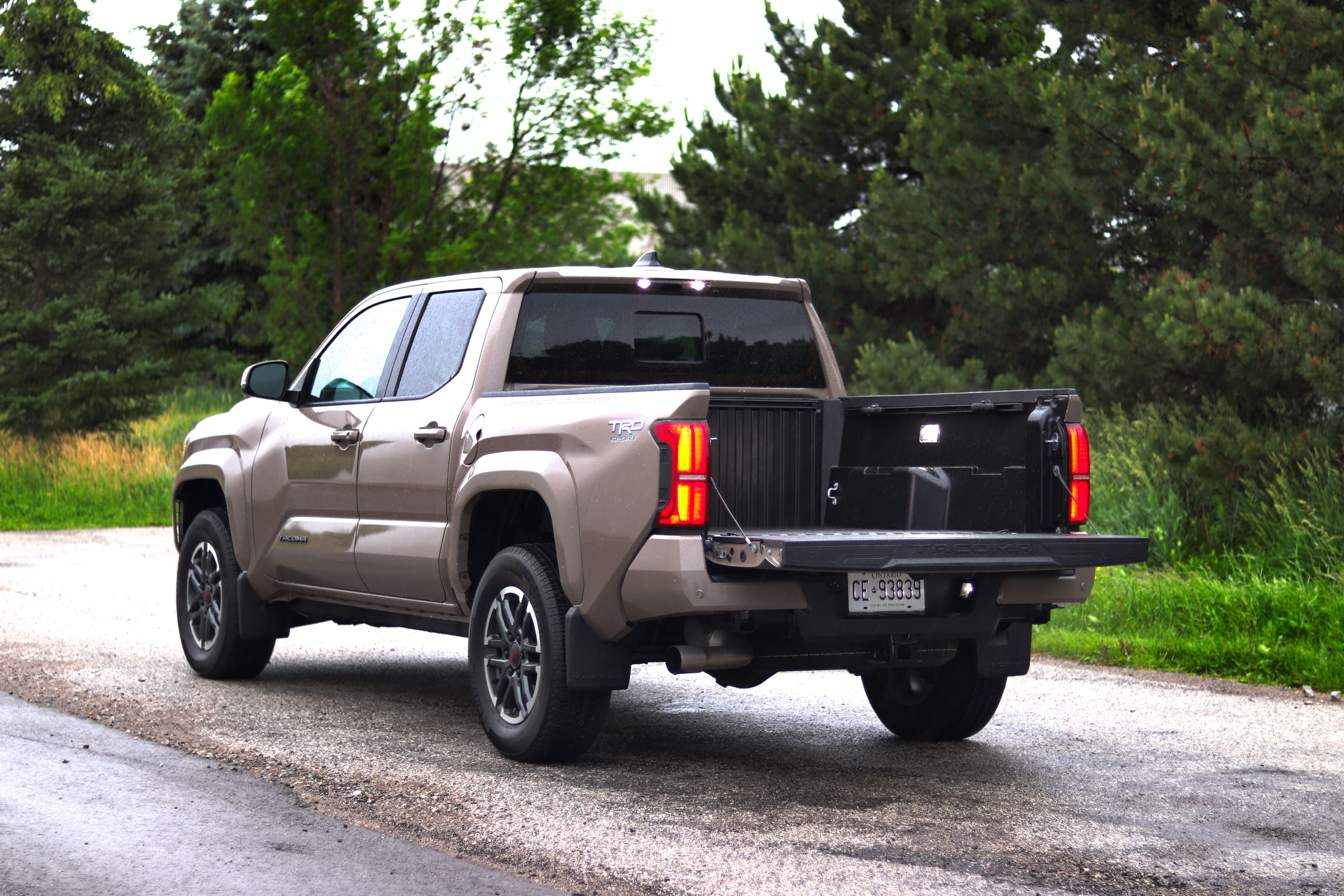
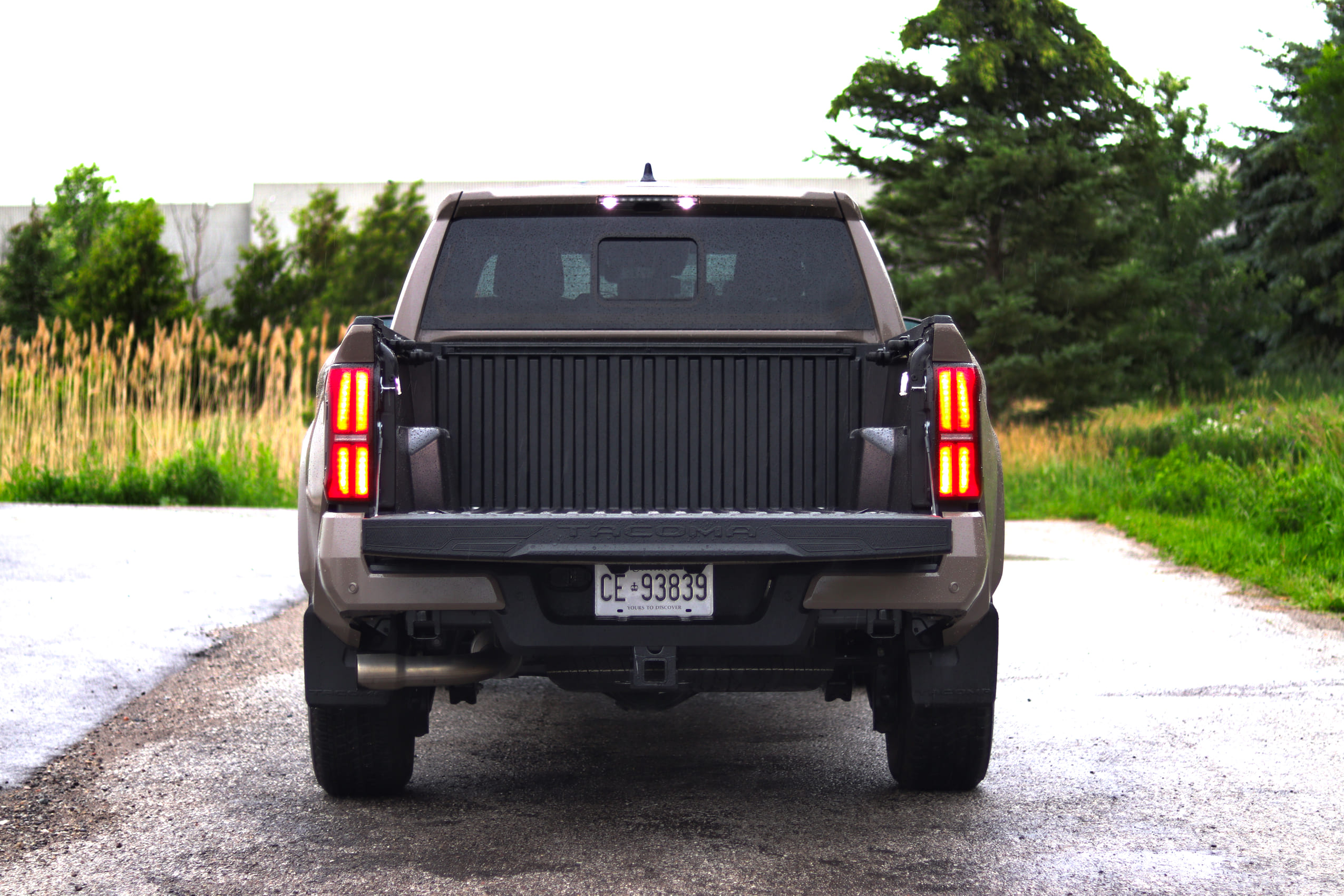
Around back, the Tacoma’s design settles into a brutalist, functional reality. There’s no attempt to hide the fact that this is a work-machine. The taillights are sharp, protruding elements that break up the slab-sided profile, and the tailgate itself isn’t a design afterthought—it’s an integrated structural component that feels heavy, solid, and built to survive a lifetime of abuse. The wheel wells are massive, almost aggressively so, designed with enough air to swallow larger, knobbier tires without requiring an aftermarket lift kit. It’s a deliberate design cue that tells you the engineers knew you were going to modify it the moment you got it home.
Then there are the quirks that make you realize this is a Japanese product designed with a very specific, almost stubborn, logic. The A-pillars are upright and vertical, giving the cabin a retro, industrial-era greenhouse effect that creates incredible forward visibility but generates more wind noise than a smoother, raked-back design would. It feels cramped and focused, not airy and luxurious. The door handles are oversized, glove-friendly loops, and the entire body shell is covered in “sculpting”—creases and folds that seem excessive until you realize they’re likely there to increase panel rigidity. It’s a busy design, certainly, but every line seems to have a reason for existing beyond just looking “cool.” It’s an exercise in form following function, even when that function is just sheer toughness.
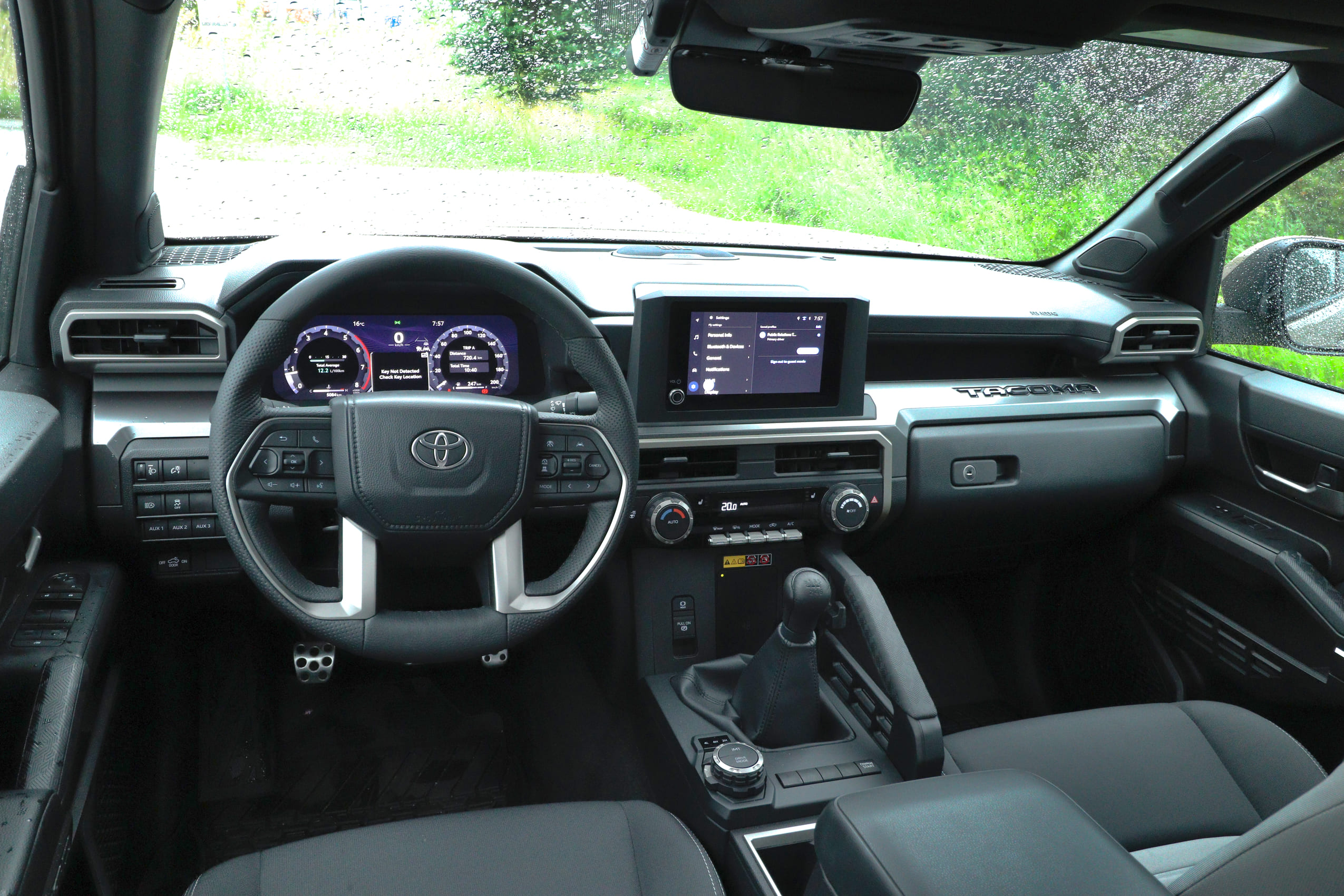
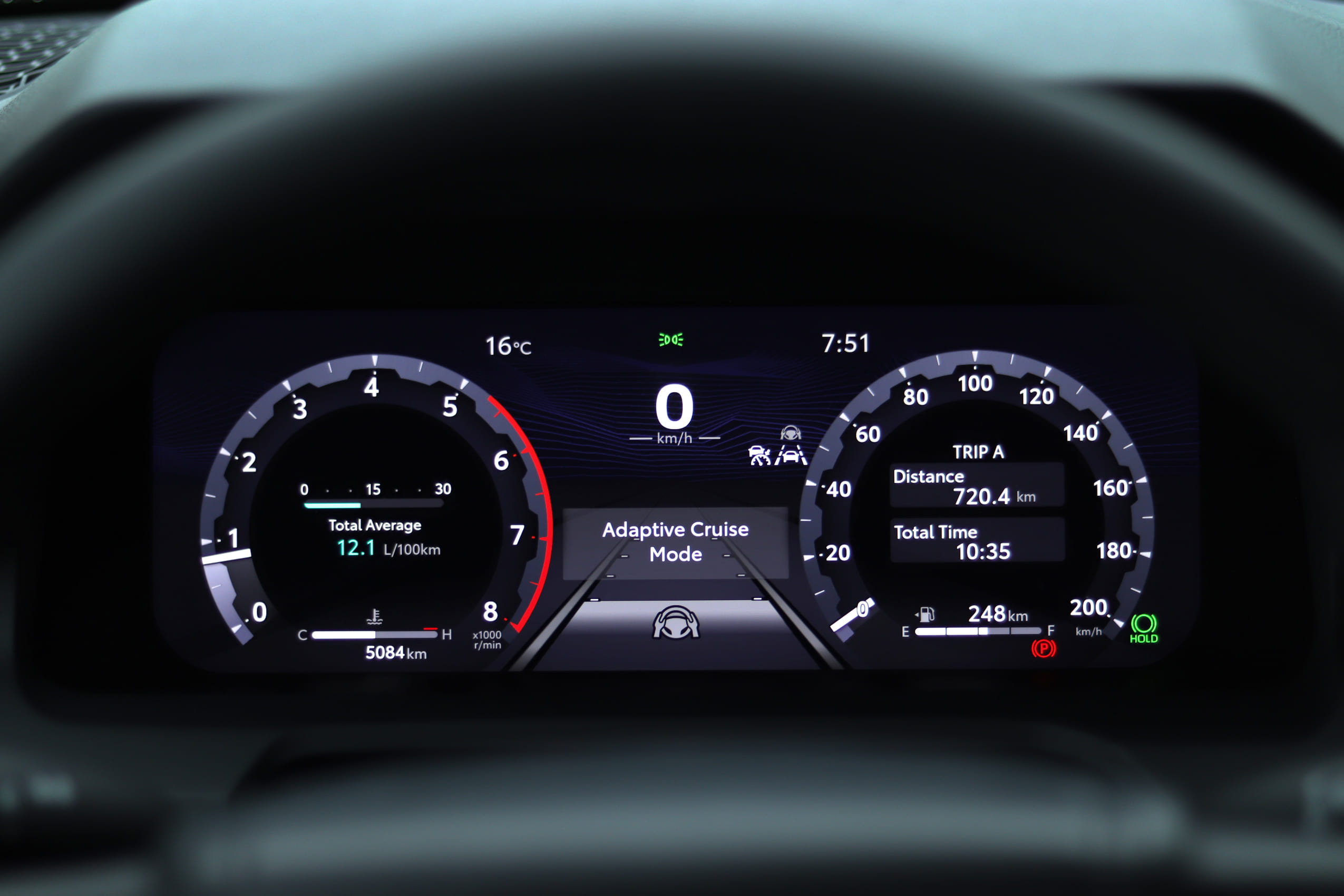
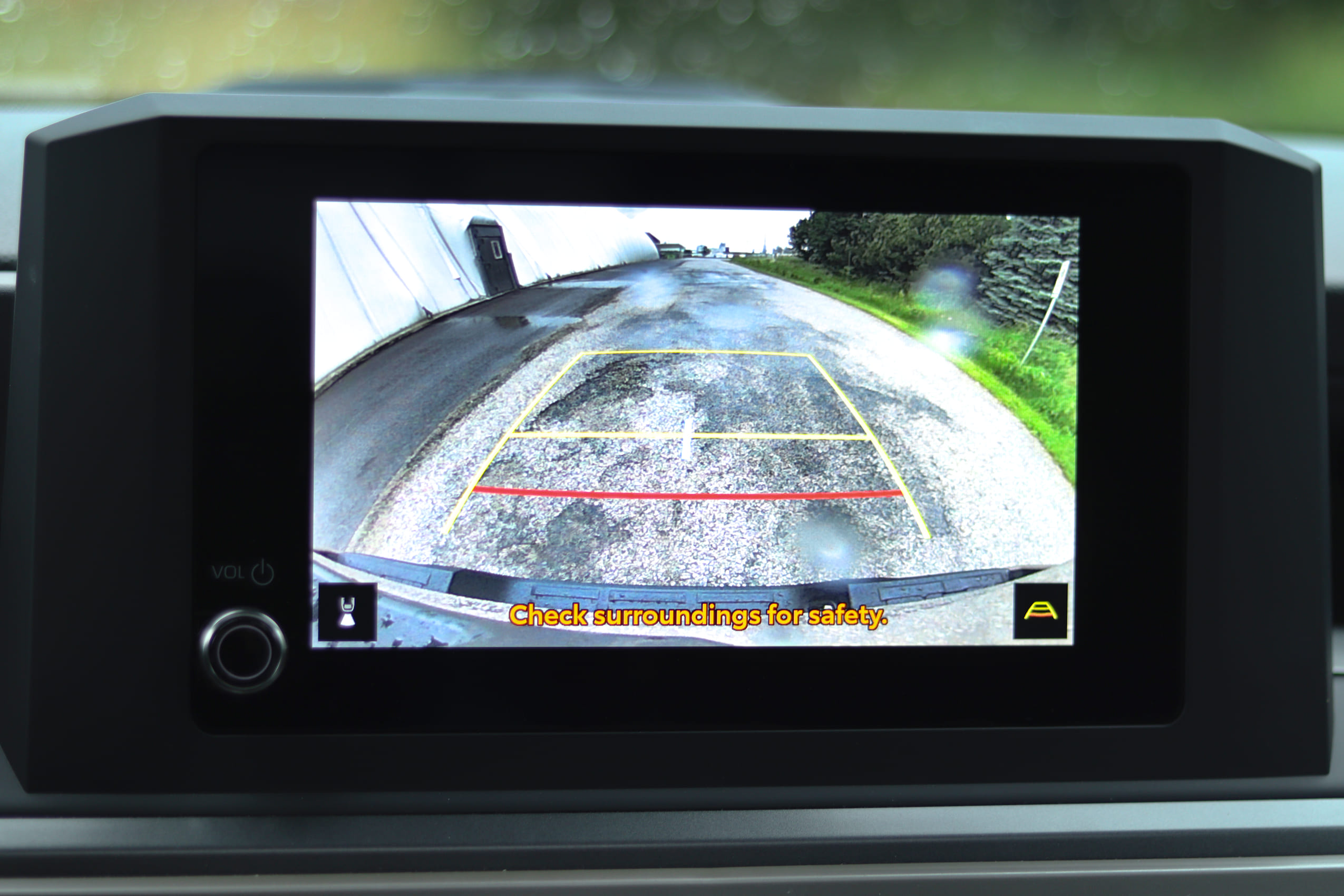
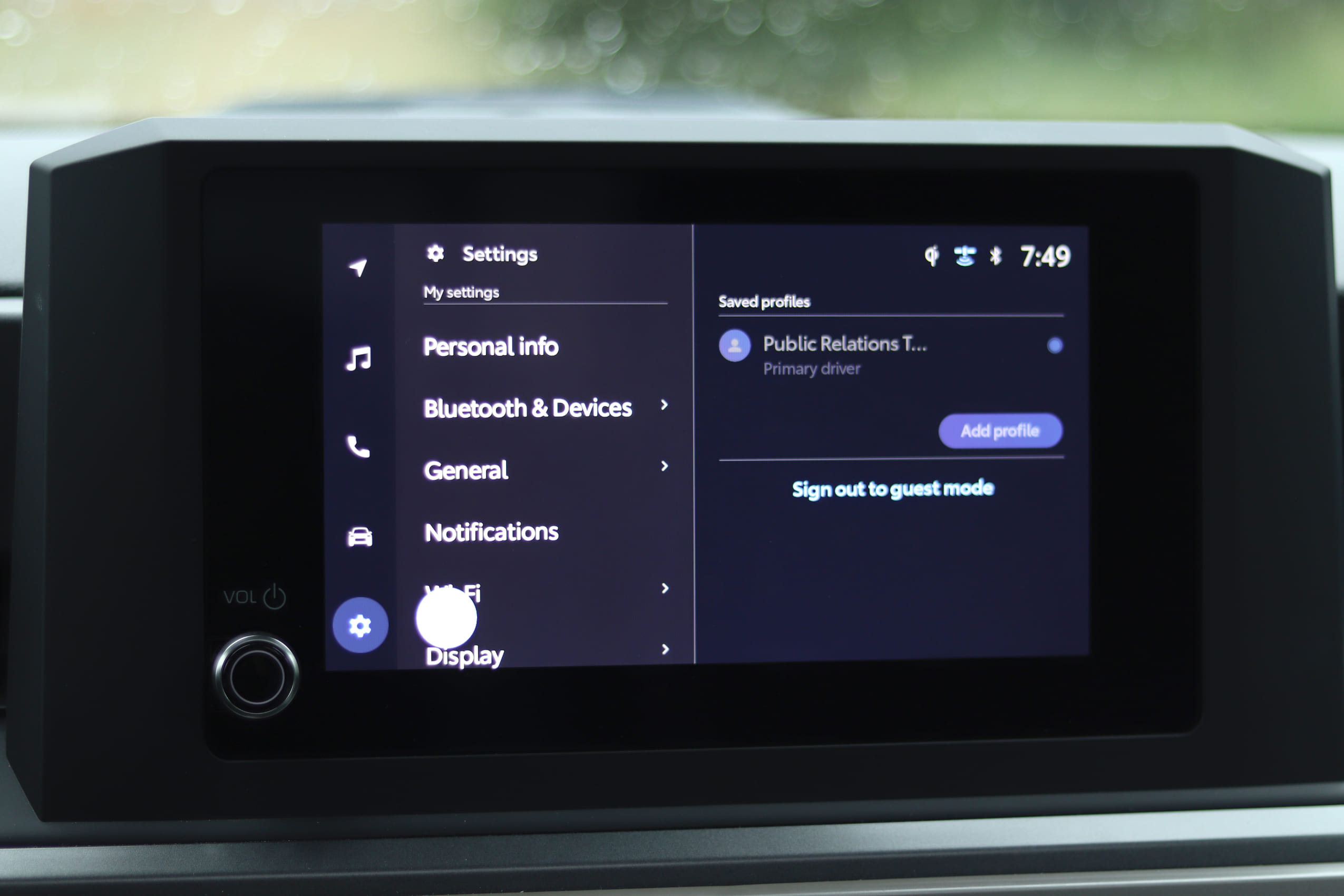
Climb inside of the Tacoma, and you are greeted by an interior that completely rejects the modern trend of turning truck cabins into sterile, high-tech living rooms. It is a strictly monochromatic affair, dominated by a sea of dark, textured plastics. But it doesn’t feel cheap; it feels rugged, like a dashboard that could be hosed down after a muddy weekend without triggering an electrical apocalypse.
Because this isn’t the flagship trim, you won’t find any useless luxury gimmicks here. Instead, it is an exercise in functional ergonomics—everything is blindingly easy to use and even easier to live with. The physical buttons and knobs are oversized and tactile, designed to be operated by muscle memory or gloved hands rather than forcing you to dig through endless touch-screen submenus.
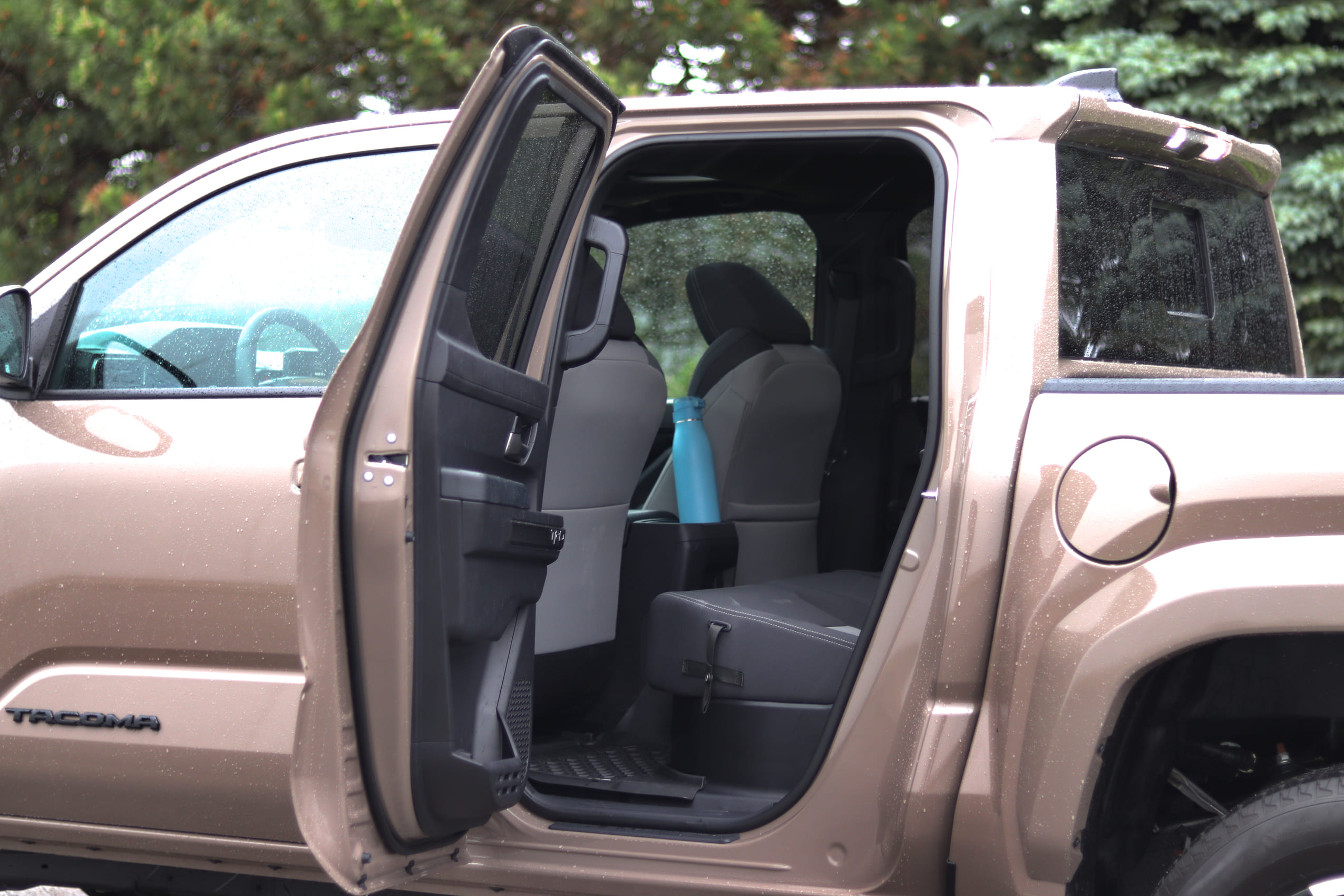
Up front, the seat comfort is genuinely great, offering the kind of support that holds you perfectly in place whether you’re cornering on pavement or bouncing over washboard trails. But that goodwill evaporates the moment you try to sit in the back. The rear seat is the Tacoma’s packaging Achilles’ heel. It is cramped, short on legroom, and sits too low to the floor, rendering it entirely unsuitable for adults on anything longer than a five-minute trip. It remains the truck’s biggest compromise when stacked against its domestic rivals.
And if you’re the type who appreciates that Toyota is one of the few manufacturers left offering different bed configurations to suit your actual workflow, the enthusiast gods demand one final compromise: if you want that glorious, three-pedal stick shift, your choice has been made for you. The manual transmission is strictly tethered to a single configuration—the five-foot short bed double cab. If you want the longer utility box, you’ll have to hand control back over to the computer.
Under the Tacoma’s hood sits the sole engine option for the three-pedal crowd: a 2.4-litre turbocharged i-FORCE inline-four. Opting for the manual transmission means accepting a very slight paperwork penalty from the factory, as the engine is tuned down just a hair to protect the flywheel. You get 270 horsepower and 310 lb-ft of torque—dropping 8 horses and 7 pound-feet compared to the automatic, with peak torque arriving slightly later at 2,800 rpm.
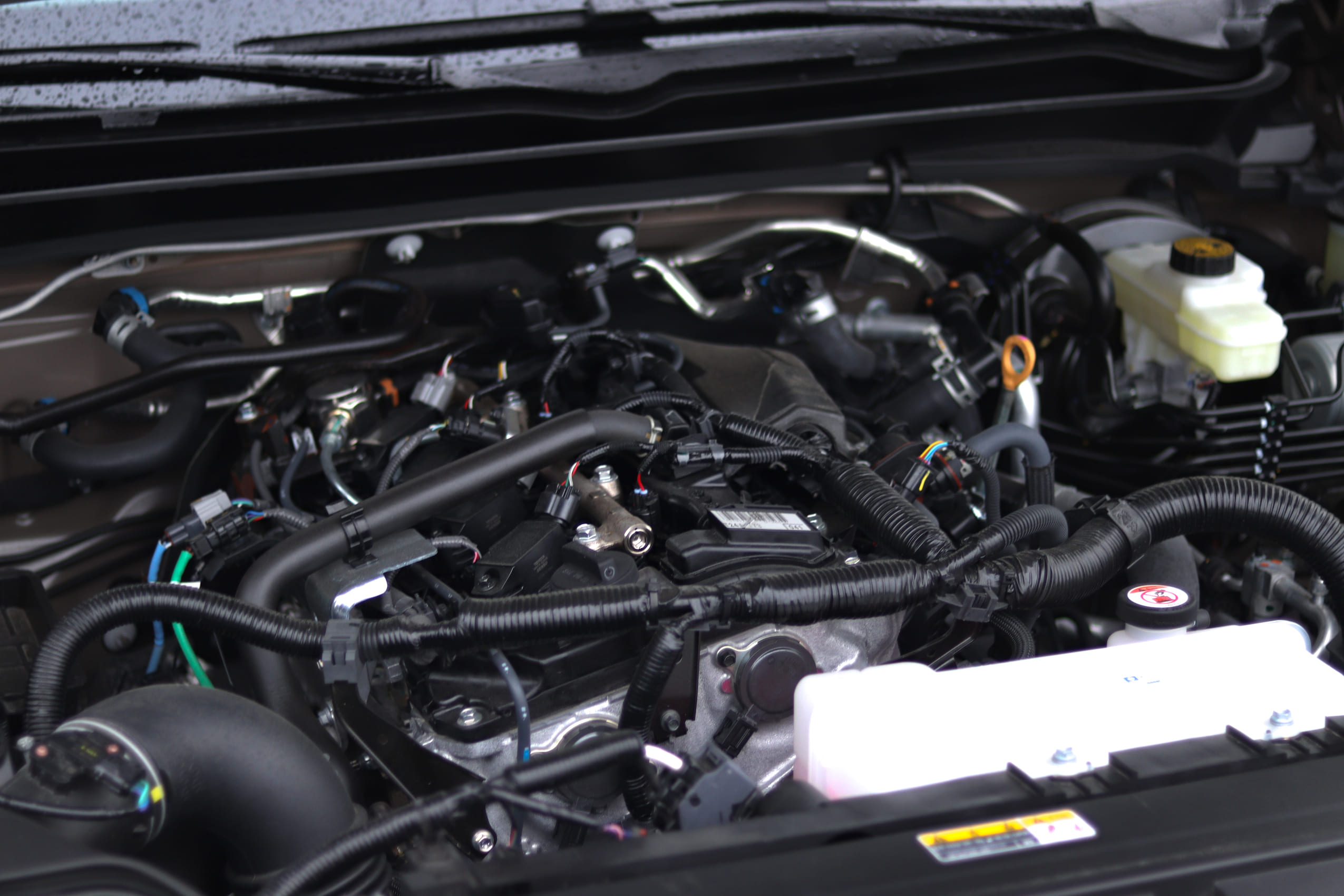
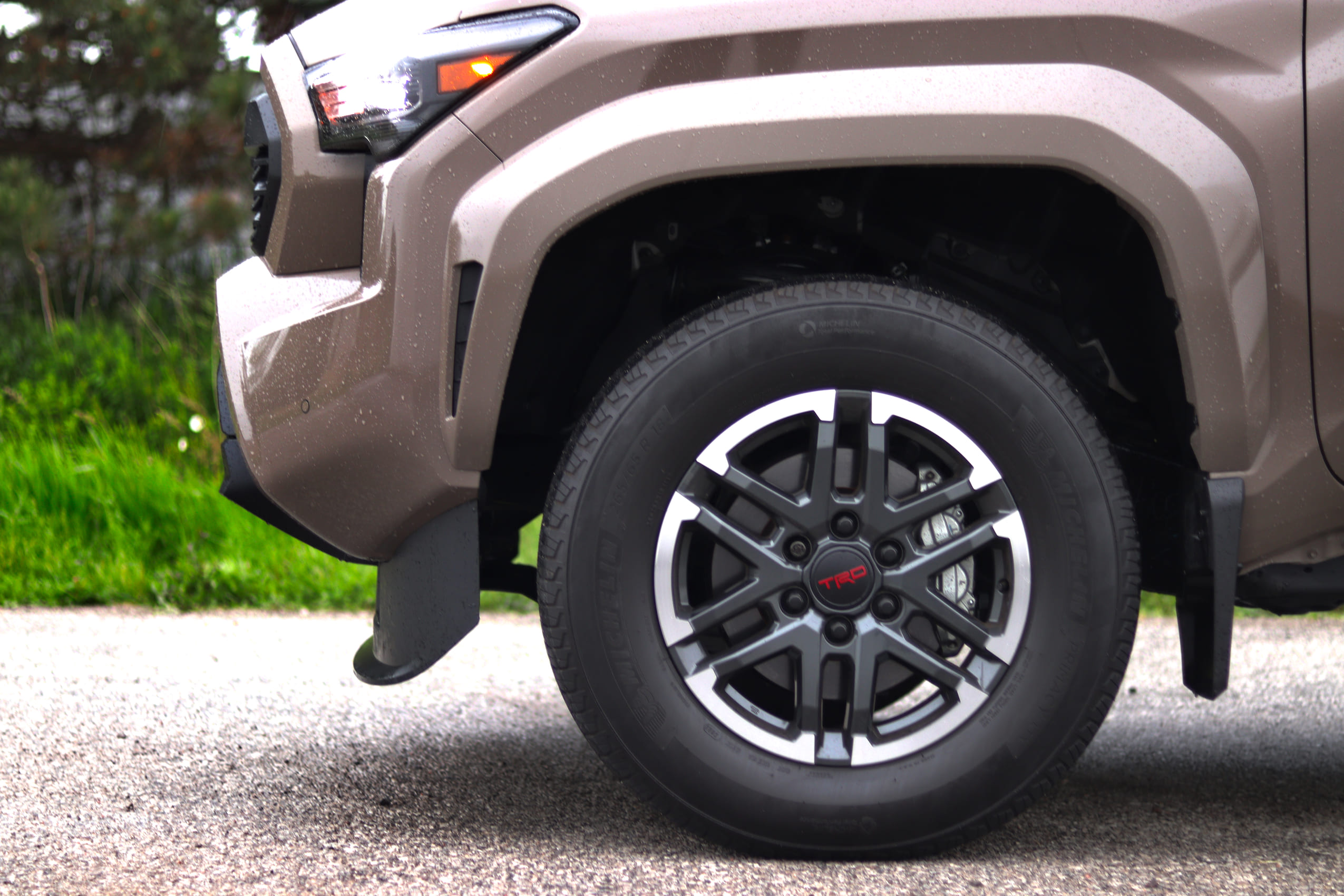
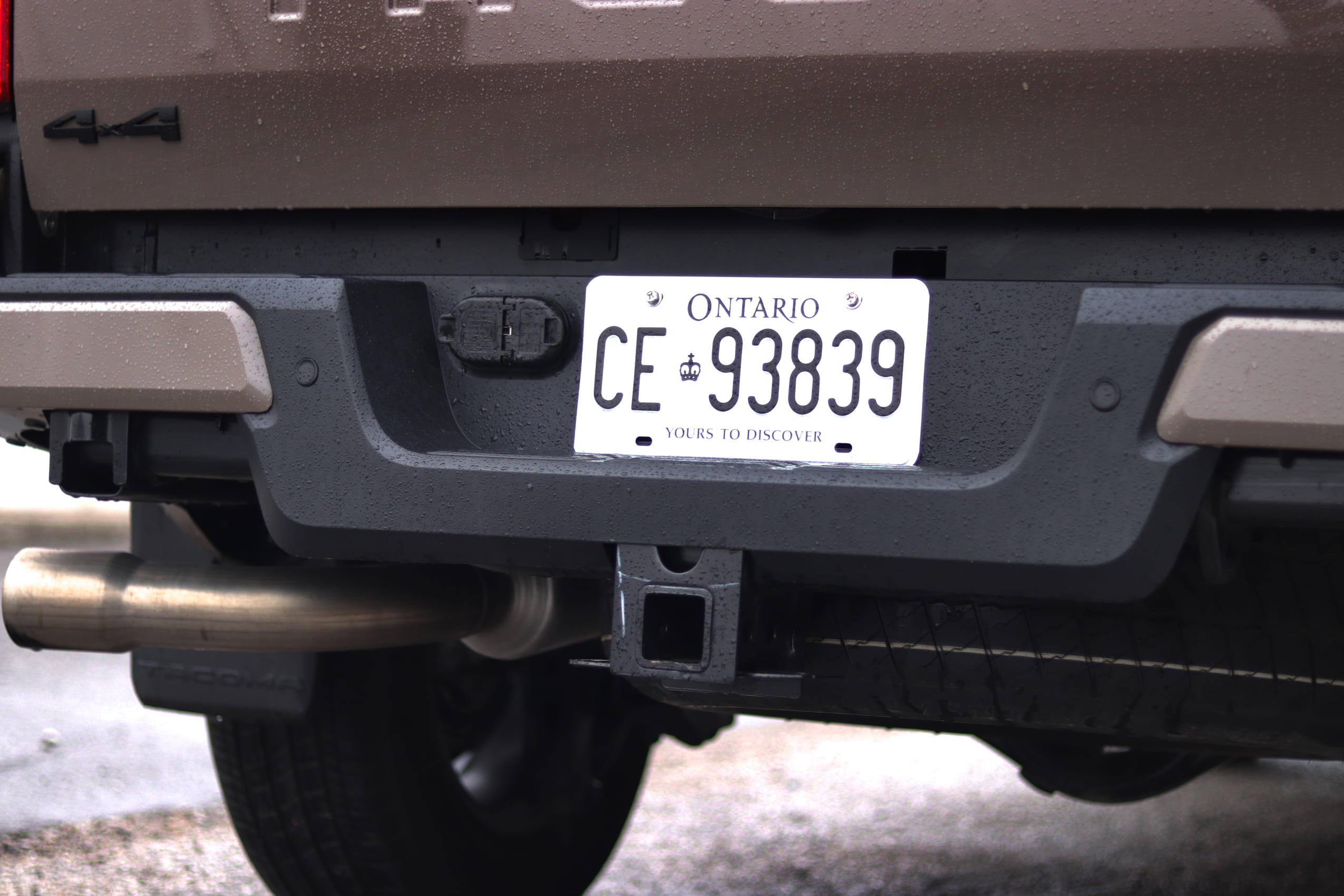
But numbers don’t capture the actual character of this thing, which is entirely unrefined. Fire it up, and the direct-injected turbo four sounds less like a high-tech modern powertrain and more like a industrial garbage disposal chewing through a handful of gravel. It is noisy, vibratory, and unashamedly mechanical.
Crucially, because you opted for the stick shift, Toyota strips away the fancy multi-terrain dial and multi-stage electronic drive modes found on the high-end automatics. And frankly, you don’t need them. While the automatic variants rely on complex algorithms to figure out traction, the manual truck gives you a real, physical transfer case lever, an electronic locking rear differential, and a clutch pedal. Managing your momentum through mud or rock crawls is left entirely to your left foot and your choice of gear—proving that mechanical simplicity will always be more satisfying than a computer trying to guess what kind of dirt you’re standing on.
When you hook up a trailer, the manual transmission forces you to look reality right in the face. On paper, the three-pedal TRD Sport is rated to tow a respectable 6,400 pounds. That is more than enough for a couple of dirt bikes or a modest boat, but if your primary goal in life is dragging maximum tonnage down the highway, the competition laughs in its general direction.
The automated, tech-heavy domestic mid-sizers from Ford and Chevy will happily pull up to 7,500 or 7,700 pounds without breaking a sweat, leaving the Tacoma feeling distinctly mid-pack. But numbers alone miss the point. Towing with a modern automatic is an invisible process—the computer isolates you, smoothing out the physics until you forget the load is even back there. Towing with this manual Tacoma is a visceral, full-body event. Every grade requires a conscious downshift, every stop demands a perfectly matched rev, and every pound of that trailer communicates itself directly to your left foot. It is harder work, absolutely, but it’s a masterclass in mechanical honesty.
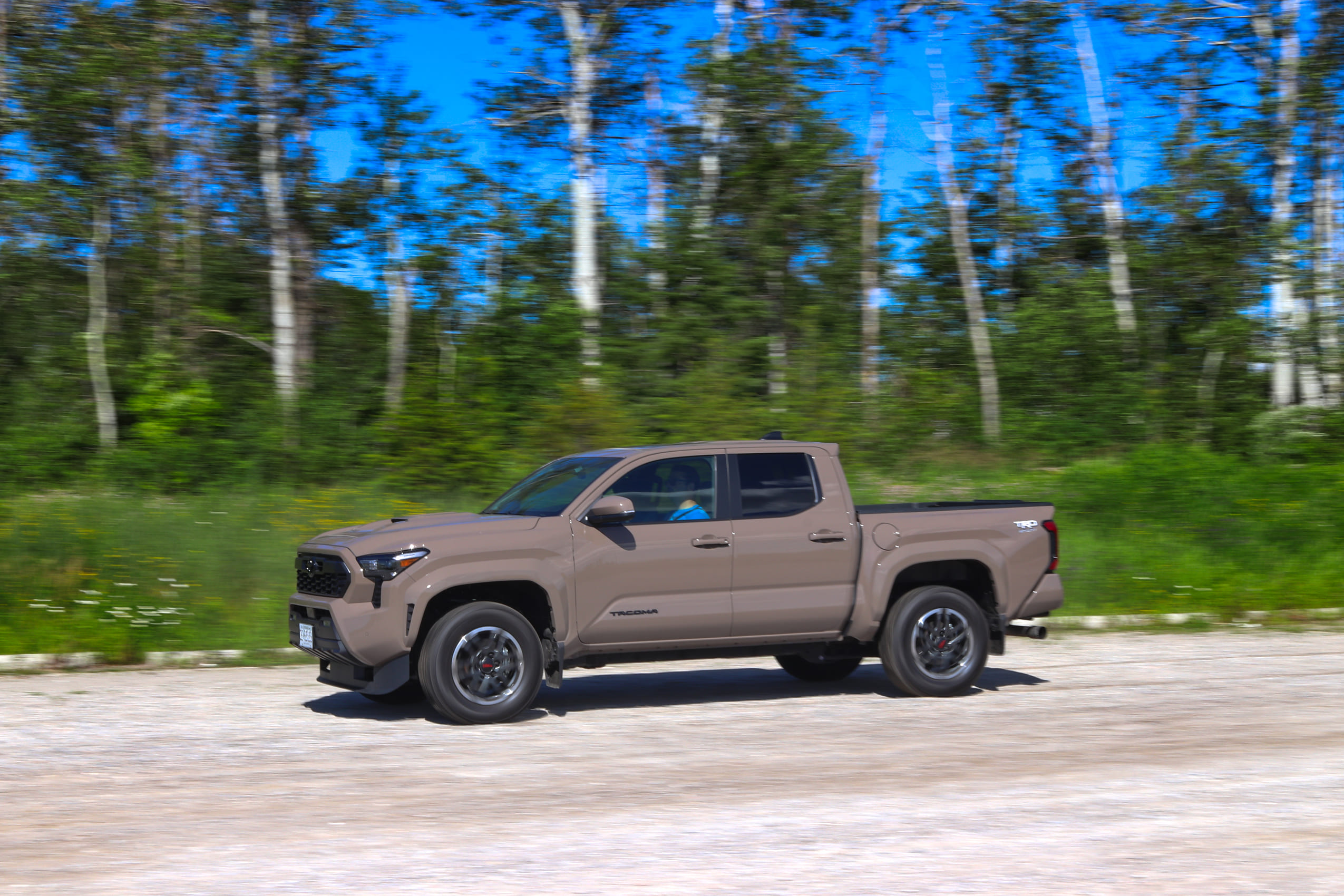
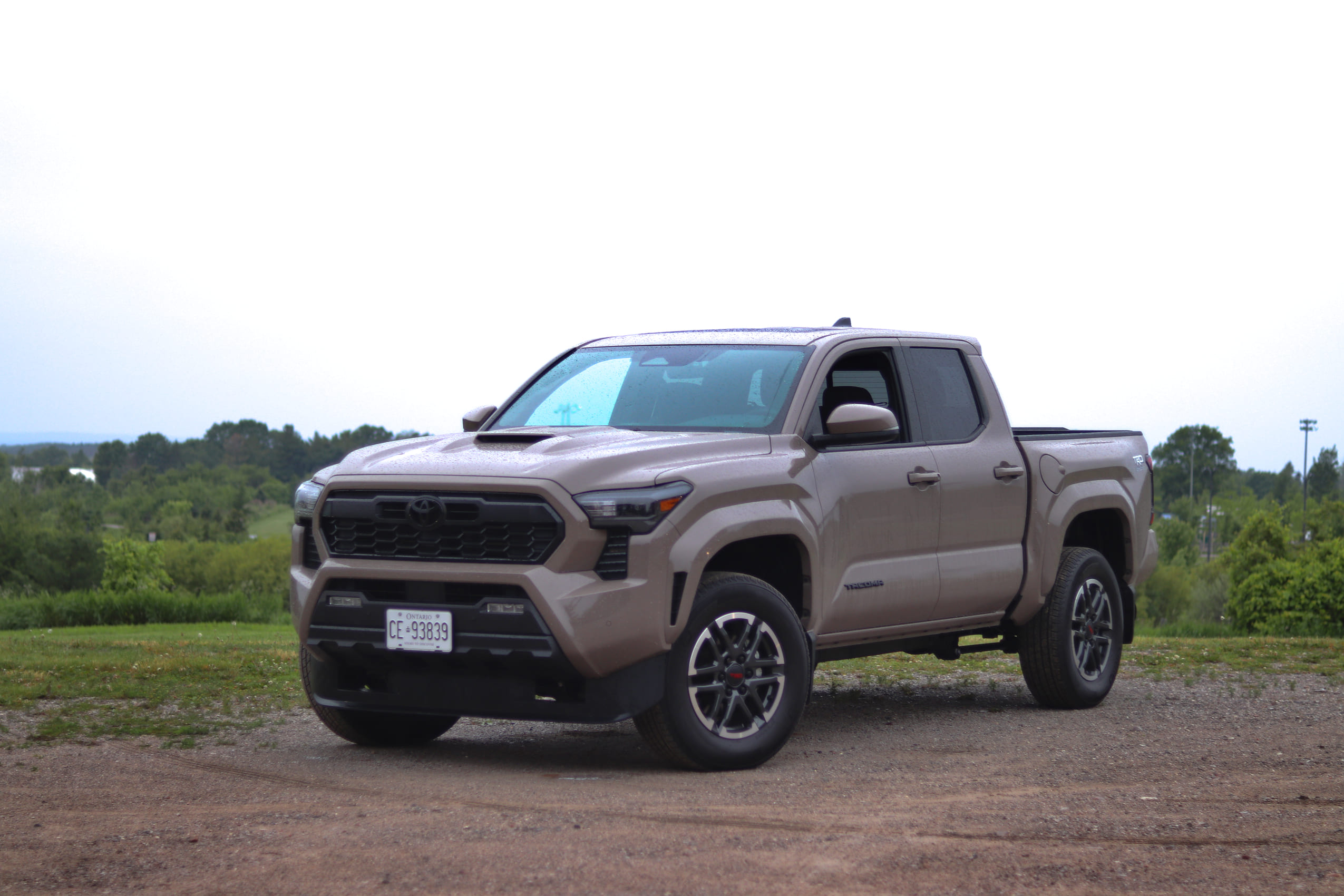
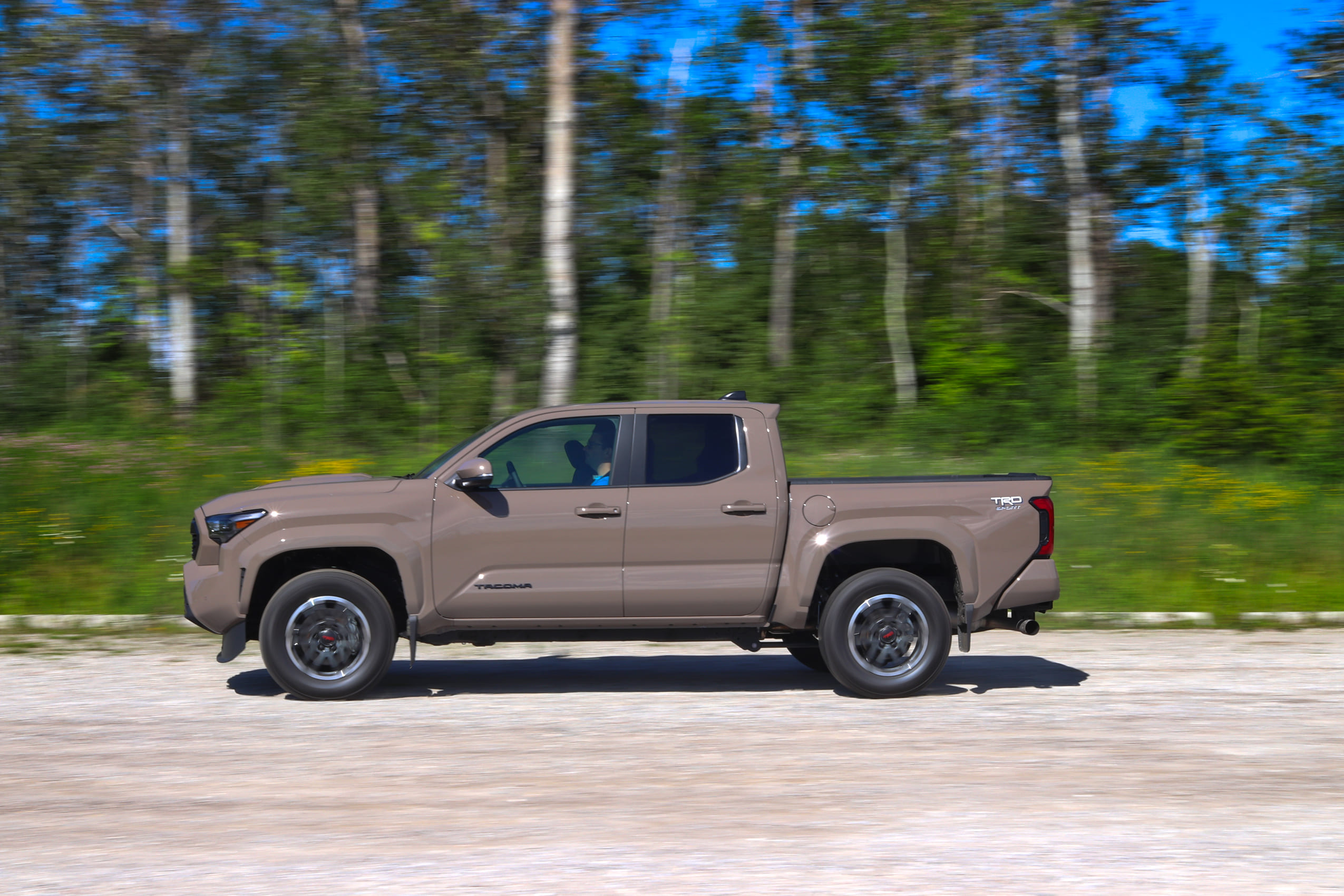
On the move, the driving experience is an absolute masterclass in mechanical nostalgia. The shifter has a long, deliberate throw that feels less like a modern sports car and more like a heavy-duty piece of agricultural equipment—and I mean that as a compliment. You have to actually drive this thing. The clutch pedal has real, linear weight to it, and because the turbo inline-four delivers its torque in a sudden, deliberate swell, executing a smooth rev-matched downshift requires actual thought and coordination. It behaves like a truck from twenty years ago, filtering out the artificial, electronic numbness that plagues every other modern vehicle on the road. You feel the vibrations through the floorboards, you hear the turbo whistle mingle with the mechanical racket under the hood, and you are forced to become an active participant in your own commute. It’s noisy, it’s involving, and it is brilliant.
Ultimately, this manual Tacoma is a glorious, completely irrational anomaly. It makes absolutely no sense on a spreadsheet. It has a cramped back seat, it tows less than its domestic rivals, it sounds like an industrial appliance, and it forces you to shift your own gears in a world that has largely forgotten how. It is a truck bought entirely with the heart, not the brain. By any logical, objective metric of modern consumerism, you should buy the automatic. But if you are the kind of person who still values the tactile romance of a mechanical connection—who wants to actually feel the gears meshing beneath your hand—this truck is a beautiful, defiant gift. It is a reminder of what driving used to feel like before the computers took over, and we should celebrate the fact that Toyota still has the guts to build it.
2026 Toyota Tacoma TRD Off-Road Specs
| Engine Type | 2.4-Liter i-FORCE Turbocharged Inline-4 |
| Transmission | 6-Speed Intelligent Manual (iMT) |
| Horsepower | 270 hp @ 5,400 rpm (-8 hp vs. Automatic) |
| Torque | 310 lb-ft @ 2,800 rpm (-7 lb-ft vs. Automatic) |
| Drivetrain | Part-Time 4WD with 2-Speed Electronic Transfer Case |
| Rear Differential | Electronically Controlled Locking Rear Diff |
| Configuration | Double Cab / 5-Foot Bed Only |
| Max Towing Capacity | 6,400 lbs |
| Max Payload | 1,705 lbs |
| Website | www.toyota.ca |
The Anti-ADV Hero: Why the 2026 Honda Transalp is the
Leave it to Honda to look at the entire, absurdly over-engineered, $25,000 middleweight adventure segment—a market flooded with hyper-focused rally…

2026 Suzuki V-Strom 800DE: No V-Twin, No Problem
Words are supposed to mean things. The “V” in V-6 means a V-layout, and for two decades, the “V” in…
2026 Honda Passport TrailSport Review: The World’s Most Charming Anti-Wrangler
Let’s be honest about what’s actually happening here. Honda knows as well as you do that nobody is taking a…
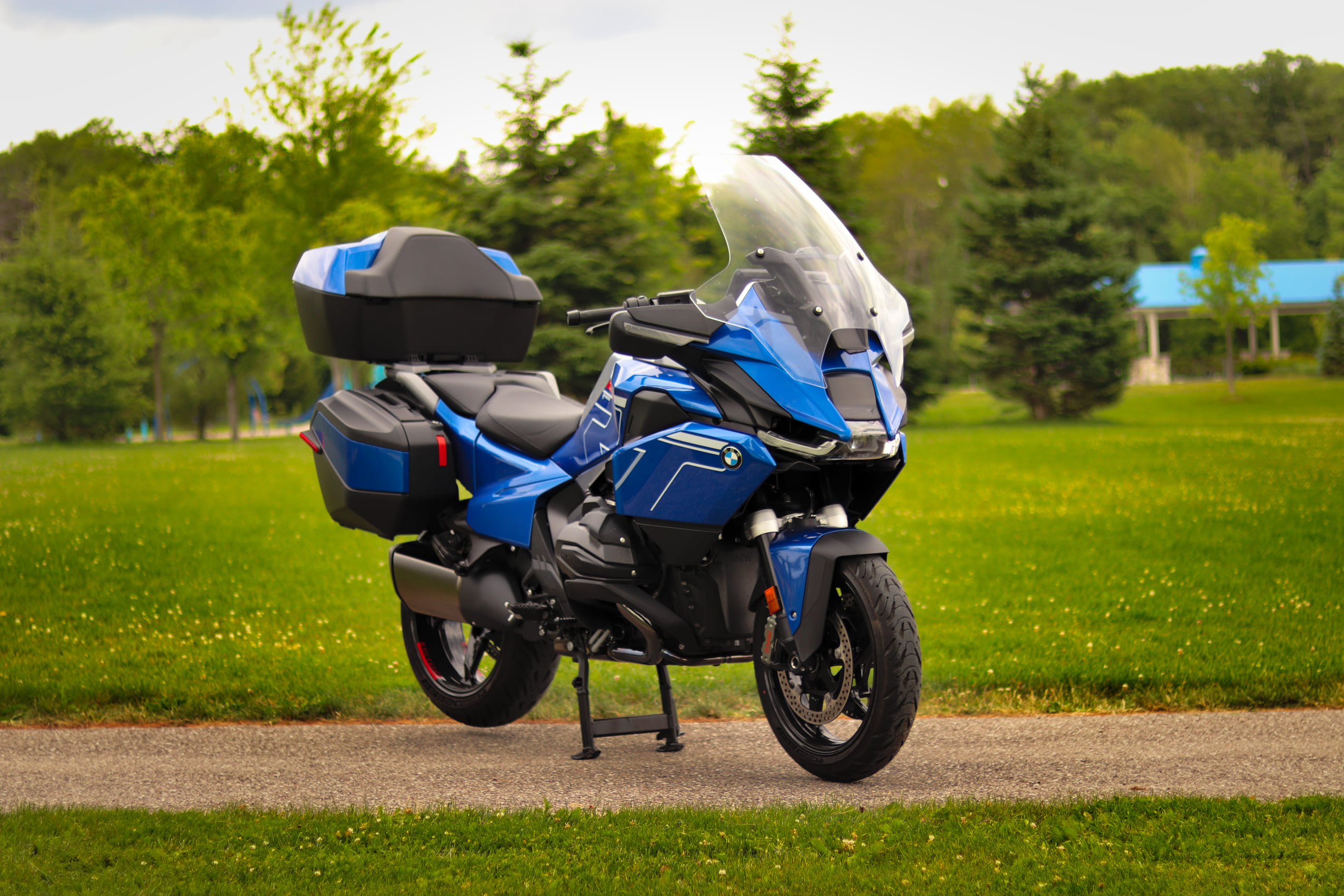
2026 BMW R1300RT: Radar-Guided, Clutchless, and Unreasonably Capable
It is a biological impossibility to look at a 620-pound, radar-guided Bavarian land-yacht and think, “Ah, yes—what this needs is…
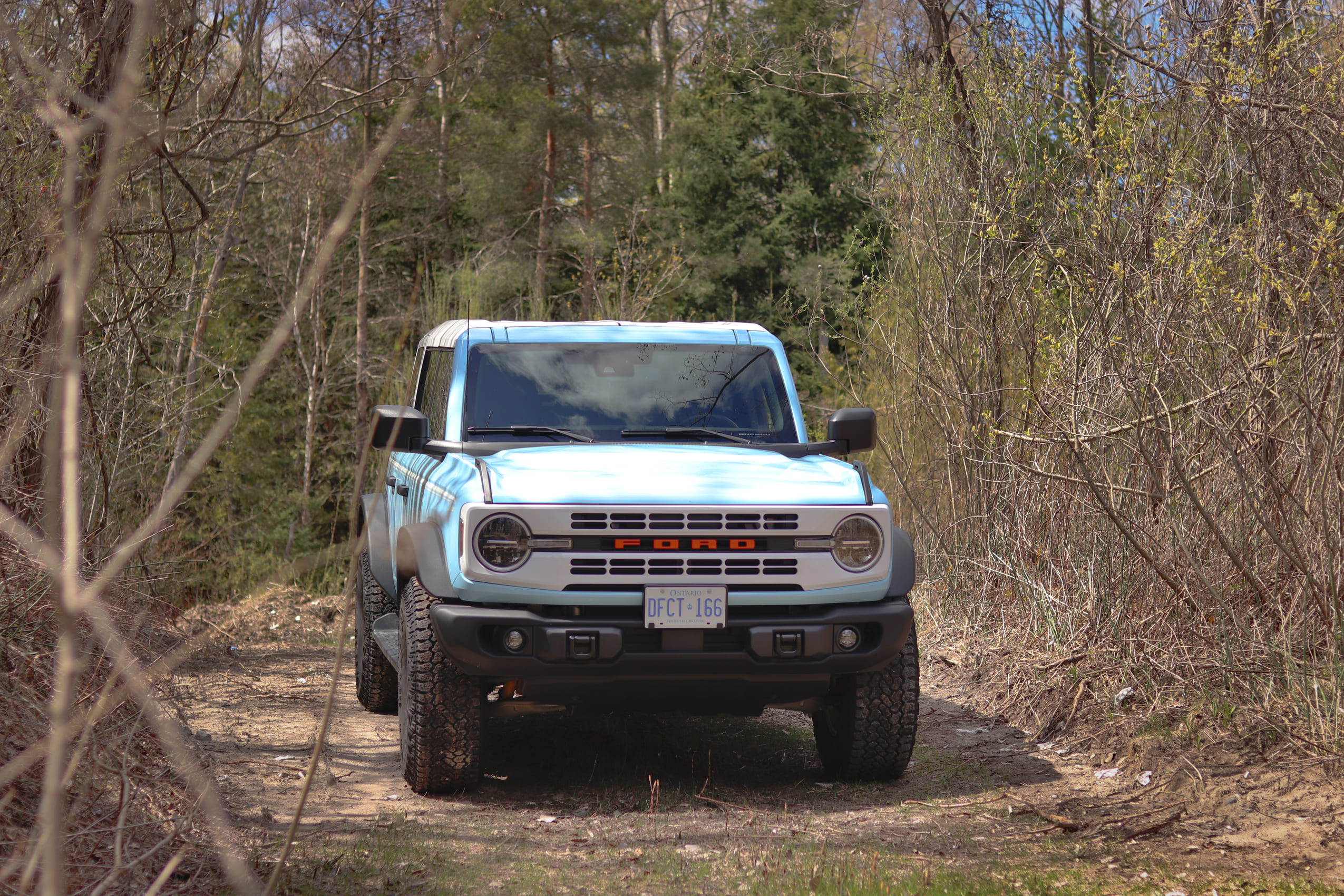
The 2026 Ford Bronco Heritage Edition Is a Great, Big,
If we are being completely honest with ourselves, modern retro design is usually a lazy, cynical grift—a plastic tribute act…
The 2026 Toyota Tacoma Manual is a Beautiful, Defiant Mistake
The modern mid-size truck has become an exercise in digitised isolation, a tool designed to conquer the wilderness while shielding…